Tu’er Ye Beijing: Discover the Enchanting Rabbit God of Beijing’s Folk Art
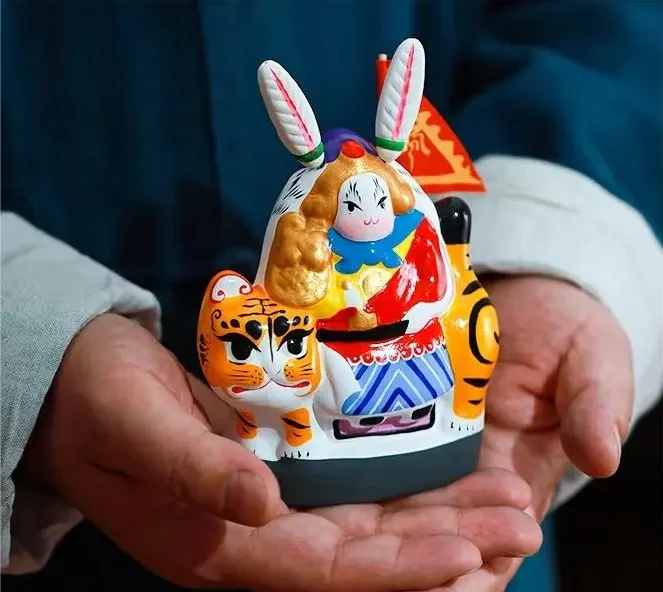
As you wander through the winding Hutongs of Beijing, among grey-brick courtyards and lantern-lit alleys, you may notice bright clay figures peering from shop windows — rabbit-headed, human-bodied, clad in armor and riding tigers or deer. These are the iconic Tu’er Ye Beijing, the city’s beloved Rabbit God, a vivid symbol of Chinese folk belief and artistry. Once a lunar emissary said to descend from the Moon Palace to heal the sick, Tu’er Ye has evolved over four centuries into a treasured emblem of Beijing’s Intangible Cultural Heritage — where mythology, craftsmanship, and local life merge beneath the glow of the Mid-Autumn moon.
🏮Discover more in our Beijing Tourist Attractions Collection and China Cultural Heritage Tours Collection to plan your journey.

I. The Moonlight Guardian in the River of History: From Plague God to Lunar Emissary
The origin of Tu’er Ye Beijing dates back to the mid-Ming Dynasty. According to the Records of Beijing Festivals (Beijing Sui Hua Ji), a deadly plague once struck the capital. Folklore tells that the Jade Rabbit from the Moon Palace descended to Earth, carrying a pestle and medicine to save the people. Out of gratitude, locals sculpted rabbit-headed, human-bodied clay figures in worship — and when the epidemic subsided, the Tu’er Ye became a divine protector of the city.
Every Mid-Autumn Festival, families brought a Tu’er Ye home to pray for health and peace. The Records of Seasonal Customs in Yanjing (Yan Jing Sui Shi Ji) vividly described:
“When the festival arrives, the clever city folk mold toad-rabbit figures from yellow clay and sell them as Tu’er Ye. The tallest stand three chi high; the smallest barely an inch — some sit like deities of the Hu people, while others fit in the palm of a hand.”
Over time, the Tu’er Ye transformed from a simple seated figure to imaginative forms — riding a tiger, deer, or holding a banner — and even inspired the magnificent “Rabbit Mountain,” where dozens of figures were stacked into a pagoda-like display during festive celebrations.

II. Oriental Aesthetics at the Fingertips: From Clay to Deity
Creating a single Tu’er Ye involves twelve meticulous steps, from selecting and aging the clay to molding, drying, painting, and finishing. Masters still prefer Xishan purple clay, a highly adhesive earth collected after the Autumn Equinox and aged for three years before use.
Each Tu’er Ye begins with the careful shaping of rabbit ears using wooden and bamboo tools. The facial features are delicately carved — the eyes alone are painted in seven layers of iron oxide pigment, giving the Rabbit God a spirited, lifelike gaze.
Classic Masterpieces
- Sitting Tiger Tu’er Ye: The most traditional form, showing the Rabbit God seated atop a tiger, holding a medicinal pestle and a gourd symbolizing protection from evil — reflecting the saying, “When the tiger roars, the wind stirs; when the rabbit leaps, the clouds part.”
- Flag-Attired Tu’er Ye: A Qing Dynasty creation where the Rabbit God dons a Manchu Qipao and phoenix coronet, symbolizing the cultural blend of imperial Beijing.

III. Immersive Experience Guide: Touching the Warmth of Old Beijing Memories
To truly appreciate Tu’er Ye Beijing, the best way is to experience it in person — through museums, workshops, and heritage streets.
(I) Top Spots for Tu’er Ye Experiences
- Beijing Tu’er Ye Museum (Meizhu Hutong, Dongcheng District):
The first museum dedicated to Tu’er Ye, housing over 300 works from Ming relics to modern designs. Visitors can try the traditional “Powdering Process,” applying fine talcum powder to “open the face” of the Rabbit God. - Ni Ren Zhang Clay Sculpture Studio (Shichahai Area):
Run by National Intangible Heritage inheritors, this studio lets you mold, paint, and kiln-fire your own clay figure — a perfect hands-on experience for art lovers. - Qianmen Intangible Heritage Experience Hall:
Offers a 90-minute crash course where travelers can create their own small Tu’er Ye and receive a “Junior Inheritor” certificate — ideal for families or short-stay visitors.

(II) Shopping & Collecting Guide
Where to Buy:
- “Ji Tu Fang” (Nanluoguxiang): A century-old shop known for classic Sitting Tiger models, each stamped with the artisan’s seal.
- “Tu Ye Shi Jia” (Dashilan): Renowned for modern interpretations, including a licensed collaboration with Disney’s Zootopia.
Price Reference:
- Mini models (under 10 cm): ¥50–¥150
- Classic models (20–30 cm): ¥300–¥800
- Collector’s editions: ¥1,000+
Selection Tips:
- Check if the ears are naturally joined to the body.
- Rotate to ensure the base is even and crack-free.
- Tap lightly — a fine piece emits a crisp “dang-dang” sound.
(III) Pre-Trip Tips
- Best Time to Visit: One month before the Mid-Autumn Festival, when artisans host the Tu’er Ye Consecration Ceremony.
- Dress Code: Wear darker clothing during workshops to avoid pigment stains.
- Etiquette: Avoid touching unfired clay figures directly; folklore says it takes away their ling qi — “spiritual energy.”
IV. Conclusion: Letting Tradition Flourish Anew
From an ancient guardian deity to a modern cultural icon, Tu’er Ye Beijing embodies the living spirit of the capital — imaginative, kind-hearted, and timeless. When you place the final cinnabar dot on your handmade Rabbit God in a Hutong workshop, or admire centuries-old figures in a museum, you’re not just seeing clay — you’re touching Beijing’s living soul.
This meeting of myth and craftsmanship bridges centuries of creativity, inviting travelers to experience the artistry, warmth, and wonder that make Tu’er Ye Beijing one of the most enchanting treasures of China’s cultural heart.