Shanghai Xiaolongbao: The Philosophy of Oriental Cuisine in a Cloud of Steam
As you stroll near the entrance of Shanghai’s longtangs (laneways), a faint yet rich aroma draws you in—the steam rising from bamboo steamers carries the hearty scent of wheat and pork. This golden sphere, barely 5 cm in diameter, is the Shanghai Xiaolongbao (soup dumpling), a National Intangible Cultural Heritage and a symbol of Haipai cuisine. More than just breakfast, it embodies the refined culinary code of Shanghai. This guide explores its origins, craftsmanship, classic flavors, and modern tasting experiences.

I. The Origins and Evolution of Xiaolongbao
1. From Jiangnan Water Towns to Shanghai
The predecessor of Xiaolongbao can be traced to the “Cave Plum Blossom Baozi” (Shandong Meihua Baozi) during the Northern Song Dynasty. Migrants carried it south to Jiangnan, where the humid climate inspired the development of thin-skinned, juicy buns. In 1861, Huang Mingxian at Rihua Xuan in Nanxiang Town innovated “small size, heavy filling, thin skin,” creating the template for modern Nanxiang Xiaolongbao.
2. The Icon of Haipai Culture
By the 1920s, Nanxiang Xiaolongbao spread to Shanghai’s foreign concessions. Changxing Lou (Yu Garden branch) introduced Crab Roe Xiaolongbao, incorporating Yangcheng Lake crab roe and pork, initiating the tradition of seasonal flavors. As early as 1937, Runfa Lou near the Bund featured English menus, bringing Xiaolongbao to an international audience.
3. Modern Intangible Heritage
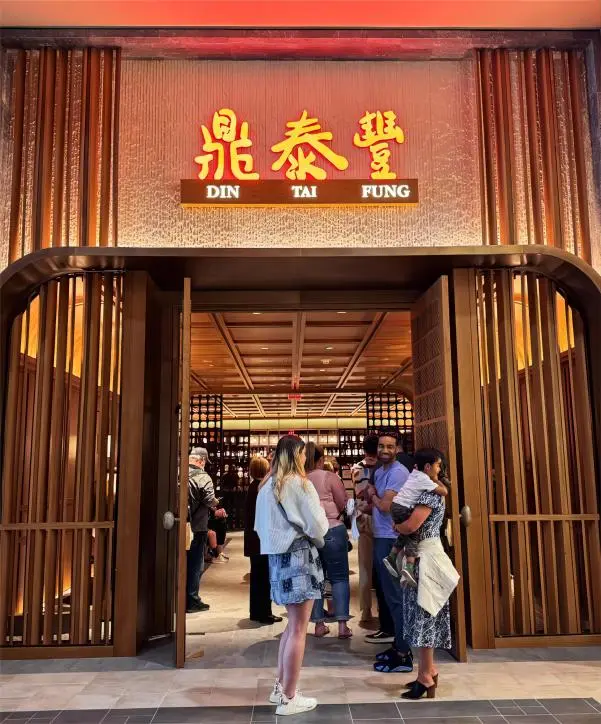
In 2014, Nanxiang Xiaolongbao making was inscribed as a National Intangible Cultural Heritage. Today, fourth-generation inheritors, such as Li Jiangang, maintain techniques like bamboo steaming and the sixteen-pleat seal, while also creating innovative flavors including truffle and foie gras. Michelin-starred Din Tai Fung emphasizes precision with the “5 g skin + 16 g filling” standard, demonstrating Shanghai Xiaolongbao’s global culinary recognition.
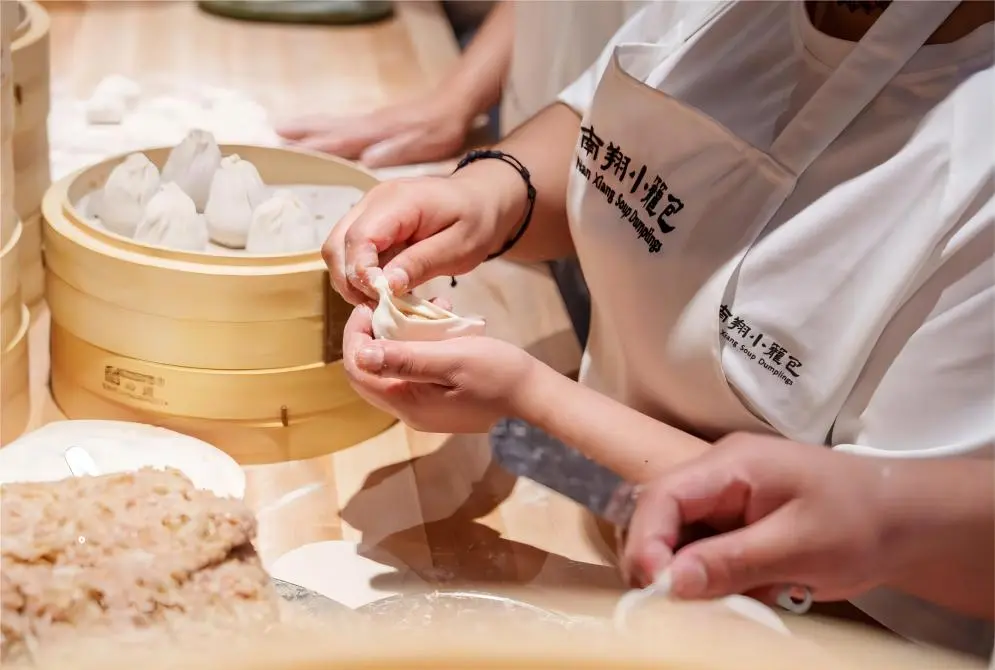
II. The Craftsmanship of Shanghai Xiaolongbao
1. Dough: Thin but Resilient
High-quality Xiaolongbao dough follows the “three lights” rule: clean hands, smooth dough, clean basin. Medium-gluten flour is mixed with 80 °C water (5:3 ratio), kneaded until smooth, and rested for 30 minutes. Wrappers use the thin edges, thick center method, approximately 6 cm in diameter and 0.1 cm thick, ensuring the skin holds soup without breaking.
2. Filling: Perfect Flavor Balance
The classic filling uses the “Three-Seven Ratio”: 30% fatty pork for juiciness and 70% lean pork for texture. Seasoned with ginger juice, yellow rice wine, and a touch of sugar, the aspic made from pork skin jelly melts during steaming, creating 15–20 ml of golden soup inside each dumpling.
3. Steaming: Precision in Every Second
Bamboo steamers are brushed with lard and lined with pine needles or parchment. Steaming starts with a rolling boil for exactly 3 minutes. Early steaming yields sticky dough; overcooking dries the soup. Ideal timing achieves the visual perfection: “lifted like a lantern, resting like a chrysanthemum.”

III. Tasting Shanghai Xiaolongbao
1. Classic Brands
- Nanxiang Mantou Dian (Yu Garden Branch): Established 1900. Crab Roe & Pork is a must during September–November. Pair with aged Huadiao wine.
- Din Tai Fung (Xintiandi Branch): Michelin one-star with consistent 18-pleat dumplings, perfect for tourists seeking reliable quality.
- Jia Jia Tang Bao (Huanghe Road Branch): Local favorite for pure pork filling with a “bursting juice” sensation.
2. Innovative Experiences
- Lai Lai Xiaolong (Tianjin Road): Truffle Black Gold Xiaolongbao combines Italian truffle with pork, ¥88 per steamer.
- Shu Shang Yao (Jing’an Temple): Sichuan-Haipai fusion with Sichuan Peppercorn Chicken Juice Xiaolongbao for adventurous palates.
3. Tips for Visitors
- Timing: Avoid peak hours 7–9 AM; post-10 AM or alternate branches are less crowded.
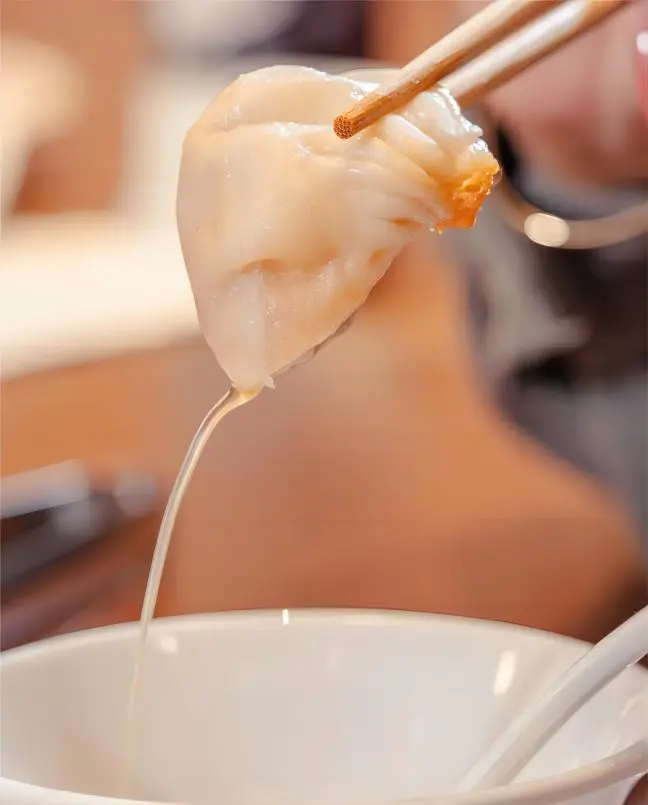
- Eating Method: Follow “first open the window, then sip the soup”. Bite a small hole in the skin, slurp slowly to avoid burns.
IV. Shanghai Xiaolongbao: A Culinary Memory
Piercing the translucent skin and watching amber soup flow reveals why locals call Xiaolongbao “a dim sum wrapping spring.” From Nanxiang workshops to Michelin-starred restaurants, this small dumpling balances heritage and innovation. As critic Cai Lan says: “It uses the simplest ingredients to interpret the most exquisite Oriental aesthetic.” The next time steam rises from a bamboo basket, pause—it’s more than aroma; it’s Shanghai’s culinary soul.
Discover more in our Shanghai Tourist Attractions Collection and China Cultural Heritage Tours Collection to plan your journey.