Sichuan Opera Face Changing: A Traveler’s Guide to Chengdu’s Most Magical Performance
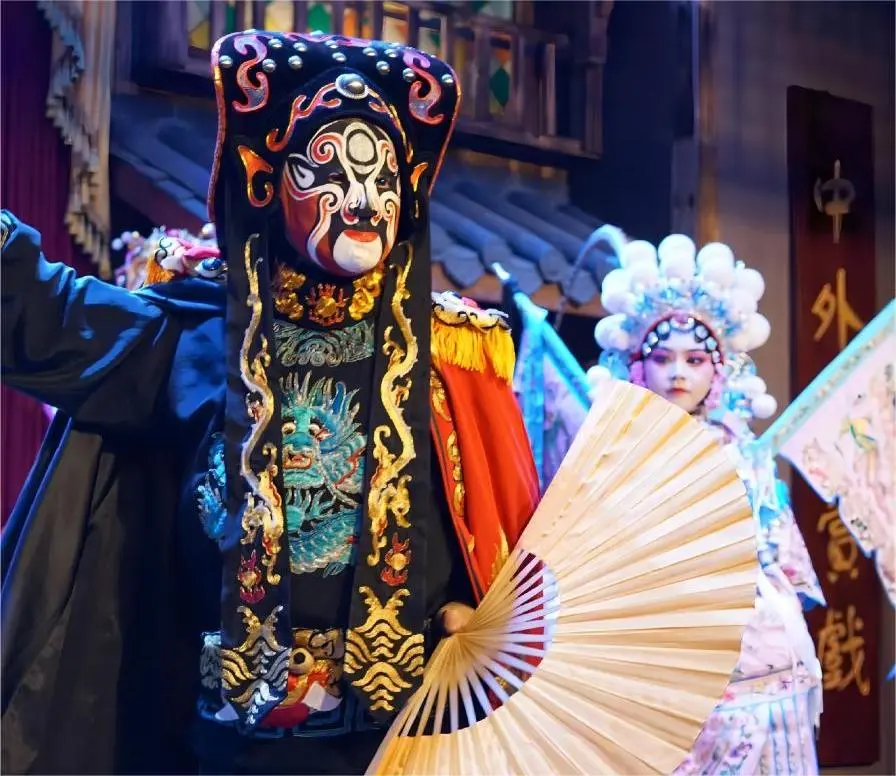
When two Greek travel influencers first witnessed the face-changing spectacle of Sichuan Opera (Chuanju) in a Chengdu teahouse, one of them gasped, “His face just changed—it’s like magic!”
That magical moment captures the very heart of Sichuan Opera face changing, one of China’s most mesmerizing intangible cultural heritage traditions. With a history spanning centuries, this art form blends music, dance, drama, and illusion—offering visitors an unforgettable glimpse into the soul of Southwest China.
1. The Origins of Sichuan Opera Face Changing: A Thousand Years of Magic
Sichuan Opera was born through cultural fusion during the Qing Dynasty, when eight vocal styles—including Yiyang, Qinqiang, and Huidiao—merged in the Sichuan Basin. Local Lantern Plays (Dengxi) then shaped it into a unique form featuring five distinct vocal styles:
High-Pitch (Gaoqiang), Kunqu, Huqin, Clapper Opera (Tanxi), and Lantern Melody (Dengdiao).
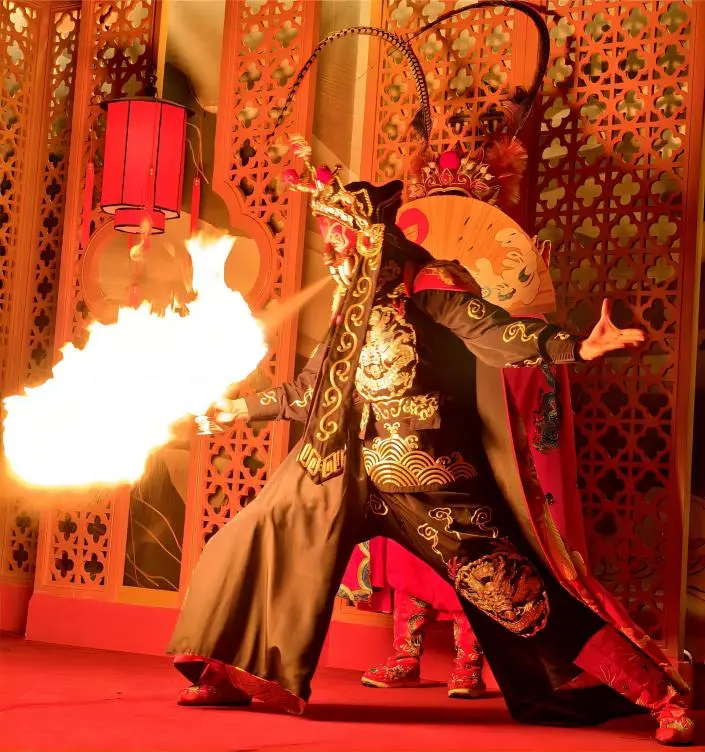
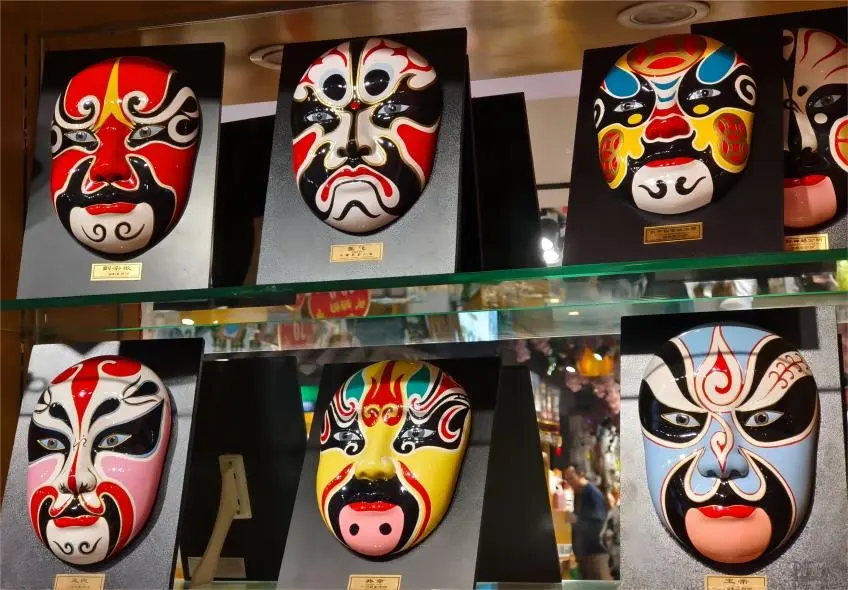
Among all its wonders, the face-changing (Bianlian) and fire-spitting performances are the most breathtaking. Their roots trace back to ancient Shu rituals and the mysterious masks of Sanxingdui. For over five hundred years, Sichuan Opera artists have refined these techniques into the stunning transformations audiences see today.
2. How the Face Changing (Bianlian) Performance Works
When a performer’s mask instantly shifts from gold to ghostly red under the stage light, it’s more than just a trick—it’s living art.
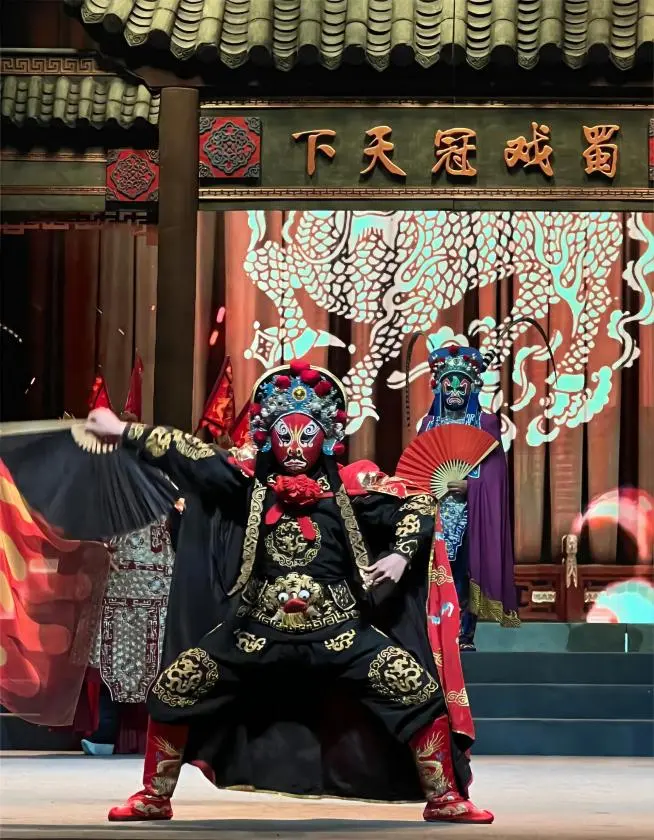
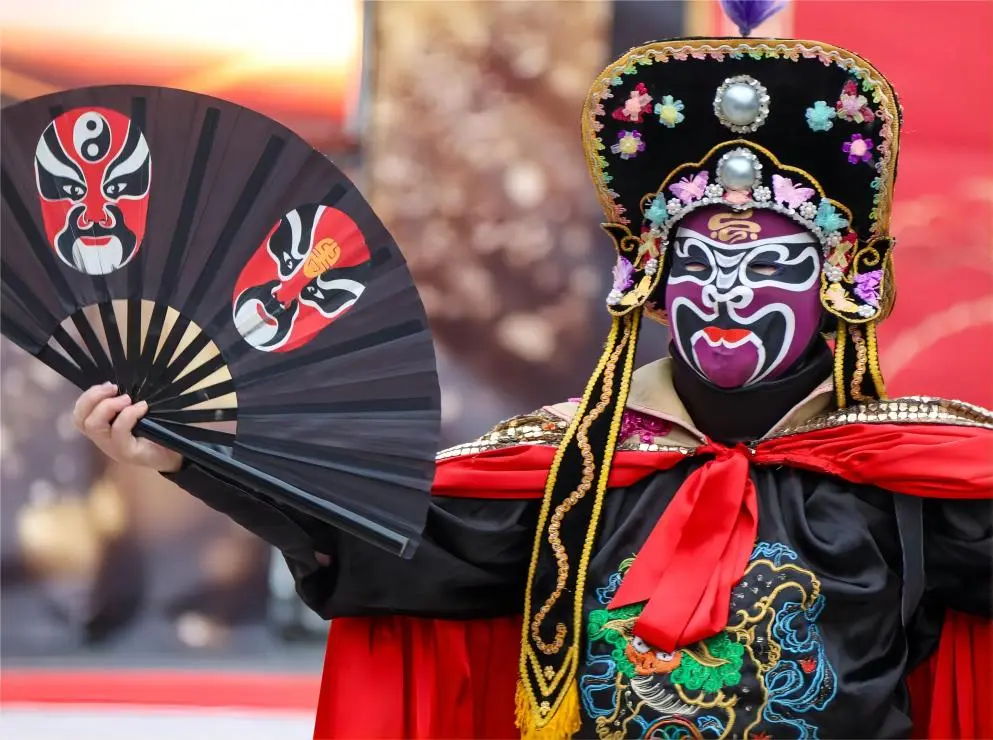
Face changing (Bianlian) is performed through three traditional techniques:
- Smearing Face (Malian)
- Blowing Face (Chuilian)
- Tearing Face (Chelian)
Elite performers can change up to 12 masks in less than half a second, each symbolizing a different emotion or spirit.
Another breathtaking act is fire-spitting, where the actor breathes out a blazing flame up to three meters long. It’s not just visual spectacle—it carries symbolic meaning, often representing divine power or emotional release in classic operas such as The Legend of the White Snake: Jinshan Temple.
3.Where to Watch Sichuan Opera Face Changing Shows in Chengdu
To experience the essence of Chuanju, don’t miss these must-see performances and venues:
🎭 Classic Operas
- The Legend of the White Snake – A graceful blend of martial arts and Bianlian, featuring the famous “water sleeve” movements.
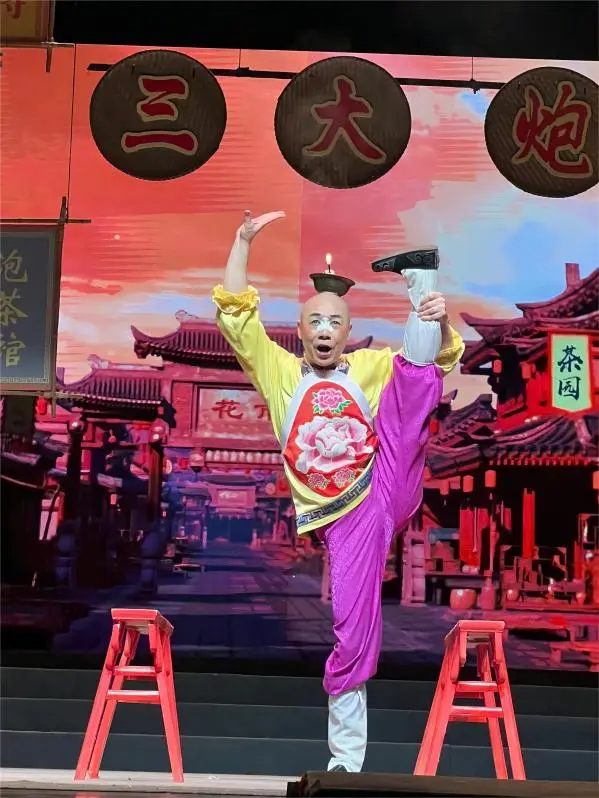
- Rolling Light (Gun Deng) – A humorous and acrobatic favorite where actors perform somersaults with a lit oil lamp balanced on their heads.
- Changing Face (Bianlian) – A modern masterpiece that uses 12 masks to express complex human emotions, winner of the prestigious Wenhua Award.
📍 Top Places to Watch Sichuan Opera Changing Shows in Chengdu
- Gaiwan’er Liyuan Theatre (People’s Park / Tianfu Square) – Known for close-up fire-spitting and face changing shows.
- Zigong Lantern World – Combines traditional Bianlian with light and digital art, creating a unique modern experience.
(Tip: Book early—these shows often sell out during weekends and festivals.)
4. Immersive Experience Tips for Visitors
Enhance your Chengdu Opera night with these insider recommendations:
- Arrive 30 minutes early to see the actors’ dressing room and mask painting process.
- Choose front-row seats for the best view of Bianlian transitions.
- Join a Face Mask Painting Workshop to design your own souvenir mask.
- Try the Opera Teahouse Package, where you can sip Gaiwan tea and enjoy short plays (Zhezi Xi) like Autumn River.
5. Cultural Insights: Symbolism Behind the Masks
| Color | Meaning in Sichuan Opera Face Paint |
|---|---|
| Red | Loyalty and bravery |
| Black | Integrity and uprightness |
| Gold | Gods, spirits, and supernatural beings |
Safety tip: During fire-spitting acts, front-row guests should keep a safe distance and avoid leaning forward—bring a moist towel if you’re sitting close!
Etiquette: Feel free to catch a handkerchief tossed by an actor, but never touch their makeup or mask—it’s part of the sacred stage ritual.
6. The Modern Revival of Sichuan Opera
Contemporary Chuanju continues to evolve.
At the 2025 Sichuan Opera Festival, Dust Settles merged Tibetan epic storytelling with Gaoqiang, while The Legend of Funu became a youth favorite for its innovative stage design. These creative interpretations prove that Sichuan Opera remains alive, relevant, and full of artistic vitality.
When visitors pose in Hanfu along Chengdu’s Kuanzhai Alley, imitating the iconic Bianlian gestures, they join a living dialogue between tradition and innovation—the timeless soul of Sichuan Opera.
🌟 Final Note
If you’re planning a trip to Chengdu, watching a Sichuan Opera face changing show is a must-do cultural experience.
It’s more than entertainment—it’s a thousand years of art, mystery, and creativity condensed into a single mesmerizing performance.
Discover more in our Chengdu Tourist Attractions Collection and China Cultural Heritage Tours Collection to plan your journey.