Exploring Tibetan Thangka: A Millennial Artistic Treasure at Your Fingertips
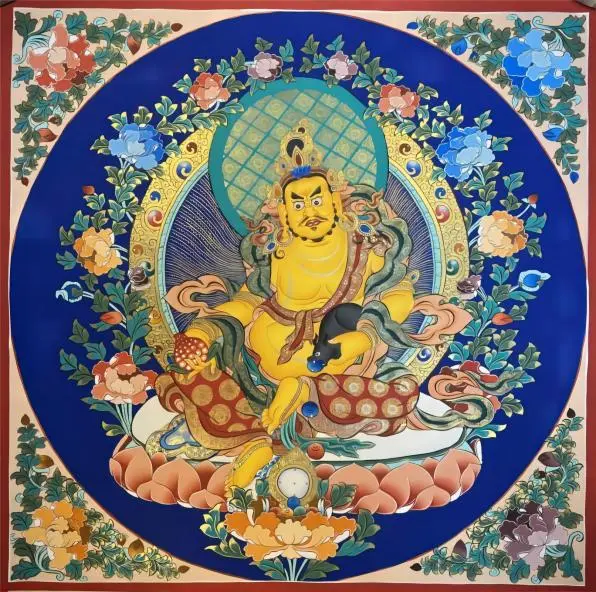
As you stroll along Barkhor Street in Lhasa, Tibet, or pause in the exhibition halls of the Regong Art Museum in Qinghai, you will undoubtedly be captivated by the richly colored, intricately detailed scroll paintings—this is Tibetan Thangka, a portable Buddhist painting painted on cloth with mineral pigments. In 2009, it was inscribed on the UNESCO Representative List of the Intangible Cultural Heritage of Humanity. For foreign visitors, Thangka is more than a visual feast; it is a key to understanding the spiritual world of the Tibetan people. Today, Thangka art has moved beyond traditional painting, integrating into modern daily life in more accessible forms.
I. Tibetan Thangka in the River of History: From Sacred Relic to Cultural Encyclopedia
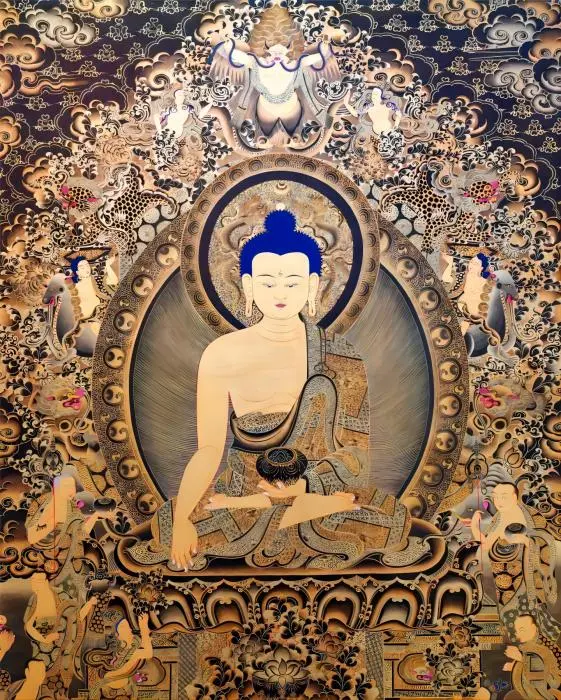
The origins of Thangka trace back to the 7th-century Tubo Kingdom. With the introduction of Buddhism to Tibet, painting techniques from India and Nepal merged with local aesthetics, gradually forming a unique artistic system. The Tibetan word “Thangka” means “flat and broad canvas.” Initially a visualization tool for Buddhist practitioners, it later evolved into a “Tibetan encyclopedia”, documenting knowledge spanning history, medicine, and astronomy.
The Three Competing Schools of Painting
- Karma Gadri School (Garzê, Sichuan): Founded in the 16th century by Living Buddha Namkha Tashi, it absorbed the meticulous Chinese gongbi style with rich colors. Famous for the Jataka Stories from the Wish-Fulfilling Vine suite, it blends the solemnity of Indian-Nepalese tradition with the dynamism of the Han style.
- Regong Art (Tongren, Qinghai): Emerging in the Amdo region in the 13th century, represented by works like the Thousand-Armed Guanyin and Manjushri Bodhisattva. Its colors are bright like the plateau sunshine, and its lines flow like the Yellow River waves, earning it the nickname “Oriental Art Pearl.”
- Menri School (Lhoka, Tibet): Founded in the 15th century by Menla Döndrup Gyatso, it inherits the Indo-Nepalese style while integrating Tibetan landscapes into the background. Many surviving murals in the Potala Palace are masterpieces of this school.
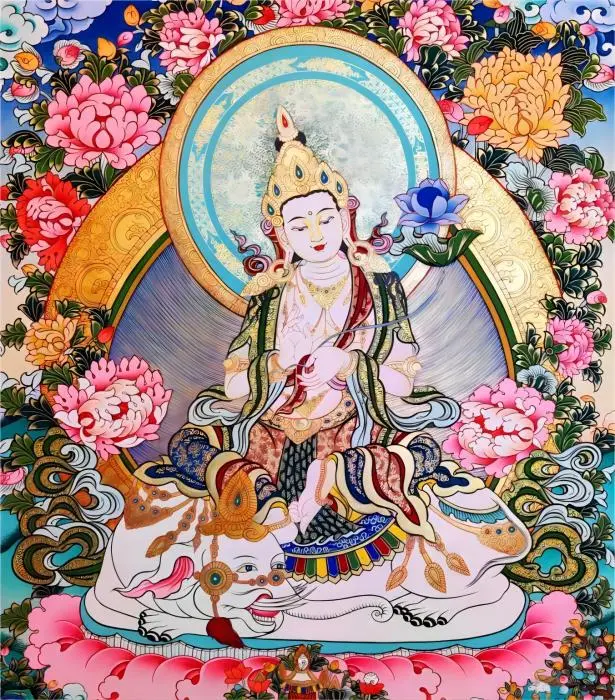
II. Tibetan Thangka Artisan’s Fingertip Magic: The Birth of a Deity from Canvas
Creating a Thangka involves nine procedures and up to a hundred days of meticulous practice:
- Canvas Preparation: Pure cotton cloth or sheepskin is primed with a mixture of chalk powder and glue, polished repeatedly until smooth like a mirror.
- Sketching the Composition: Following the Canon of Iconometry, precise proportional outlines are drawn with charcoal. The main deity occupies the center, with surrounding deities arranged like stars.
- Coloring and Blending: Mineral pigments like lapis lazuli (blue), coral (red), and gold are applied. Techniques such as flat wash and shading create depth. For instance, garments of the Green Tara require up to seven layers to achieve translucency.
- Lining and Eye-Opening: Contours are outlined with a sable brush using the “Iron Wire Line” technique. Finally, a senior master “opens the eyes,” symbolically breathing life into the deity.
Inheritance of the Craft: Thangka painters study the Canon of Iconometry from a young age, often undergoing ten years of rigorous training before graduation. Today, academies in Regong still uphold the master-apprentice tradition. When Dean Shawu Jiantuo guides apprentices in painting the Sukhavati (Pure Land), they first chant prayers before touching the brush to canvas.
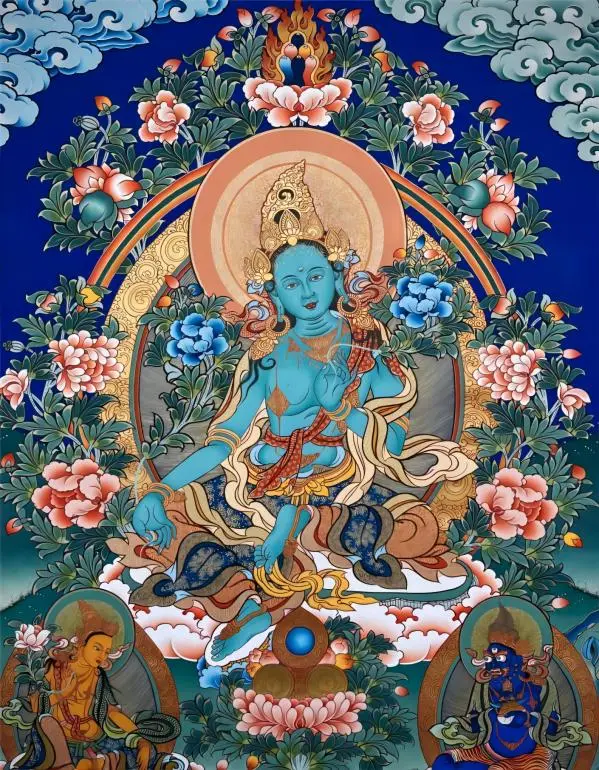
III. Must-See Tibetan Thangka Classics: A Visual Epic Across Time
- The Two Saints and Six Ornaments (Lanka Gyal Thangka): Created by 17th-century “Magical Painter” Lanka Gyal, it uses perspective techniques to make the Buddha and disciples appear to leap from the canvas, hailed as a “pioneer of cubism.”
- Milarepa (Drigung Embroidered Thangka): An embroidery master from Maizhokunggar used horsehair skeletons and silk threads to create three-dimensional reliefs, with every muscle fiber visible.
- Qamdo Karma Gardri Thangka: Features cinnabar warm-color blending, where snow mountains and lakes display varying hues with changes in light—a true “breathing painting.”
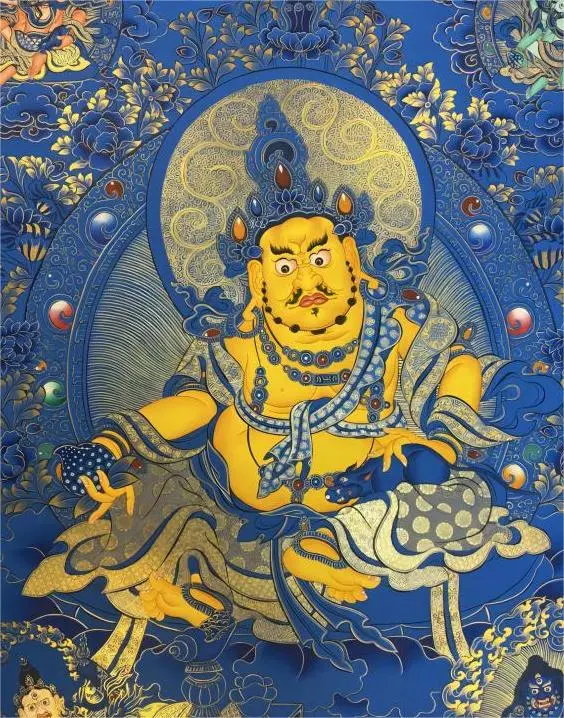
IV. From Canvas to Daily Life: Modern Tibetan Thangka Interpretations
While traditional Thangka exists primarily as scroll paintings, modern adaptations make it accessible in daily life:
- Jewelry Series: Miniature deity embroideries or paintings on silver pendants, paired with lapis lazuli or turquoise beads. Bracelets incorporate auspicious motifs like the Eight Auspicious Symbols or the Swastika, crafted with enamel or gilding.
- Lifestyle Objects: Tea sets, fragrance sachets, and bone china cups painted with Thangka colors, sometimes imprinted with the Six-Syllable Mantra, allowing daily life to echo the spiritual practice.
These modern designs retain Thangka’s core aesthetic while lowering the barrier for collectors to enjoy a “portable Buddhist shrine” at home.

V. Experience and Collection: Taking Faith Home
Immersive Experience:
- Qinghai Regong Art Academy: Visitors can don Tibetan attire and create a mini-Thangka under painters’ guidance, experiencing the Zen philosophy of “one brushstroke, one world.”
- Lhasa Barkhor Street: Master Tsetan Namgyal demonstrates the “Split-Thread Embroidery” technique, using silk threads finer than human hair to embroider cinnabar marks on the Buddha’s brow.
Collection Guide:
- Look for the “Intangible Cultural Heritage Inheritor” certificate to avoid machine-printed imitations.
- Traditional mineral pigment Thangkas can last thousands of years but must be protected from light and moisture.
- Recommended purchase: “Tsakyi Lhamo Thangka Necklace”, combining adornment and blessing.

VI. Travel Tips: A Bridge of Respect and Understanding
- Thangka painting is a form of spiritual practice; please avoid noise and do not touch unfinished works.
- Obtain painter permission before photographing; some schools prohibit flash photography.
- For deeper understanding, consult Thangka Art: The Tibetan “Encyclopedia” of Painting.
The beauty of Thangka lies in using humble materials to carry profound faith. Whether as wall scrolls or miniature amulets, the art conveys the same story: Art never strays from life, and faith always walks hand-in-hand with beauty. Step onto the plateau, and let this blessing, spanning a thousand years, become the indelible mark of your cultural journey, while experiencing the timeless beauty of Tibetan Thangka up close.
Discover more in our China Cultural Heritage Tours Collection to plan your journey.