The Yonghe Lama Temple: A Journey Through Imperial Faith and Cultural Harmony
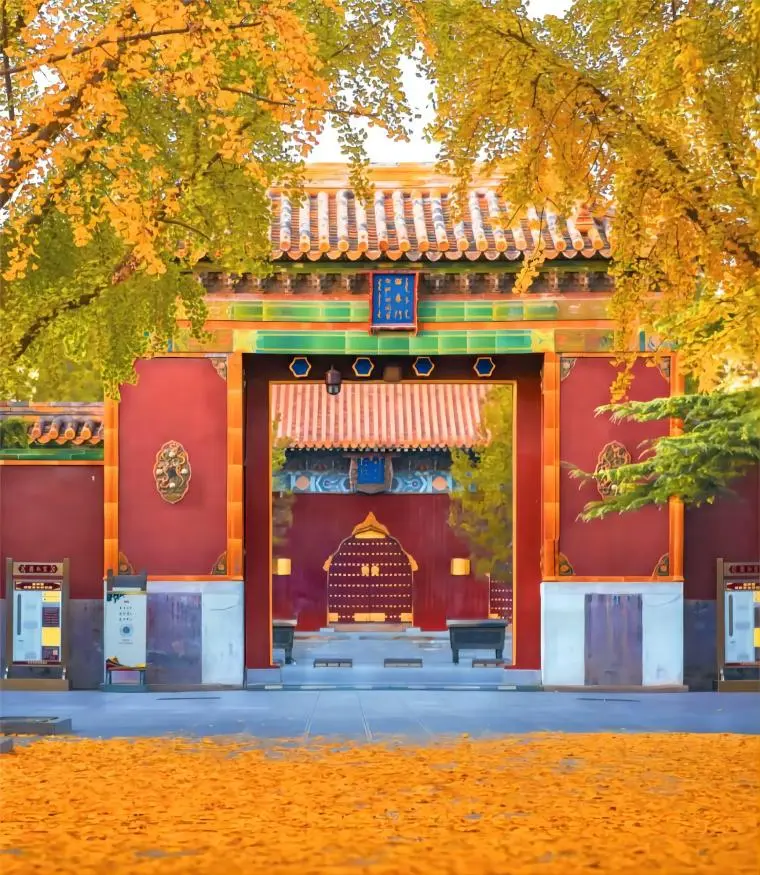
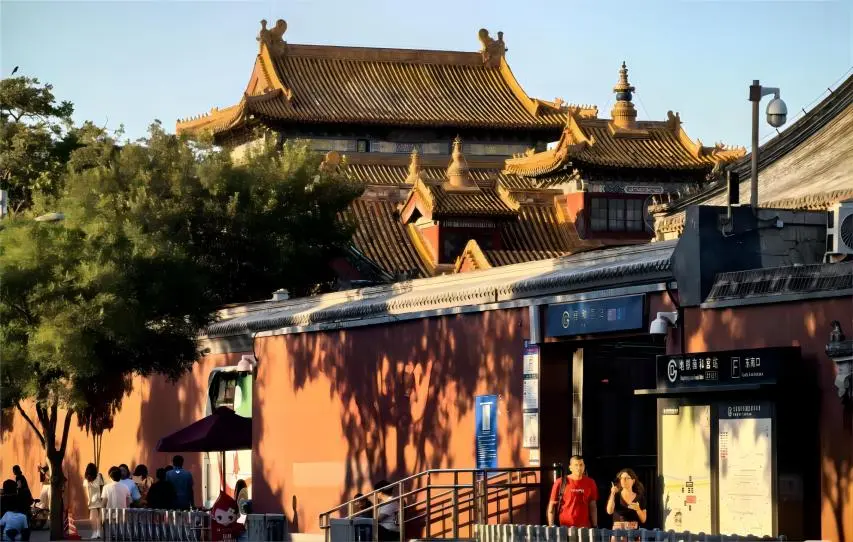
Tucked away in the hutongs of Beijing’s Dongcheng District, the Yonghe Lama Temple stands as one of China’s most beautiful and culturally rich Buddhist temples. Once an imperial residence, this complex—featuring yellow glazed tiles, red walls, and curling eaves—fuses Han, Manchu, Mongolian, and Tibetan influences into a living symbol of China’s multicultural heritage. For travelers, it offers both serenity and a deep insight into the spiritual and artistic legacy of the Qing Dynasty.
I. From Prince’s Mansion to Imperial Monastery
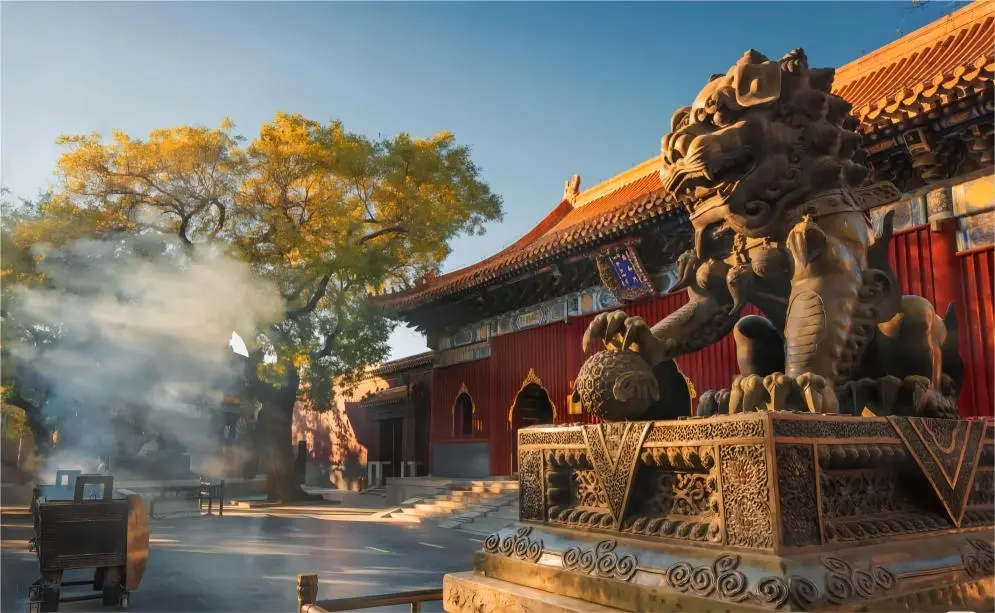
Built in 1694 during the reign of Emperor Kangxi, the Yonghe Lama Temple began as the residence of his fourth son, Prince Yinzhen (later Emperor Yongzheng). This modest compound would later become a site of imperial and religious significance.
- In 1725, after Yinzhen ascended the throne, the mansion was elevated to a temporary imperial palace and renamed “Yonghe Gong.”
- In 1735, Emperor Yongzheng’s coffin rested here after his death, and the hall tiles were replaced with the imperial yellow seen in the Forbidden City.
- Emperor Qianlong, born in this very residence, later transformed it into a monastery of the Gelug school of Tibetan Buddhism in 1744. This act blended politics and faith—reflecting the Qing policy of promoting Tibetan Buddhism to foster unity among Mongolian and Tibetan peoples.
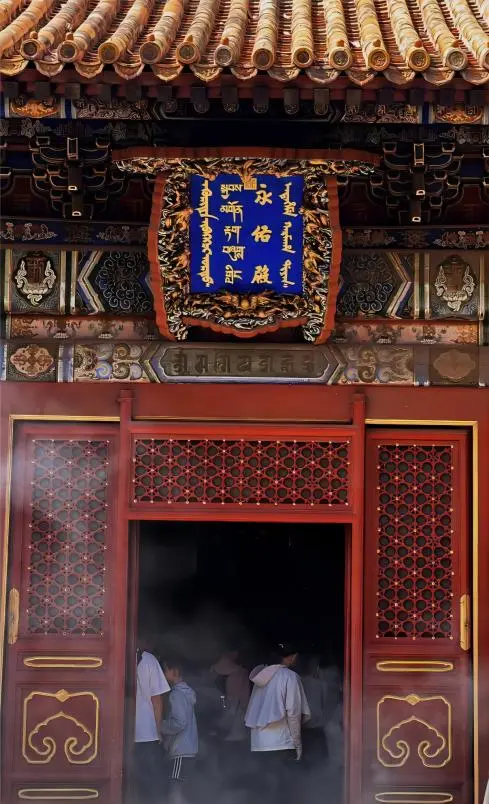
Today, visitors can still read Emperor Qianlong’s vision of harmony engraved on the “Lama Shuo” Stele, written in four scripts—Han, Manchu, Mongolian, and Tibetan—testifying to centuries of cultural inclusiveness.
II. Architecture and Art: A Living Museum of Multicultural Beauty
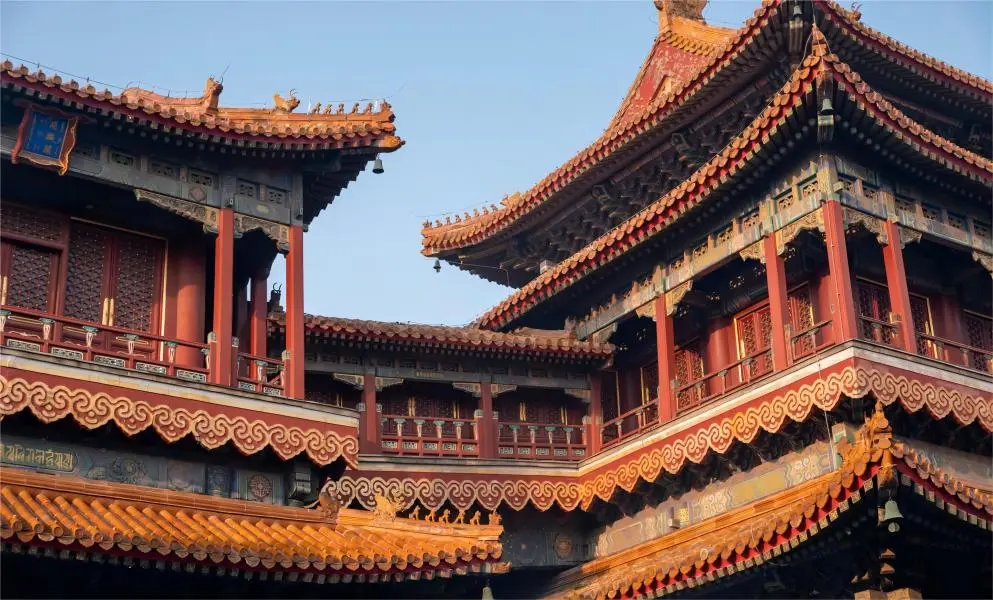
The Yonghe Lama Temple stretches along a central axis of seven courtyards and over 20 halls, embodying the symmetrical precision of Han architecture combined with Tibetan symbolism.
- Hall of Heavenly Kings (Tianwang Dian): The temple’s main gate, home to the Maitreya Buddha and the Four Heavenly Kings. Bronze incense burners from the Qianlong era still emit a faint scent of history.
- Hall of Eternal Protection (Yongyou Dian): Once Emperor Yongzheng’s living quarters, now housing the Amitayus, Medicine, and Lion’s Roar Buddhas.
- Hall of the Wheel of Law (Falun Dian): Crowned by five golden stupas, it features the breathtaking 500 Arhat Hill, carved from fragrant Phoebe zhennan wood.
- Pavilion of Ten Thousand Happiness (Wanfu Ge): The temple’s crown jewel, sheltering a 26-meter-tall Maitreya Buddha carved from a single piece of white sandalwood. Imported from Nepal and buried 8 meters deep, it’s listed in the Guinness World Records as the world’s largest wooden statue of its kind.
One of the most fascinating features is the Golden Urn System, instituted by Emperor Qianlong to ensure fairness in the reincarnation of Tibetan and Mongolian lamas. The urn preserved here mirrors the one in Lhasa’s Jokhang Temple—an enduring symbol of both faith and governance.
III. Yonghe Lama Temple Today: Where History Meets Modernity
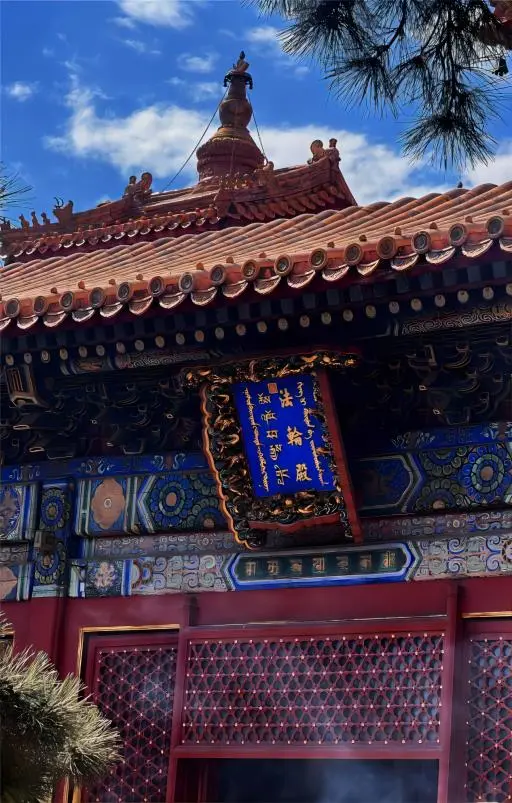
Today, the Yonghe Lama Temple functions as a vibrant national heritage site and an active center of Tibetan Buddhist art and education. The annual Laba Congee Festival, held on the eighth day of the twelfth lunar month, draws thousands of visitors. The temple also embraces digital culture, offering virtual tours, online lectures, and educational exhibits on Buddhism and traditional Chinese philosophy.
Nearby, travelers can wander down Wudaoying Hutong, a chic lane filled with teahouses and boutiques—a delightful blend of old Beijing charm and youthful creativity.
If you’re planning your Beijing itinerary, consider adding the Yonghe Lama Temple to your route. For more inspiration, explore other highlights on our Beijing Tourist Attractions page.
Visitor Tips
- Opening Hours: 09:00–16:30 (last entry at 16:00)
- Tickets: Around ¥25 (check for updates on official channels)
- Best Time to Visit: Early morning on weekdays for fewer crowds
- Dress Code: Modest clothing is appreciated in all temple areas
Amid the lively streets of Beijing, the Yonghe Lama Temple offers a serene sanctuary filled with devotion and history. Wisps of fragrant incense curl through the courtyards, carrying the prayers and hopes of visitors—young and old alike. Standing before the majestic halls, people light incense and bow with quiet reverence. The rising smoke seems to bridge the human and the divine, a gentle reminder of our timeless wish for peace, health, and happiness.