Hongluo Temple Beijing: A Thousand-Year Buddhist Sanctuary for Blessings and Inner Peace
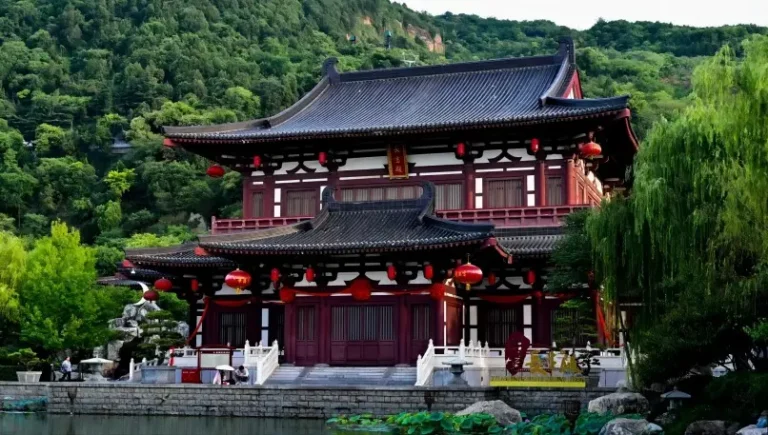
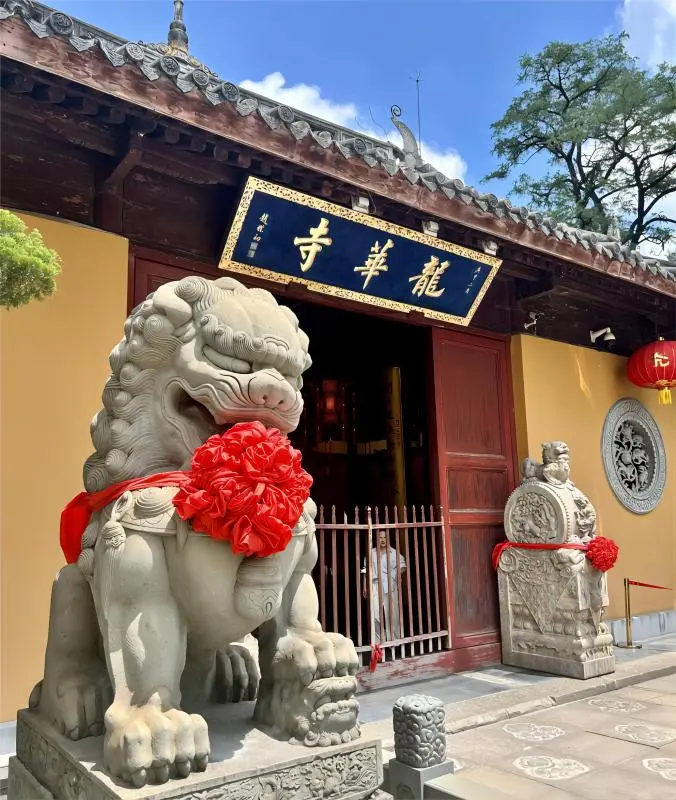
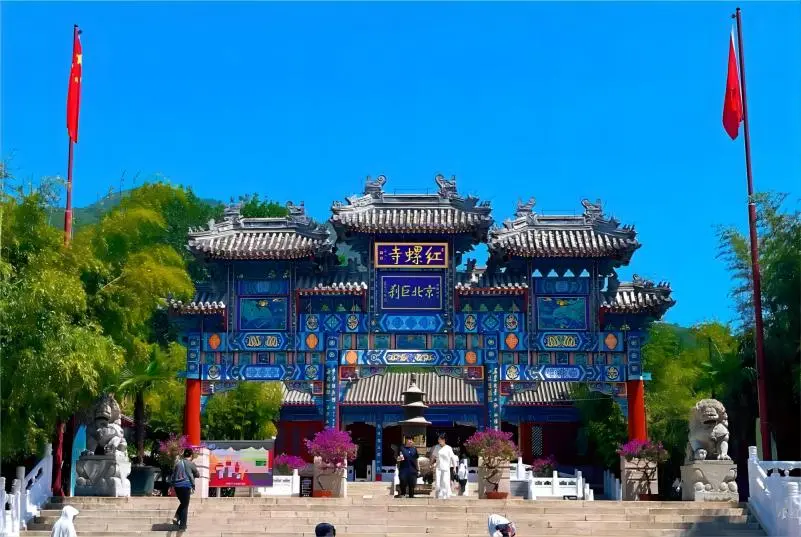
Tucked away in the Huairou mountains, about 55 kilometers from central Beijing, the thousand-year-old Hongluo Temple (Red Snail Temple) has stood since the fourth year of the Xiankang reign of the Eastern Jin Dynasty (338 AD). Known as “an ancient temple hidden among emerald waves,” it offers visitors a serene world where history, faith, and nature intertwine.
As the birthplace of Buddhism in Northern China and honored as the “Foremost Ancient Temple of Northern Beijing,” it remains a spiritual haven for those seeking prayers, blessings, and peace of mind.
I. A Thousand Years of Buddhist Heritage: From Royal Monastery to Center of Blessings
Originally named Daming Temple, Hongluo Temple was expanded into a royal prayer site during the reign of Emperor Taizong of the Tang Dynasty. Genghis Khan’s stone inscription in the Yuan Dynasty confirmed its royal status, and it was later renamed Huguozifu Chan Temple during the Ming Dynasty’s Zhengtong era.
What truly endeared the temple to the people, however, is the enduring legend of the Red Snail Immortals—two celestial maidens who transformed into red snails and dwelled in the spring water before the temple, guarding the region’s peace. This legend inspired the name Hongluo Mountain and Hongluo Temple, infusing the site with warmth and human devotion beyond its monastic roots. Today, it remains one of Northern China’s most revered temples for blessings and prayers.
Three natural wonders reflect this heritage:
- The Imperial Bamboo Forest: Planted by an eminent Yuan monk with 613 bamboo shoots, the grove gained fame when Emperor Kangxi once stopped to count them. Their evergreen resilience mirrors Buddhist perseverance.
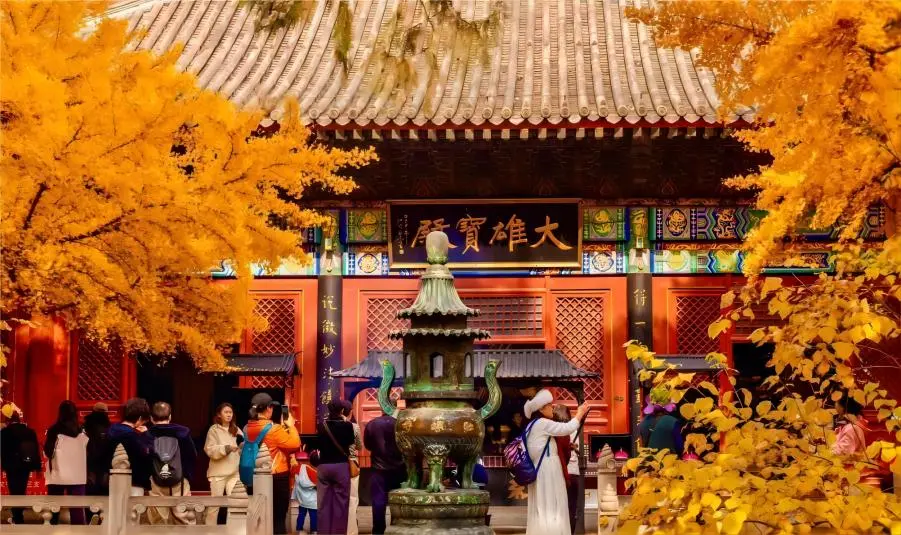
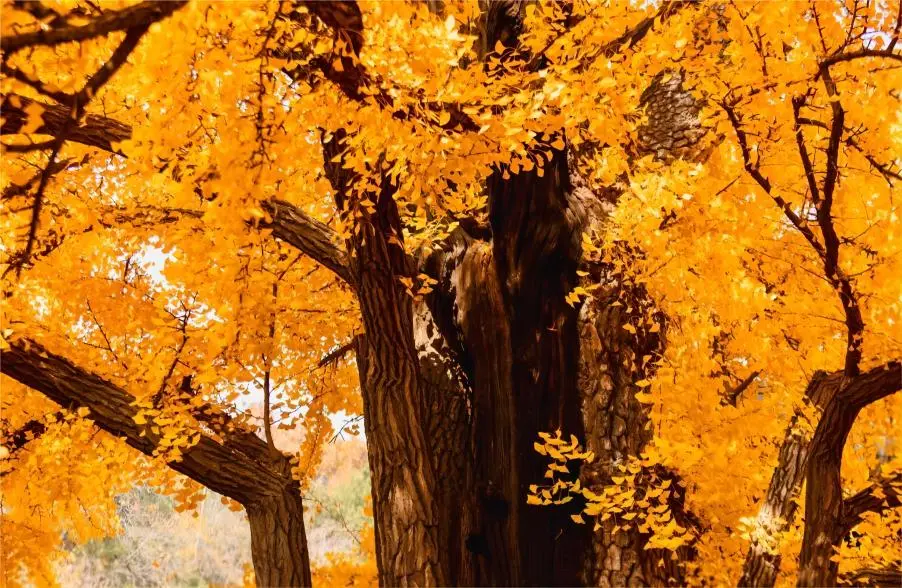
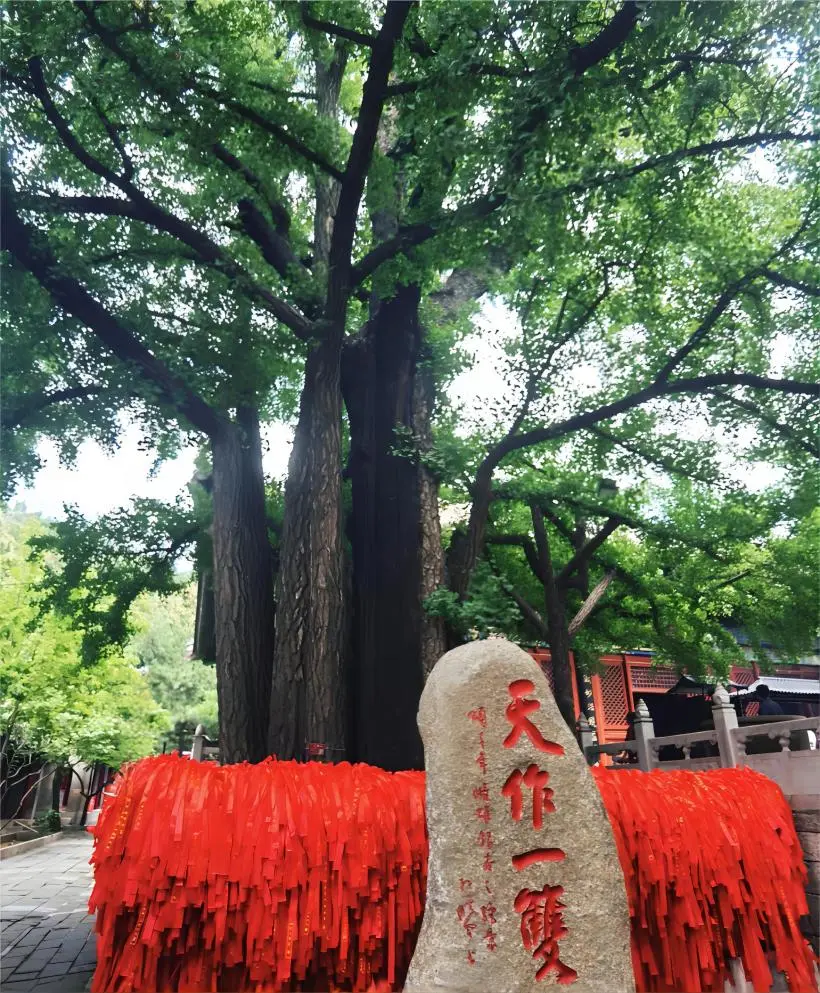
- The Male and Female Ginkgo Trees: Over 1,100 years old, these trees in front of the Grand Hall symbolize eternal harmony—the male blossoms without fruit, the female fruits without flowers.
- Wisteria Clinging to Pine: An 800-year-old pine and wisteria vine form a green canopy of over 300 square meters, bursting with purple blooms in spring and pinecones in autumn.
II. Praying and Making Wishes at Hongluo Temple: The Blessing Traditions
Hongluo Temple’s spiritual magnetism lies in its wish-granting culture. A popular saying goes, “Yonghe Temple for men, Hongluo Temple for women” (Nan Yonghe, Nü Hongluo), highlighting its fame as a blessing site for love, marriage, and fertility.
- Prayers for Marriage: Young women clutching red strings often kneel before the Guanyin Hall to pray for destined love. Legend holds that the Red Snail Maiden once descended to help couples find their match, making this temple a powerful site to pray for love and harmonious relationships.
- Blessings for Fertility: Couples seeking children offer flowers and fruits before Guanyin, stating their names and addresses when making vows. Once wishes come true, they return to express gratitude. During the Qing Dynasty, Master Jixing’s Field of Blessings System (Futian Zhi)—which provided congee, flour, and medicine—strengthened the temple’s role as a folk symbol of fulfilled wishes and compassion.
III. Visiting Hongluo Temple: Spiritual Healing and Cultural Experience
For travelers, Hongluo Temple offers far more than religious rituals—it provides a holistic spiritual and cultural experience.
- Harmony of Nature and Architecture: Surrounded by vast pine forests, the temple offers changing seasonal views—spring cherry blossoms, autumn maples, and snow-draped roofs in winter. A 2-kilometer mountain trail leads to panoramic views of the Huairou Reservoir.
- Cultural Immersion: Visitors can witness monks’ morning chanting, attend Buddhist philosophy lectures, or join Zen meditation sessions for inner calm. The temple’s vegetarian restaurant serves dishes like Arhat vegetables and mushroom noodles—simple yet deeply mindful.
- Seasonal Activities: From the Spring Festival temple fair with dragon and lion dances to the Buddha’s Birthday assembly and the Autumn Ginkgo Festival, each visit offers a fresh spiritual flavor.
IV. Blessing Souvenirs and Temple Gifts: Bring Home Your Good Fortune
- Consecrated Items: Near the Guanyin Hall, visitors can find blessed prayer beads, amulets, and marriage charms, perfect as meaningful souvenirs of one’s spiritual journey.
- Cultural Derivatives: Handmade ginkgo-leaf bookmarks and wisteria-patterned silk scarves combine beauty with symbolic blessings.
- Temple Cuisine: Try the temple’s homemade Fuling (Poria cocos) cakes or walnut shortbread—traditional treats wrapped in rustic paper, ideal as gifts symbolizing health and gratitude.
V. How to Visit Hongluo Temple, Beijing: Hours, Tickets, and Travel Tips
- Address: No. 2 Hongluo East Road, Huairou District, Beijing.
- Opening Hours: 8:30 AM – 5:30 PM.
- Transportation:
- By Car: Take Jingcheng Expressway to Exit 14 (approx. one hour).
- By Bus: Direct Bus No. 867 from Dongzhimen to Hongluo Temple.
- Admission: ¥54 (includes mountain trail).
- Tips: Visit early (before 7:00 AM) for tranquility. Meditation sessions require advance booking; weekends are busiest.
The timeless charm of Hongluo Temple lies not only in its thousand-year Buddhist heritage but also in its ability to offer inner peace and blessings to those who seek them. As you pass through its gates and hear the whisper of bamboo leaves, you may find that the true blessing here is not in the wish you make—but in the calm awakening that follows. For more inspiration, explore other highlights on our Beijing Tourist Attractions page.
For travelers seeking more spiritual and blessing experiences, our Temple & Blessing Experience Guide introduces several renowned temples where you can meditate, make wishes, and find inner balance.