Beijing Bell and Drum Towers: A Timeless Landmark on the Central Axis
Rising at the northern end of the Beijing Central Axis, the Beijing Bell and Drum Towers stand as two of the city’s most iconic historic sites. For more than seven centuries, these twin towers were the heartbeat of old Beijing, marking the passing of time and shaping the rhythm of life in the ancient capital. Today, they remain essential stops for anyone exploring Beijing’s cultural heritage.

I. History of the Beijing Bell and Drum Towers
Beijing’s Bell and Drum Towers trace their origins to 1272, when they served as the timekeeping center of Yuan Dadu. In 1420, Emperor Yongle repositioned the towers to the northern end of the Central Axis, establishing the classic layout of “Drum in the South, Bell in the North.”
Rebuilt several times through the Ming and Qing dynasties, the two towers—each rising 47.9 meters—became enduring symbols of the capital’s order and rhythm. Their bells and drums once marked every dawn and dusk, guiding daily life for centuries.
After their timekeeping role ended in 1924, the towers transformed into cultural landmarks and now play a key role in Beijing’s UNESCO Central Axis heritage application, standing as silent witnesses to the city’s evolution from imperial capital to global metropolis.
II. What Makes the Bell and Drum Towers Special
1. Ancient Timekeeping at Its Peak
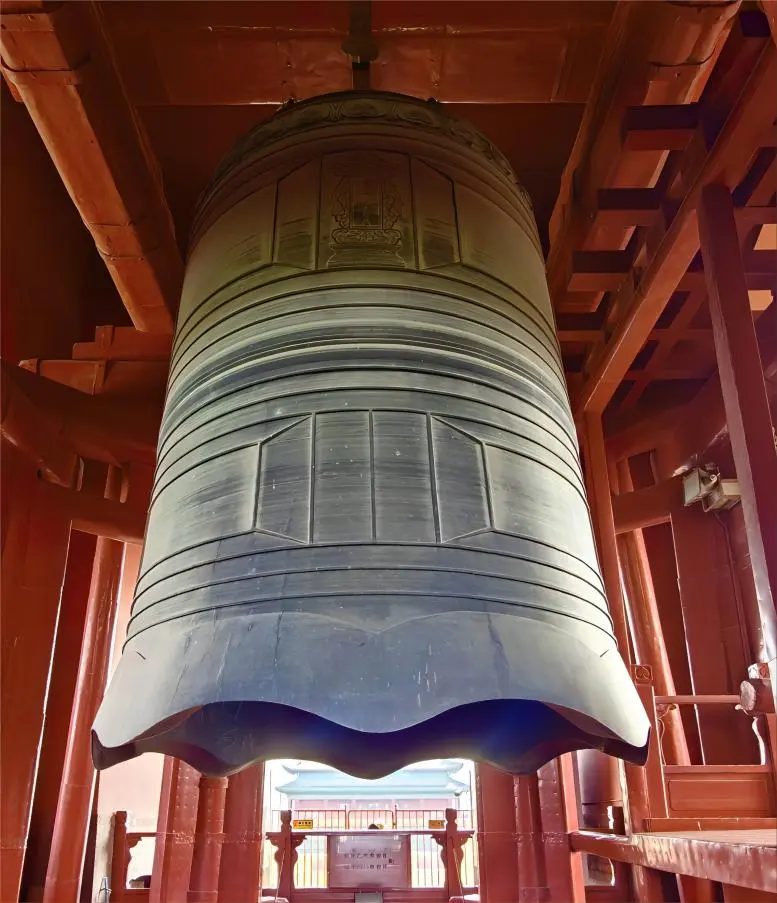
The Drum Tower, once home to a main drum and 24 smaller drums representing the solar terms, played its rhythms at sunset to mark the night. At dawn, the Bell Tower rang out across the city. The massive bronze bell inside — cast during the Yongle reign — weighs 63 tons and earned the title “King of Ancient Bells.” Its deep echoes once traveled several kilometers across the old capital.
Timekeeping followed precise patterns: 108 strikes, symbolizing a complete cosmic cycle and reflecting the traditional philosophy of “Harmony between Heaven and Humanity.”
2. Architectural Beauty: Power Meets Elegance
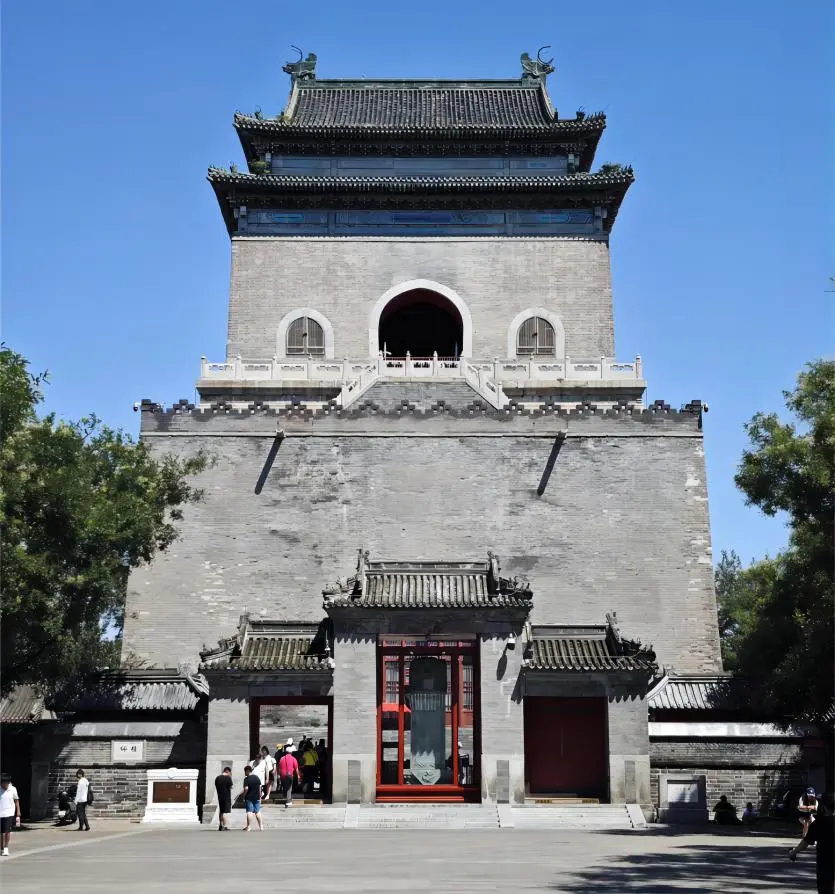
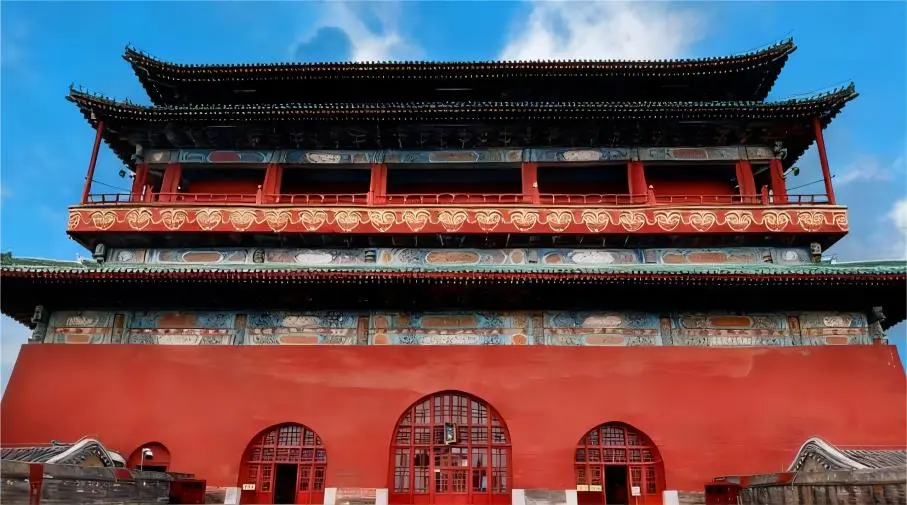
The Drum Tower showcases grand ancient timber architecture with striking red walls and elaborate dougong brackets. The Bell Tower, sturdier and more restrained, uses brick-and-stone construction with refined imitation-wood carvings.
Both structures feature double-eaved hip-and-gable roofs, an engineering masterpiece known for its symmetry, stability, and classic Chinese aesthetics.
3. Living History in the Heart of Beijing
Beyond their imperial function, the towers were once the vibrant center of Beijing life. Since the Yuan Dynasty, the surrounding neighborhood bustled with teahouses, markets, theaters, and small shops. Traces of history still remain — including knife marks left by Japanese soldiers during the 1900 invasion.
Together, the bell’s deep resonance and the drum’s historic wounds tell stories of resilience, memory, and cultural endurance.
III. Top Things to Do at the Bell and Drum Towers
1. Digital Light & Shadow Show: “The Story of Time”
Inside the Drum Tower’s exhibition hall, a digital interactive display recreates ancient timekeeping scenes. You can “strike” a virtual drum or experience how the bell once echoed across the city. From the upper platform, enjoy a wide-angle view of the Beijing Central Axis, aligned perfectly through the seasons.
2. Drum Performance: Feel the Pulse of Old Beijing
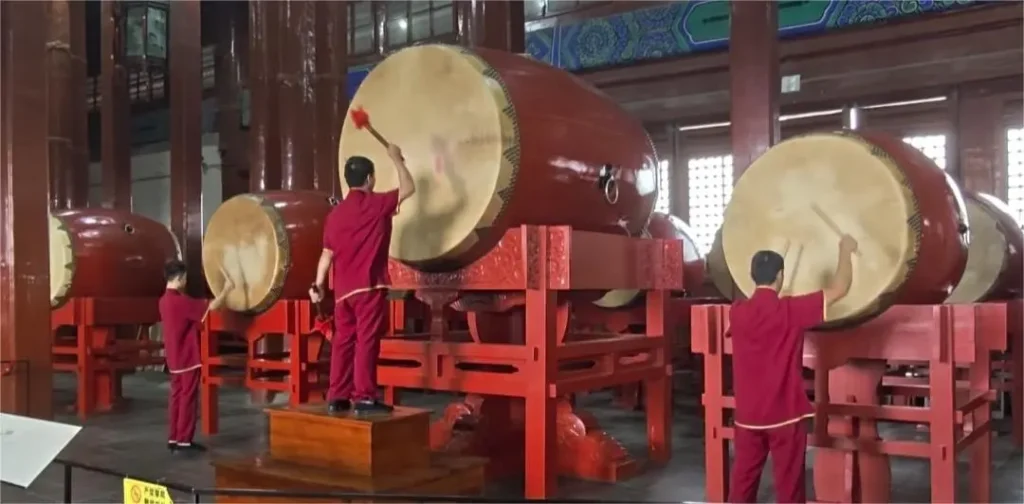
Daily live drum performances (11:00 AM & 2:30 PM) tell the story of the 24 solar terms through sound — from spring’s liveliness to winter’s solemn cadence. It’s one of the most immersive cultural experiences in Beijing.
3. Explore the Neighborhood: Old Beijing Charm All Around
After visiting the towers, take a leisurely walk through the surrounding hutongs:
- Gulou West Street: Classic photo spots with red walls and historic facades
- Yandai Xiejie: One of Beijing’s oldest streets
- Local snacks: Yaoji Stewed Liver (Chao Gan), Wenyu Cheese
- Shichahai: Lakeside views, paddle boats, and traditional courtyard life
This area is one of the best places to feel authentic Old Beijing atmosphere.

IV. Visiting the Bell and Drum Towers: Tickets, Hours & Transport
Tickets:
- Drum Tower: ¥20
- Bell Tower: ¥10
- Combined Ticket: ¥30
Opening Hours:
- Peak Season (Apr 1–Oct 31): 9:30 AM–5:30 PM
- Off-Peak Season (Nov 1–Mar 31): 9:30 AM–4:30 PM
How to Get There:
Take Subway Line 8 to Shichahai Station (Exit A2), then walk 239 meters.
Final Thoughts
The beijing Bell and Drum Towers are more than historic buildings — they are cultural storytellers, echoing the heartbeat of the ancient capital. Whether you love history, architecture, photography, or simply exploring authentic Old Beijing, this is a must-visit destination that brings 700 years of heritage to life.