Niujie Mosque Beijing: A Thousand-Year Islamic Cultural Landmark
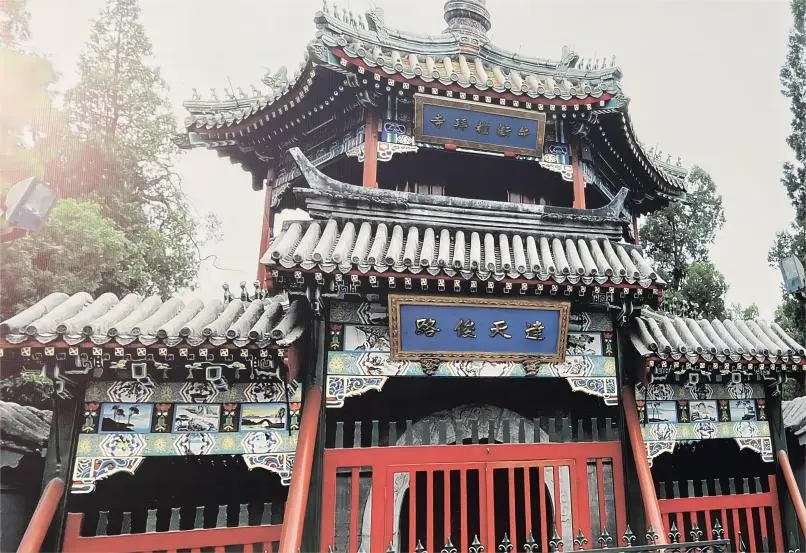
The Niujie Mosque , founded in 996 AD during the Liao Dynasty, is Beijing’s largest and oldest Islamic architectural complex. Over a millennium, it has become a living museum showcasing the cultural integration of Chinese and Arab traditions.
Niujie Mosque History and Architecture
The mosque was established under the guidance of the Arab scholar Nasruddin. During the Yuan Dynasty, it expanded significantly, and in 1474 (Ming Chenghua period), it received the official name Libaisi (Temple of Prayer) from imperial decree, solidifying its status as a recognized religious sanctuary.
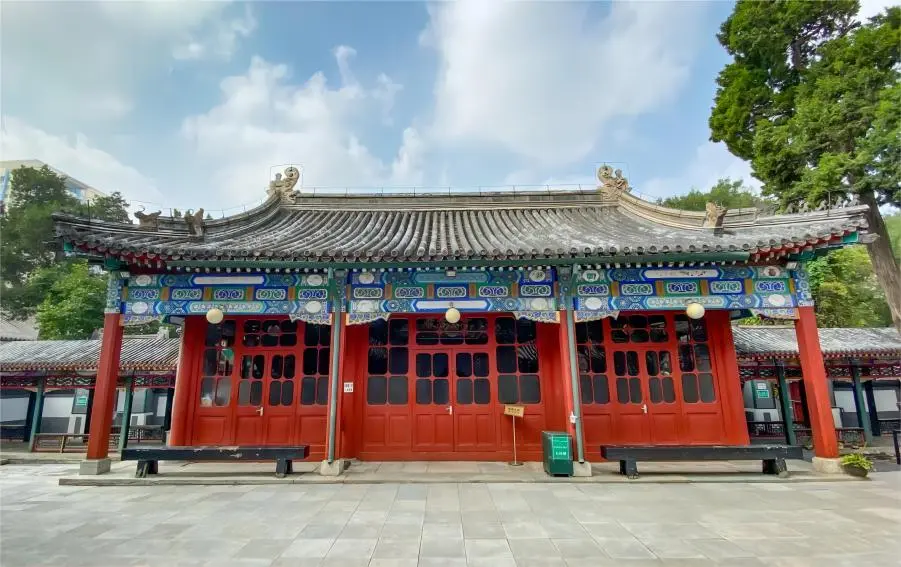
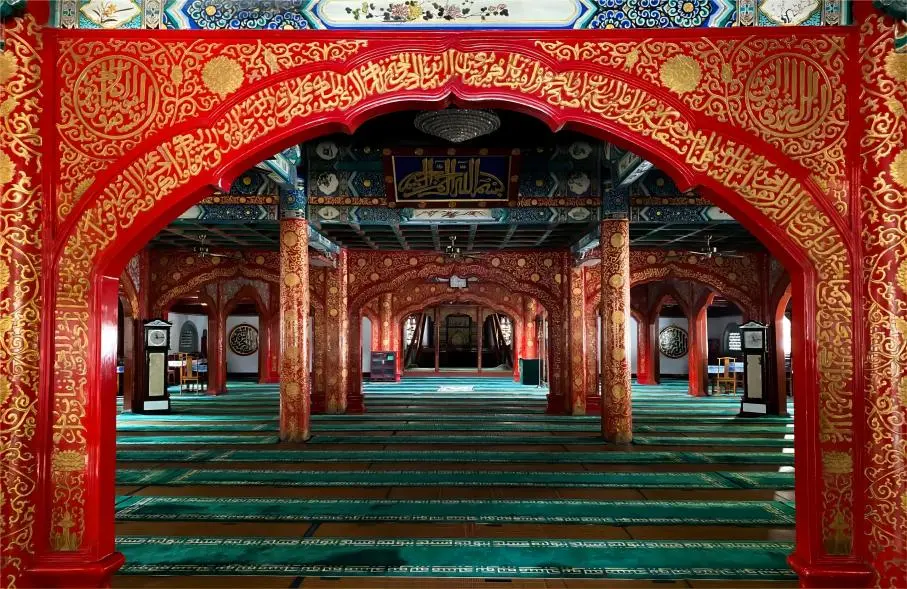
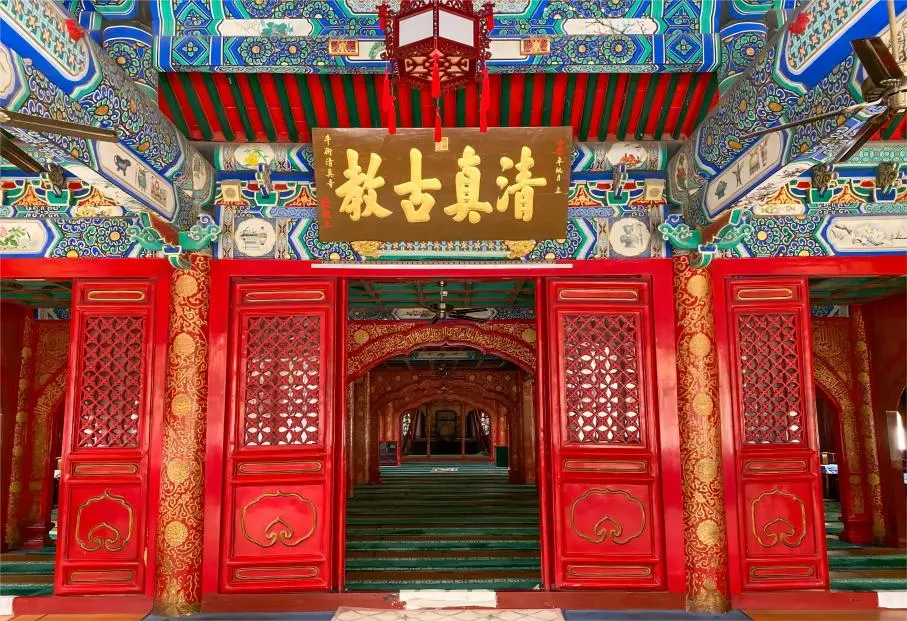
Niujie Mosque features a symmetrical layout along a central axis, blending Chinese palace-style timber architecture with Islamic elements such as domes and pointed arches. Key structures like the Moon-Viewing Tower, Prayer Hall, and Minaret (Bangke Lou) use the Chinese Hip-and-Gable roof style, while interior decoration emphasizes Arabic script and geometric motifs, exemplifying “Outer Confucian, Inner Muslim” (Wai Ru Nei Mu).
Among the mosque’s treasures are two Yuan Dynasty tombs (shai hai fen) with Arabic inscriptions, recording the early spread of Islam in China. Additional artifacts include a Ming Dynasty imperial edict plaque, porcelain incense burners, and a 300-year-old handwritten Quran, reflecting centuries of Islamic presence in the Central Plains.
Religious Practices at Niujie Mosque
The spiritual atmosphere at Niujie Mosque is distinct from Daoist and Buddhist temples.
Unlike the heavy incense and kowtowing rituals of Buddhist and Daoist spaces, worshippers here remove shoes before entering the hall and face Mecca for prayers. Idolatry is strictly prohibited, and decorations focus on calligraphy, scripture, and plant motifs, creating a solemn yet minimalistic environment.
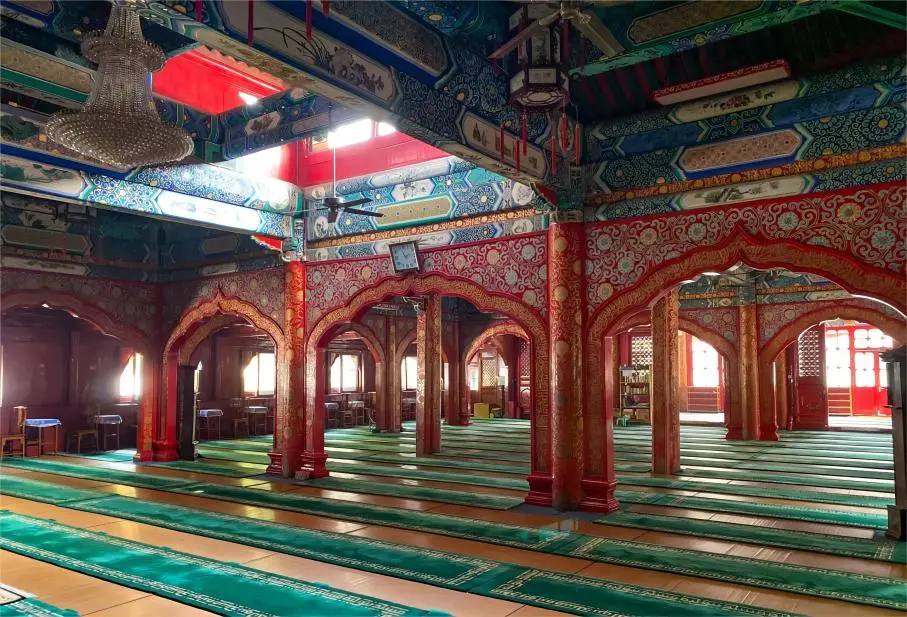
The call to prayer echoes five times daily from the Minaret, inviting both devout followers and interested visitors to observe Islamic rituals respectfully. This “reverence without image” contrasts with other Chinese religious traditions, highlighting Niujie Mosque’s unique place in Beijing’s spiritual landscape.
Daily Life and Worship at Niujie Mosque
Niujie Mosque remains active throughout the week, especially during Friday congregational prayers (Jumu’ah) and festivals like Eid al-Fitr. Worshippers pray for family health, harmony, and the well-being of deceased relatives, reflecting the universal desire for blessings and fortune.
Local Muslims believe that praying in front of the Mihrab (the niche facing Mecca) amid Quranic inscriptions connects them more directly with Allah. The mosque’s integration with Niujie Street reinforces its role as the heart of Beijing’s Hui community, preserving centuries of religious and social life.
Niujie Mosque Visitor Experiences
For Muslim and international travelers, Niujie Mosque offers immersive cultural experiences:
- Participate in Congregational Prayer: Join thousands for the Jumu’ah prayer at noon on Friday to witness collective devotion.
- Sample Halal Cuisine: Niujie Street is renowned for authentic Hui cuisine. Institutions like Jubaoyuan Hot Pot and Hongji Snacks serve halal specialties cherished by locals and tourists alike.
- Shop for Unique Souvenirs: The mosque’s cultural shop offers Arabic calligraphy and gilded Qurans. Nearby shops sell Hui embroidery and copper incense burners (non-religious use).
- Local Immersion: Stroll along Niujie Street to explore a blend of Old Beijing hutong life and Hui culture, creating a rich sensory experience.
Transportation and Travel Tips
- Opening Hours: Daily 8:00 AM–4:00 PM (extended to 5:00 PM on Fridays for Jumu’ah).
- Dress Code: Long pants and long sleeves are required; shoes must be removed before entering the Prayer Hall.
- Getting There: Subway Line 7 to Guang’anmen Nei Station (Exit C), 5-minute walk.
- Respectful Conduct: Do not photograph worshippers during prayer; avoid consuming non-halal food on mosque grounds.
Visiting Niujie Mosque offers a profound insight into Beijing’s Islamic heritage, where architecture, faith, and daily life converge. Regardless of your background, every wooden beam, roof tile, and Arabic inscription tells a story of a thousand years of cultural integration. For more inspiration, explore other highlights on our Beijing Tourist Attractions page.