Beihai Park, Beijing: History, Landmarks & Travel Guide
In the heart of Beijing, near the Forbidden City and Jingshan Park, lies a shimmering expanse of water—Beihai Park. One of the oldest and most completely preserved imperial gardens in China, it is a living history book, narrating imperial memories and folk legends from the Liao, Jin, Yuan, Ming, and Qing dynasties. For visitors, Beihai Park offers a window into Oriental landscape aesthetics and a vibrant introduction to the Chinese philosophy of “unity of Heaven and Humanity.”

I. History of Beihai Park: From Imperial Garden to Public Oasis
Beihai Park began as a lake in the Liao Dynasty (late 10th century), when Emperor Taizong of Liao built the “Yao Island Palace” on its shore. During the Jin Dynasty (1153), Emperor Shizong Wanyan Yong expanded the area into the “Daning Palace,” inspired by the Genyue Garden of Bianjing (Kaifeng). Exotic stones were brought to Qionghua Island (now Baita Hill), creating the prototype of the “One Pond, Three Hills” design—a classic layout of ancient Chinese imperial gardens.
In the Yuan Dynasty (1271), Kublai Khan moved the capital to Beijing and built the White Dagoba (Baita) on Qionghua Island, symbolizing the Mongol Empire’s “unity of politics and religion.” After Emperor Yongle of the Ming Dynasty (1421) relocated the capital, Beihai became part of the “Three Seas of the Imperial City,” a private retreat for emperors. During the Qing Dynasty (1651 onwards), Emperors Kangxi and Qianlong renovated extensively, adding pavilions and halls, forming the current layout of “mountains encircling water, with different views at every step.”
In 1925, Beihai opened to the public, transitioning from imperial exclusivity to a shared cultural symbol.
II. Cultural Highlights: Every Brick and Tile Tells a Story
1. White Dagoba: A Blend of Tibetan and Han Cultures
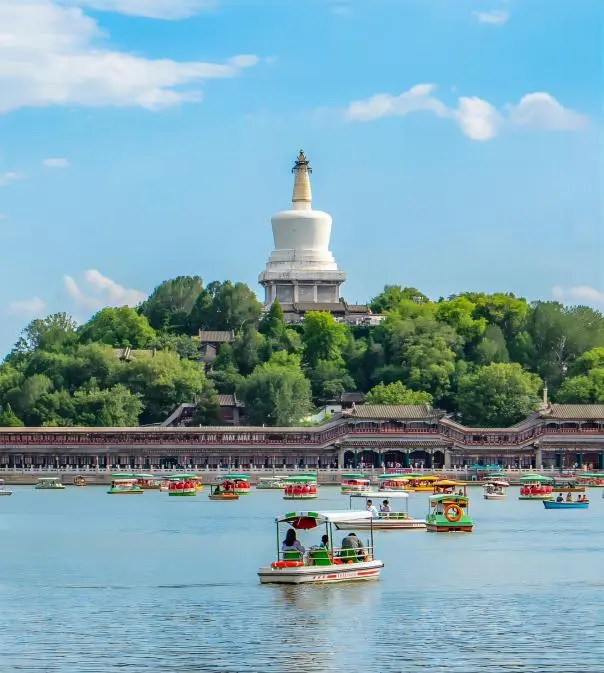
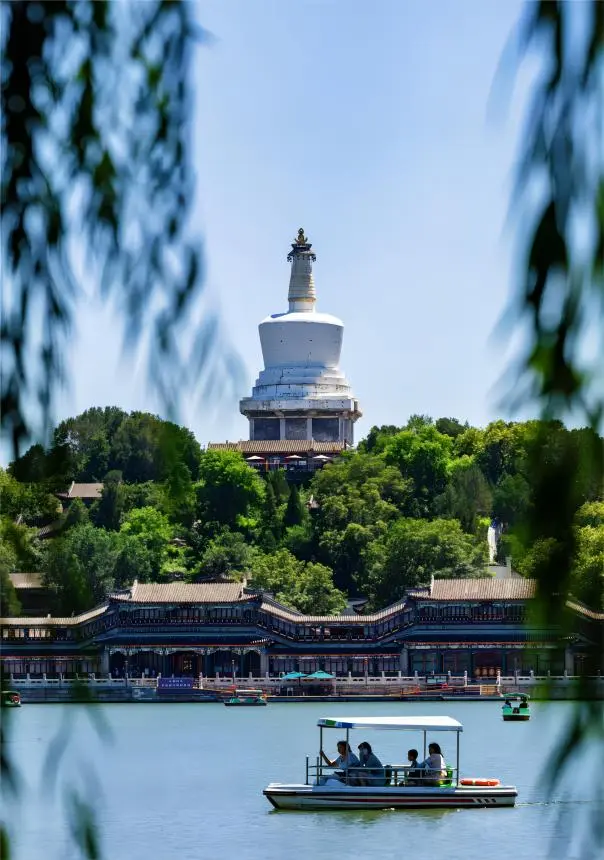
The 35.9-meter White Dagoba on Qionghua Island is Beihai Park’s landmark, partly designed by the Nepalese artisan Araniko. Its pure white body and gilded top shine in the sun. The Stele Recording the Building of the Pagoda documents Emperor Qianlong’s wish for national peace. The octagonal base subtly references the “Eight Trigrams” (Bagua), blending Tibetan and Han traditions and representing cultural integration.
2. Nine-Dragon Wall: Imperial Symbolism and Folk Ingenuity
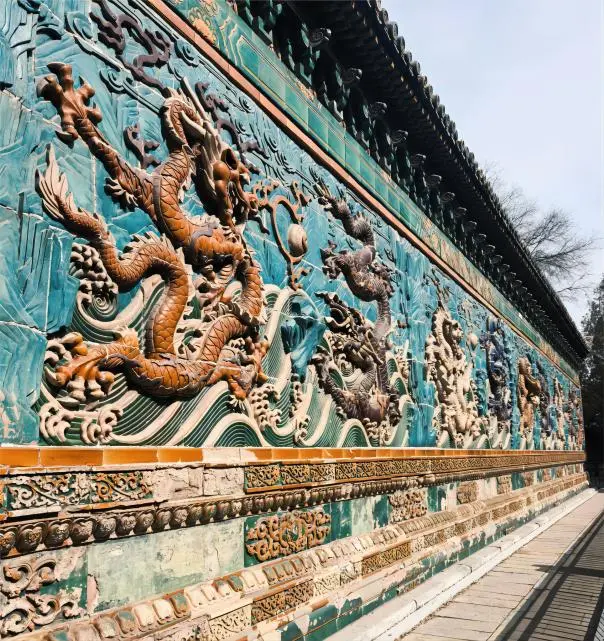
The Nine-Dragon Wall (Jiulongbi) on the east bank is the only double-sided glazed wall among China’s three Nine-Dragon Walls. Nine dragons twist amid clouds and waves, with detailed scales. Legend says Emperor Qianlong ordered the dragon whiskers to tremble in the wind, showcasing artisan ingenuity and reflecting the common people’s desire for “good fortune and smooth sailing.”
3. Round City (Tuancheng): Miniature Ecological Marvel
The Round City, a 46-meter diameter circular island south of Beihai, carries 800 years of history. Ancient trees like the “Marquis of Shade” (Zheyinhou) and “General in White Robe” stand tall. Its ingenious drainage system uses inverted trapezoid bricks to channel rainwater into the lake, ensuring it never floods—a testament to ancient engineering.
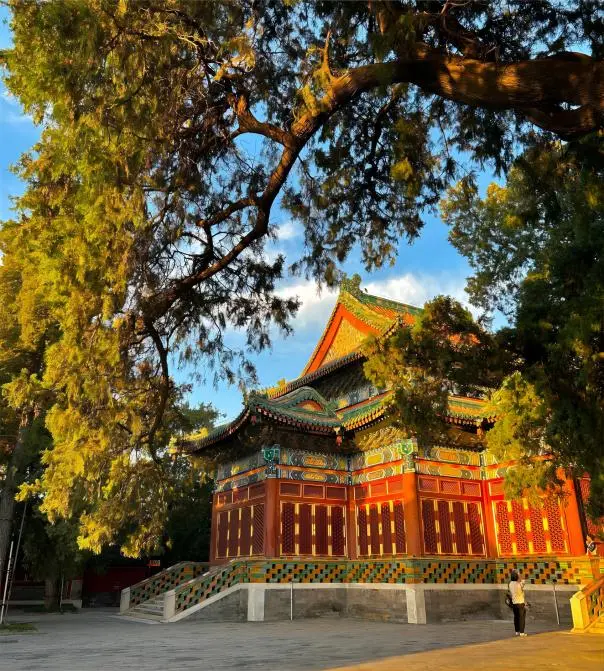
III. Visitor Tips: How to Experience Beihai Park
- Transportation: Subway Line 6, Beihai North Station, Exit B. Enter via North Gate (closest to Qionghua Island), exit via South Gate (closest to Round City).
- Must-See Spots: White Dagoba, Nine-Dragon Wall, Five-Dragon Pavilions (Wulong Ting), Small Western Heaven (Xiaoxitian).
- Cultural Experience: Early mornings feature locals practicing Tai Chi or walking birds in cages. In summer, boat rides across the lake provide stories of old Beijing. In winter, experience traditional ice sports (check opening times).
For a broader Beijing itinerary, visit our Beijing Tourist Attractions page.
IV. Conclusion: A Living Symbol of History and Culture
Beihai Park is a living fossil of Chinese culture. From the Liao Dynasty’s Yao Island Palace to a modern public park, it consistently welcomes every visitor. Strolling under the White Dagoba, boating on the lake, or exploring the Nine-Dragon Wall, tourists experience not only China’s history but also humanity’s universal aspiration for beauty, peace, and harmony. Like Beihai’s waters, despite a thousand years of storms, its spirit remains clear and enduring.