Chengdu Sugar Painting (Tanghua): A Sweet Cultural Journey
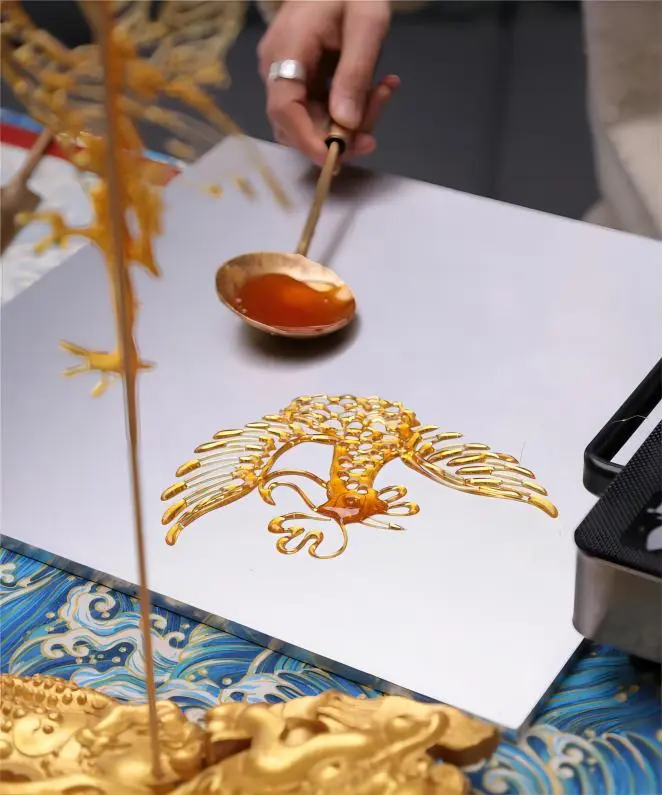
When food blogger Jack visited Kuanzhai Alley in Chengdu, he watched a master artisan wield a copper spoon like a brush, letting amber-colored malt syrup flow across a bluestone slab. In moments, a phoenix seemed ready to take flight. This enchanting craft, recognized as a National Intangible Cultural Heritage of China, is Chengdu Sugar Painting (Tanghua) — a sweet art blending folk wisdom, artistic aesthetics, and centuries of tradition.

1. History of Chengdu Sugar Painting (Tanghua)
Chengdu Sugar Painting traces its origins to the Tang Dynasty legend of the “Sugar Chancellor.” According to the Compendium of Materia Medica, Empress Wu Zetian once commissioned chefs to sculpt the twelve zodiac animals in sugar — edible works of art. By the Song Dynasty, sugar painting spread to the streets as a popular form of entertainment, documented in Dreams of the Eastern Capital (Dongjing Menghualu).
During the Ming and Qing Dynasties, Chengdu artisans innovated the “Spinning Wheel Selection”, turning sugar painting into interactive street fun. After 1949, three-dimensional sugar sculpting emerged. Masters like Chen Changlin blew hollow sugar figures and filled them with colored grains, delighting children with early versions of “sweet blind boxes.” In 2008, Chengdu Sugar Painting was officially listed as a National Intangible Cultural Heritage.
2. Chengdu Tanghua Techniques: Spinning Wheel and 3D Sugar Sculptures
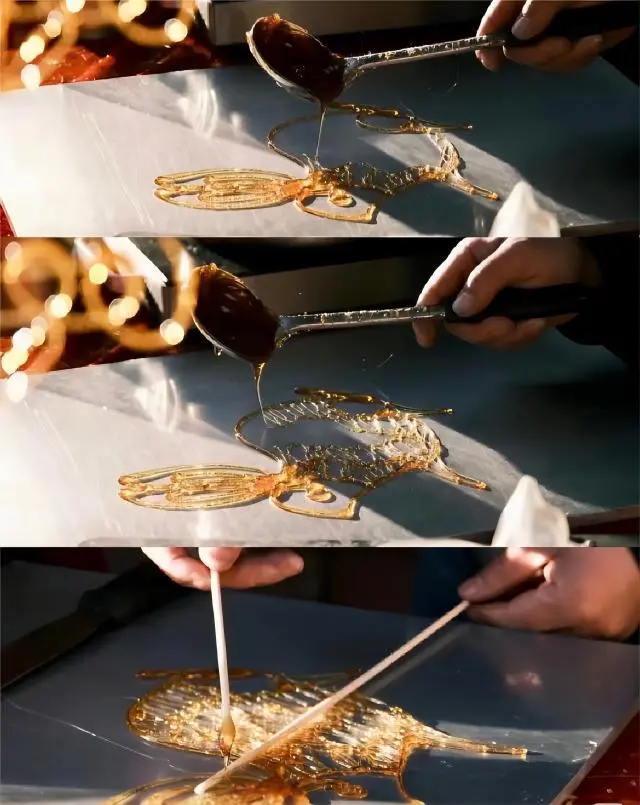
In Chengdu’s Jinli Ancient Street, the Tanghua stall is always bustling. On a 60 cm spinning wheel, twelve zodiac signs or mythical figures form a circle. Visitors pay a small fee, spin the pointer, and watch as hot syrup flows like liquid gold.
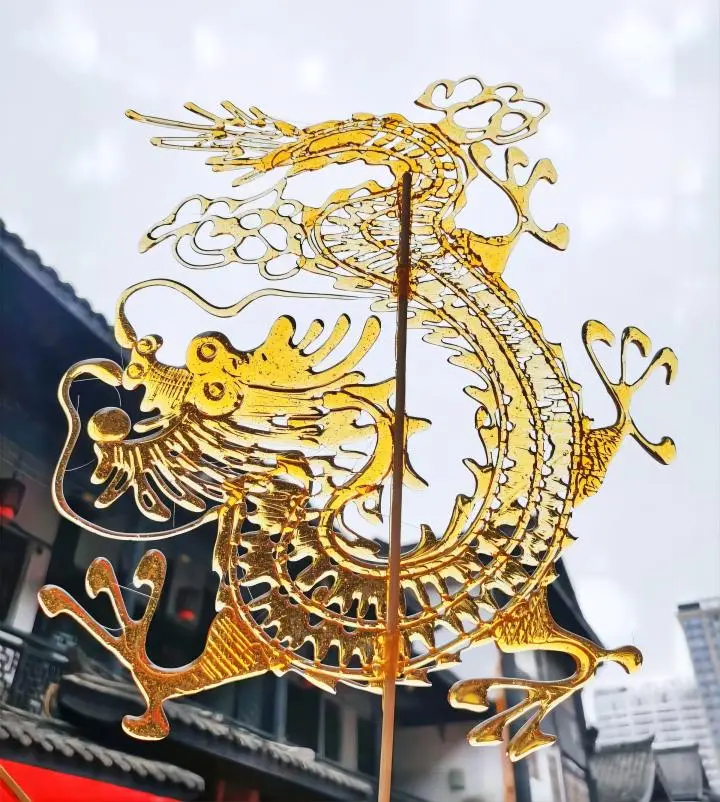
The “Drawing Thread” technique allows artisans to pull dragon whiskers into 0.5 mm fine lines, while the “Shaking Thread” technique textures phoenix tails. The entire process takes under 90 seconds.
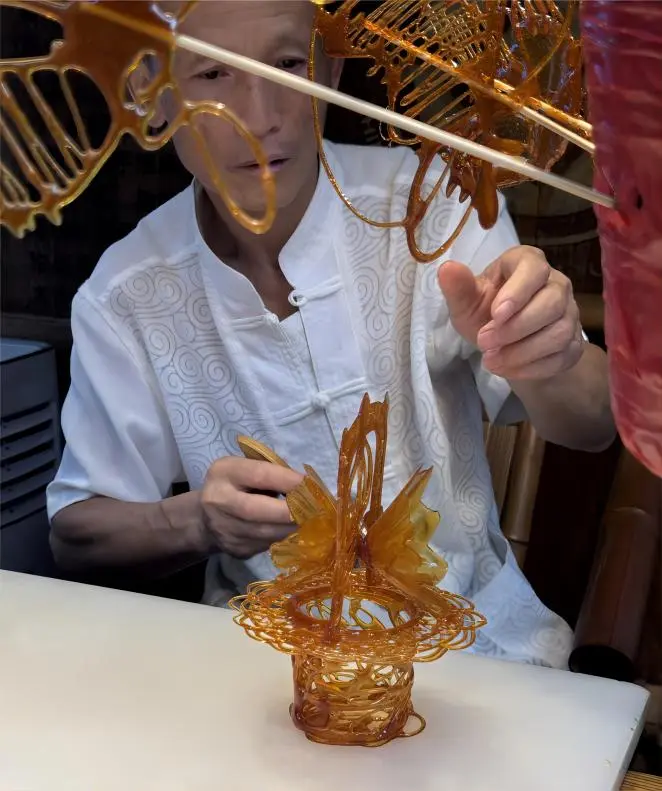
Three-dimensional sugar sculpting is equally impressive. Hot syrup, boiled to 155°C, is poured into molds, blown into hollow spheres, and detailed with a sugar needle. Scenes from Journey to the West, including the Tang Monk and Monkey King, showcase intricate folds and patterns — a delicate combination of temperature control, precision, and artistry.
Custom sugar calligraphy is another modern innovation. Artisans craft names or blessings in English or Chinese, creating personalized edible artworks treasured by visitors.

3. Where to Experience Chengdu Sugar Painting (Tanghua)
Must-Visit Locations
- Jinli Ancient Street “Sugar Painting Street”: Daily live demonstrations of “Sugar Painting Calligraphy” (2:00 PM – 6:00 PM).
- Kuanzhai Alley Intangible Heritage Experience Center: Hosts Tanghua competitions on Saturday afternoons, where visitors can vote.
- Chengdu Museum: Exhibits historical molds and advertisements from the Qing and Republican eras.
- Jinli Street Stores: Offer iconic three-dimensional sugar sculptures like “Panda Holding Bamboo”, moisture-proof for up to three months.
Hands-On Workshops
- Learn to create your own sugar painting under a master artisan’s guidance.
- Techniques include Drawing Thread, Shaking Thread, and simple 3D blowing methods.
- Personalized sugar letters and figures are often included as take-home souvenirs.
4. Understanding Chengdu Sugar Painting (Tanghua): Tips and Techniques
- Temperature & Syrup: Boil malt sugar to 155°C until it reaches the “thread-hanging” stage. Once cooled, it becomes hard like amber.
- Regional Characteristics: Chengdu uses malt sugar for a more translucent and three-dimensional effect, distinct from northern or Cantonese styles.
- Preservation: Three-dimensional sugar sculptures can last weeks if kept dry; avoid humidity.
5. Modern Revival and Cultural Significance
Today, Chengdu Sugar Painting (Tanghua) continues to enchant locals and tourists alike. Artisans blend tradition with creativity, offering interactive street experiences, workshops, and personalized sugar artworks. Beyond a sweet treat, Tanghua preserves a millennial cultural heritage, telling stories of the Tang Dynasty, street markets, and the artistic imagination of Chengdu’s craftsmen.
Final Thoughts
Every copper spoon tap and flowing syrup thread carries centuries of Chengdu Sugar Painting (Tanghua) tradition. Experiencing this craft firsthand is a sweet journey into Chinese folk art, a hands-on encounter with a millennium of culture — a living fairy tale written on a stone slab.
Discover more in our Chengdu Tourist Attractions Collection and China Cultural Heritage Tours Collection to plan your journey.