Explore Chengdu Wuhou Shrine: Immerse Yourself in Three Kingdoms Culture and Timeless Wisdom
Wuhou Shrine: A Gateway to 1,800 Years of Three Kingdoms Wisdom
In the southern suburbs of Chengdu, a cluster of ancient buildings stands quietly, surrounded by red walls. This is more than a historical site; it’s a gateway to Eastern wisdom. The Chengdu Wuhou Shrine is the only temple in China dedicated to both a ruler and his subject. It’s also the world’s central landmark for Three Kingdoms culture. For Western visitors, stepping into the Wuhou Shrine Chengdu travel guide feels like opening a living history book. It’s a chance to experience Zhuge Liang’s unwavering dedication and the profound depth of ancient Chinese civilization.

From History to Legend: The Evolution of the Wuhou Shrine
The Wuhou Shrine was first built in 221 AD to honor Zhuge Liang. Later, it was merged with the temple for his ruler, Liu Bei, creating a unique space where both were worshiped together. The existing buildings are mostly from the Ming and Qing dynasties, laid out along a central axis that creates a solemn and dignified atmosphere. For anyone researching the history of Chengdu Wuhou Shrine, this story is essential.
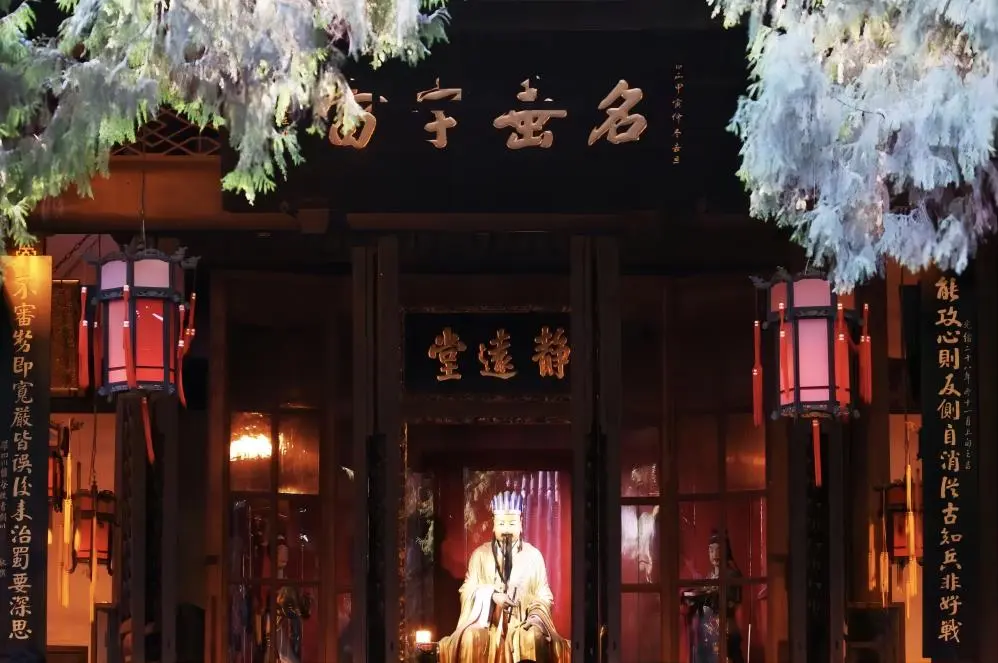
The Zhuge Liang Hall is the heart of the shrine. It holds treasures like the “Three Masterpieces of the Tang Stele” and the “Conquering Hearts Couplet.” The Tang Stele, written by Tang prime minister Pei Du with calligraphy by Liu Gongchuo, combines literature, calligraphy, and sculpture. The couplet uses short phrases to summarize Zhuge Liang’s governing wisdom, and it is still widely quoted today—an essential highlight for visitors looking into Zhuge Liang temple Chengdu.
The famous poet Du Fu once wrote, “Where can I find the Prime Minister’s temple? It’s outside the Brocade Official’s city, among the cypress trees.” This made the Chengdu Wuhou Shrine a place where literature and history meet. Additionally, a stone tablet with Yue Fei’s calligraphy links the Southern Song Dynasty to the Three Kingdoms history in Chengdu, creating a moving connection across time.
Three Kingdoms Culture Goes Global: From History to Icon
The story of the Three Kingdoms culture was little known in the West until an English translation of Romance of the Three Kingdoms appeared in the early 20th century. Since then, it has become an icon of world literature. Western scholars are particularly interested in Zhuge Liang’s governing wisdom and military strategy. Many travelers search for Romance of the Three Kingdoms Wuhou Shrine to better understand this legacy.
In the digital age, this cultural resonance has grown. The video game Total War: Three Kingdoms (2019), developed by British studio Creative Assembly, became a global hit. Players could test Zhuge Liang’s “Eight Trigrams” battle formation and even explore a virtual recreation of the Chengdu Wuhou Shrine. The game’s theme of governing with benevolence echoes the ethical ideals preserved here, making it one of the most unique Three Kingdoms games Wuhou Shrine experiences worldwide.
Wuhou Shrine’s Modern Dialogue: Global Culture Meets Technology
As a landmark of Three Kingdoms culture, the Wuhou Shrine Chengdu continues to bridge the past and present in new ways. When a group of journalists from the “Belt and Road” initiative visited in 2024, a Russian journalist remarked, “The 47 statues and more than 70 couplets are like a three-dimensional Records of the Three Kingdoms.”
Today, AR tours recreate Zhuge Liang inventing the “wooden ox and flowing horse.” The “Three Kingdoms Metaverse” even uses blockchain to record visitors reciting his famous writings. These innovations make Three Kingdoms culture in modern media more engaging than ever.
Elements of the Three Kingdoms have also entered global film and comics. In Netflix’s Marco Polo, Kublai Khan learns Zhuge Liang’s tactics. In Marvel’s Ragnarok, Loki’s scepter carries the Chinese phrase “ambition must be fueled by a tranquil heart.” These fusions prove the universal value of Three Kingdoms culture.
Hollywood’s Red Cliff drew deeply from the traditions preserved in the Chengdu Wuhou Shrine. The crew visited the site for research, helping them create a compelling image of Kongming. Its global release inspired many to search for movies about Zhuge Liang and Wuhou Shrine, encouraging travelers to visit and touch real history.
The Beauty of Architecture: An Epic in Stone and Wood
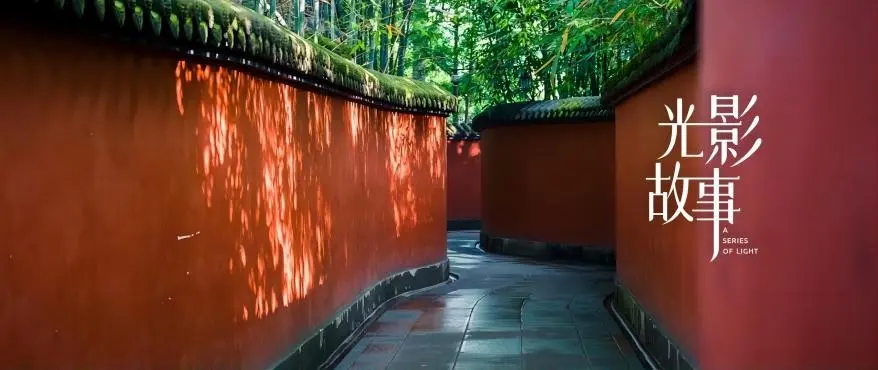
The Wuhou Shrine architecture unfolds along a central axis. From the main gate to the Zhuge Liang Hall, the symmetrical layers reflect the order and ritual of ancient Chinese design. The double-eaved roof of Liu Bei’s temple symbolizes imperial dignity, while the cloud carvings in the Zhuge Liang Hall reflect his noble character. Red walls, green bamboo, and engraved steles together create a solemn and timeless atmosphere.
The “Three Masterpieces Stele” is especially unmissable. The prose of Pei Du, calligraphy of Liu Gongchuo, and carving of Lu Jian make it a Tang Dynasty masterpiece. For architecture lovers searching ancient Chinese architecture Chengdu Wuhou Shrine or Tang Dynasty steles Wuhou Shrine, this is a highlight.
A Wisdom Shared With the World
When Western visitors walk through the Chengdu Wuhou Shrine, they are not just exploring history—they are also touching a spirit that transcends civilizations: wisdom, loyalty, and benevolence. From poetry to video games, from stone tablets to blockchain, the Wuhou Shrine Chengdu travel experience answers one timeless question: How do we keep history alive?
As one couplet says, “If you can win hearts, resistance will disappear. Since ancient times, those skilled in war were not fond of fighting.” The Three Kingdoms culture reminds us that understanding, respect, and dialogue are the foundation of coexistence. With its thousand-year-old charm, the Chengdu Wuhou Shrine continues to inspire those seeking cultural travel in Chengdu China and remains one of the most meaningful places to visit in Chengdu.
While exploring the profound history of Chengdu Wuhou Shrine, don’t forget to plan your Chengdu Panda Trip: A Sweet Attractions You Can’t Miss to experience another side of Chengdu’s unique charm.