
Danba Tibetan Villages Travel Guide: Watchtowers, Culture & Timeless Life in Western Sichuan
Why Visit Danba Tibetan Villages?
Hidden deep in the mountains of Western Sichuan, Danba Tibetan Villages offer something increasingly rare in modern travel: authenticity. Known as the “Kingdom of a Thousand Watchtowers,” Danba is not a single village but a cluster of ancient Tibetan settlements where stone watchtowers rise beside snow peaks, terraced fields, and red-and-white Tibetan homes. There are no staged performances here—only daily life unfolding at a human pace.
Ranked the “Most Beautiful Ancient Village Town in China” by Chinese National Geography, Danba is ideal for travelers seeking culture, history, photography, and slow travel rather than crowds.

Where Are the Danba Tibetan Villages?
Danba County lies along the famous Western Sichuan loop, in Garzê Tibetan Autonomous Prefecture. The most well-known villages include Jiaju, Zhonglu, and Suopo, each offering a different perspective on Danba’s architecture, landscape, and way of life.
Altitudes range from 1,800 to 2,100 meters, making Danba relatively comfortable compared with higher plateau destinations.
What Makes Danba Unique?
The Kingdom of a Thousand Watchtowers
Danba is home to more than 200 ancient stone watchtowers, some over 30 meters tall. Once used for defense, storage, and communication, these towers now stand as the most iconic symbol of the region. Their angular silhouettes against snow mountains have earned Danba the nickname “Oriental Pyramids.”
A Living Plateau Landscape
Villages cascade down steep hillsides, interwoven with terraced fields and orchards. Each season reshapes the scenery:
- Spring: Pear blossoms blanket the valleys
- Summer: Lush green terraces and alpine flowers
- Autumn: Apple harvests and golden fields
- Winter: Snow-covered watchtowers and quiet village life
Jiarong Tibetan Culture
Danba is the heartland of the Jiarong Tibetans, known for preserving traditional customs, architecture, dress, and festivals. Religious elements—prayer flags, white stupas, Mani stone piles—are seamlessly woven into daily life.
The Three Best Villages to Visit in Danba

Jiaju Tibetan Village (Ticket: ¥50)
The largest and most accessible village, Jiaju feels like a Tibetan fairy tale. Red-and-white houses with wooden windows stack along the mountainside.
Best experiences:
- Sunrise and sunset photography from Viewpoints No.1 and No.2
- Visiting local homes for yak butter tea and barley cake
- Walking village paths to observe white stone worship on rooftops

Zhonglu Tibetan Village (Free)
More untouched and quieter, Zhonglu blends watchtowers with terraced farmland and distant snow peaks.
Best experiences:
- Climbing selected watchtowers (with permission) for 360° views
- Stargazing under minimal light pollution
- Sunrise and sunset photography
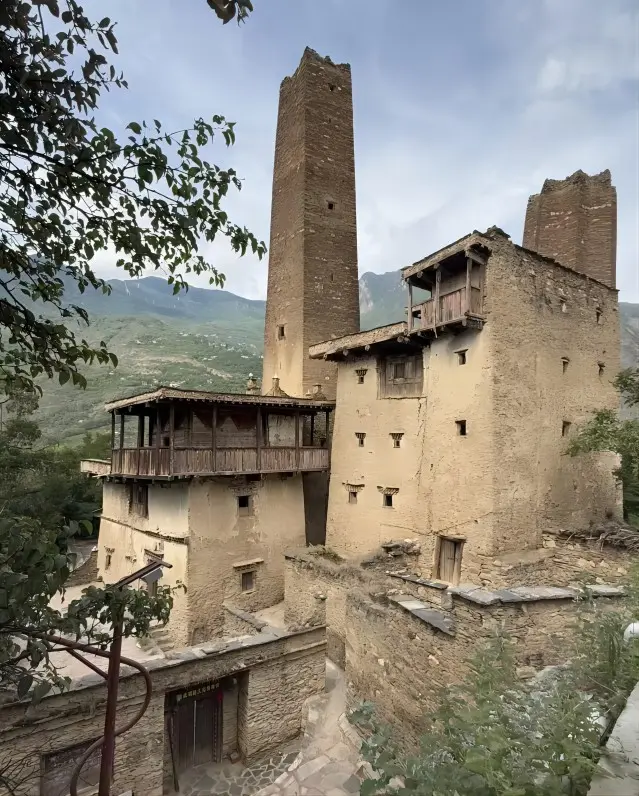
Suopo Tibetan Village (Ticket: ¥20)
Suopo contains the densest cluster of watchtowers, including rare five-corner and ten-corner towers.
Best experiences:
- Visiting the Watchtower Museum
- Hiking ancient stone paths between towers
- Learning about traditional tower construction techniques
Things to Do in Danba Tibetan Villages
Experience Local Life
Join an evening Guozhuang circle dance, often held in village squares or family courtyards. Visitors are frequently invited to participate, turning strangers into friends.
Taste Traditional Tibetan Food
- Yak butter tea: Salty, rich, and warming
- Tsampa: Roasted barley flour mixed with butter tea
- Stone pot chicken: Slow-cooked with local mushrooms
- Smoked yak pork: A regional specialty
Discover Traditional Crafts
Danba Tibetan Villages embroidery is recognized as a national intangible cultural heritage. Some villages allow visitors to learn basic stitching techniques directly from artisans.

How to Get to Danba Tibetan Villages from Chengdu
Self-driving: Chengdu → Ya’an → Luding → Kangding → Danba (approx. 330 km, 6–7 hours). An SUV is recommended due to mountain roads.
Public transport: Bus from Chengdu Xinnanmen Bus Station to Danba (about 8 hours), or shared car from Kangding (about 3 hours).
Where to Stay in Danba Tibetan Villages
Jiaju Tibetan Village:
- Jiaju Tibetan Village Hotel (¥400–¥600)
- Local guesthouses (¥150–¥300, often include meals)
Zhonglu Tibetan Village:
- Zhonglu Viewpoint Inn (¥200–¥400)
- Boutique retreats such as Kongshan Guesthouse (¥600–¥1000)

Best Time to Visit Danba Tibetan Villages
- April–May: Pear blossoms
- June–August: Green terraces and hiking
- September–October: Apple harvest and autumn colors
- November–March: Quiet winter scenery (cold, icy roads)
Practical Travel Tips
- Dress in layers; temperature changes quickly
- Sunscreen and sunglasses are essential due to strong UV
- Ask permission before photographing locals
- Walk clockwise around prayer wheels and Mani piles
- Carry trash bags and respect the environment

Is Danba Worth Visiting?
Danba Tibetan Villages rewards travelers who value depth over speed. It is not about ticking landmarks off a list, but about slowing down—watching mist lift from watchtowers, sharing tea with villagers, and feeling history breathe through stone walls.
If you are looking for a destination that blends culture, landscape, and human warmth, Danba Tibetan Villages remain one of Western Sichuan’s most unforgettable journeys. Furthermore, to explore more highlights of a Sichuan journey, don’t miss our page on Chengdu Tourist Attractions!