Fragrant Hills Park Beijing (Xiangshan Park): Travel Guide + Autumn Red Leaves
Nestled in the western suburbs of Beijing, Fragrant Hills Park (Xiangshan Park) is like an emerald jewel set among the foothills of the Yan Mountains. With its ever-changing palette of seasonal colors and centuries of cultural heritage, it stands as one of the city’s most beloved scenic spots. Once a Qing Dynasty imperial garden, it now serves as a “living museum of color” — cherry blossoms in spring, lush greenery in summer, fiery maples in autumn, and snow-clad pines in winter. Every season invites a poetic dialogue with nature.
I. Autumn Red Leaves at Fragrant Hills Park
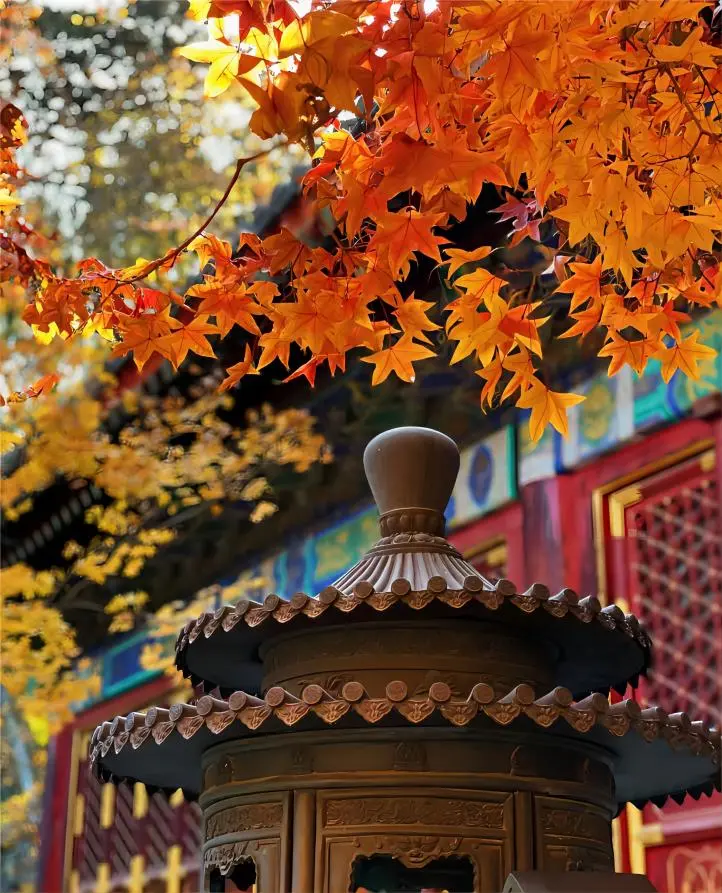
Fragrant Hills Park is world-famous for its spectacular red leaves in autumn. From late October to mid-November, over 200,000 trees — including Chinese sumac, maple, and ginkgo — transform the mountain into a sea of crimson and gold. This dazzling display rivals Canada’s Maple Road and Kyoto’s Arashiyama, yet Xiangshan’s unique charm lies in its layered gradation of colors: golden hues at the base rise to deep crimson at the summit, like a living oil painting. The Spectacles Lake (Yanjing Lake) reflects this fiery panorama, creating the poetic illusion of “water and sky dyed in one color.”
- The Symbolism of Red: In Chinese culture, red signifies happiness and prosperity. The park’s autumn foliage embodies the ancient saying: “Frost-tinted leaves are redder than February flowers.”
- The Ritual of Hiking: Visitors can explore multiple trails, from the scenic “Twenty-Eight Views of Jingyi Garden” to the challenging Incense Burner Peak (Xianglu Feng) — offering both casual walks and serious climbs.
II. Best Time to Visit Fragrant Hills Park Beijing
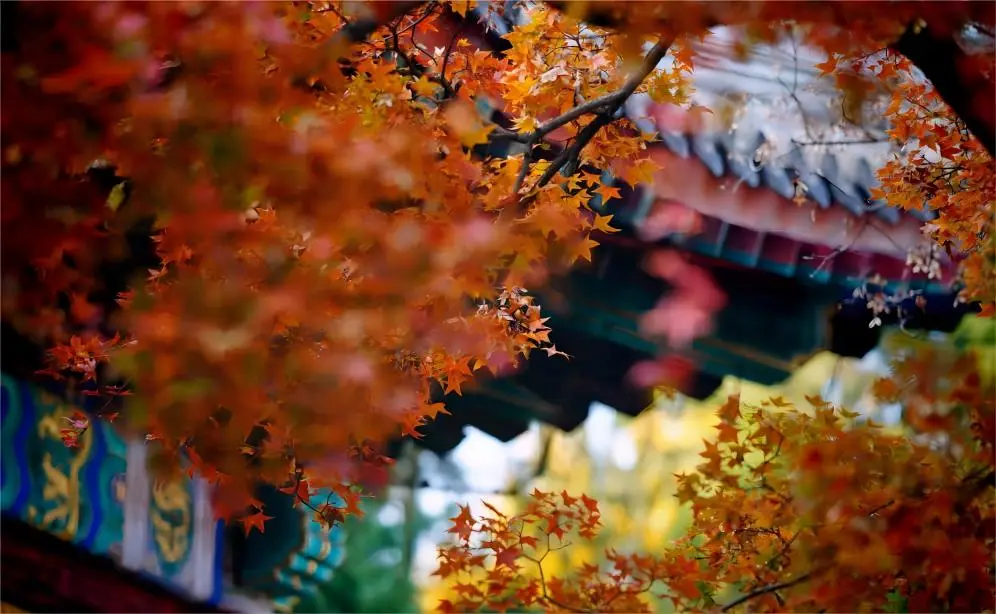
The best time to visit Fragrant Hills Park (Xiangshan Park) is during autumn, when the famous red leaves transform the mountains into a breathtaking sea of crimson. From late October to mid-November, thousands of maple and Chinese sumac trees create one of the most spectacular fall landscapes in Beijing.
This annual display of Fragrant Hills red leaves has made Xiangshan one of the city’s most iconic autumn destinations, attracting photographers, hikers, and nature lovers every year.
Although autumn is the most popular season, the park offers beautiful scenery throughout the year:
- Spring (April): Peach blossoms, apricot flowers, and cherries cover the hillsides in soft colors.
- Summer (June–August): Dense forests provide cool shade, with temperatures often 3–5°C lower than downtown Beijing.
- Autumn (late Oct–mid Nov): The famous red leaves season, when the mountains glow with vibrant colors.
- Winter (December–February): Snow-covered pines and quiet temples create a peaceful winter landscape.
For the best experience, it’s recommended to arrive early in the morning, especially during the peak red leaves season when the park becomes one of Beijing’s most popular scenic spots.
Unlike Western landscapes, Xiangshan emphasizes “borrowing scenery” and artistic conception (Yijing) — blending nature and architecture into one. At Yuhua Xiu, ancient pines merge with strange rocks, while Jianxin Zhai (Hall for Seeing the Heart) combines pavilions, water, and reflections, embodying the philosophy of being “crafted by man but resembling Heaven’s work.”
Top Attractions in Fragrant Hills Park
- Incense Burner Peak (Xianglu Feng): At 575 meters, it’s the park’s highest point. From here, you can gaze over Beijing — the modern skyline in the distance, red maples and temples below, blending centuries of history in a single view.
- Shuangqing Villa: Once an imperial retreat, this villa features two natural springs and ancient ginkgo trees over 600 years old. In autumn, their golden leaves fall like a “rain of gold.”
- Xiangshan Temple (Fragrant Hills Temple)
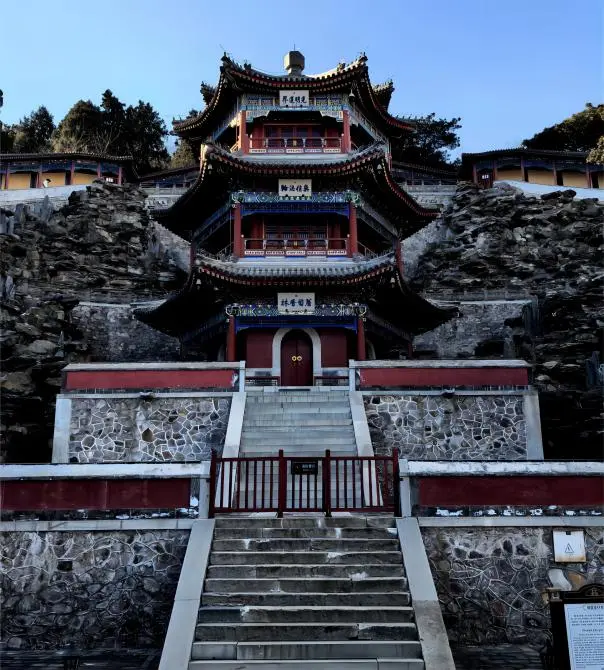
Nestled within Fragrant Hills Park, Xiangshan Temple is renowned for its elegant Rear Garden and the striking Imperial Stele Screen inscribed by Emperor Qianlong. The temple’s layout follows the natural slope of the mountain, creating a harmonious, layered progression of halls, pavilions, and courtyards. Surrounded by ancient trees and rockeries, the Rear Garden perfectly reflects the balance between imperial grandeur and nature’s tranquility. - Biyun Temple (Azure Clouds Temple)
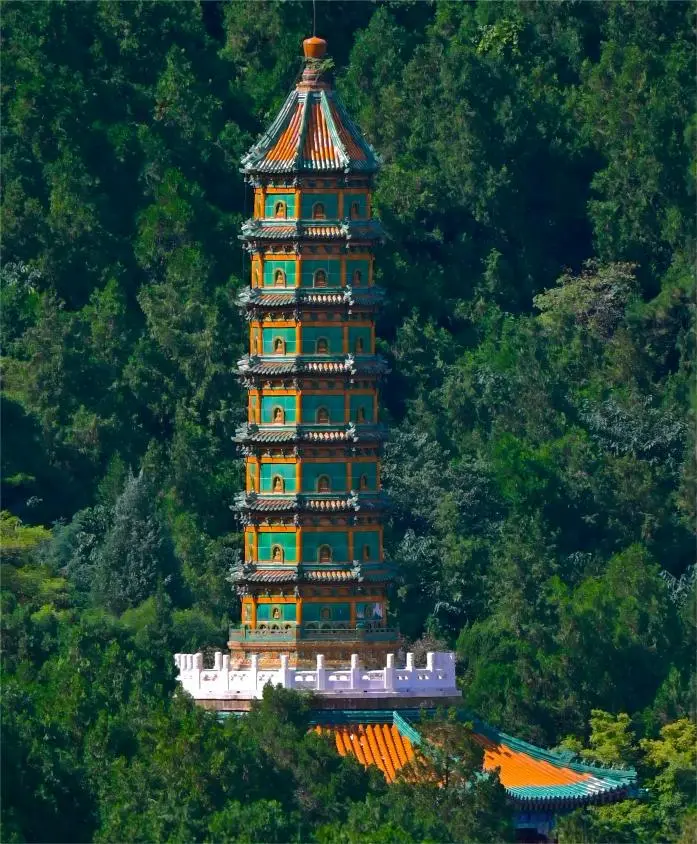
Located near the western edge of Fragrant Hills Park, Biyun Temple (Azure Clouds Temple) showcases a graceful fusion of Tibetan and Han architectural styles. The temple complex ascends the mountainside through six courtyards, each revealing unique views and religious details. The Diamond Throne Pagoda (Jingang Baozuo Ta) and the Hall of Five Hundred Arhats form the visual and spiritual center of the temple.
III. History of Fragrant Hills Park (Xiangshan Park)
Fragrant Hills Park has a long and storied history dating back to the Jin Dynasty. It was expanded during the Yuan, Ming, and Qing dynasties, with Emperor Qianlong transforming it into Jingyi Garden and composing the “Poems of the Twenty-Eight Views of Xiangshan.”
In 1949, Shuangqing Villa became the first working headquarters of the Chinese Communist Party after entering Beijing. Here, Mao Zedong drafted historic documents including On the People’s Democratic Dictatorship, giving Xiangshan a place not only in art and nature but also in modern political history.
IV. Fragrant Hills Park Travel Tips
- Best Time to Visit:
- 🍁 Autumn (late October–mid-November) for the red leaves
- 🌸 Spring (April) for blossoms
- 🌳 Summer for cool shade
- ❄️ Winter for tranquil snow scenes
- Getting There:
- Take Subway Line 10 to Bagou Station, then transfer to the Xijiao Line (tram) to Xiangshan Station.
- Self-driving is possible but parking is limited on weekends — arrive early.
- Tickets:
- ¥10 (April–November), ¥5 (November–March).
- Tickets must be booked in advance via the official WeChat public account.
- Top Experiences:
- Hike early to avoid crowds.
- Catch the sunset from Incense Burner Peak.
- Try Old Beijing Tanghulu (candied fruit skewers) at the base of the mountain.

FAQ About Fragrant Hills Park Beijing
Why is Fragrant Hills Park famous?
Fragrant Hills Park (Xiangshan Park) is famous for its spectacular autumn red leaves, which cover the mountains in vibrant shades of crimson and gold from late October to mid-November. The park is also known for its historic temples, scenic hiking trails, and its past as an imperial garden during the Qing Dynasty.
When do the red leaves appear in Fragrant Hills?
The red leaves in Fragrant Hills Park usually reach their peak from late October to mid-November. During this time, thousands of Chinese sumac and maple trees turn bright red, creating one of the most famous autumn landscapes in Beijing.
How high is Incense Burner Peak in Fragrant Hills Park?
Incense Burner Peak (Xianglu Feng) is the highest point in Fragrant Hills Park, reaching 575 meters above sea level. From the summit, visitors can enjoy panoramic views of the surrounding mountains and even parts of Beijing on clear days.
Is Fragrant Hills Park worth visiting?
Yes, Fragrant Hills Park is considered one of the best natural attractions in Beijing. It offers beautiful mountain scenery, historic temples such as Biyun Temple, and seasonal landscapes, especially the famous autumn red leaves.
How do you get to Fragrant Hills Park from central Beijing?
The easiest way to reach Fragrant Hills Park is by public transportation. Take Subway Line 10 to Bagou Station, then transfer to the Xijiao Line tram to Xiangshan Station, which is close to the park entrance. Visitors can also take buses or taxis, but public transit is usually the most convenient option, especially during the busy autumn season.

Conclusion
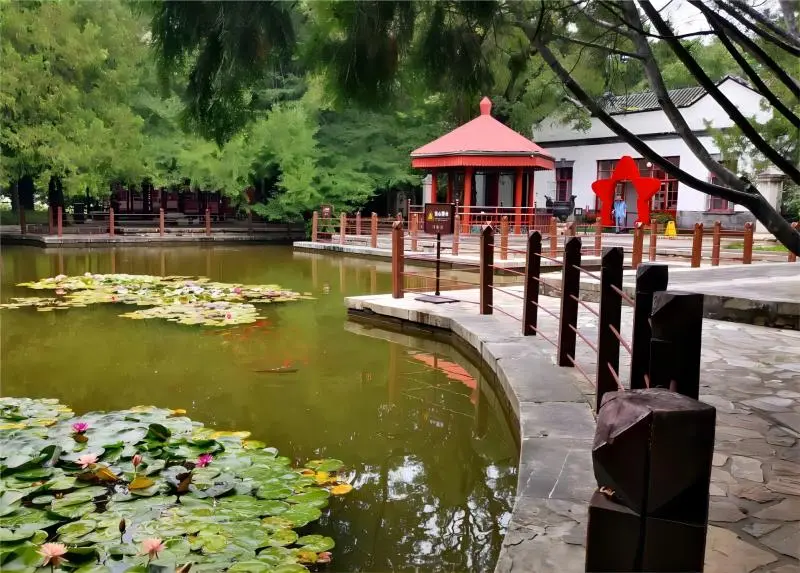
Fragrant Hills Park (Xiangshan Park) is a sanctuary where nature, art, and history converge. Whether you’re photographing the crimson hills, reflecting beside a lotus pond, or simply breathing in the mountain air, this park reminds us that beauty needs no translation. In every rustling leaf and quiet sunrise, you’ll feel the enduring rhythm of Beijing — ancient yet ever alive.
For travelers seeking the best autumn spots in Beijing, a peaceful day trip, or a glimpse of imperial garden culture, Fragrant Hills Park promises an unforgettable journey through time, color, and serenity. Beijing also has many historic parks such as the Summer Palace and Beihai Park.
For more must-see sites, check our Beijing Tourist Attractions page.