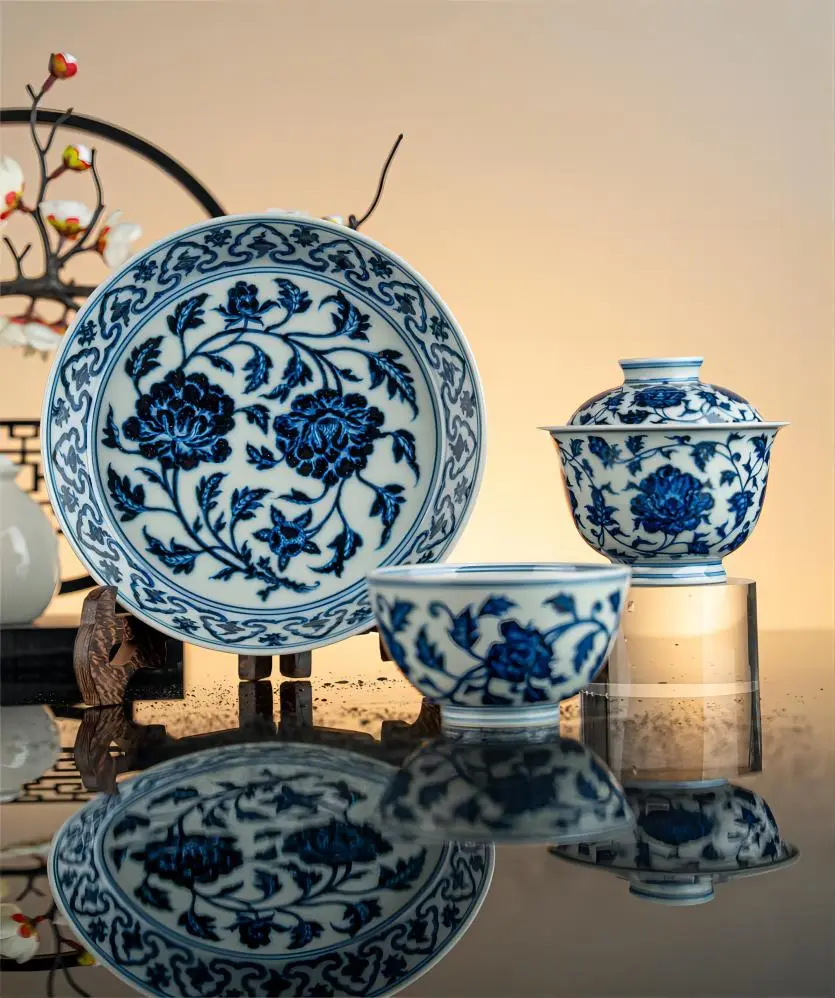
Jingdezhen Porcelain Travel Guide: Explore Millennial Handcrafted Art
When your fingertips lightly touch the Jingdezhen Porcelain body, warm and smooth as jade, and when the cobalt blue glaze begins to softly bleed a thousand-year-old poem onto the unfired biscuit, you are engaging in a dialogue with an Intangible Cultural Heritage that spans over 1,700 years. Jingdezhen Porcelain craftsmanship, one of China’s first National Intangible Cultural Heritages, transforms humble clay into a vessel carrying Oriental civilization with the ultimate aesthetic of “white as jade, bright as a mirror, thin as paper, and sound like a chime.” For visitors traveling from afar, this is not just a visual feast but a cultural exploration across time and space.
I.Millennial Kiln Fire: The Legacy of Jingdezhen Porcelain
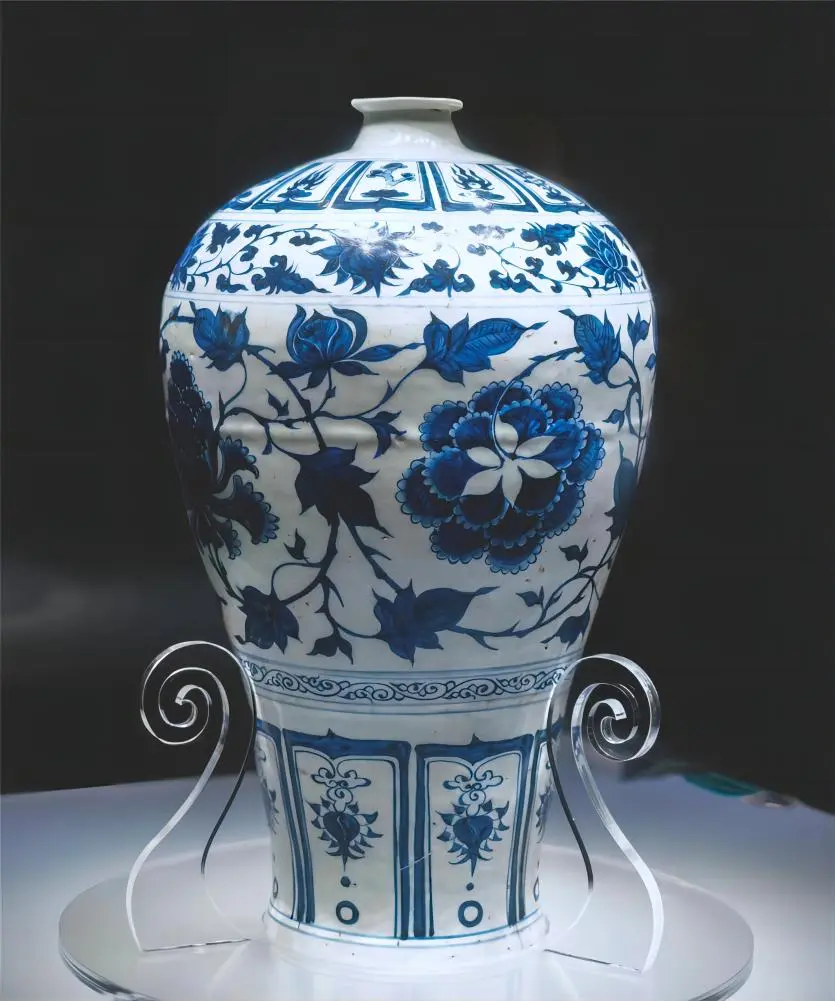
Jingdezhen’s ceramics history began in the Han Dynasty, scaling up by the Eastern Jin. Tang Dynasty white porcelain earned praise as “imitation jade.” The Song Dynasty birth of Qingbai porcelain linked the city to the era name “Jingde,” establishing its reputation as the “Porcelain Capital” (Cidu).
Yuan Dynasty Blue and White Porcelain (Qinghua) pioneered underglaze decoration, traveling via the Maritime Silk Road to Asia, Africa, and Europe. The Ming-Qing Imperial Kiln Factory perfected techniques including Wucai, Doucai, and Fencai. The “Vase with Various Glazes” (Cimu) combined 17 glazes and 12 auspicious motifs, acclaimed as a technical pinnacle. Today, 20 core procedures—from clay selection to firing—preserve artisan expertise.
II.Vessels with Soul: Masterpieces of Jingdezhen Porcelain
1. Yuan Blue and White: A Civilizational Epic
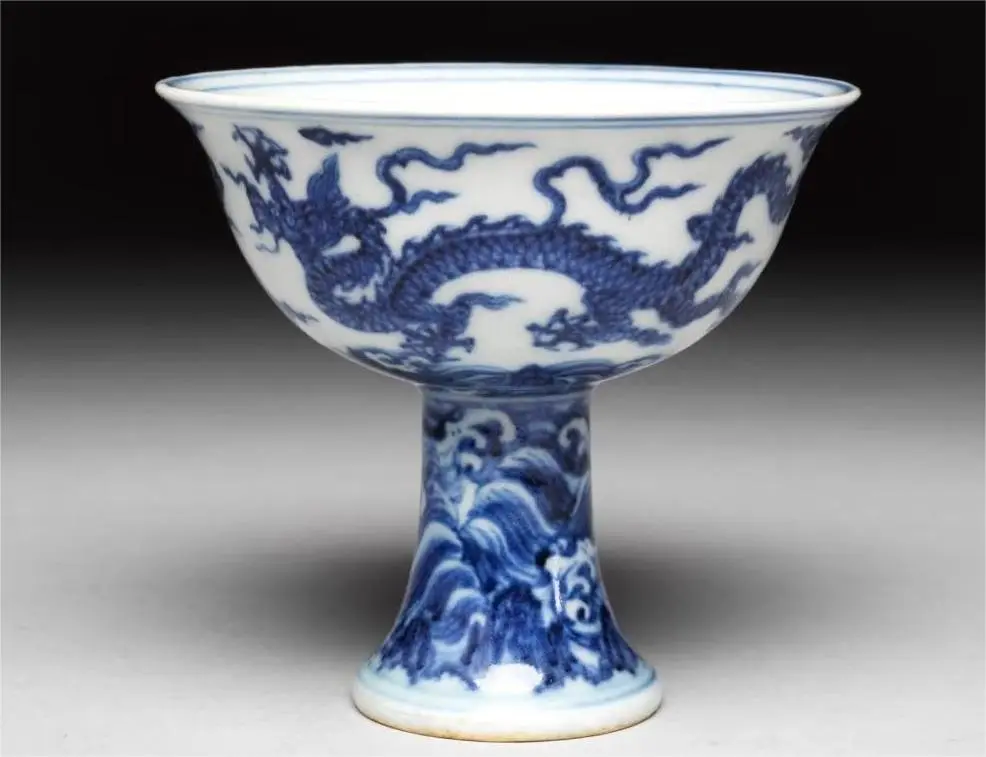
The “Ghost Valley Down the Mountain” Jar depicts Su Dai and Guiguzi, with intense blue hues and lifelike figures. In 2005, it sold for 230 million RMB in London. Huang Yunpeng’s replicas faithfully follow traditional methods, reviving this lost craft.
2. Yongxuan Blue and White: Imperial Aesthetics
Ming Dynasty Qinghua from Yongle and Xuande reigns, using Sumali Blue pigment, feature “rust spot” textures. The “Blue and White Meiping Vase with Ruyi Shoulders and Flower-and-Fruit Sprays” in the China Ceramic Museum shows perfect shade gradations and harmonious composition, exemplifying Ming imperial kiln artistry.
3. Revolving Heart Vase (Zhuanxinping): Mechanical Wonder
The Qing Qianlong “Fencai Revolving Heart Vase with Auspicious Fish Motif” nests an inner vase inside an outer one, showing moving landscapes through carved carp motifs. A similar piece sold for 554 million RMB in London in 2010. Its complexity remains challenging to replicate today.

III. Immersive Experience: Exploring Jingdezhen Porcelain Artistry
1. Ancient Kiln Site: Touching Craft
The Ancient Kiln Folk Customs Exhibition Area in Changjiang District restores Qing Dynasty workshops. Visitors can watch artisans create masterpieces on spinning wheels and participate in “Trimming Experience” to feel the precision of thickness control.
2. Creative Markets: Hunting Favorite Works
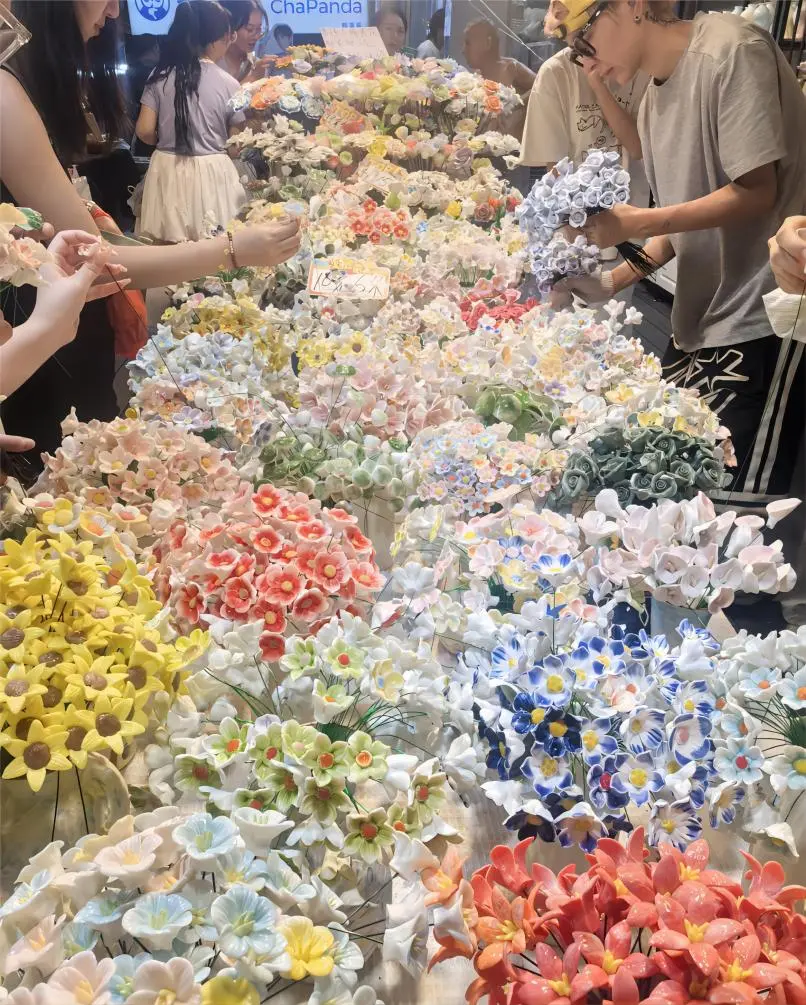
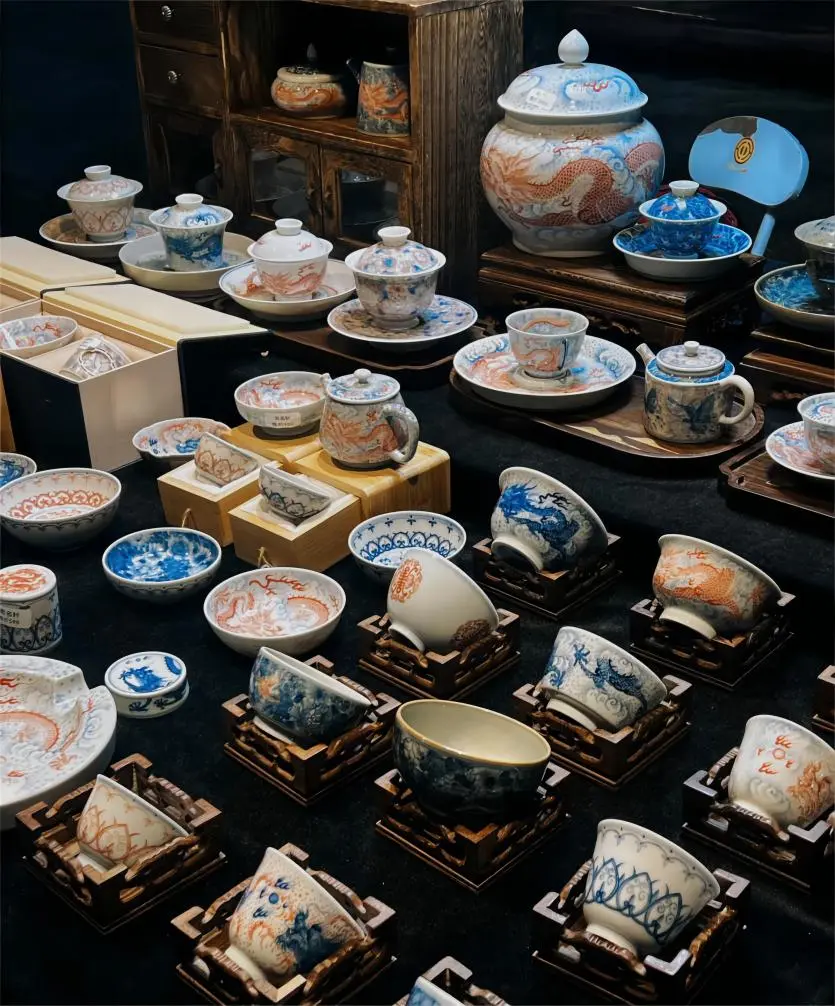
- Taoxichuan Ceramic Art Avenue: Friday-Saturday evening, hundreds of young artists showcase tea sets and 3D-printed ceramics.
- Sculpture Factory Le Tian Market: Saturday mornings feature faculty and student works, including hand-painted plaques and mini vessels under 100 RMB.
- Fanjiajing Antique Street: Collectors can find imitations of Yuan, Ming, Qing porcelain; careful distinction is advised.
3. High-End Customization: Exclusive Souvenirs
At “Yaci Xuan” or “Jiangxin Ci Yi,” artisans create custom blue-and-white porcelain or tea sets based on your design. Production takes 15–30 days, resulting in a unique cultural keepsake.
IV. Travel Tips: Visiting the Jingdezhen Porcelain Capital
- Best Season: April–May (Spring Ceramics Festival) or September–October (International Ceramic Exposition).
- Transportation: Jingdezhen Luojia Airport or high-speed rail to Wuyuan Station + 1-hour bus.
- Cultural Notes: Avoid touching unfired clay; obtain permission before photographing; ask if pieces are “hand-made locally.”
- Extended Experience: Visit China Ceramic Museum (free) for ceramic history; explore Yaoli Ancient Town for ancient kilns and water-powered workshops.
Conclusion: Kiln Fire Unceasing, Civilization Enduring
As you embark on your return journey with a hand-painted Jingdezhen Porcelain cup, the tea inside reflects not just the blue-and-white pattern but a nation’s eternal pursuit of beauty. Jingdezhen Porcelain craftsmanship has used a thousand years of kiln fire to elevate clay into a symbol of civilization. It reminds us that true art is never confined to a museum’s glass case, but resides in the warmth of the artisan’s fingertips and in every dialogue between fire and earth.
Discover more in our China Cultural Heritage Tours Collection to plan your journey.