Lujiazui Shanghai Travel Guide: Oriental Pearl Tower, Skyline & Tips
Planning to visit Lujiazui in Shanghai? This modern financial district is home to the Oriental Pearl Tower, Shanghai Tower, and some of the most iconic skyline views in China.
In this guide, you’ll learn what to see, the best viewpoints, and practical tips to help you explore Lujiazui efficiently.
Quick Guide
Lujiazui Shanghai at a Glance
- 📍 Location: Pudong, Shanghai
- ⭐ Main Highlights: Oriental Pearl Tower, Shanghai Tower, skyline views
- ⏰ Best Time to Visit: Sunset and night for skyline views
- 🚇 How to Get There: Metro Line 2 – Lujiazui Station
- 💰 Cost: Free to explore; tower ticket ~¥200
What Is Lujiazui in Shanghai?
It is Shanghai’s main financial district located in Pudong, known for its futuristic skyline and iconic landmarks like the Oriental Pearl Tower, Shanghai Tower, and Jin Mao Tower.
It is one of the most popular places to visit in Shanghai for skyline views, photography, and modern city experiences.
Best Photo Spots in Lujiazui
- Binjiang Riverside Promenade
- IFC Mall rooftop
- Pedestrian bridges near Oriental Pearl

I. Best Things to Do in Lujiazui
1. Visit the Oriental Pearl Tower
- Go up to the observation deck
- Try the glass floor experience
- Best time: sunset
2. Walk Along Binjiang Riverside Promenade
- Free skyline views
- Best photo spot of the Bund
3. See Shanghai’s Three Iconic Skyscrapers
- Shanghai Tower
- Shanghai World Financial Center
- Jin Mao Tower
4. Take the Ferry from the Bund
- Only ¥2
- Best budget skyline experience
II. Lujiazui’s Transformation: From Riverside to Skyline
Lujiazui’s transformation mirrors China’s own modernization—a stunning leap from quiet fishing village to financial powerhouse.
1. Historical Echoes: From Ferry Dock to Financial City
Before the 19th century, Lujiazui was a low-lying area dotted with ferry crossings. After Shanghai opened its port in 1843, the land across from the Bund began to attract merchants and warehouses.
Then came 1990—a turning point. The Chinese government declared Pudong as a Special Economic Development Zone, and he became the nation’s architectural and financial showcase. Today, it houses over 500 financial institutions, including the Shanghai Stock Exchange, and has earned the nickname “China’s Manhattan.”
- For New York visitors, Lujiazui’s skyscraper cluster feels like Wall Street stretched vertically into the sky.
- For London travelers, it’s reminiscent of Canary Wharf—but with an unmistakable Eastern rhythm and order.
💡 Travel Tip: For the most cinematic view of Lujiazui, take the 2 RMB ferry across from the Bund. The skyline gradually unfolds before you—a breathtaking contrast between Shanghai’s old-world Bund (read more: The Bund Shanghai: Where History Shines Against the Modern Skyline) and its futuristic mirror image across the river.
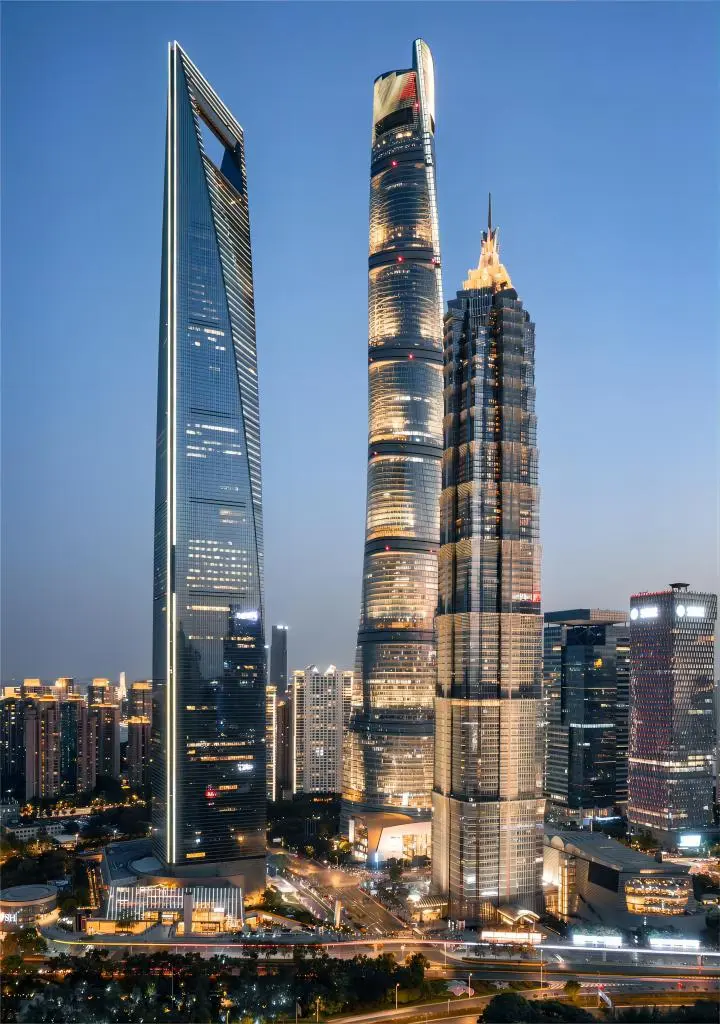
2. Shanghai Skyline: The Three Iconic Towers
Each of Lujiazui’s iconic towers tells a story where modern design meets traditional symbolism:
- Shanghai Tower (632m): The world’s second-tallest building. Its spiraling “dragon-scale” design embodies upward energy and harmony with nature.
- Shanghai World Financial Center (492m): Known for its “sky window”, the trapezoidal opening symbolizes connection and global vision.
- Jin Mao Tower (420.5m): Inspired by the ancient Nine-Layer Pagoda, it blends neo-futurism with traditional Chinese geometry.
👉 Insider Viewpoint: Head to the IFC Mall’s 5th-floor outdoor deck for a free, panoramic view of all three towers—the perfect spot to watch day turn to neon night.
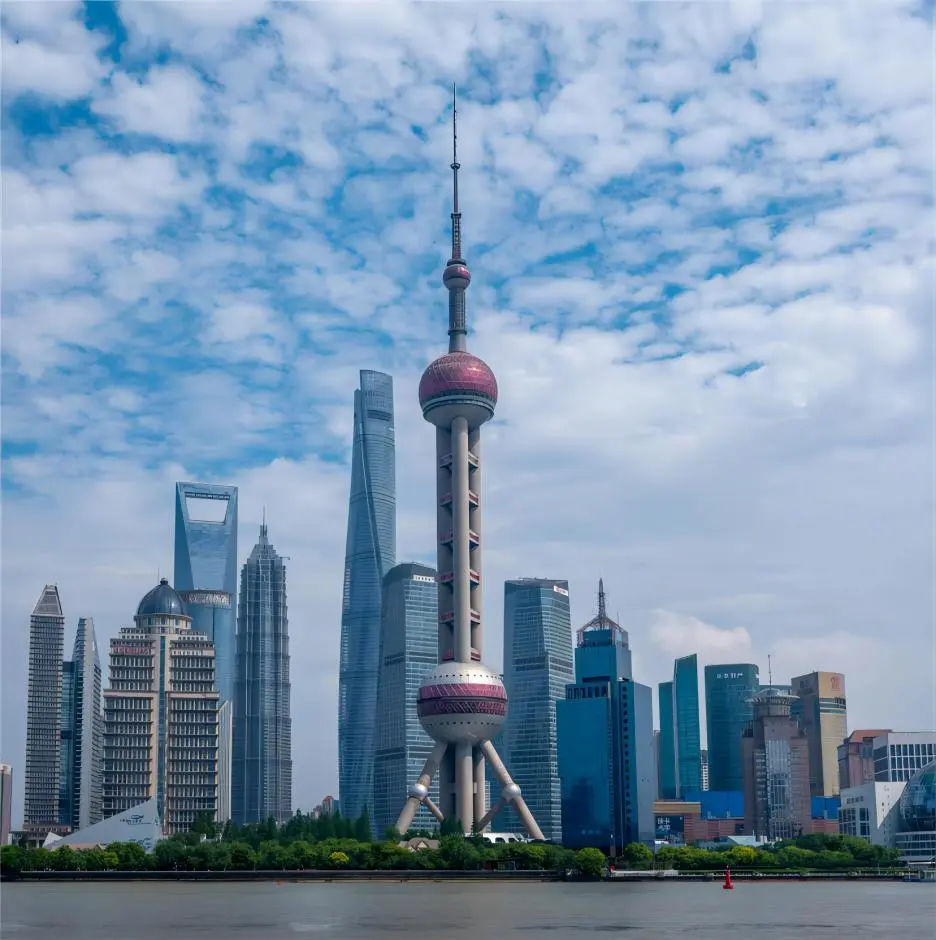
II. The Oriental Pearl Tower: Shanghai’s Symbol of the Sky
If Lujiazui represents the city’s financial pulse, then the Oriental Pearl Tower is its soul and symbol—a futuristic beacon seen from almost every corner of Shanghai.
1. Oriental Pearl Tower Visitor Guide
Highlights
- Glass observation deck
- 360° skyline views
Ticket Info
- ~¥200 (cheaper online)
Best Time to Visit
- Sunset → night
Is It Worth It?
Yes, especially for first-time visitors. However, if you’re short on time, you can skip going up and enjoy skyline views from Lujiazui instead.
2. Design Inspiration: From Ancient Poetry to Sci-Fi
Completed in 1994 at 468 meters, the Oriental Pearl’s design draws from a Tang Dynasty poem describing “pearls falling onto a jade plate.” Eleven glass spheres of different sizes are linked like beads on a string, creating an image both poetic and space-age.
The tower’s futuristic lines and shimmering colors have made it an enduring symbol of Shanghai’s imagination.
- For Paris visitors, it’s the “Eiffel Tower of the East”—a landmark of identity and pride.
- For Tokyo travelers, it evokes the Tokyo Tower, but its design is richer in metaphor and cultural soul.
3. Cloud-Level Experience: The Observation Decks
The 263-meter observation deck offers one of Shanghai’s most unforgettable experiences. Step onto its glass floor and gaze straight down—cars crawl below like toys, ferries glide along the Huangpu, and the golden domes of the Bund glimmer in the distance.
This is Shanghai’s time machine: past and future captured in a single frame.
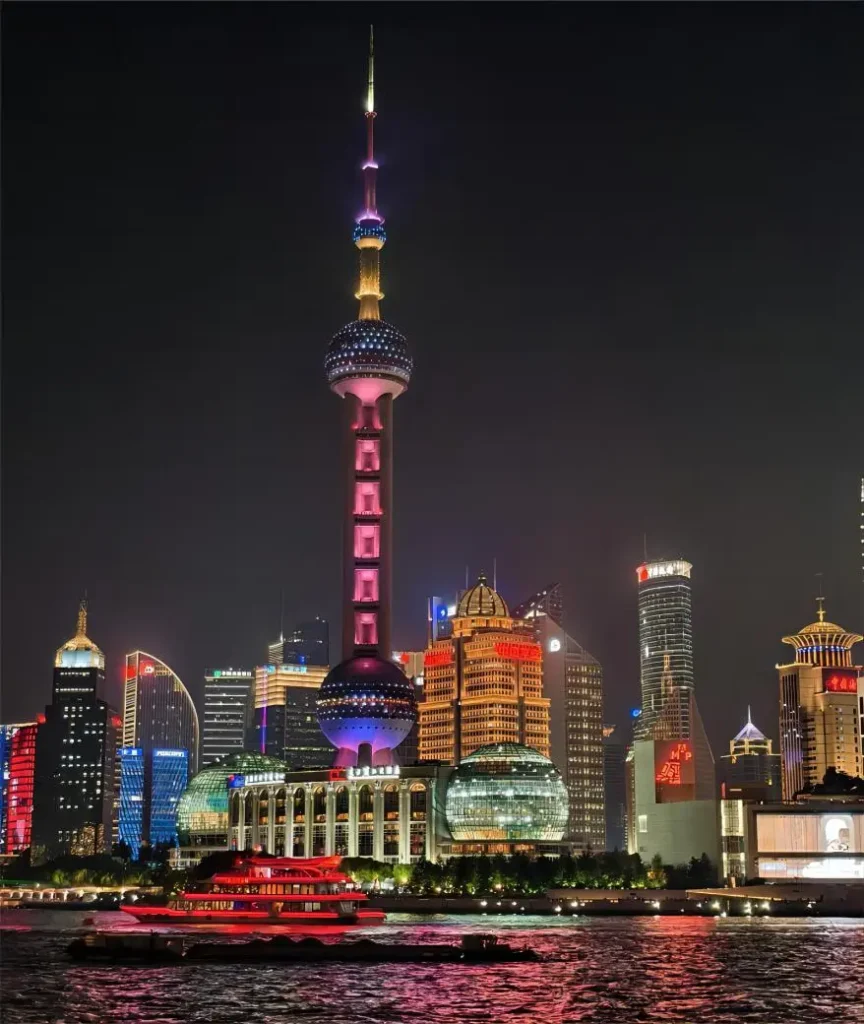
🌇 Best Moment: Go at sunset and wait for the city lights to bloom. Lujiazui transforms into a galaxy of glass and neon, perfectly mirrored in the river below.
🏛️ Don’t Miss: The Shanghai History Museum inside the tower—an immersive journey through how Shanghai grew from a fishing village to a world metropolis.
IV. Practical Guide: Your Lujiazui Itinerary
- Best Time to Visit:
- Morning: Clear skyline photos and fewer crowds.
- Evening: For the full light show experience after 7:00 PM.
- Getting There: Take Metro Line 2 to Lujiazui Station, or hop on the Bund Ferry for the best views.
- Tickets: Oriental Pearl Tower entrance (including multiple decks and the museum) costs about 200 RMB; online booking is cheaper.
- Nearby Attractions:
- Shanghai IFC Mall: Luxury shopping and rooftop cafes.
- Binjiang Riverside Promenade: The best free skyline view.
- Yuyuan Garden: Cross back to the west bank to explore Shanghai’s classical side ([Yuyuan Garden Shanghai: A 400-Year Journey Through Classical Chinese Beauty]).
FAQ: Lujiazui & Oriental Pearl Tower
Is Lujiazui worth visiting?
Yes, It’s one of the best places in Shanghai to experience the city’s modern skyline and iconic landmarks like the Oriental Pearl Tower.
What is Lujiazui known for?
It’s known for its futuristic skyline, financial district, and famous skyscrapers including Shanghai Tower and the Oriental Pearl Tower.
How do I get to Lujiazui?
Take Metro Line 2 to Lujiazui Station, or take the ferry from the Bund for a scenic route.
Can you visit Lujiazui for free?
Yes, walking around Lujiazui and enjoying skyline views is free. Only attractions like the Oriental Pearl Tower require tickets.
Conclusion: Where Shanghai’s Past and Future Reflect in Glass and Light
Lujiazui and the Oriental Pearl Tower are more than architectural marvels—they are Shanghai’s living dialogue between past and future. Here, you can sip coffee in a skyscraper cafe while gazing across the river to the Bund’s century-old facades, feeling time fold upon itself.
Every reflection in the river, every beam of light, tells a story of ambition, transformation, and cultural harmony.
How can you visit Shanghai and skip this skyline? To stand in Lujiazui is to stand in the future—and still feel the heartbeat of history beneath your feet.