Nanjing Velvet Flower: Discover the Millennial Beauty of China’s Intangible Heritage
As you stroll through the bluestone lanes of Nanjing’s Laomendong district, a window display might stop you in your tracks — “flowers” crafted from silk floss and copper wire, glowing under the warm light with a delicate sheen. They are not real blooms, but their charm often surpasses the natural ones. This is the Nanjing Velvet Flower (Ronghua), a living representative of China’s Intangible Cultural Heritage. Known for “weaving prosperity and splendor with a single strand of silk floss,” it is not merely a craft but a poetic expression of Chinese auspicious culture.

I. Millennial Silk Whispers: The Cultural Genes of Nanjing Velvet Flower
The story of Ronghua dates back to the Tang Dynasty. According to Zhonghua Guzhu (Ancient Chinese Records), during the reign of Empress Wu Zetian, velvet flowers were listed as royal tributes, renowned for their brilliant hues and lifelike forms. Alongside the Yangzhou Velvet Flower, they were collectively known as “Court Flowers.”
The term Ronghua itself carries layers of symbolism. “Rong” (velvet) reflects the softness of silk, while “Hua” (flower) embodies auspicious beauty. Its homonym “Rónghuá” means prosperity and splendor — a wish woven into every petal. From the ornate headpieces of imperial concubines to the “Dragon and Phoenix Bring Good Fortune” wedding ornaments, and from festive “Three Friends of Winter” displays to protective “Five Poisons” charms during the Dragon Boat Festival, Ronghua has long been a “talking charm of blessings.”
II. Threads Bloom into Flowers: Oriental Aesthetics in Classic Works
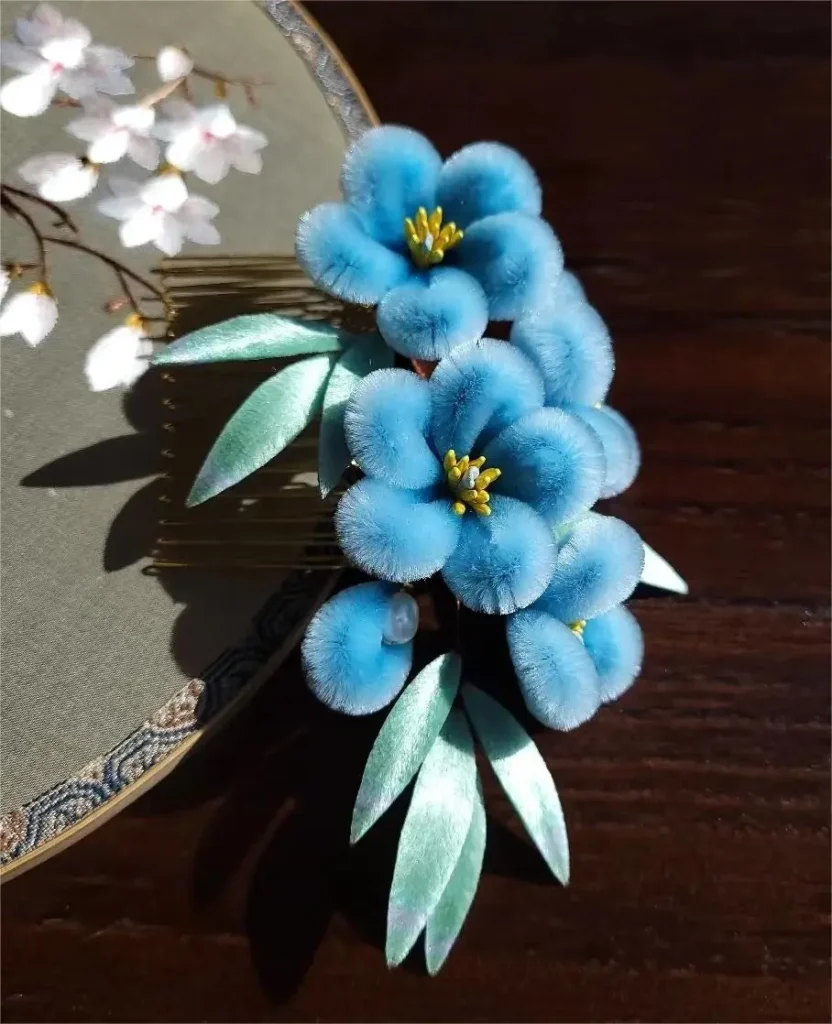
The beauty of Nanjing Velvet Flower lies in its perfect union of natural form and cultural meaning. Its artistry falls into four major categories — hair ornaments, hanging screens, wearable accessories, and animal figures — each weaving its own thread of heritage.
1. Hair Ornaments (Zanhua): Flowing Poetry for the Hair
In ancient China, Ronghua hairpins were the finishing touch of a lady’s attire. The “palace flowers” mentioned in Dream of the Red Chamber refer precisely to this craft. The Ming classic Pounding the Table in Amazement describes a matchmaker “with red, misty Ronghua on her head,” capturing its fashionable allure.
Modern inheritor Zhao Shuxian revived this tradition for the hit drama Story of Yanxi Palace, designing 19 exquisite Ronghua headpieces using the Kingfisher Feather Inlay (Diancui) technique. The pearl Ronghua worn by “Empress Fucha” — crafted from 0.3 mm copper wire wrapped in silk floss — became a symbol of Tang-inspired elegance reborn.

2. Hanging Screens: Three-Dimensional Poetry on Silk
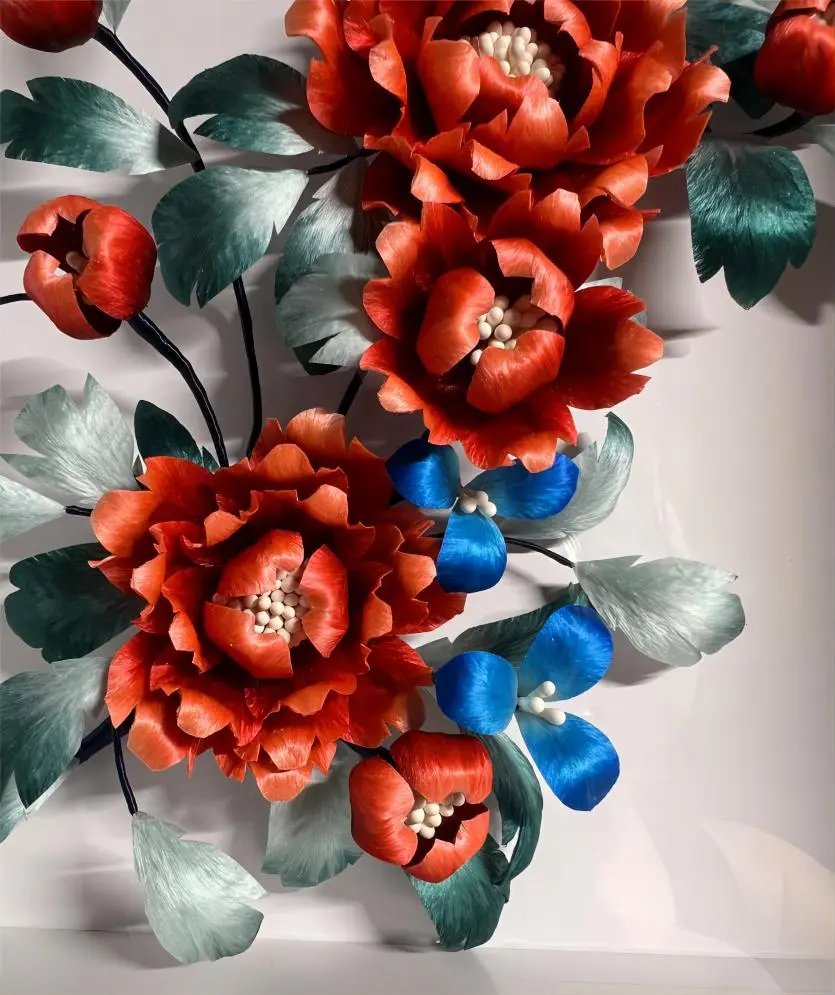
Velvet hanging screens mark the creative peak of Nanjing Ronghua. Master artisan Zhou Jiafeng’s “Longevity with Pines and Cranes” (Song Ling He Shou Tu) — measuring 188 cm × 105 cm — features thirty red-crowned cranes among ancient pines, symbolizing enduring vitality. Similarly, the “Dragon and Phoenix Bring Good Fortune” wedding screen intertwines auspicious motifs in a silk-based relief, making Ronghua a true “embroidery that can hang.”
3. Ornaments and Animals: A World of Elegance in the Palm of Your Hand
Miniature Ronghua ornaments showcase masterful precision. Zhao Shuxian’s “Panda Holding Bamboo” combines black silk outlines with soft white velvet, while the leaves glow with gradient dyeing. The “Velvet Bird” series, using the Tapering (Dajian) technique, layers feathers so finely that the sparrow and peacock seem ready to flutter off the silk.
III. Seeking Fragrance in Jinling: Experiencing the Velvet Flower in Nanjing
For those eager to experience this living heritage firsthand, Nanjing offers several delightful options.
1. Nanjing Folk Museum (Guanxi’s Former Residence)
2. Wuyihuang Velvet Flower Flagship Store (Laomendong Branch)
Located at No. 78 San Tiaoying in the Qinhuai District, this boutique managed by Zhao Shuxian features over 100 Ronghua works. Recommended souvenirs include Mini Velvet Flower Brooches and the collector’s “Twelve Flower Gods” hanging screen, inspired by The Peony Pavilion.
3. Dongxiangmen Yinfei Heritage Center
Hidden in a quiet alley, this youthful studio merges tradition with innovation. Here, Ronghua meets modern materials like resin and metal, creating Cyberpunk-style hairpins that blend ancient grace with futuristic flair — a favorite among young travelers.

IV. Travel Tips: Decoding Velvet Flower Culture
- Purchase Guide: Traditional Ronghua should be kept away from humidity; creative products are typically waterproofed.
- Workshop Etiquette: Ask permission before photographing or touching unfinished works.
- Cultural Note: Red Ronghua symbolizes celebration and is ideal for weddings, while white Ronghua is used for mourning — avoid gifting it casually.
Conclusion: Threads Endure, Prosperity Remains
When your fingertips brush against the soft silk floss and you hear the crisp “snip” of scissors shaping a petal, you are not just crafting a flower — you are partaking in a dialogue across a thousand years of Chinese civilization.
Nanjing Velvet Flower transforms simple silk and copper wire into a timeless symbol of grace, craftsmanship, and the human longing for beauty. In Nanjing — a city where ancient elegance meets modern creativity — these everlasting Oriental blooms invite you to experience their artistry with your own eyes and heart. Discover more in our China Cultural Heritage Tours Collection to plan your journey.