Potala Palace Travel Guide: Visiting Lhasa’s Iconic Landmark
I. Why Potala Palace Matters
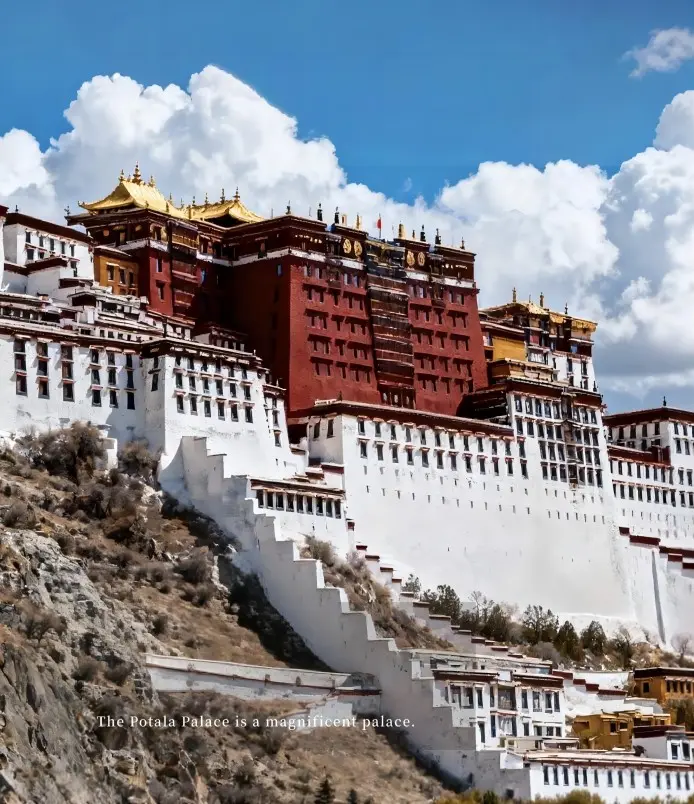
Rising above Lhasa on Marpo Ri (Red Hill), Potala Palace is the most recognizable symbol of Tibet. Listed as a UNESCO World Heritage Site in 1994, it is both a historic seat of political authority and one of the most important sites in Tibetan Buddhism.
The present structure dates largely to the 17th century, when it was expanded under the Fifth Dalai Lama. For centuries, it functioned as the winter residence of the Dalai Lamas and the administrative center of old Tibet.
Today, Potala Palace is no longer a residence but a protected cultural monument. Visiting it is less about entering a palace and more about walking through layers of Tibetan history.
II. Understanding the Palace Layout
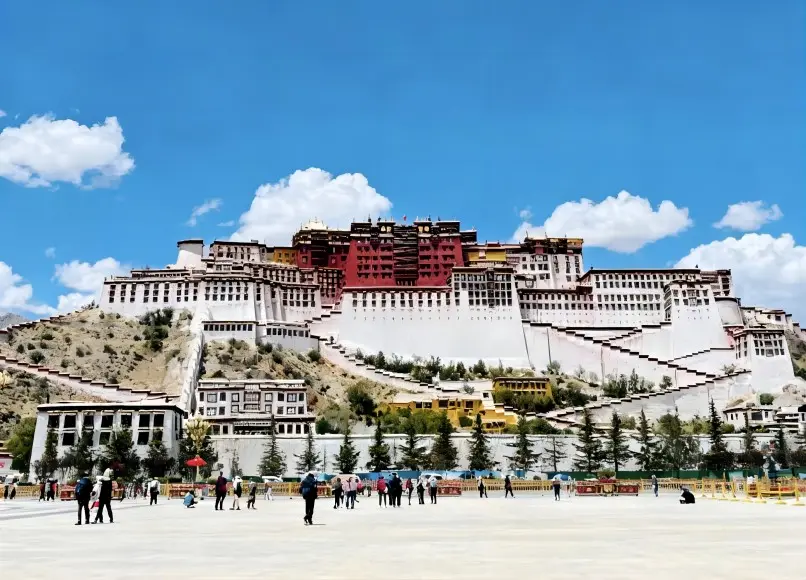
The complex is divided into two main sections:
The White Palace
The White Palace served as the administrative and living quarters. Here, the Dalai Lamas handled political affairs and daily governance. The rooms are relatively simple compared to the religious halls, reflecting its secular function.
The Red Palace
The Red Palace is the spiritual core of the complex. It houses:
- Assembly halls for Buddhist study
- Numerous chapels
- Eight stupas containing the remains of past Dalai Lamas
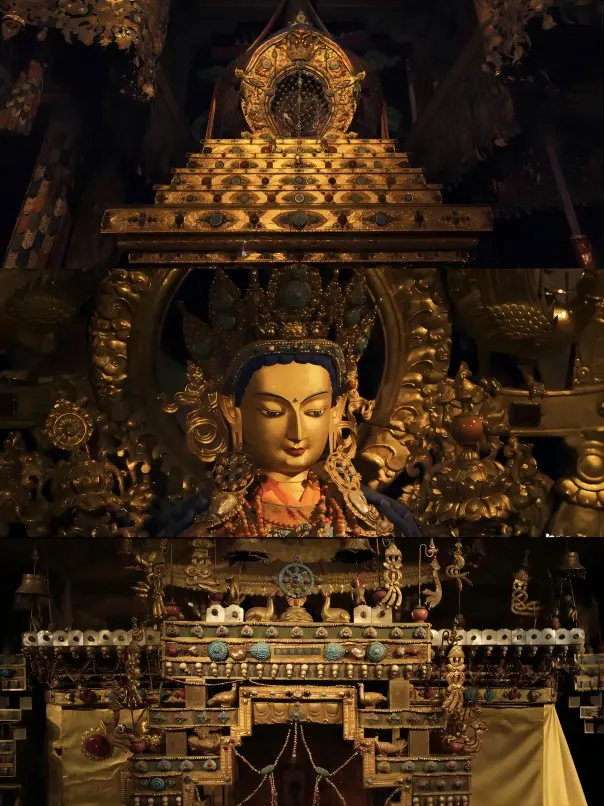
The most striking is the gilded stupa of the Fifth Dalai Lama, richly decorated with gold and precious stones. The Red Palace also preserves extensive murals and thousands of thangka paintings.
Architectural Significance
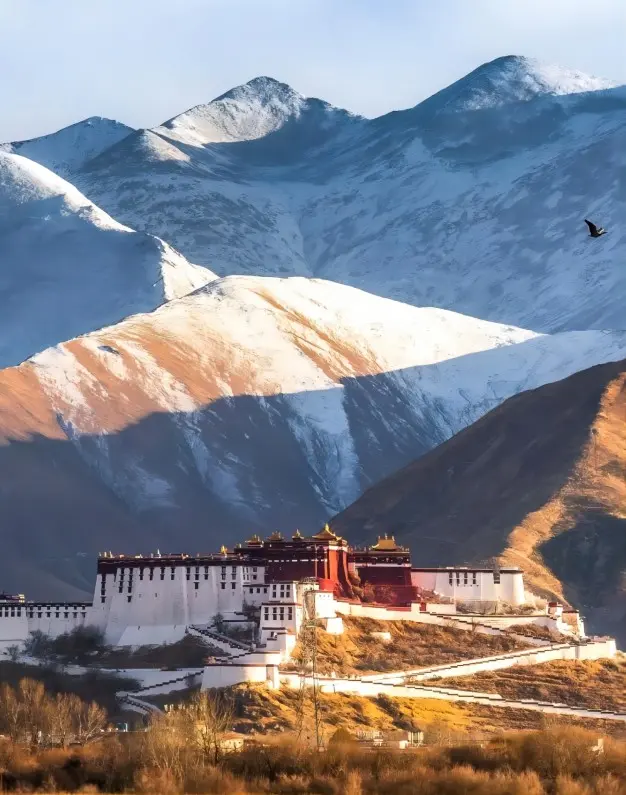
At 3,700 meters above sea level and rising 117 meters high, the palace dominates Lhasa’s skyline. Its inward-sloping white walls, golden roofs, and fortress-like structure reflect both defensive needs and religious symbolism.
III. Practical Visitor Information
Tickets
- Peak Season (May 1 – Oct 30): 200 RMB
- Off-Season (Nov 1 – Apr 30): 100 RMB
Advance booking through the official system is required, especially during peak months. Daily visitor numbers are strictly limited.
Opening Hours
Morning and afternoon entry slots
Closed on Mondays (subject to seasonal adjustment)
Once inside the main palace halls, visitors are generally required to complete the interior route within approximately one hour.
Altitude Considerations
Lhasa sits at high elevation. Do not schedule your Potala visit on your first day in Tibet. Allow at least 24–48 hours to acclimate before climbing the palace stairs.
Move slowly on the zigzag stone pathway. Shortness of breath is common and normal at this altitude.
IV. Visiting Tips & Etiquette
- Carry passport or ID for security checks.
- Dress modestly; hats must be removed inside.
- Photography is strictly prohibited inside the halls.
- Do not step on door thresholds.
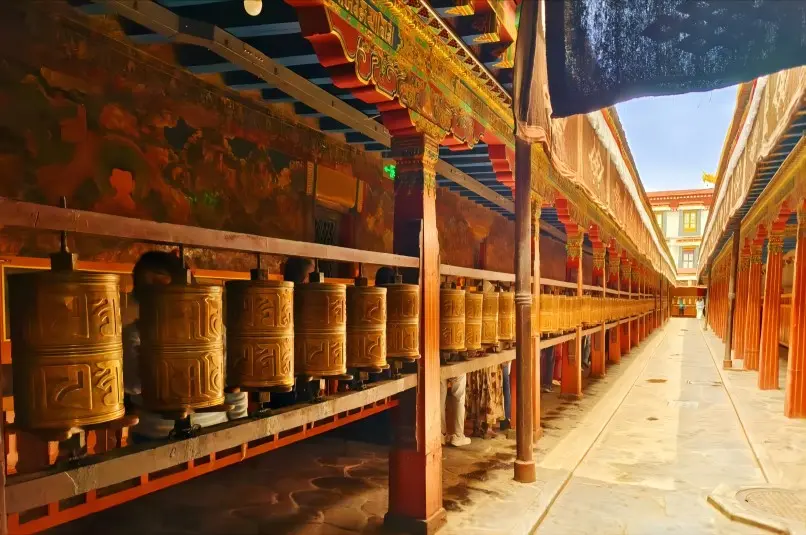
- Always move clockwise where indicated.
Potala Palace remains a site of religious reverence. Quiet, respectful behavior is expected.
V. What to Focus On During Your Visit
Because interior time is limited, prioritize:
- The Great West Hall murals
- The gilded stupa of the Fifth Dalai Lama
- The Dharma King’s Cave (traditionally linked to early Tibetan kings)
- Rooftop views overlooking Lhasa
Outside the palace, walk around the base with local pilgrims completing their kora (circumambulation).
VI. A Balanced Day Around Potala Palace
Early Morning – Photograph the palace from Potala Square before crowds arrive.
Mid-Morning – Enter via your reserved time slot and complete the interior route.
Late Morning – Walk behind the palace through Lukhang Park to see its reflection in the lake.
Afternoon – Continue to Jokhang Temple and explore Barkhor Street to understand the religious life that once revolved around the palace.
After exploring Potala Palace, continue your journey to the spiritual heart of Lhasa at Jokhang Temple, located in the old town. While Potala represents political authority, Jokhang reflects the devotional life that has shaped the city for centuries.
Sunset – View the palace from Chakpori Hill for a classic panoramic perspective.
VII. Why Potala Palace Leaves Such an Impact
Potala Palace is not simply impressive because of its scale. Its significance lies in continuity — a fortress, monastery, and administrative center unified in one structure.
For travelers, it offers three dimensions at once:
- Political history
- Religious tradition
- Architectural achievement
Climbing its stone steps at high altitude is physically demanding. That challenge is part of the experience. By the time you reach the upper terraces, the view over Lhasa makes the effort worthwhile.
Potala Palace does not rely on spectacle. Its presence alone defines the city. Potala Palace is just one of many iconic Buddhist sites across the country—if you’d like to explore more, this guide to famous temples in China offers a broader perspective.