Shu Embroidery (Shuxiu) in Chengdu: A Guide to China’s Silk Art on a Needle Tip
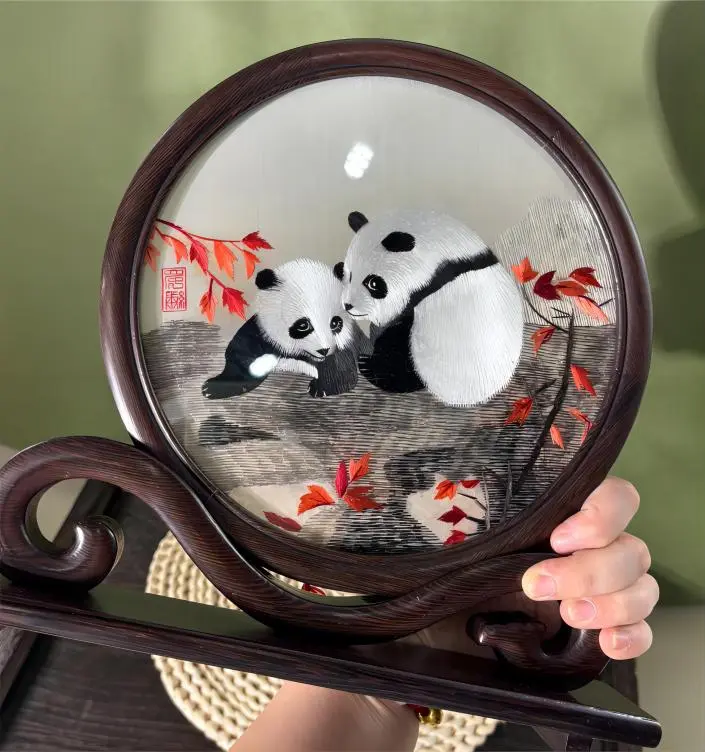
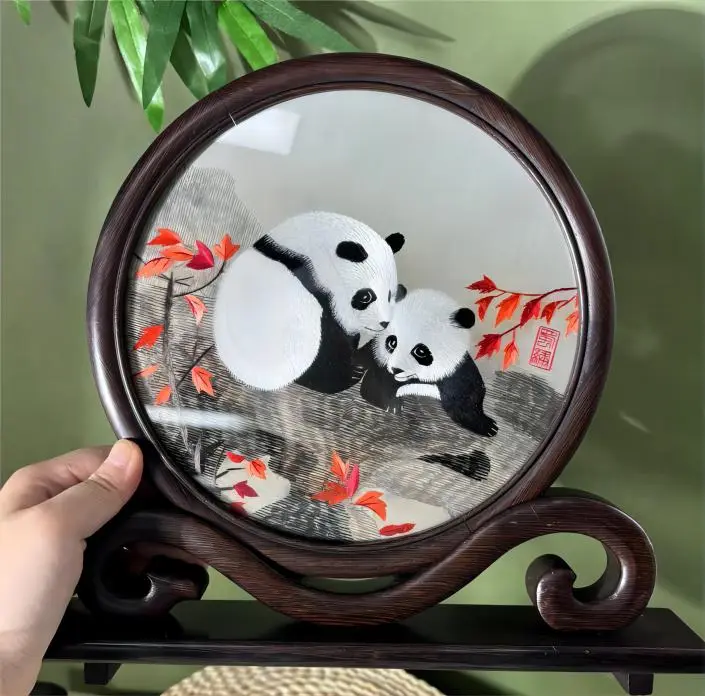
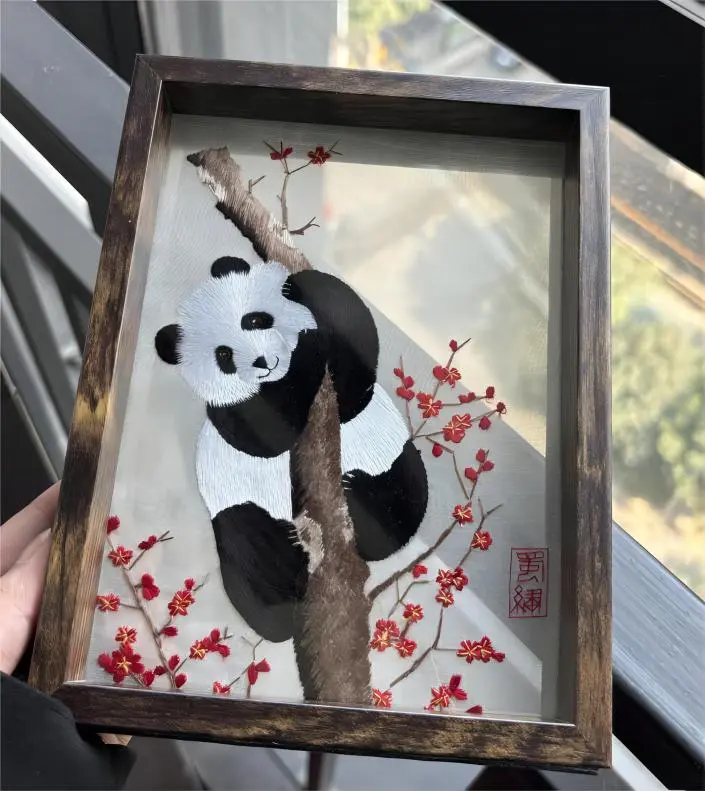
When French designer Emily first touched a double-sided Shu Embroidery (Shuxiu) piece in Kuanzhai Alley, her fingertips seemed to trace a millennium of artistry. On one side, a panda peeked playfully; on the reverse, a hibiscus bloomed in delicate detail—two contrasting images thriving on the same silk. It felt like a masterpiece of time weaving itself. Recognized by UNESCO as an Intangible Cultural Heritage of Humanity, Shu Embroidery is celebrated as one of China’s Four Great Embroideries, and its 122 stitch techniques encode the cultural soul of the Bashu region.
1. The History of Shu Embroidery (Shuxiu): From Ancient Roots to Global Runways
Shu Embroidery’s lineage stretches back to the artistic legacy of Sanxingdui. Archaeological finds—like bronze masks with vertical eyes—mirror the aesthetic of Shu’s “rolling stitch” methods. At the Jinsha site, jade zhang scepters bear geometric motifs that resemble early embroidery patterns. In the Han Dynasty, scholar Yang Xiong documented Chengdu’s textile workshops in Shudu Fu, noting scenes of “silks spread, threads poised”—a society interwoven with embroidery.
By the Tang and Song eras, Shuxiu evolved into a refined system with over a hundred stitch varieties. Qing Dynasty masters brought it to full bloom. At the 1915 Panama-Pacific Exposition, a Shuxiu work titled “Sleeping Lion” won a gold medal, surprising Western audiences with the gleam and texture produced by silk threads just 0.02 mm thick. In modern times, the “Sun and Immortal Birds” piece flew aboard Shenzhou-6 spaceflight, and embroidered peony designs adorned the 2008 Olympic medals—symbols of “Oriental Aesthetics on a Needle Tip.”
2. Inside Shu Embroidery: 122 Stitch Techniques and Hidden Magic
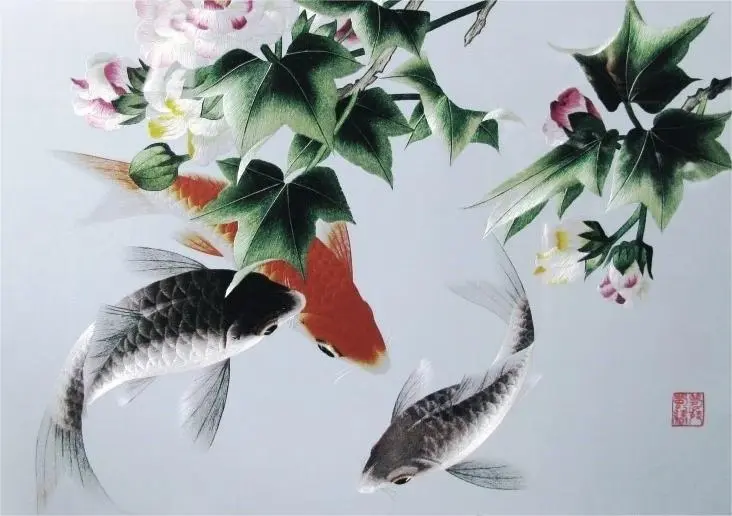
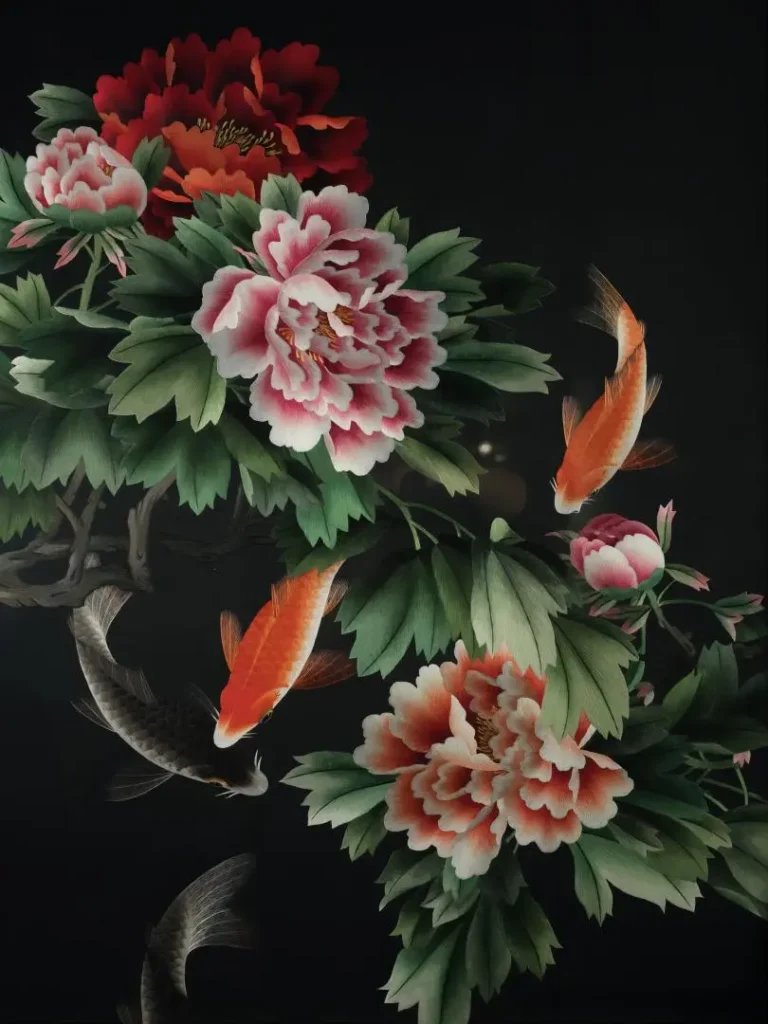
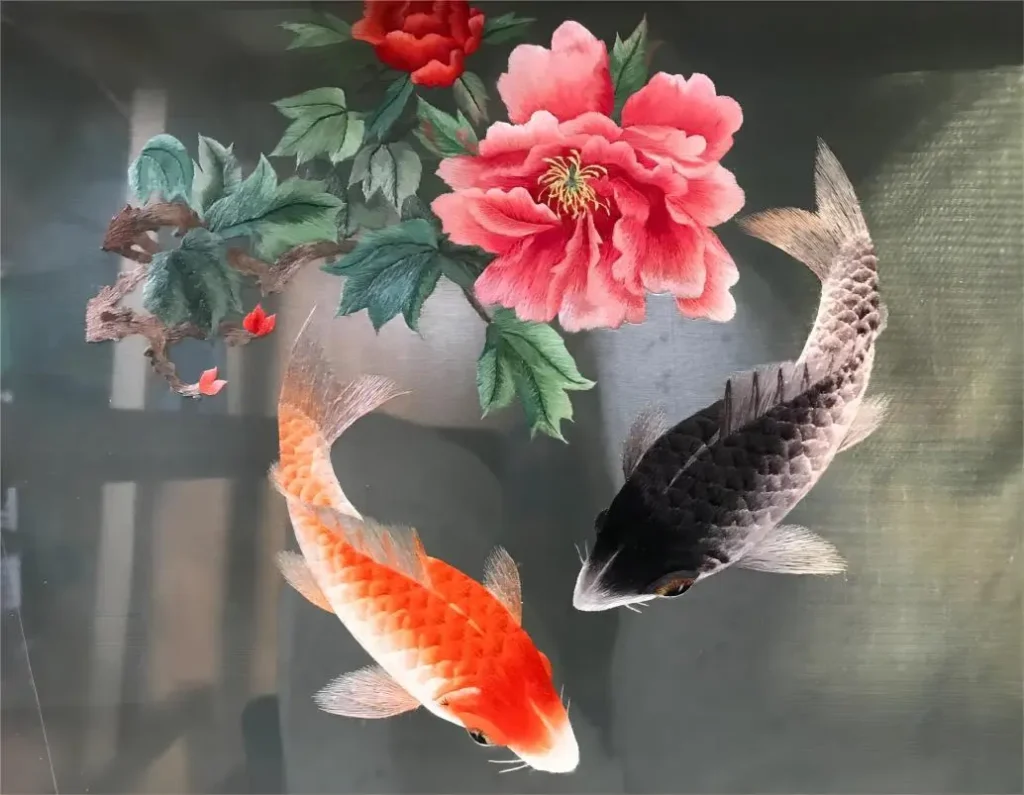
What makes Shuxiu so mesmerizing? It treats needle as brush and thread as ink. In the Hibiscus and Koi Fish work by inheritor Hao Shuping, light and shade dance across fish scales using the Blended Stitch (Yunzhe), layering twelve threads to produce gradual color transitions from gold to azure. In dual-side masterpieces like Nine Cubs: Panda, nine pandas appear on the front, while nine hibiscus blooms lie hidden on the back—executed by the legendary Yin-Yang Stitch.
One of the most sophisticated methods is the Patterned Brocade Stitch (Yijin Wen Zhen), elegantly combining Shuxiu with modern embellishments like Swarovski crystals. For instance, at the 2025 Vogue Gala, actor Gong Jun wore a suit embroidered with pandas—complete with an inner Shuxiu detachable bowtie—bridging traditional craft and contemporary fashion. Such innovations have brought Shuxiu from museum showcases into the international spotlight as a symbol of China Chic.
3. Where to See and Experience Shu Embroidery in Chengdu
🎨 Must-See Exhibitions
- “Journey to the West” Shuxiu Scroll at the Sichuan Intangible Cultural Heritage Museum: 72 stitches recreate mythic scenes.
- “The Night Revels of Han Xizai” at the Shu Embroidery Museum: silk threads as fine as 0.01 mm capture folds and expressions.
- “A Thousand Li of Rivers and Mountains” Dynamic Screen atop Chengdu IFS: light and shadow make landscapes shift like living paintings.
🧶 Workshops & Interactive Spots
- Shujiang Embroidery Institute (Luomashi, Chengdu): for ¥35, visitors can stitch a panda pendant while instructors explain techniques through animation.
- Anjing Shu Embroidery Park: try “heritage rubbing” where you press Shuxiu motifs onto fabric or T-shirts.
- Wenjiang Shu Brocade World: watch live demonstrations of Gauze Stitch (Shaxiu), where translucent threads weave ethereal scenes.
4. Understanding the Art and Symbolism of Shu Embroidery
- Stitch Vocabulary: Yunzhe (Blended Stitch) for tonal flow; Gunzhen (Rolling Stitch) for contours; Canzhen (Graduated Stitch) for seamless color shifts.
- Color Semantics: Red signals fortune and joy, Green evokes growth and vitality, Gold signifies prestige and power.
- Shopping Wisdom: Beware of “¥99 Shuxiu” souvenirs in tourist zones—they are often mass-machine imitations. Genuine pieces typically incorporate three or more stitch techniques, with varied thread directions and depth.
5. Modern Revival: How Shu Embroidery Is Evolving Today
Modern designers are fusing Shuxiu techniques into global fashion. The 2025 Vogue Gala panda-embellished suit is one example; others include streetwear brands weaving Shuxiu motifs into jackets, handbags, and accessories. These reinterpretations affirm that Shu Embroidery is not relic—I t’s a thriving craft bridging heritage and modern identity.
When travelers pose in Kuanzhai Alley wearing Hanfu, replicating Shuxiu motifs in selfies, they contribute to a living artistic dialogue between China’s past and present.
Final Thoughts
If you visit Chengdu, a stop at a Shu Embroidery workshop or museum is a must. You’ll not only see but touch centuries of Chinese silk art. In its shifting threads lie stories of myth, civilization, and modern reinvention. Let your fingers explore the tapestry of Bashu history—one stitch at a time.
Discover more in our Chengdu Tourist Attractions Collection and China Cultural Heritage Tours Collection to plan your journey.