Sichuan Pickles (Paocai): A Local Chengdu Food Guide for Travelers
Sichuan Pickles: The Magical “Crunch” of Chengdu
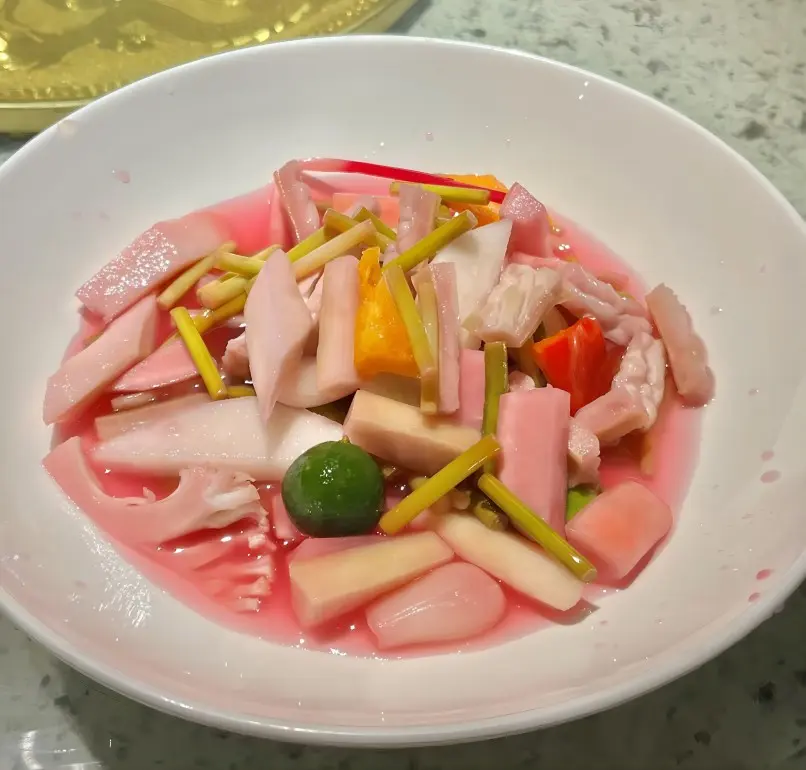
If hot pot is Chengdu’s “fire,” and Twice-Cooked Pork represents its boldness, then Sichuan Pickles (Paocai) are the city’s gentle magic.
These sour, spicy, and irresistibly crunchy bites make plain rice exciting and help balance rich, oily Sichuan dishes. Many travelers are surprised to find that Sichuan pickles become their favorite part of the meal.
This guide introduces the most common types of Sichuan pickles and shows you where and how to enjoy them like a local in Chengdu.
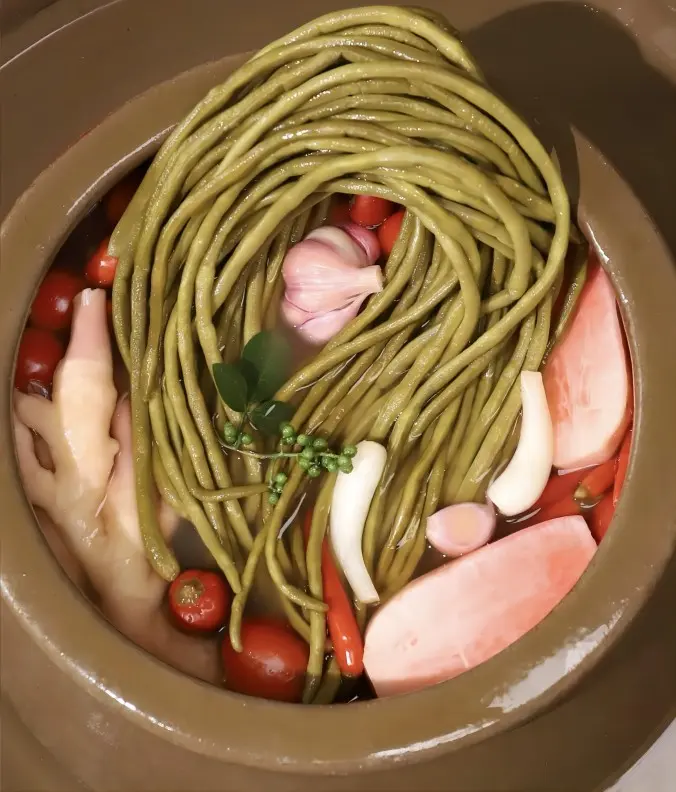
1. What Makes Sichuan Pickles Special?
Sichuan pickles are more than a side dish — they are a culinary tradition passed down through generations. Fresh vegetables are fermented in ceramic jars using water, salt, Sichuan peppercorns, and chilies.
- Sour: Naturally fermented, refreshing, and clean — never harsh.
- Spicy: Made with local Erjingtiao chilies for balanced heat.
- Crunchy: Every bite delivers a satisfying “ka-cha” sound.
- Fresh: Fermentation enhances the vegetables’ natural sweetness.
💡 How locals eat Sichuan pickles:
- With Rice: Chop and stir into hot rice — a true “rice killer.”
- With Hot Pot: Eat between bites to refresh your palate.
- With Noodles: Add on top for extra sour-spicy depth.
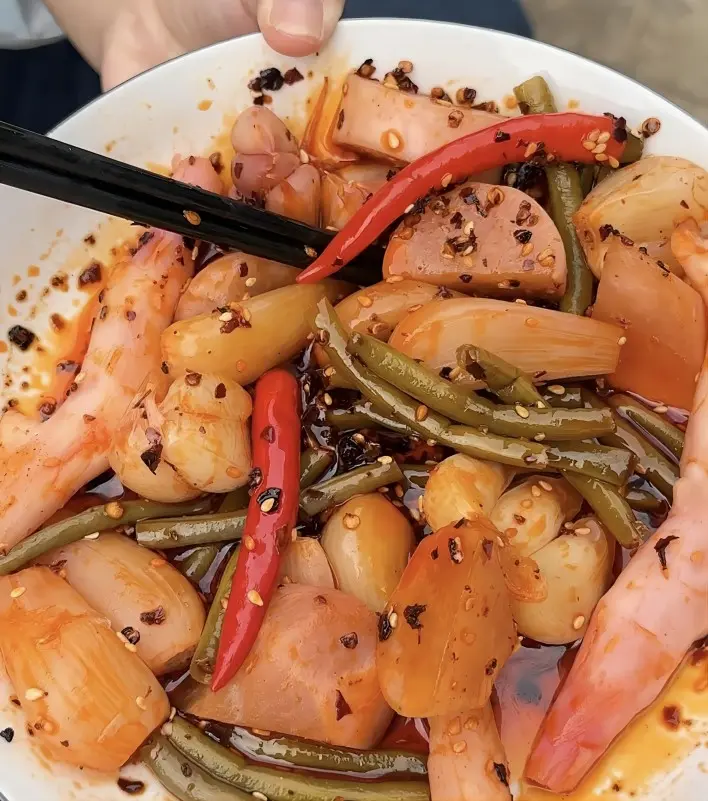
2. Five Popular Styles of Sichuan Pickles
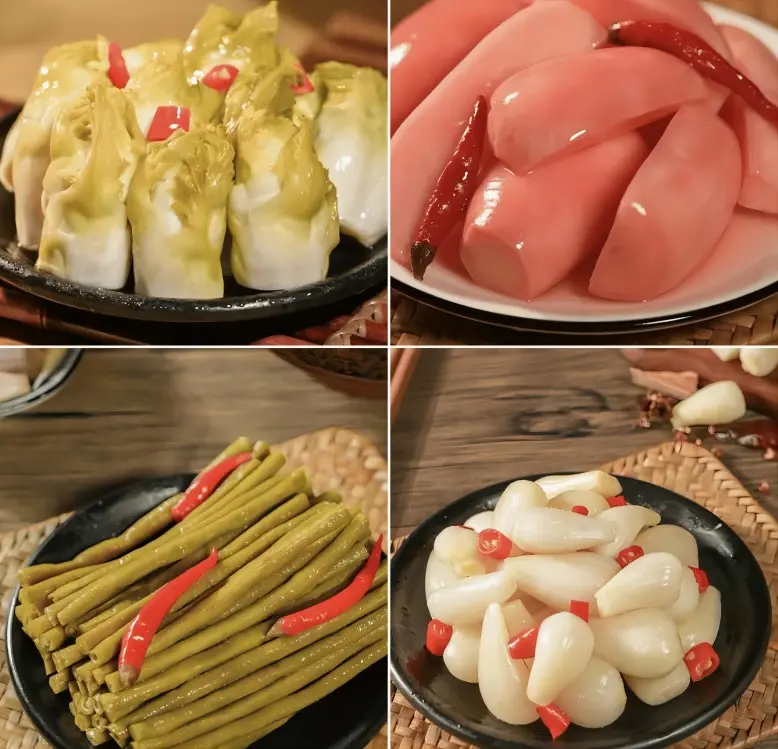
1. Crunchy Classics (Short-Term Pickles)
- Vegetables: Radish, carrots, cabbage, cucumber
- Style: Fermented for 1–3 days; light, crisp, and mild
- Best for: First-timers
- Local Favorite: Thick radish strips dipped in chili powder
2. Soft & Savory (Long-Term Pickles)
- Vegetables: Long beans, celery, garlic sprouts
- Style: Fermented over a week; deeper sourness and umami
- Best for: Stir-frying with minced pork (Paoganrou)
3. For Spice Lovers
- Vegetables: Young ginger, fresh red chilies
- Style: Bold, spicy, and aromatic
- Best for: Adventurous eaters
- Tip: Pickled young ginger cleanses the palate surprisingly well
4. Sweet & Spicy Fruit Pickles
- Ingredients: Apple, pear, green papaya
- Style: Light fermentation with fruity sweetness
- Best for: Dessert-style snacking
- Taste: Like a fermented fruit salad
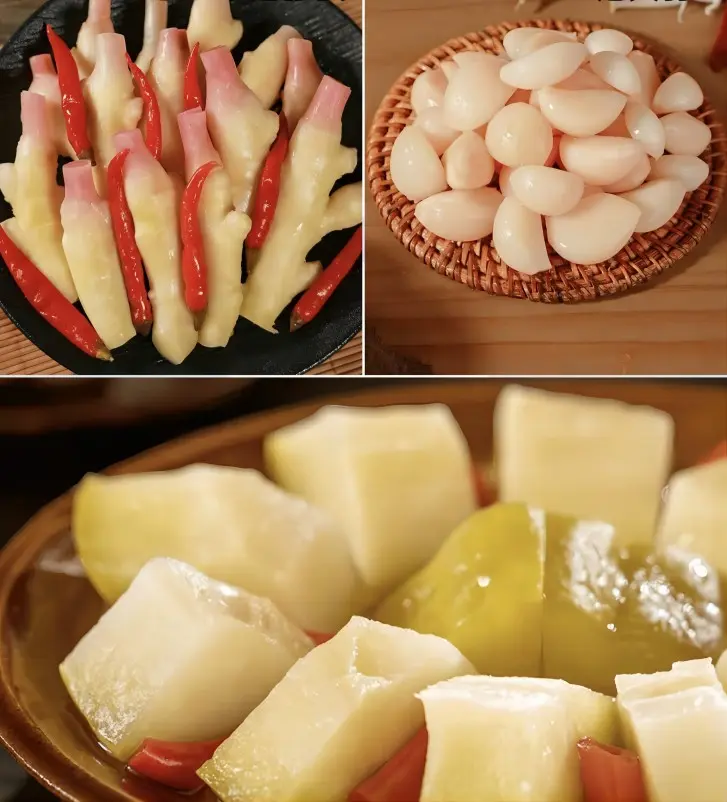
5. The Wild Cards
- Vegetables: Garlic, onion, bitter melon
- Style: Unique and surprising
- Highlight: Pickled garlic becomes sweet and soft; bitterness fades
3. Where to Find the Best Sichuan Pickles in Chengdu
The “Blind Box” Experience (Almost Any Restaurant)
- Where: Sichuan restaurants, noodle shops, hot pot places
- Price: Usually free or just a few RMB
- Tip: Every shop has its own jar and secret recipe
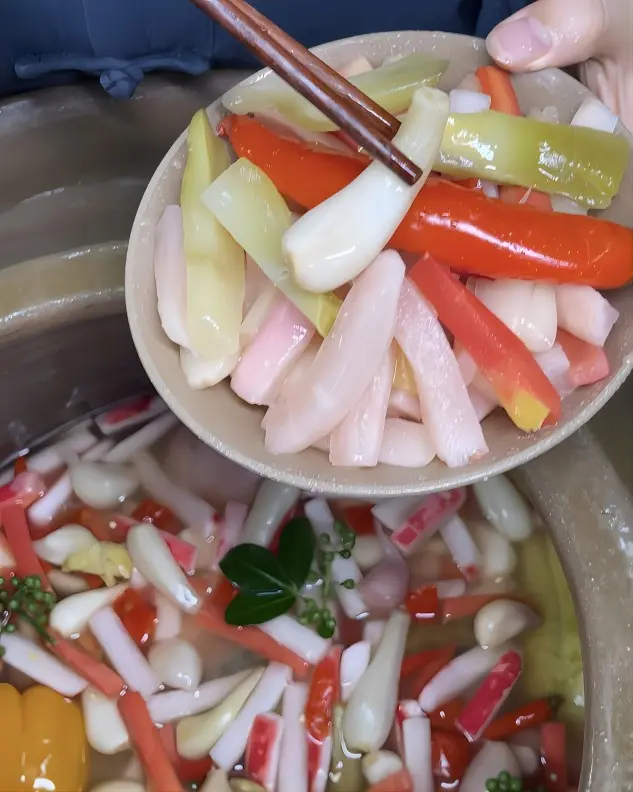
Zhang Lao Er Pickles (Qingyang District)
- Location: Near Kuanzhai Alley
- Vibe: Over 40 years old; recognized cultural heritage shop
- Highlight: Famous “old-jar pickles”
- Souvenirs: Vacuum-sealed packs available
Yulin Wet Market (Wuhou District)
- Location: Near Yulin Road
- Vibe: Bustling local market
- Highlight: Dozens of pickle stalls
- Price: Big mixed bags for around 10 RMB
- Tip: You can taste before buying
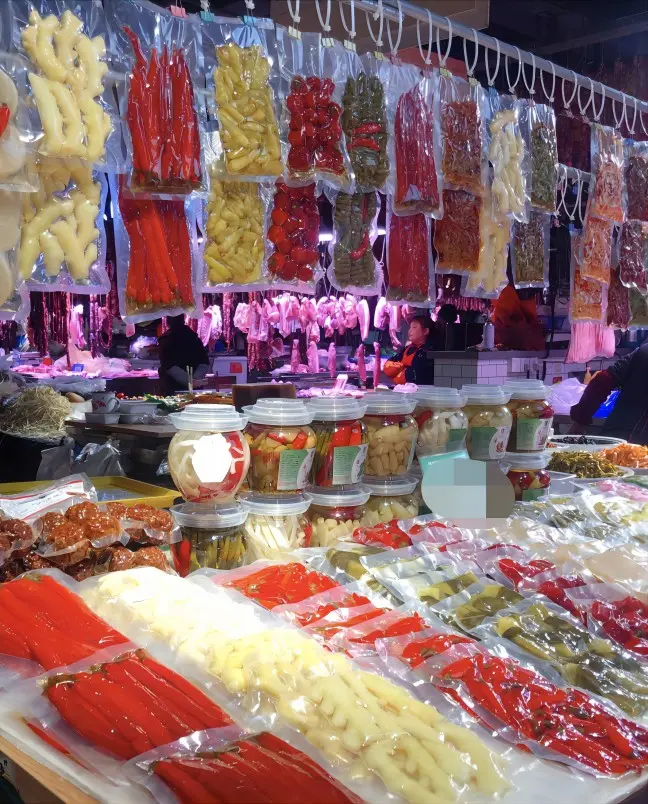
4. Practical Tips for Travelers
- Too Spicy? Ask for “Xi Zao Pao Cai” (washed pickles)
- Cooling Pairings: Bingfen (sweet ice jelly) or soy milk
- Taking Home: Choose vacuum-sealed packs and refrigerate after opening
Conclusion
Sichuan pickles are the heart of Chengdu’s slow, everyday food culture. They may not look fancy, but they make every meal better. Don’t leave Chengdu without trying at least three different kinds of Sichuan Paocai. For a deeper taste of the city, visit our Chengdu Local Food Trails guide to explore traditional snacks, street food, and the everyday dishes locals truly love.