Suzhou Day Trip from Shanghai: A Complete Guide to the UNESCO Classical Gardens
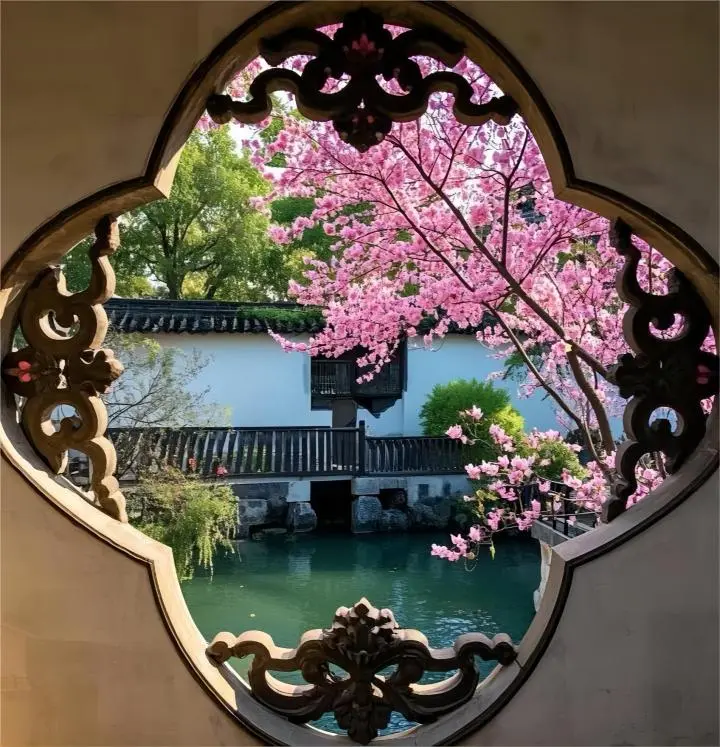
A Suzhou day trip from Shanghai is one of the most rewarding cultural excursions for international travelers. Just 23–30 minutes away by high-speed rail, Suzhou offers a serene world of classical beauty that contrasts dramatically with Shanghai’s futuristic skyline. The city is home to nine UNESCO Classical Gardens, each a masterpiece of Chinese aesthetics, spatial philosophy, and poetic craftsmanship.
These gardens are more than historical attractions—they are the highest achievements of classical Chinese garden design. The UNESCO-listed sites include: Humble Administrator’s Garden, Lingering Garden, Lion Grove Garden, Master of the Nets Garden, Canglang Pavilion, Mountain Villa with Embracing Beauty, Couple’s Garden Retreat, Garden of Cultivation, and Retreat and Reflection Garden. Though compact in size, each garden demonstrates the Eastern philosophy of “recreating the universe within a confined space.”
I. Why Suzhou Gardens Are Unique: A Living 3D Scroll of Oriental Aesthetics
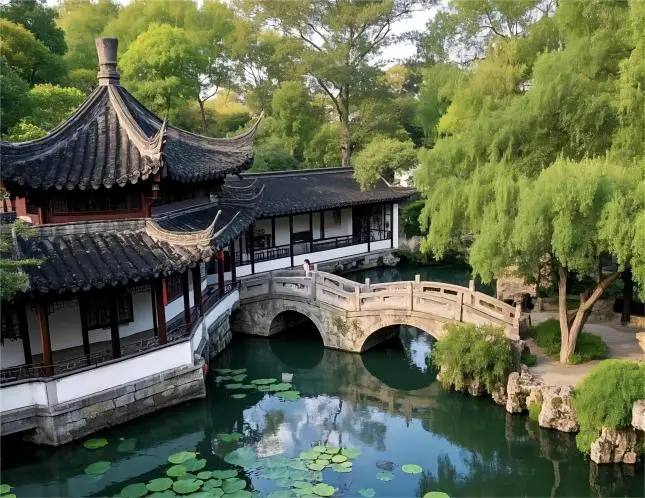
Suzhou’s Classical Gardens are designed as immersive, walkable scrolls where the scenery shifts with every step—Yībù Huàn Jǐng, or “one step, one view.” Their beauty comes from the interplay of five core elements.
1. Water: The Garden’s Soul
Water typically takes up more than 60% of a Suzhou garden, but it is never used as a simple pond.
In Humble Administrator’s Garden, the main water body is subtly divided by zigzag bridges and arching pavilions around the “Hall of Distant Fragrance.” This “large division, small gathering” layout creates depth and shadow across the water.
Near the “Studio of Enlightenment,” even the flow speed is intentionally controlled, creating natural lotus patterns—an example of how Suzhou gardens turn nature into artwork.
2. Rockeries: Sculpted Landscapes in Miniature
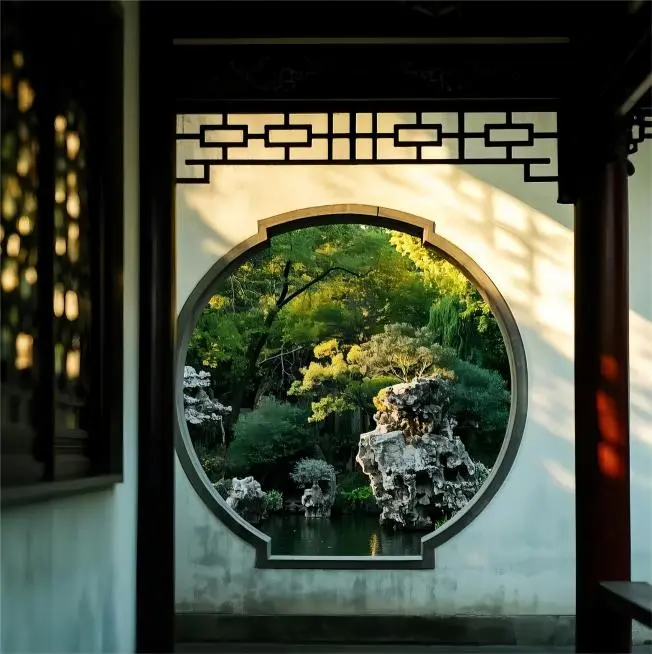
The rockery maze at Lion Grove Garden is legendary. Built with more than 120 tons of Taihu stones—known for the qualities thin, wrinkled, open, and permeable—the garden forms 21 caves and 12 winding paths.
Some stones resemble crouching lions; others float like clouds. The best formations hide miniature peaks and valleys inside stone crevices, creating what ancient artisans called “mountains within stones.”
3. Architecture: Geometry Made to Breathe
Garden architecture is not merely functional.
The “Fragrant Snow Boat” in Humble Administrator’s Garden—part viewing platform, part tea room, part library—uses layered roofs to create a dynamic silhouette.
In Lingering Garden, the “Bright-Hued Pavilion” features a rare Sino-Western hybrid design, with Chinese sweeping eaves on one side and Gothic-inspired elements on the other, predating European Art Nouveau by centuries.
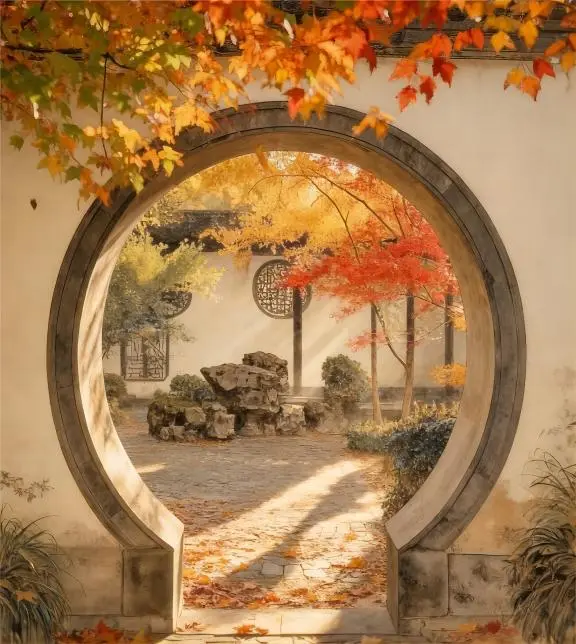
Decorative “flower windows”, carved in shapes like gourds, fans, and hexagons, act as natural viewfinders that frame outdoor scenery into ever-changing paintings.
4. Plants: Borrowing Nature, Borrowing Seasons
Planting in Suzhou gardens follows the principle of “imitating nature.”
The “Studio Beyond the Bamboos” features rare purple bamboo with a natural red-violet gradient.
In Lingering Garden, centuries-old cypress and privet trees interlock to form a green dome.
One of the most poetic techniques is “borrowed scenery.” From Humble Administrator’s Garden, tall trees frame the distant North Temple Pagoda—3 kilometers away—creating the iconic “Pagoda Shadow Pavilion.”
5. Light and Shadow: Time as Art
Suzhou gardens treat sunlight as a moving ink brush.
At Canglang Pavilion, 108 perforated windows scatter light across the “double corridor,” creating a shifting mosaic across the ground.
In Lingering Garden, the “Hall of Five Peaks” contrasts bright halls with dim side rooms to produce dramatic chiaroscuro effects.
At the “Studio with Whom to Sit,” a circular patch of light cast through a fan-shaped window appears only in late afternoon—a photographer’s favorite minimalist moment.

II. The Three Must-See Gardens for a Suzhou Day Trip
If your Suzhou day trip from Shanghai is limited to one day, prioritize these three UNESCO gardens.
1. Humble Administrator’s Garden: Dialogue Between Water and Architecture
This is Suzhou’s largest and most famous garden—essential for first-time visitors.
The “Hall of Distant Fragrance” offers 360-degree views of lotus ponds in summer.
Blue glazed tiles on the “36 Pairs of Mandarin Ducks Hall” shimmer under sunlight, echoing the colors of the real mandarin ducks in the water.
Hidden View Tip:
Stand on the south side of the “Flying Rainbow Bridge” and use the arch to frame the “Fragrant Snow Boat.” The resulting composition resembles the classic painting A Thousand Li of Rivers and Mountains.

2. Lingering Garden: A Masterclass in Spatial Folding
Lingering Garden excels at creating “small spaces revealing grand effects.”
Its 2.3 hectares are divided into four sections using two layout methods:
- Gathering views in the central zone (dense with stones and pavilions)
- Scattering views in the west (hidden paths, extended routes)
Don’t miss:
“One Step, Two Views” at “Flowery Steps Small Dwelling”—geometric courtyard from the east, mountain landscape from the west.
3. Lion Grove Garden: A Playground of Stones
This Yuan Dynasty garden is a paradise for rock enthusiasts.
Over 200 Taihu stones form a labyrinth where visitors squeeze through narrow passages—some only 40 cm wide—to find hidden carvings like “Five Lions Playing with a Ball.”
Tip: Bring a small flashlight to explore the dim caves behind the “Hall of True Delight.”

III. How to Get to Suzhou from Shanghai (Fastest Route)
A Suzhou day trip from Shanghai is extremely easy:
- From: Shanghai Hongqiao Railway Station
- To: Suzhou Railway Station
- Travel Time: 23–30 minutes by high-speed rail
- Frequency: Over 200 trains daily
Transport from Suzhou Station
| Destination | Route |
|---|---|
| Humble Administrator’s Garden | Subway Line 4 → North Temple Pagoda → Tourist Bus No.1 or taxi (10 min) |
| Lingering Garden | Subway Line 2 → Shilu Station → Walk 10 min |
| Lion Grove Garden | Subway Line 4 → North Temple Pagoda → Walk 15 min |
Suggested One-Day Itinerary
- Humble Administrator’s Garden – 2 hours
- Lingering Garden – 1.5 hours
- Lion Grove Garden – 1–1.5 hours
Total sightseeing: 5 hours
If short on time, reduce Lion Grove Garden to 1 hour focusing on the rockery maze.

IV. Tickets, Passes & Extra Recommendations
Suzhou Garden Tourist Pass
Includes all nine UNESCO gardens and saves up to 40% compared to buying tickets individually.
If you have extra time:
- Master of the Nets Garden – atmospheric evening Kunqu opera
- Garden of Cultivation – a quiet mini-garden loved by photographers
V. The Sunset Moment You Should Not Miss
As the sun sets, the whitewashed walls and black tiles glow gold. Stand on the “Wavy Corridor” in Humble Administrator’s Garden and look toward the North Temple Pagoda. The connection between Ming Dynasty garden architecture and a much older Buddhist pagoda captures the essence of Suzhou: ordinary materials creating timeless beauty. I think you’ll really enjoy this Suzhou Day Trip from Shanghai—it’s an easy, beautiful, and fun way to experience Suzhou. And if you’re planning more places to see in the city, check out my page on Shanghai Tourist Attractions for more ideas.