Discover Xi’an’s Terracotta Army: Awe-Inspiring Ancient Warriors
Unraveling the Mystery of the Terracotta Army: An Eastern Wonder That Transcends Time
When former French President Jacques Chirac first stood before the Terracotta Army in Xi’an, he famously remarked: “There were the seven wonders of the world, and the discovery of the Terracotta Warriors can be called the eighth.” This underground army, which slept for over 2,200 years, has become a must-see attraction for travelers worldwide. For those planning a comprehensive visit, check out our 2025 Xi’an Terracotta Army travel guide for step-by-step tips. National Geographic called it “the greatest archaeological find of the 20th century.” Let’s explore the history, culture, and travel tips for visiting the Terracotta Warriors.
Why the Terracotta Army in Xi’an Is a Must-See Attraction
1. Scale & Craftsmanship: A Masterpiece of Ancient Art
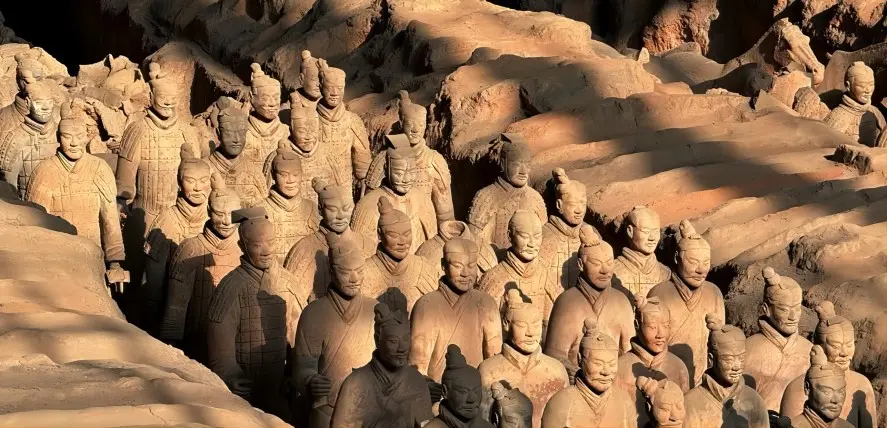
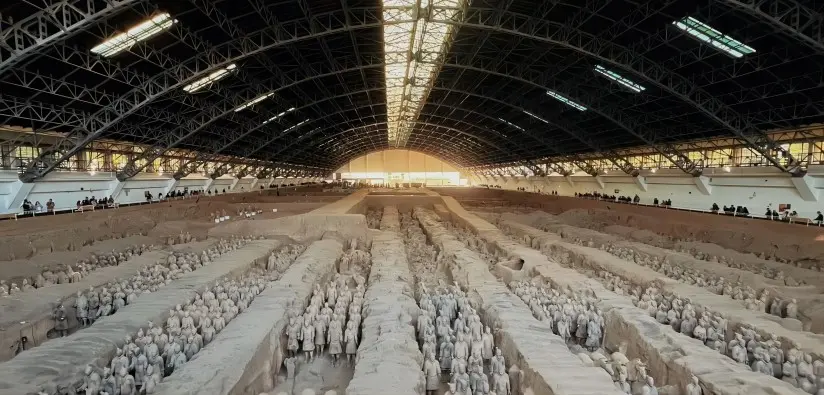
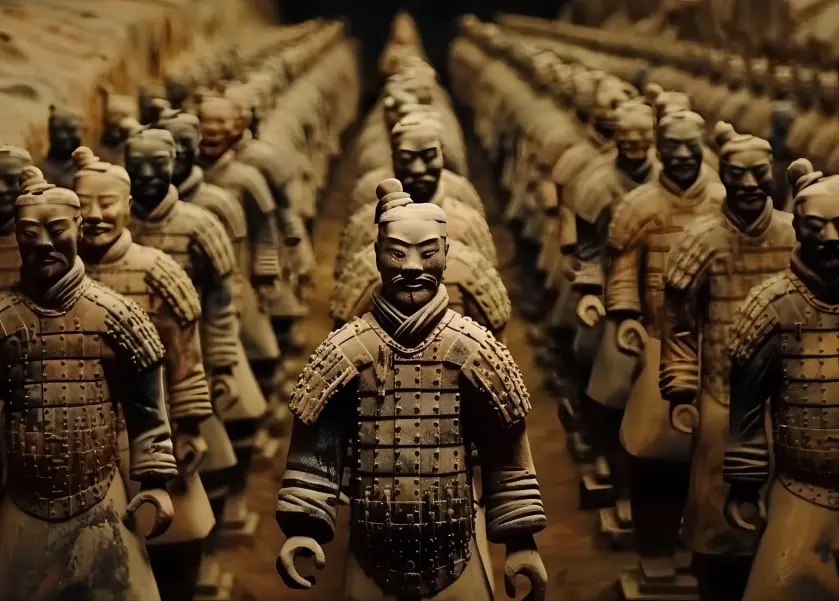
In 1974, farmers in Shaanxi province accidentally unearthed fragments of a pottery figure while digging a well. This led to the discovery of an “underground army” of more than 8,000 life-sized Terracotta Warriors and horses. Each figure has a unique face, hairstyle, and armor design. Archaeologists found that artisans used a combination of modular production and individual carving—a method that was 1,500 years ahead of its time in Europe.
Tip for readers: If you’re a history or archaeology enthusiast, Pit 1 offers the most iconic rows of soldiers to photograph.
2. Qin Shi Huang’s Historical Vision
As China’s first emperor, Qin Shi Huang not only unified the writing system, currency, and weights across the country but also replaced live human sacrifices with terracotta figures in his tomb—a practice UNESCO called “the end of human sacrificial burial.” The army’s formation mirrors modern military strategy, with a light infantry vanguard, cavalry on the flanks, and chariots with heavy infantry at the rear. In many ways, it’s a “holographic war simulator” created over two millennia ago.
3. Technology Bringing History to Life
The Terracotta Warriors Museum now uses 20-billion-pixel panoramic photography and AR headsets to show the original colors of the figures. Spectral analysis reveals that Qin Dynasty artisans used China’s earliest mineral pigments, including the mysterious “Chinese Purple,” a formula still not fully understood today.
Cultural Impact of the Terracotta Army
1. A Dialogue Between East and West
While Egyptian pharaohs expressed eternal power through pyramids, Qin Shi Huang chose a “realist” army to guard his afterlife. This unique approach inspired Western artists and historians alike. As a journalist from The Guardian noted: “This comes closer to the essence of humanity than any court painting.”
2. From Tradition to Modern Design
The museum’s “Geometric Warriors” IP uses vibrant colors to reimagine the figures and was featured at Paris Design Week. Collaborations like the “Bronze Crown” fashion line with LVMH bring Qin Dynasty aesthetics to contemporary audiences. For travelers, fun souvenirs include the “His Majesty’s Plush” series—adorable, cartoon-like versions of the warriors.
3. A Global Symbol in Pop Culture
From the “China 8-minute” performance at the Rio Olympics to the Qin Dynasty expansion in Assassin’s Creed: Odyssey, the Terracotta Army continues to inspire global audiences. Visiting the site, Georgian journalist Tarachef remarked: “These figures remind me of the Trojan Horse—but Qin Shi Huang’s story is even more stunning than a myth.”
Travel Tips for Visiting the Terracotta Warriors
- Avoiding Crowds: Arrive at 8:30 AM for Pit 1, or after 3 PM to explore the Bronze Chariots first. For a full breakdown of each pit, ticketing tips, and insider advice, see our detailed Terracotta Army museum guide.
- Hidden Gems: Rent an AR headset in Pit 2 to see the warriors in their original colors.
- Souvenirs: Must-have gifts include the “Bronze Sword Bottle Opener” and Terracotta Army building blocks.
Standing before a restoration artist’s workbench, piecing together fragments from over 2,000 years ago, visitors become “history decoders.” As Lonely Planet says, “Here, there are no boring exhibits—only the echoes of 2,200-year-old artisans in clay.”
Practical Information for Travelers
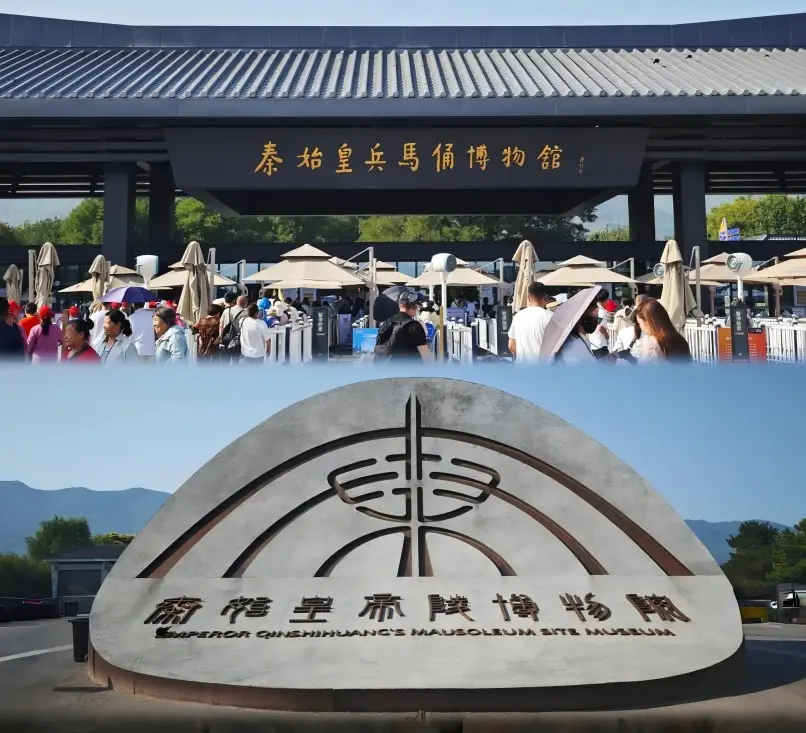
- Directions: About a 1-hour drive from central Xi’an, or take Metro Line 9 to Hwaqing Palace Station, then a 10-minute taxi ride.
- Hours: 8:30 AM – 6:30 PM (last entry 5:00 PM)
- Tickets: 120 RMB (includes Lishan Garden); students get 50% off.
As the setting sun turns the Terracotta Warriors golden, imagine stepping back in time to Qin Shi Huang’s underground empire—where every figure tells a story of eternity. For an in-depth itinerary and travel strategy, explore our complete 2025 Terracotta Army Museum guide.