

Zhongnan Mountain: Experience the Spirit of China’s Backbone
The Scene: Half of Chinese History in One Mountain
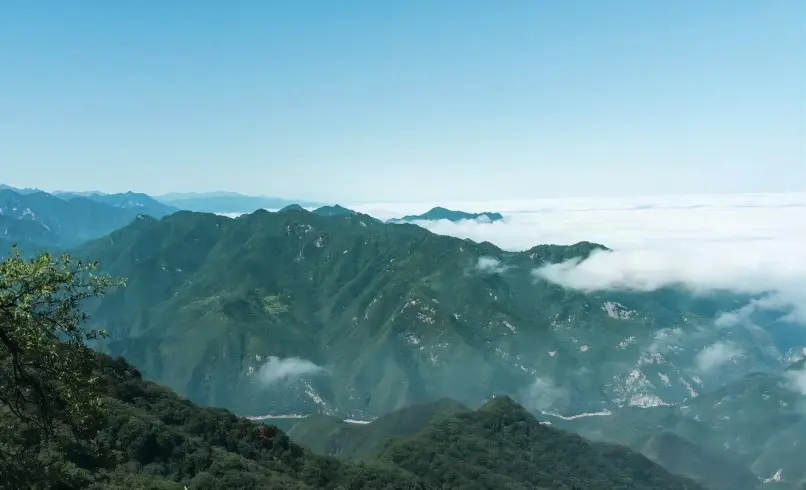
Flying over the Qinling Mountains, you see a misty ridge stretching like a resting dragon. This is Zhongnan Mountain, the geographic center of China.
It serves as the natural wall between north and south, separating the Yangtze and Yellow Rivers. For travelers, it is a “living museum.” Here, ancient Taoist temples, hermit huts, and untouched forests offer a walk through Eastern philosophy.

I. Nature: China’s “Central Mountain Range”
1. A Geographic Wonder
Zhongnan Mountain spans 120 kilometers in Shaanxi Province. Its highest peak, Mount Taibai, reaches 3,771 meters. The area is a UNESCO World Biosphere Reserve, home to rare species like giant pandas, golden monkeys, and crested ibises.
2. A Theater of Four Seasons
- Spring (March–May): Blooming azaleas in the valleys with snow-capped peaks.
- Summer (June–August): Cooler by 8–10°C than Xi’an, perfect for escaping city heat.
- Autumn (September–November): Red and gold foliage paints the valleys; high-altitude lakes shimmer under the sun.
- Winter (December–February): Frozen waterfalls and snow-covered pines create a traditional Chinese ink painting scene.
II. Culture: Taoism and Hermits
1. The Birthplace of Taoism
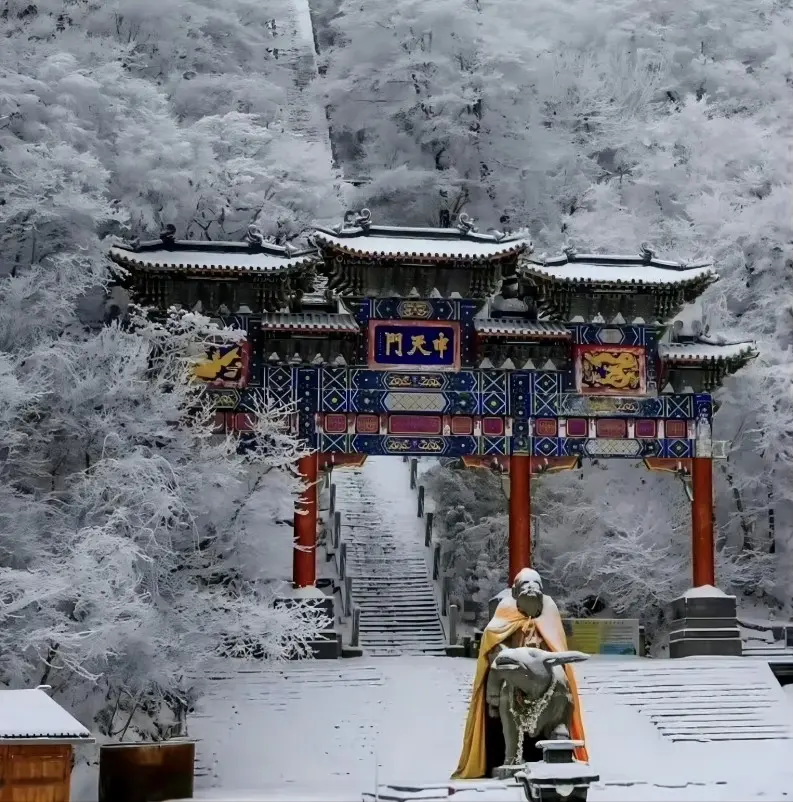
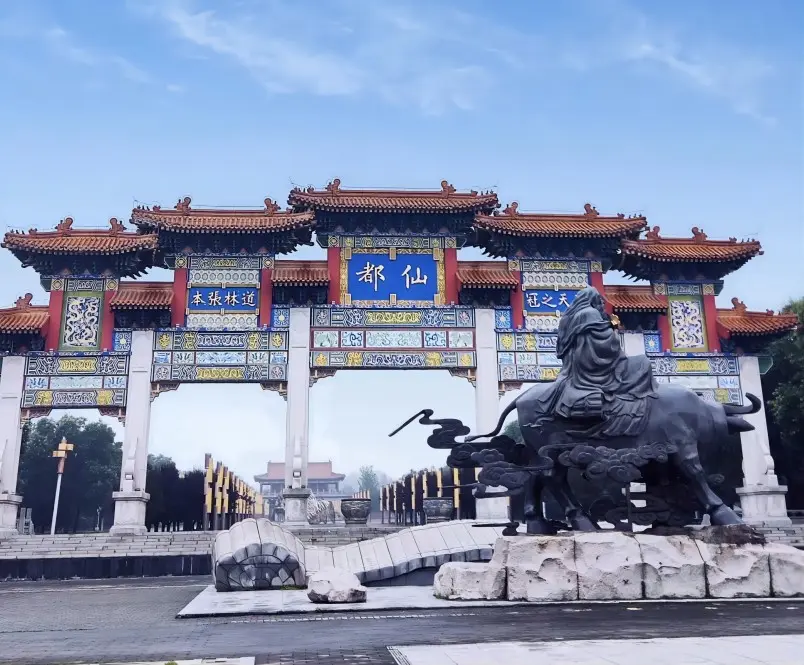
Louguantai is where Laozi wrote the Tao Te Ching. Visitors can still see ancient cypress trees and lecture halls reminiscent of the Tang Dynasty.
2. The Hermit Tradition
Zhongnan has attracted hermits since the Han Dynasty. Today, over 5,000 hermits live in caves or simple huts, following a sunrise-to-sunset lifestyle. Bill Porter’s Road to Heaven made this world-famous.
- Visitor Tip: Respect hermit huts. Knock only with permission and consider offering a small gift like tea or a book.
III. Zhongnan Mountain Hiking & Adventure: Routes for Every Level
1. Beginner: Ziwu Valley → Jinxian Temple (3 hours)
- Route: Taxi from Xi’an Metro Line 2 (Weiqunan Station) to the valley.
- Highlight: Easy walk along an ancient road; see Ming Dynasty carvings and a 1,000-year-old ginkgo tree.
- Best For: Families and casual walkers.
2. Intermediate: Cuihua Mountain (6 hours)
- Route: Bus from Xi’an to Cuihua Mountain entrance.
- Highlight: “Sea of Rocks” boulders and the high-altitude “Heavenly Lake” (Tianchi).
- Best For: Active hikers with proper footwear.
3. Advanced: Ao-Tai Traverse (3 days)
- Route: From Tangkou Village in Taibai County to Mount Taibai summit.
- Highlight: One of China’s top 10 challenging treks; climb from lush forests to rocky “stone seas” above clouds.
- Safety: Requires professional guide, tent, and high-energy food; forbidden in winter.
Tips : For Day-Trippers: If you are short on time, you can visit Louguantai (a sacred Taoist site) or South Wutai (a famous Buddhist mountain) at the base of the mountain. Both are perfect for a quick day trip from Xi’an.
IV. Practical Survival Guide
1. Best Time to Visit
Spring (April–May) and Autumn (September–October) offer the most comfortable hiking conditions.
2. Transport & Lodging
- Transport: Most valleys are a 1-hour drive or Metro + Taxi from Xi’an.
- Lodging: Local homestays (minshus) 100–300 RMB/night; hot spring resorts for luxury stays.
3. Food & Safety
- Must-Try: Huxian Soft Noodles, Lantian Buckwheat Noodles, fresh kiwi (autumn).
- Safety: Never hike alone in remote areas; carry a power bank and first-aid kit; do not feed wildlife.

V. Reflection: Finding Harmony in the Zhongnan Mountains
Zhongnan Mountain offers more than views—it conveys philosophy: “Harmony between Man and Nature.”
Walking these paths, you realize being a “hermit” is about inner peace, not isolation. This wisdom is Zhongnan Mountain’s greatest gift to the modern world.
Conclusion: Whether hiking for three hours or three days, standing on China’s “backbone” lets you connect with nature and history.
Furthermore, to explore more highlights of a Xi’an journey, don’t miss our page on Xi’an Tourist Attractions!



Glad to be one of several visitants on this amazing web site : D.