Zhujiajiao Water Town: Shanghai’s Timeless “Venice of the East” | A Journey Through Jiangnan’s Slow Life
For international travelers eager to escape Shanghai’s urban rush, a timeless secret awaits just outside the city: Zhujiajiao Water Town.
Located in Qingpu District, this millennium-old town is often called the “Venice of Shanghai.” Nine long streets run along the water, 36 stone bridges arch over crisscrossing rivers, and over a thousand Ming and Qing Dynasty buildings rest by the banks. Unlike the intense commercialism of Wuzhen or the crowds of Zhouzhuang, Zhujiajiao offers an authentic, slow-paced taste of Jiangnan culture.
If you’re exploring Shanghai’s cultural gems, you might also enjoy Yuyuan Garden Shanghai: A 400-Year Journey Through Classical Chinese Beauty — a serene classical garden experience that contrasts beautifully with Zhujiajiao’s riverside charm.

I. Historical Roots: From Transport Hub to “Pearl of the South”
Zhujiajiao’s history stretches back to the Three Kingdoms period. It flourished during the Song and Yuan dynasties as a grain and cargo hub and became a major rice and cotton distribution center in the Ming and Qing eras.
The Cao’gang River, flowing through the town, linked Taihu Lake to the Huangpu River. Merchant ships gathered along the banks, giving rise to the saying: “Three miles of long streets, a thousand shops.”
- European visitors may feel Zhujiajiao is an “Oriental version of medieval Venice,” though the canals are narrower, bridges more rustic, and pace more leisurely.
- Southeast Asian travelers might see a resemblance to ancient Mekong towns, yet the architecture and food culture remain distinctively Jiangnan.
II. Zhujiajiao Water Town Aesthetics: A Symphony of Bridges, Rivers, and Homes
Zhujiajiao’s soul lies in its water, shaped by bridges, streets, and traditional homes.
1. Fangsheng Bridge: The Oldest and Largest Stone Arch
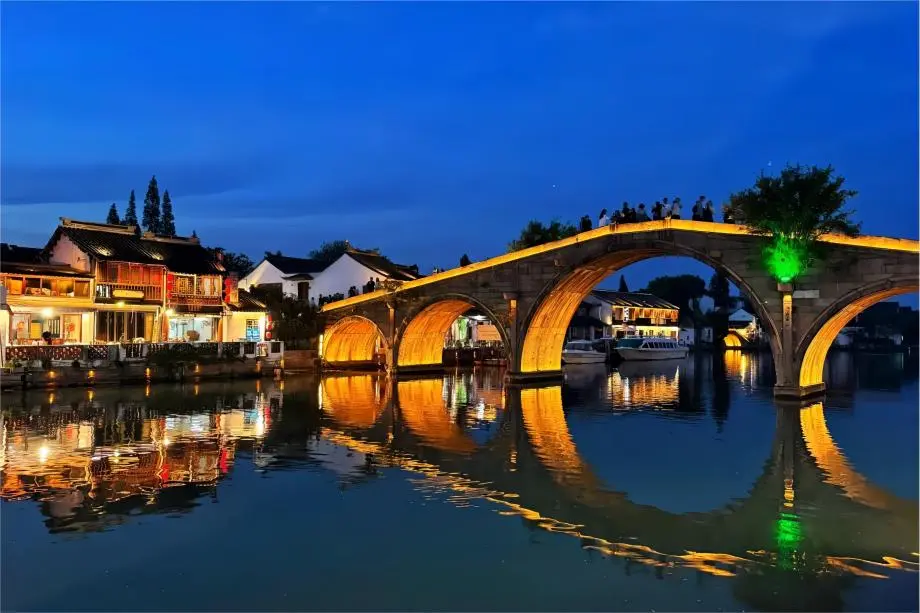
This five-arch bridge spans 70.8 meters and rises 7.4 meters above the Cao’gang River, making it the largest and oldest stone arch in Shanghai. Its name, “Life Release,” comes from the tradition of releasing fish for blessings.
Cultural Experience: Sit in a nearby teahouse at sunrise or sunset, watch wupeng boats glide past, hear boatmen sing folk songs, and absorb the poetic rhythm of “small bridge, flowing water, people’s homes.”
2. Nine Long Streets: A Living Museum of Ming and Qing Architecture
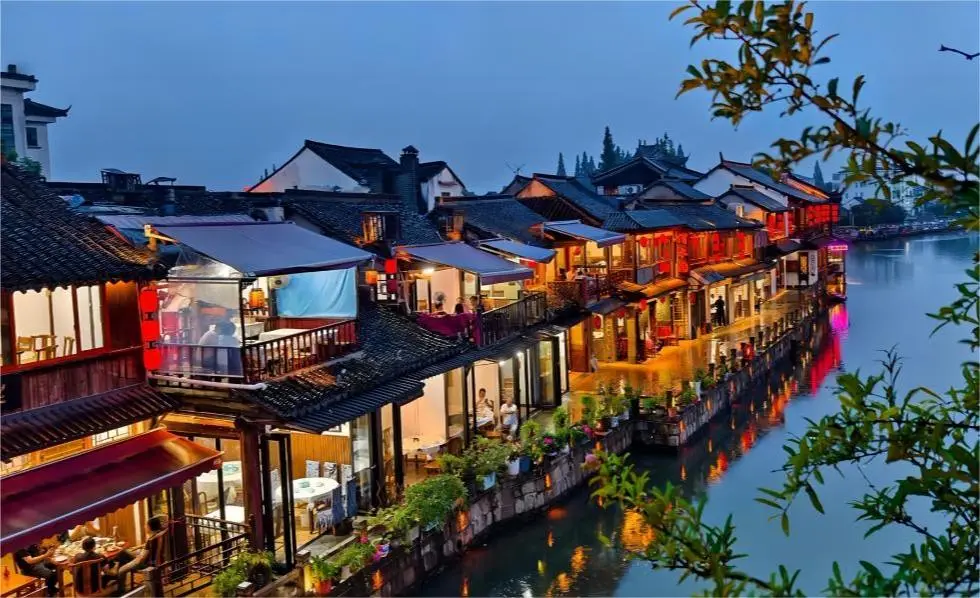
Streets like Caohe, Dongjing, and Xijing retain abundant Ming and Qing residences, shops, and ancestral halls. White walls, black tiles, horse-head gables, and wooden lattice windows showcase Jiangnan’s elegant architectural style.
Must-See Spots:
- Ke Zhi Yuan Garden: A private garden built during the Republic era blending Chinese and Western styles. The “Rice Fragrance Village” section is inspired by Dream of the Red Chamber.
- Yuanjin Temple: Founded in the Yuan Dynasty, featuring calligraphy and paintings that blend Zen tranquility with artistic heritage.

3. Thirty-Six Stone Bridges: The Town’s Necklace
Zhujiajiao boasts 36 historic bridges. Tai’an Bridge (Hejia Bridge) is the most perilous ancient bridge, while Ping’an Bridge is a popular spot for couples to pray, flanked by ancient trees.
- Italian visitors might be reminded of Venice’s Bridge of Sighs, yet Zhujiajiao’s bridges feel intimate, with locals washing clothes and children playing beneath.
- Japanese travelers may see hints of Wabi-Sabi in reflections on mossy steps and mottled stone surfaces.
For a different Shanghai perspective, you can also explore The Bund Shanghai: Where History Shines Against the Modern Skyline — here, modern skyscrapers meet century-old architecture in a stunning riverside display.
III. Local Flavor: Memories of Jiangnan through Food and Craft
Zhujiajiao’s charm extends beyond scenery to daily life, food, and crafts.
1. Food Map: From Zharou to Apo Zongzi
- Zharou (Braised Pork): Pork belly wrapped in straw and slow-cooked for hours — rich but never greasy.
- Apo Zongzi (Grandmother’s Rice Dumplings): Hand-wrapped and boiled on site, with egg yolk or savory pork fillings.
- Smoked Lasiz (Local Toad): Smoked using Qingpu tradition, a delicacy for adventurous eaters.
2. Handicraft Tour: Heritage in Action
- Local Cloth Museum: Watch artisans weave Qingpu native cloth on traditional looms — once an imperial tribute, now used for scarves and bags.
- Bamboo Weaving Workshop: Learn to craft coasters and baskets, experiencing “Jiangnan on your fingertips.”
IV. Practical Guide: Maximizing Your Slow Journey
- Transit: Metro Line 17 to Zhujiajiao Station, then a local bus or 10-minute walk.
- Best Time: Early morning (7–9 AM) or late afternoon (after 4 PM) to avoid crowds.
- Must-Do’s: Rowing boat ride, crossing Fangsheng Bridge, relaxing in riverside teahouses.
- Hidden Tip: Bike to Dianshan Lake for a peaceful ride combining water town charm with open lake views.
Conclusion: Zhujiajiao Water Town — A Never-Ending Slow Life in Jiangnan
Zhujiajiao tells the thousand-year story of Jiangnan China through a river, stone bridges, and simple snacks. Time seems suspended: oars sway, tea fragrance drifts, smoke curls from kitchens.
Every corner awaits to share its poetry. To walk into Zhujiajiao is to step into a flowing painting of the Jiangnan water country.