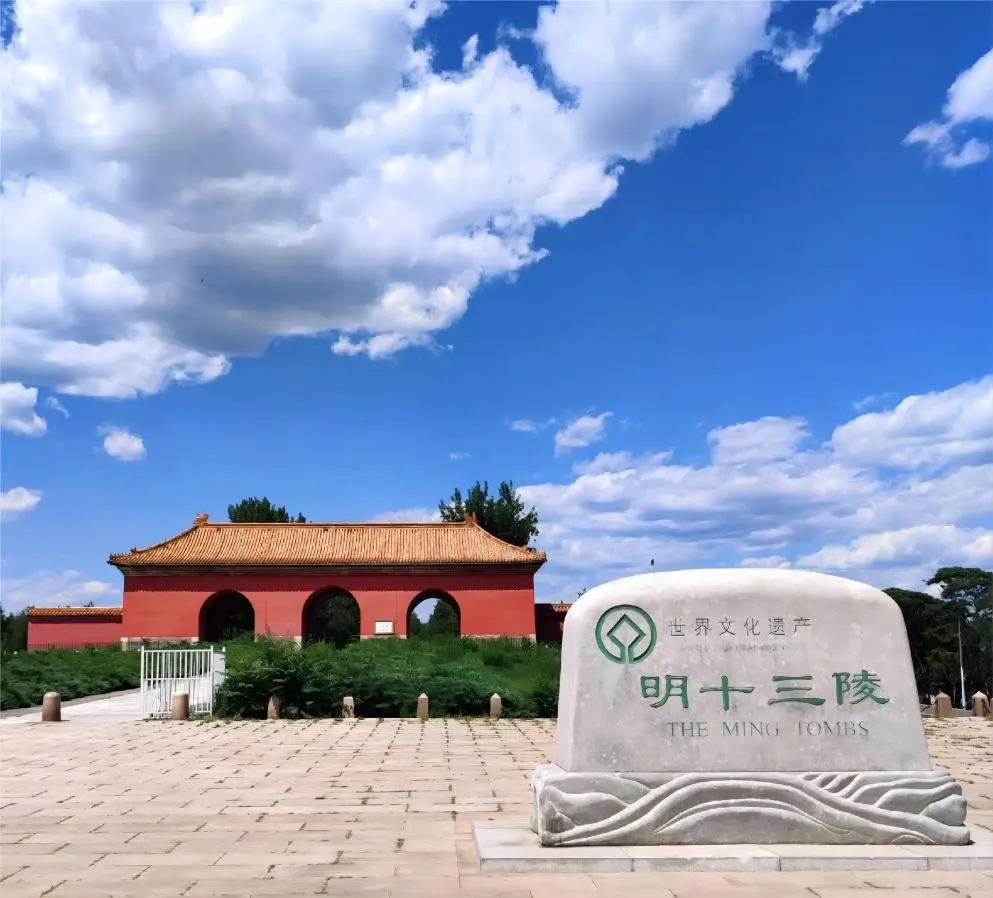
The Ming Tombs: A 600-Year Epic of Eastern Emperors
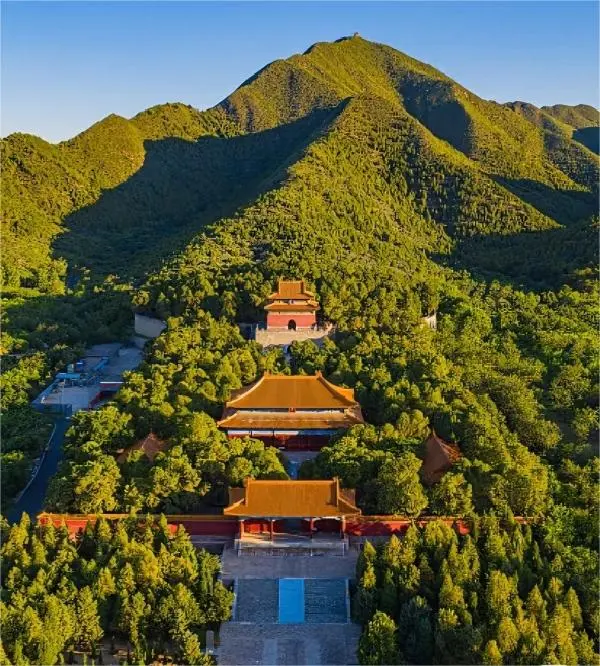
Standing at the viewing platform at the foot of Tianshou Mountain in Changping, Beijing, you see the ten-mile stretch of the Ming Tombs unfold against the layered Yan Mountains. This 40-square-kilometer open-air museum is the world’s best-preserved imperial mausoleum complex — a living archive of Ming Dynasty philosophy, power, and aesthetics, written in blue bricks and white marble.
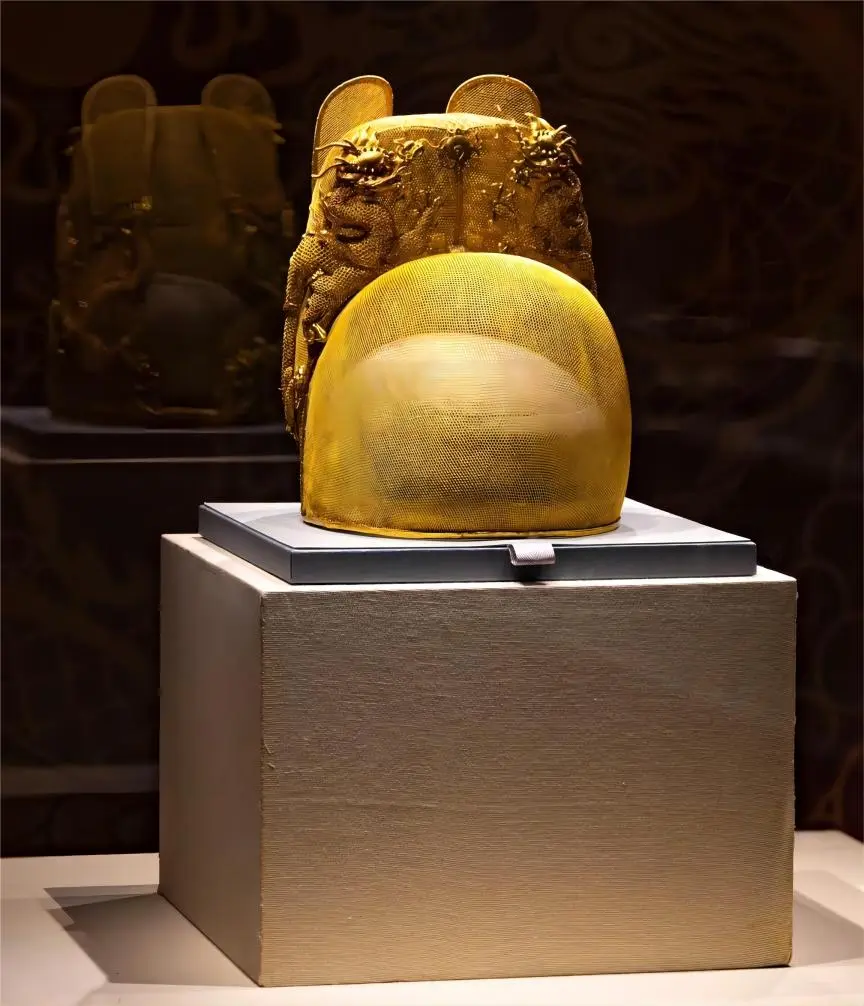
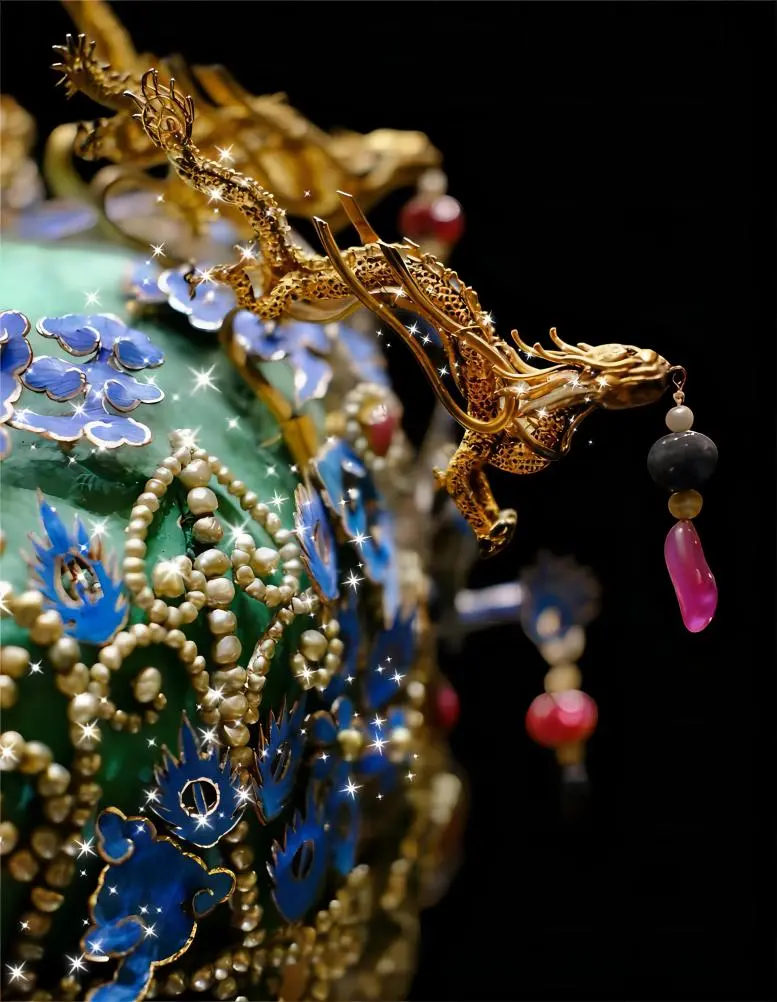
When an archaeologist from Egypt touched the Gold-Filament Phoenix Crown in the Dingling Underground Palace, he marveled:
“This mastered metal welding secrets 300 years before Tutankhamun’s mask.”
Before or after visiting, travelers often pair this journey with other imperial landmarks such as the Forbidden City, Temple of Heaven, or Tiananmen Square, completing a full circle of Beijing’s imperial grandeur.
I. Feng Shui Politics: The Eastern Code for Imperial Longevity
The choice of Tianshou Mountain by Emperor Zhu Di (the Yongle Emperor) was no accident. This sacred site, 50 kilometers from the Forbidden City, aligned with the Ming ideal of “Palace in the front, market in the back; ancestral shrine on the left, state altar on the right.”
The thirteen tombs fan out like constellations along the mountain ridges. The Changling Tomb sits centrally, symbolizing the handle of the Big Dipper, while the others orbit like stars — a cosmic model based on the philosophy of Heaven–Man Interaction.
This was not only spiritual design, but political wisdom. While Mongol cavalry still roamed the north, a 12 km defensive wall (including the Lanma Wall) separated the sacred from the secular. Archaeological findings at Deshengkou in 1982 revealed artillery positions, proving the Ming Tombs also functioned as a military fortress. This dual design — sacrificial sanctuary and defensive stronghold — embodied the Yongle Emperor’s strategy: “The Emperor Guards the Gate.”
II. Underground Palaces: Decoding Top-Tier Ming Engineering
The excavation of the Ming Tombs’ Dingling Underground Palace revealed only a glimpse of the Ming Dynasty’s architectural genius.
This palace, buried 27 meters deep, follows a “Five Halls, Two Bridges” layout. The gaps between ceiling bricks deviate by less than half a millimeter — an engineering precision few modern builders can replicate. Archaeologists found handprints left by craftsmen, silent marks of artisans who calculated and constructed by pure mechanical skill centuries before modern tools existed.
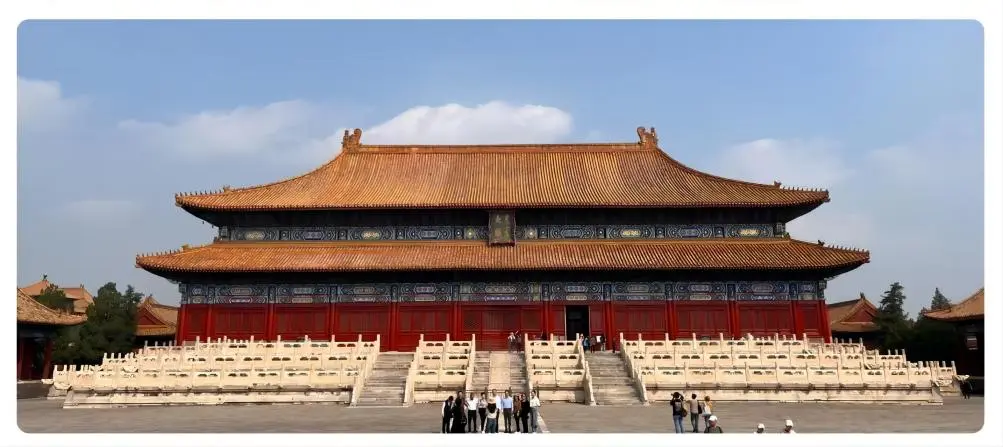
Even more breathtaking are the 60 golden nanmu pillars in the Changling Ling’en Hall. Each pillar measures 1.17 meters in diameter and 14.3 meters tall, transported by thousands of workers from the dense forests of Yunnan and Guizhou.
In the Dingling Relics Exhibition, the emperor’s gold jue cup was cast using the lost-wax method, its precision rivaling modern 3D printing. As a British Museum expert observed:
“These artifacts prove the Ming craftsmen led Europe by two centuries in metalwork.”
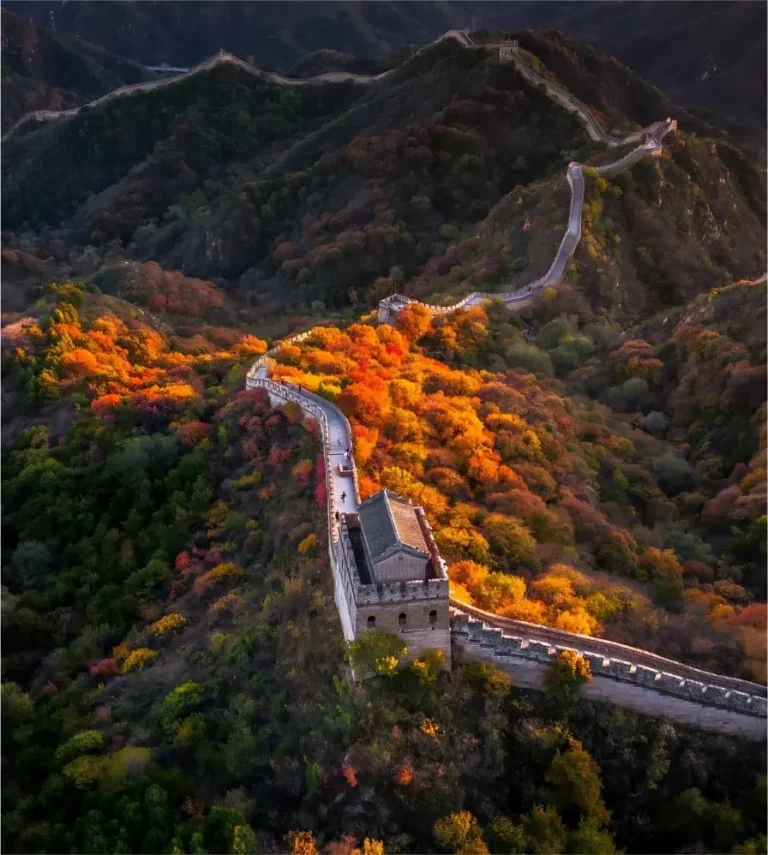
This craftsmanship legacy echoes through other Ming projects like the Great Wall of China, reconstructed and fortified during Yongle’s reign — symbols of both protection and imperial permanence.
III. A Venue for Cultural Dialogue: The Ming Dynasty as a Global Sample
At the 2023 Ming Culture Forum, forty-eight international students stood in awe beneath the Spirit Way Statues. A student from São Tomé and Príncipe gently touched a gilded spoon and said, “These details remind me of the bronze sculptures of ancient Benin — but the Ming craftsmanship feels grander, more royal.”
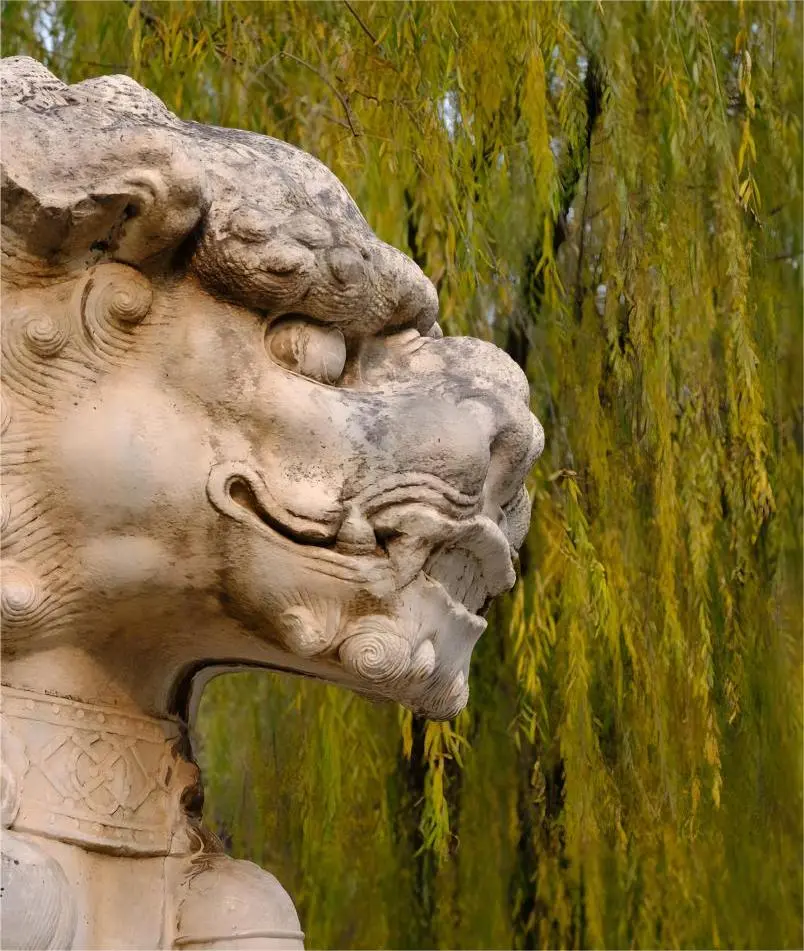
This cross-cultural dialogue extends through the 24 stone beasts and 12 civil and military statues along the Spirit Way. Among dragons and qilins appear lions — foreign symbols that entered Chinese iconography via Silk Road exchanges. The Ming Tombs thus preserve artistic proof of early globalization.
One of the site’s modern highlights is the Seal Collecting activity, where thirteen imperial seals correspond to reign names. As visitors collect them, they unconsciously learn Chinese dynastic chronology. A German traveler named Hans remarked, “So the era when Zheng He sailed the seas — the Yongle period — was when the master of Changling ruled!”
Travel Tips: A Guide to Time Travel
- Golden Route: Spirit Way (Stone Archway → Statues) → Changling (Nanmu Hall) → Dingling (Underground Palace) → Zhaoling (Restored complex). Shuttle buses connect these key sites.
- Secret Moments: At 8:00 AM, mist on the Spirit Way forms a “visual time fold” around the stone statues. In winter, the underground palace maintains a constant 16°C, contrasting with the -5°C air outside.
- Cultural Bonus: AR glasses available at the Visitor Center project a 3D holographic Ming sacrificial ceremony when you scan the palace grounds.
When the sunset gilds the broken steles at Siling Tomb, a visitor from Kazakhstan once wrote:
“This place is more vivid than any history textbook.”
This open-air museum — encompassing imperial vision, peak craftsmanship, and timeless cultural dialogue — invites the world to listen in silence. Touch the warm jade belt plaques. Gaze at the pigments that still glow after 600 years. Here, among the Ming Tombs of Beijing, you don’t just witness the Ming Dynasty — you touch humanity’s eternal pursuit of meaning and memory.