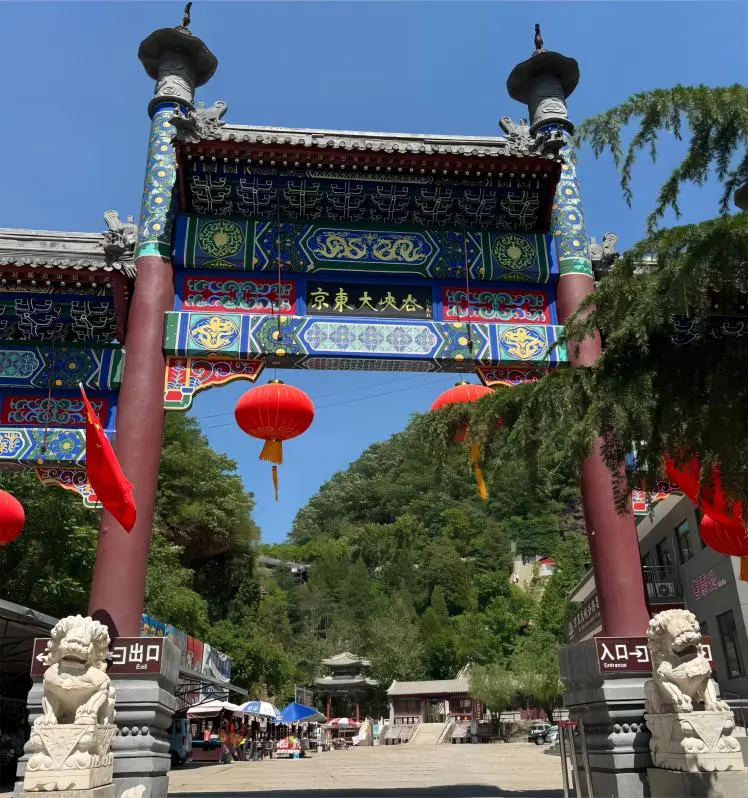
Jingdong Grand Canyon: An Ecological Sanctuary in Beijing’s Wild Northeast
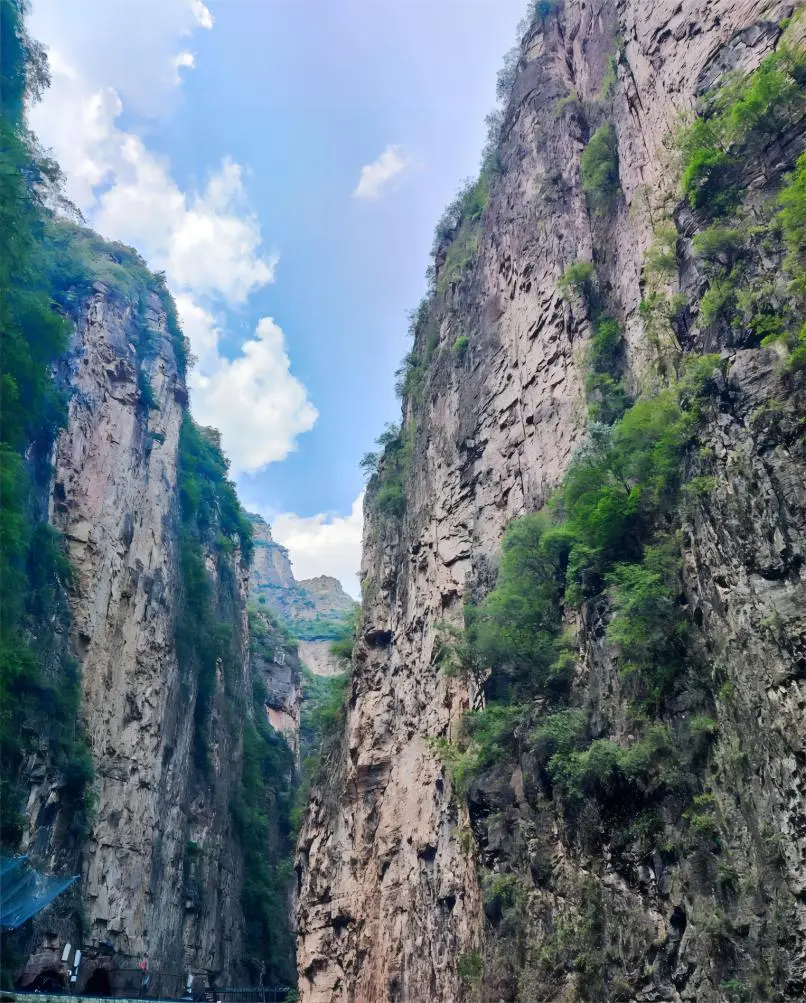
Hidden 100 kilometers northeast of Beijing in Pinggu District lies a geological marvel known as the Jingdong Grand Canyon (East Beijing Grand Canyon). Praised by National Geographic as the “Textbook of North China Canyons,” this nature reserve features kilometer-deep gorges, cascading waterfalls, clear streams, and lush forests.
As one of the wildest ecological corridors in the Beijing-Tianjin-Hebei region, it offers an ideal getaway for travelers seeking to escape the city’s pace and reconnect with nature. For international visitors exploring Beijing’s mountain culture, the four defining elements—deep gorges, towering peaks, spectacular waterfalls, and ancient villages—promise a thrilling journey through China’s natural and cultural landscapes.
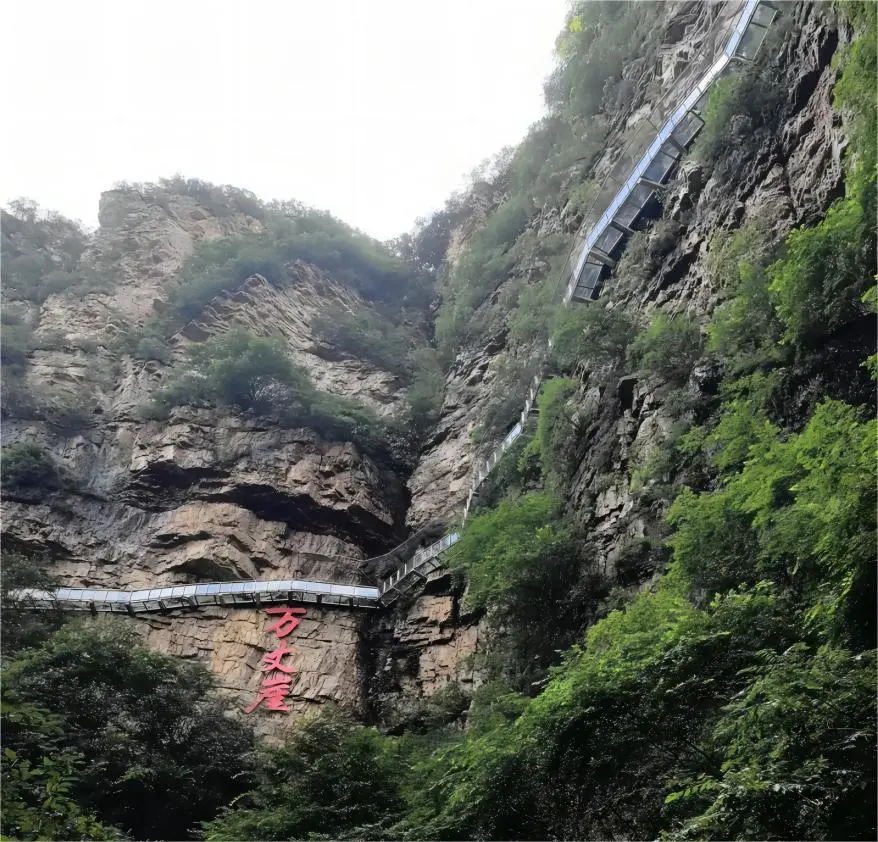
I. The Geological Story Behind Beijing’s Jingdong Grand Canyon
The formation of Jingdong Grand Canyon is a geological epic spanning over 2.5 billion years. Around 2.5 billion years ago, this area formed part of the North China Craton, one of the oldest continental cores on Earth. The Yanshan Movement 180 million years ago folded and uplifted the strata, creating today’s steep-cut canyon. Later, Quaternary glacial activity sculpted U-shaped valleys and horn peaks, leaving traces of ancient ice erosion.
In 2011, the canyon was listed in the UNESCO Tentative List for China’s Northern Karst World Natural Heritage, recognized for its well-preserved fossils and sedimentary formations that serve as “living fossils” of the North China Plate’s evolution.
Unlike the American Grand Canyon, Jingdong’s version reflects North China’s dry continental climate, with sharply defined cliff walls and unique seasonal contrasts. Summer brings rushing waterfalls, while winter turns them into glittering frozen sculptures. The canyon’s Five Pools—Surprising, Perilous, Strange, Spiritual, and Divine—cascade through a total drop of 300 meters, maintaining a steady 12°C year-round, forming the oldest cold spring system in North China.
II. Wild Adventures in Jingdong Grand Canyon
1. Glass Walkway: Walking Above the Abyss
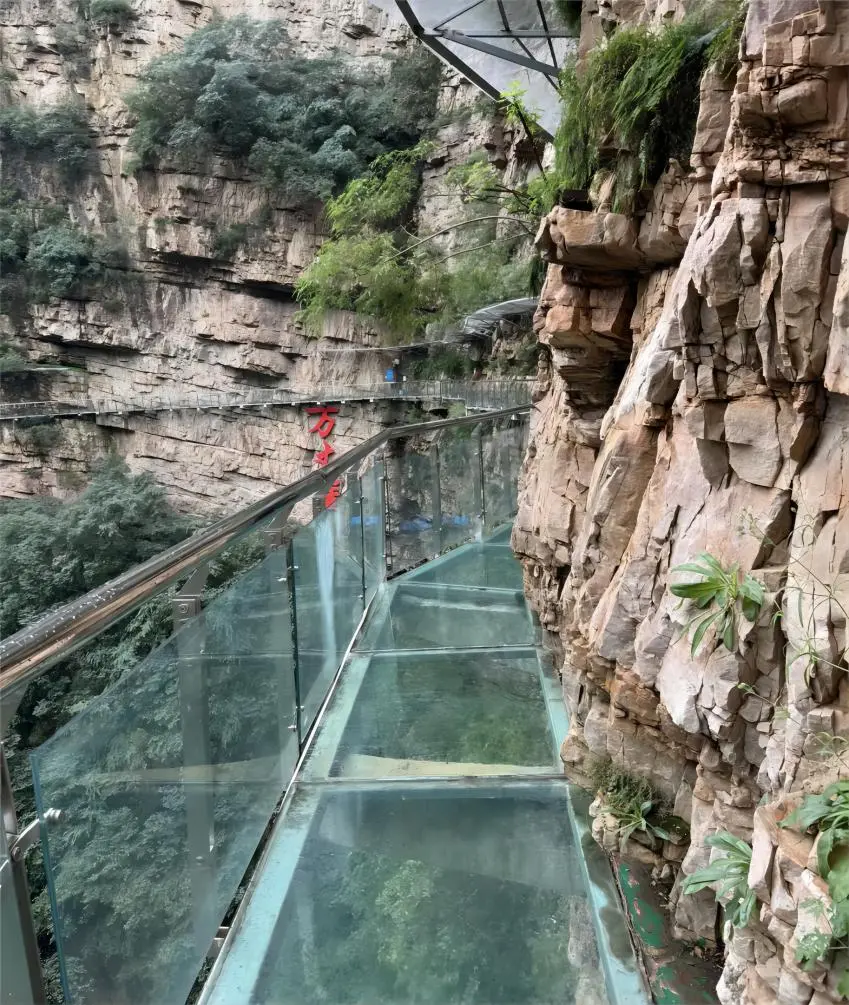
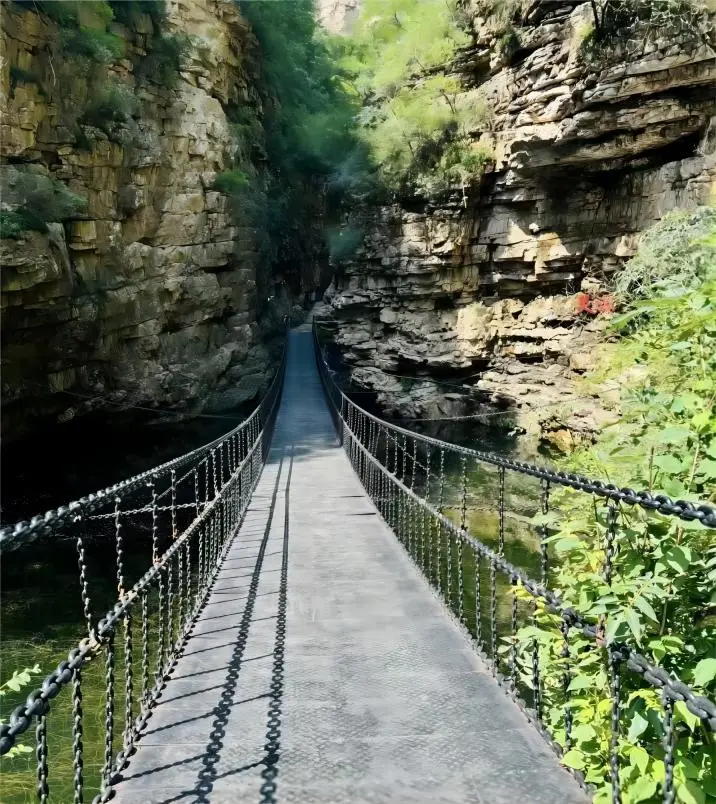
At the canyon’s deepest point, a 150-meter-long glass walkway curves in a U-shape over a kilometer-deep abyss. Built with aerospace-grade titanium alloy and triple-layer tempered glass, it can hold 200 visitors at once. Standing on the transparent bridge, the canyon opens beneath your feet, and the Yan Mountains rise in endless layers beyond.
On misty mornings, clouds swirl around your ankles—you’ll truly feel as if you’re walking in the sky, a scene straight out of Avatar.
2. Waterfall Trail: The Five Pools Adventure
Descending along the canyon trail, you’ll encounter the stunning Five Pools—each with its own character.
- The Surprising Pool glimmers like jade.
- The Perilous Pool cuts sharply through rock.
- The Strange Pool holds giant boulders.
- The Spiritual Pool mirrors the forest canopy.
- The Divine Pool seems bottomless.
The highlight is the Tongtian Gorge Waterfall, dropping 80 meters like a silver ribbon in summer and freezing into crystal art in winter. Along the way, hikers can enjoy stream tracing, stepping on mossy stones and passing through the Water Curtain Cave, where the waterfall splashes overhead—an unforgettable nature experience in Beijing’s wild canyon.
3. Ancient Village Exploration: Life Beneath the Cliffs
At the canyon’s exit sits Gongjiatai Village, one of Beijing’s highest ancient mountain settlements, founded during the Ming Dynasty. Its stone-walled houses and wooden lattice windows reflect centuries of quiet endurance. Locals grow walnuts and persimmons and sell handmade goods at the Mountain Goods Market—from walnut oil to woven baskets.
Visit during the Mid-Autumn Festival (China’s traditional harvest moon festival), and you can join villagers in handmaking mooncakes using cold spring water and stone mills—a warm, authentic encounter with local mountain life.
III. Travel Tips: Plan Your Jingdong Jingdong Grand Canyon Journey
- Transportation:
From Beijing Dongzhimen, take Bus No. 852 to Pinggu Bus Station, then transfer to Bus Ping 31.
Self-driving takes about 2 hours (navigate to “Jingdong Grand Canyon Scenic Area”). - Tickets:
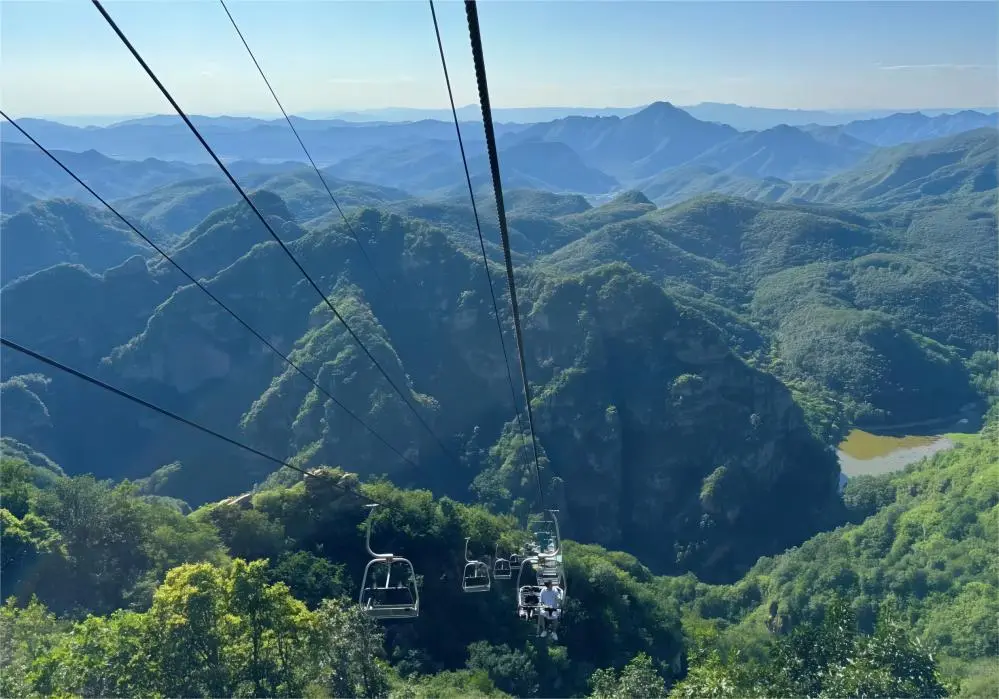
Entrance ¥75 | Glass Walkway ¥30 | Cable Car (one-way) ¥60.
Combo tickets offer better value. - Best Seasons:
🌸 April–May: blooming flowers
💦 June–August: cool hiking & stream tracing
🍁 September–October: red leaves
❄️ December–February: icefalls and snow scenery
Conclusion: A Timeless Dialogue with Nature
The beauty of Jingdong Grand Canyon lies in its ability to tell Earth’s 2.5-billion-year story through rock, water, and wind. Every stone is a record of time; every crack, a line of nature’s poetry. From prehistoric fossils and ancient villages to the glass walkway above the abyss, the canyon whispers of resilience and wonder.
If you crave a journey that is both thrilling and deeply grounding, come walk its trails and stand above the clouds. Here in the Pearl of the Yan Mountains, you can experience what few places offer—a heart-pounding waltz with the Earth itself. Want to discover more natural wonders around Beijing? Check out our guide to Top Attractions in Beijing.