
Mangshi Travel Guide 2026: China’s Rising Border Gem
1. Why Has Mangshi Seen a Boom in Foreign Tourists in 2026?
So far in 2026, foreign visitor numbers to Mangshi have risen by more than 260% year-on-year, making it one of the fastest-growing inbound travel cities in Yunnan and China. Known as the City of Dawn, Mangshi is gaining global attention for several key reasons:
1. Southeast Asian Charm Without the Crowds
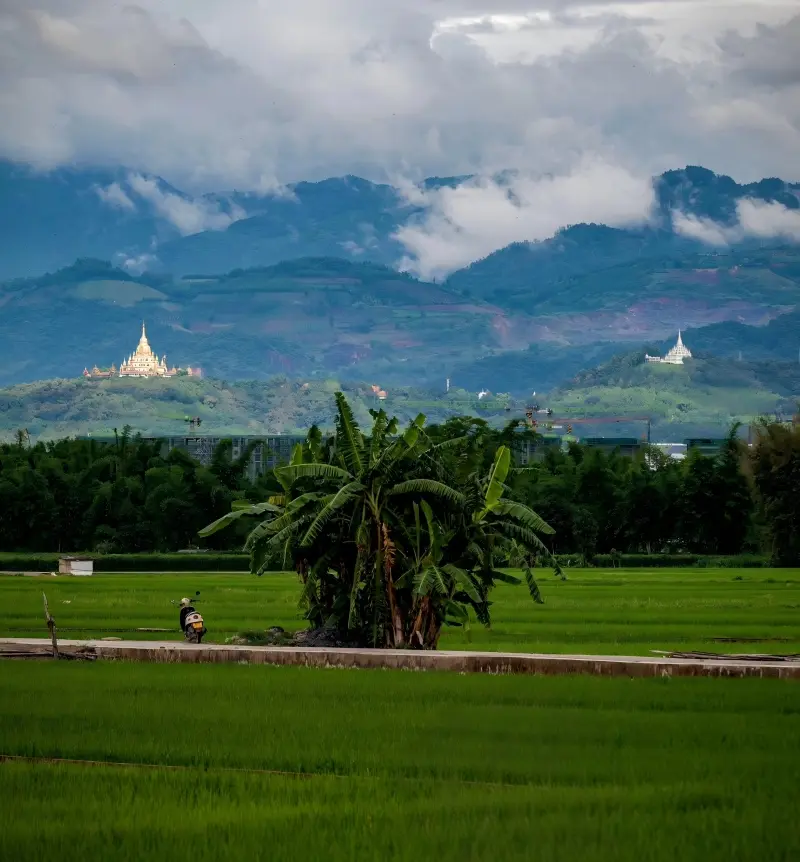
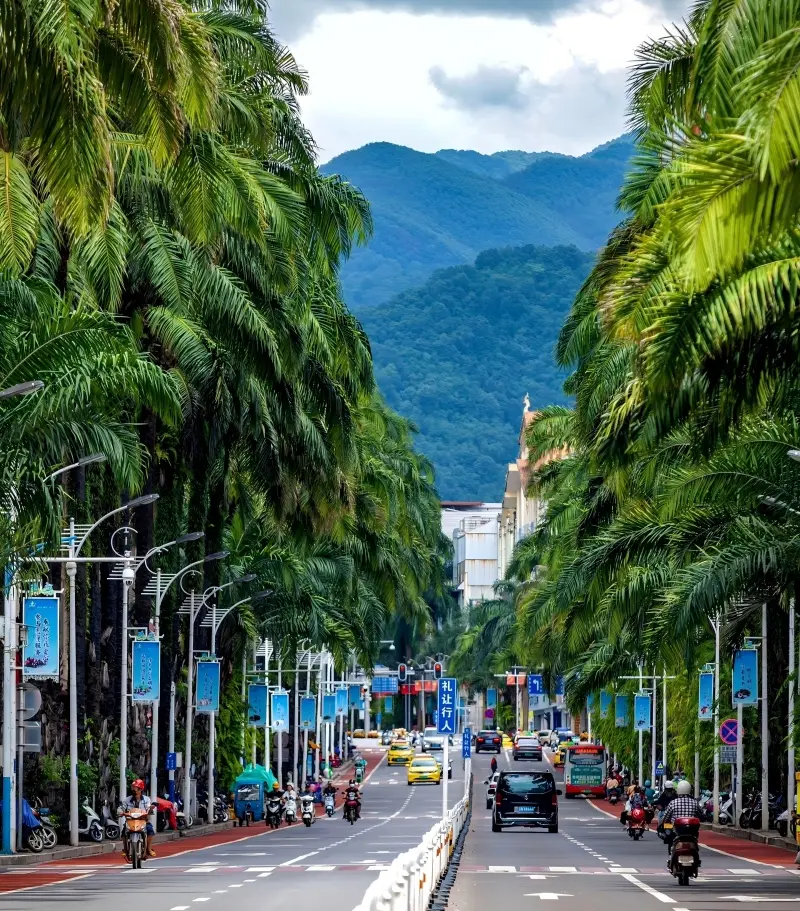
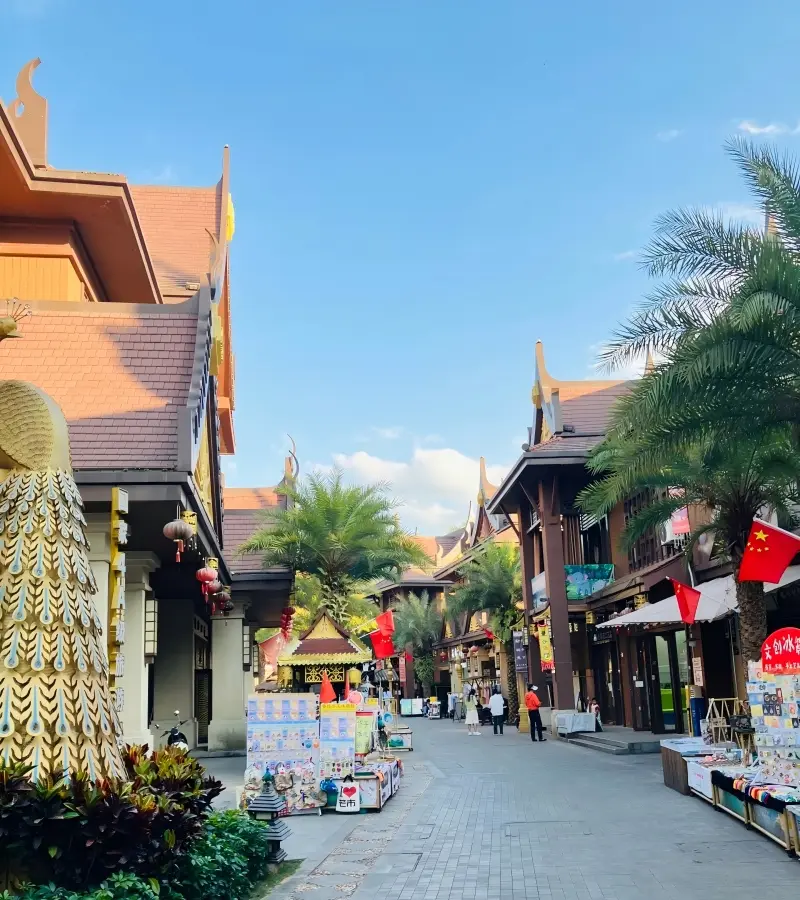
Located near the Myanmar border, Mangshi is full of golden pagodas, palm trees, and Dai-style buildings. It offers a strong Southeast Asian atmosphere without leaving China. Compared with busy destinations like Dali and Lijiang, Mangshi is quieter, less commercial, and more relaxing.
2. Rich Border Culture and Ethnic Heritage
Mangshi is home to the Dai, Jingpo, Achang, and other ethnic groups. Festivals like the Munao Zongge Festival and Water Splashing Festival are colorful highlights. Burmese food, handicrafts, and border traditions add even more cultural appeal.
3. Easy Access and Visa Benefits
China’s expanding visa-free policies make travel easier. Flights from Kunming take only 1.5 hours, and the airport is just 7 km from downtown. Visitors can also arrive by high-speed rail via Baoshan.
4. Great Food for International Travelers
Dai cuisine is fresh and flavorful, while Burmese dishes are rich and aromatic. Popular foods like Paoluda, Sa Pie, and Dai Hand-Grab Rice are loved by many visitors.
5. Pleasant Climate Year-Round
With average temperatures of 18–25°C, Mangshi is comfortable in every season. The dry season is sunny, while the rainy season is green and scenic.
2. Mangshi Transportation and Accommodation (Foreign Visitor Friendly Guide)
How to Get to Mangshi
✈ By Air (Best Choice)
Dehong Mangshi International Airport is only 7 km from downtown.
Direct flights are available from Beijing, Chengdu, Kunming, and other cities. Flights via Kunming are frequent and often affordable (around 350–500 RMB).
- Taxi to downtown: 15–20 RMB (15 minutes)
- Bus No. 2 / 12: 1 RMB (40 minutes)
🚄 High-Speed Rail + Bus
Take high-speed rail to Baoshan Station, then transfer by coach or business shuttle to Mangshi.
- Travel time: around 2 hours
- Coach: 70 RMB
- Business shuttle: 88 RMB
Foreign Visitor Tips
No special permit is required for Mangshi. A passport is enough. Please follow local rules in border areas and do not cross borders without permission.
How to Get Around the City
Taxi / Ride-Hailing
- Starting fare: 7–8 RMB
- Most city rides: 10–20 RMB
- Taxis are the easiest option, and Didi is available.
Shared Electric Scooters (Highly Recommended)
Scan and ride. This is one of the best ways to explore Mangshi.
- Cost: 2–3 RMB per ride
- Great for short distances of 3–5 km
Public Bus
- Fare: 1–2 RMB
- Covers major attractions
- Fewer departures and early finish times
Walking
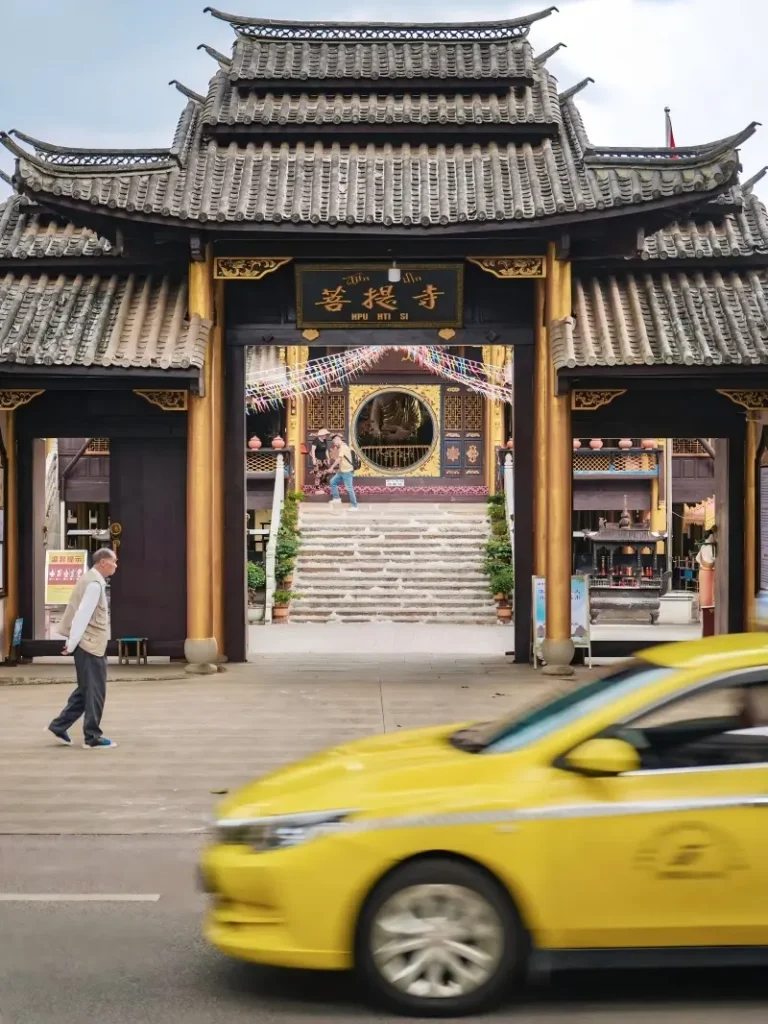
Main attractions in the city center such as the Tree-Wrapped Pagoda, Bodhi Temple, and Mangshi Square are close enough to walk between. Slow walking gives a better local atmosphere.
Best Areas to Stay
1. Mangshi Square / Tuanjie Street (City Center – Best Choice) ★★★★★
Advantages:
Transport hub, many restaurants and shops, famous local food stores, close to Tree-Wrapped Pagoda and Bodhi Temple, easy taxi access to all attractions.
Price:
- Low season: 100–200 RMB/night
- Peak season: 200–350 RMB/night
Best for:
First-time visitors, food lovers, and travelers who want convenience.
2. Near Menghuan Golden Pagoda / Silver Pagoda (Ethnic Atmosphere) ★★★★
Advantages:
Many Dai-style guesthouses and boutique hotels. Some rooms have views of the pagodas at night. Great for photos and cultural atmosphere.
Best for:
Travelers who enjoy photography and want a deeper Dai cultural experience.
3. Dai Ancient Town (Relaxing Holiday Area) ★★★★
Advantages:
Quiet environment, traditional Dai buildings, night market, performances, and good facilities.
Best for:
Slow travel and relaxing holidays.
Hotel Tips
Stay in one hotel for the whole trip instead of changing hotels. Choose hotels with breakfast, English service, and clean rooms for the best value.
3. Top 5 Best Attractions in Mangshi (Detailed Guide)
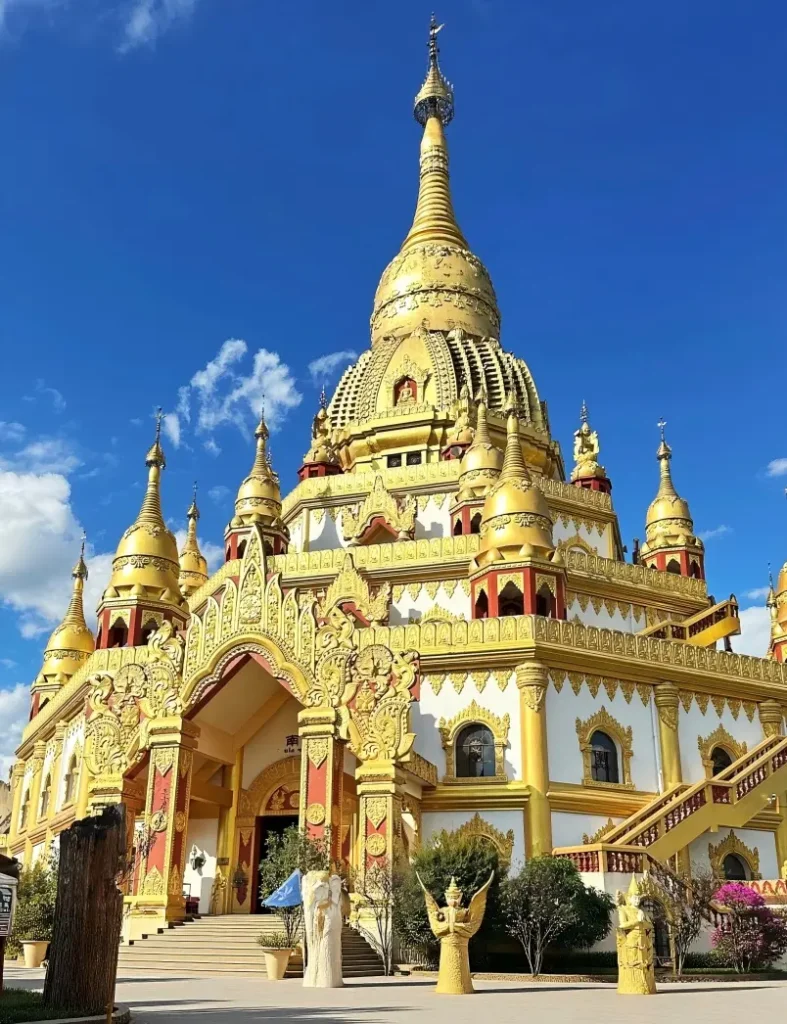
1. Menghuan Golden Pagoda
Why Visit:
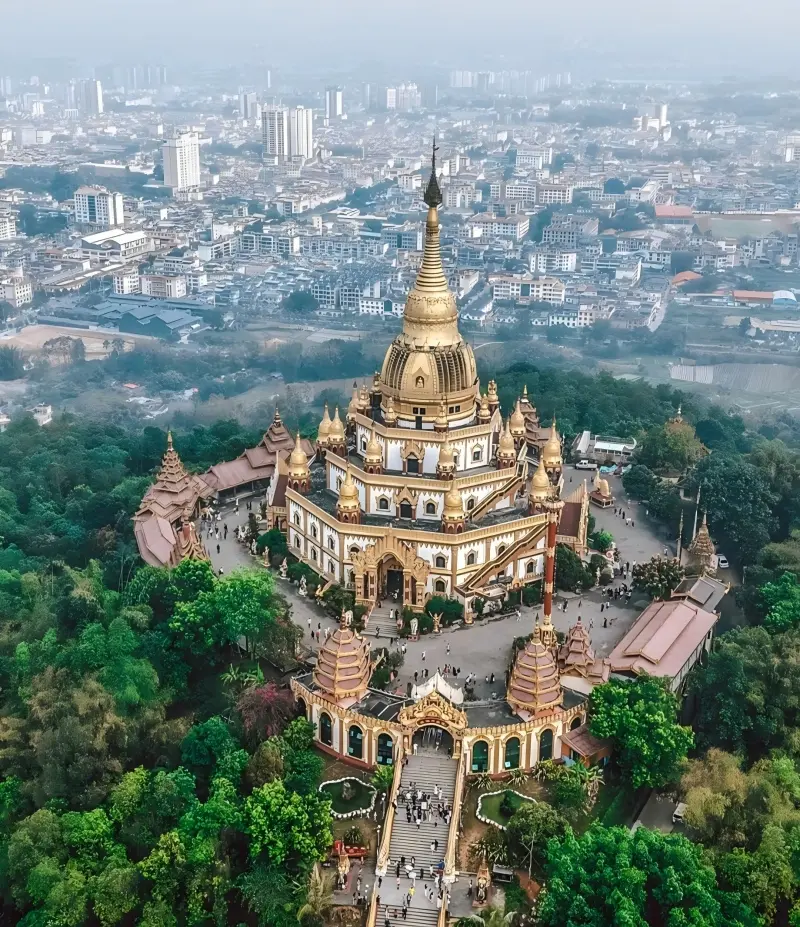
The top landmark of Mangshi, known as the largest hollow Buddhist pagoda in Asia and one of the symbols of “Little Thailand in China.”
Highlights:
The golden top shines brightly. The pagoda is 76 meters high and combines Dai and Southeast Asian architecture. The carvings are beautiful. From the top, you can enjoy panoramic city views. At sunset, the pagoda glows in golden light, and the night view is stunning.
Tips:
- Visit time: 1.5 hours
- Ticket: 50 RMB
- Best time: late afternoon for daytime + sunset + night view
- Dress properly and remove shoes before entering
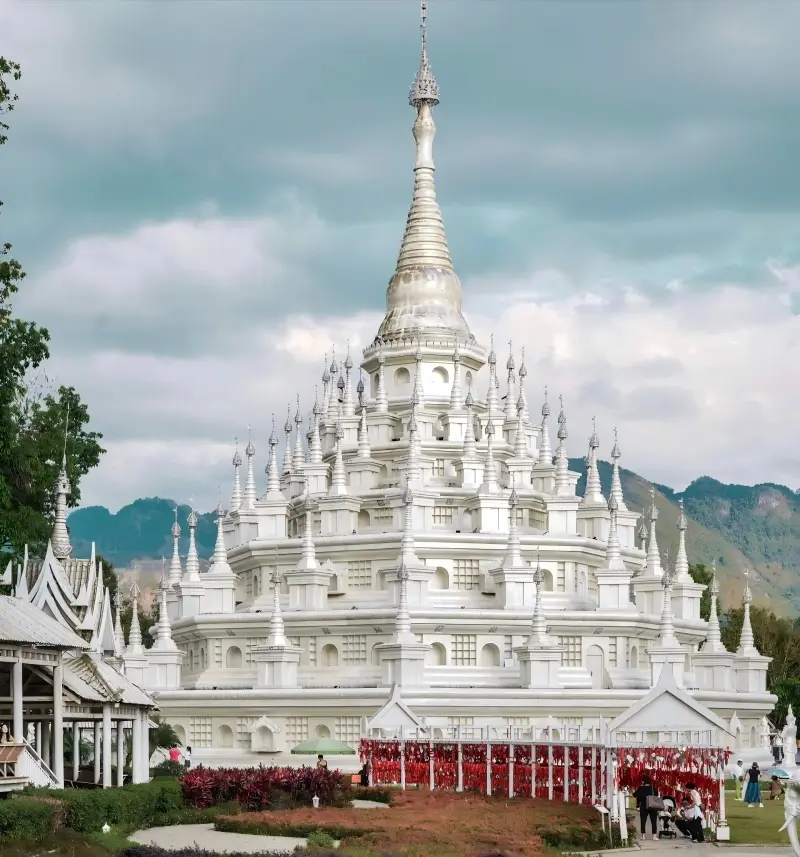
2. Menghuan Silver Pagoda
Why Visit:
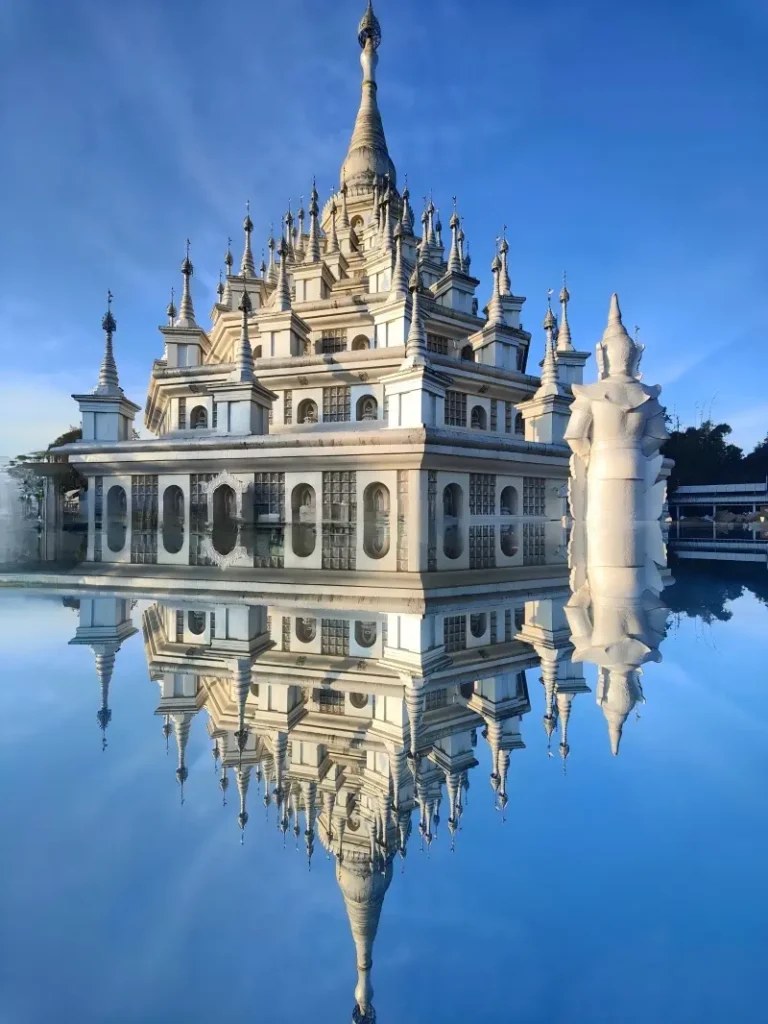
Located next to the Golden Pagoda, this pure white pagoda looks like a “Mirror of the Sky.” It is one of the most photogenic places in Mangshi.
Highlights:
The pagoda is 66 meters high. White walls reflect beautifully in the mirror pool, creating a dreamlike scene. Wind bells ring softly, and the lawns are peaceful and relaxing. It is even better for artistic photos than the Golden Pagoda.
Tips:
- Visit time: 1.5 hours
- Ticket: 38 RMB
- Combined ticket for both pagodas: 75 RMB
- Best light: before 9:00 AM or after 4:00 PM
3. Tree-Wrapped Pagoda
Why Visit:
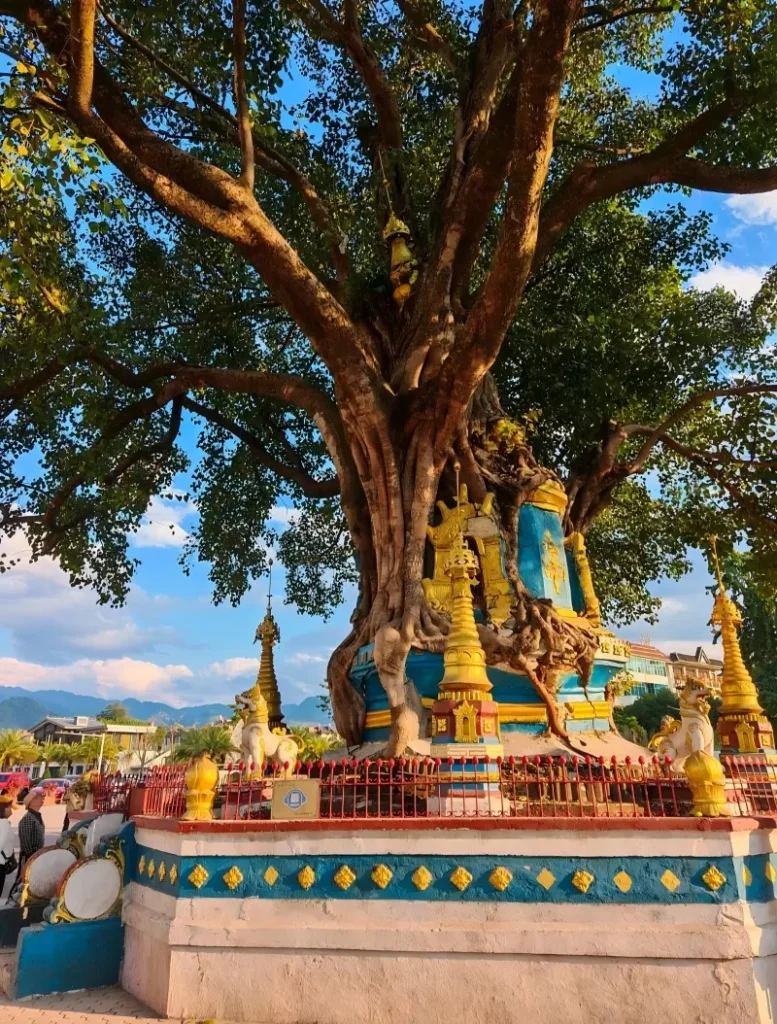
A rare wonder of nature and culture. A giant banyan tree has wrapped around an old pagoda for more than 200 years.
Highlights:
Layers of roots surround the pagoda, creating the unique view of “a tree inside a pagoda, and a pagoda inside a tree.” It is hidden inside a residential area, quiet and uncrowded, showing the harmony between faith and nature.
Tips:
- Visit time: 30 minutes
- Free entry
- Easy stop during city sightseeing
- Light-colored clothes look good in photos
4. Mengbanaxi Rare Garden
Why Visit:
A tropical garden inside the city, known as a “Peacock Paradise.” Ancient trees, strange stones, and rare birds gather here.
Highlights:
Thousand-year-old trees, petrified wood, rare plants, and free-roaming blue and white peacocks. Visitors can get close to the birds. You can also see the Golden Pagoda in the distance.
Tips:
- Visit time: 2 hours
- Ticket: 40 RMB
- Best in the morning when peacocks are more active
5. Dai Ancient Town
Why Visit:
An immersive Dai cultural area with free entry. Explore handicrafts by day and enjoy the night market in the evening.
Highlights:
Traditional Dai buildings, intangible heritage workshops such as weaving, Dai pottery, and silver crafts. Visitors can join hands-on experiences. Every night at 8:00 PM, the Gaban Guang Dance performance begins, and tourists can join. The night market is full of local food.
Tips:
- Visit time: 2–3 hours
- Free entry
- Best time: late afternoon to evening
4. 5 Must-Try Foods in Mangshi (Flavor + Culture Guide)
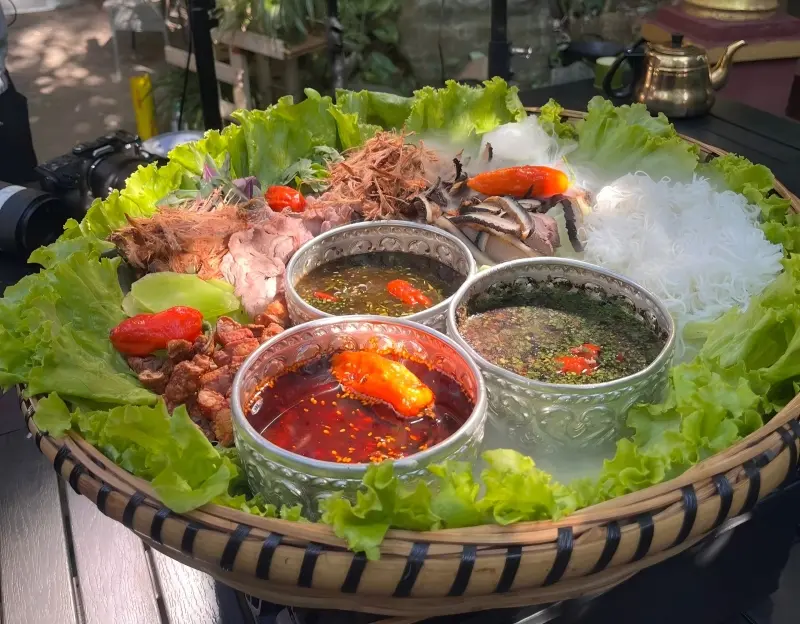
1. Sa Pie (Soul of Dai Cuisine)
Why Popular:
One of Mangshi’s signature dishes. In Dai language, it means a cold mixed raw dish. Very unique and exciting for adventurous travelers.
Flavor:
- Bitter version uses beef bile water, slightly bitter with a sweet aftertaste
- Lemon version is sour, spicy, and refreshing
Served with raw meat, vegetables, and rice noodles for dipping.
Where to Try:
Menghuan Dai Family, Dream Dehong
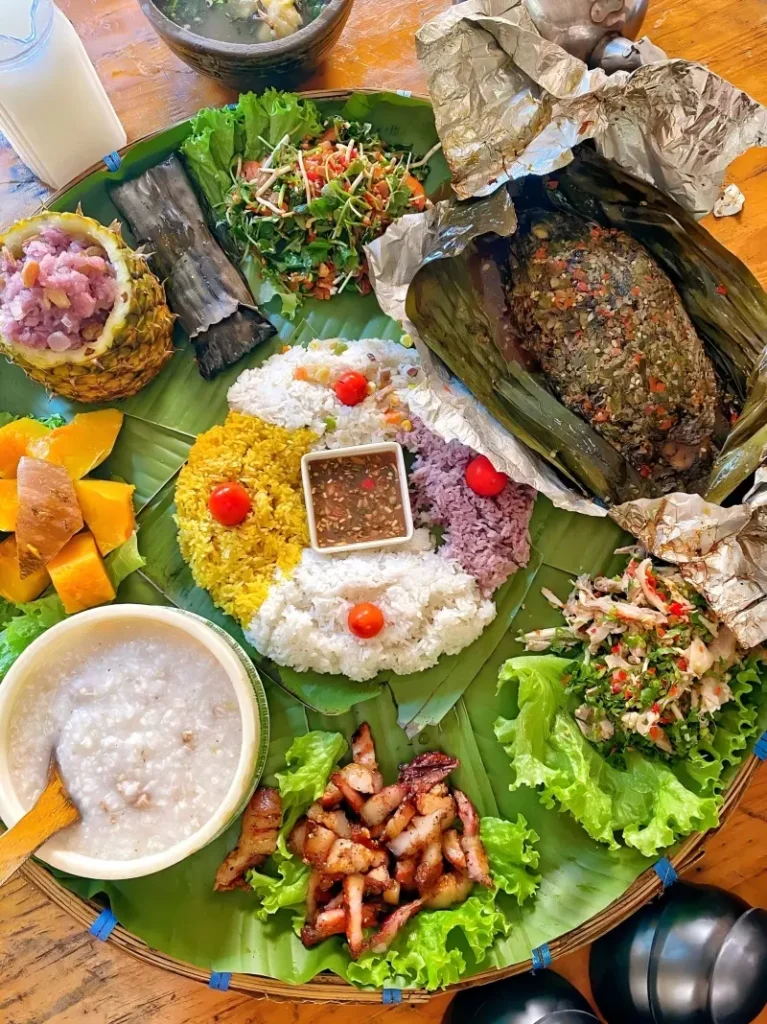
2. Dai Hand-Grab Rice Feast
Why Popular:
The highest form of Dai hospitality. A feast for both eyes and taste, perfect for sharing.
Flavor:
Sticky rice served in a bamboo tray with grilled pork belly, grilled fish, grilled chicken, wild vegetables, pickles, and dipping sauces. Eaten by hand.
Where to Try:
Runmei Ethnic Garden, Dai Ancient Town restaurants
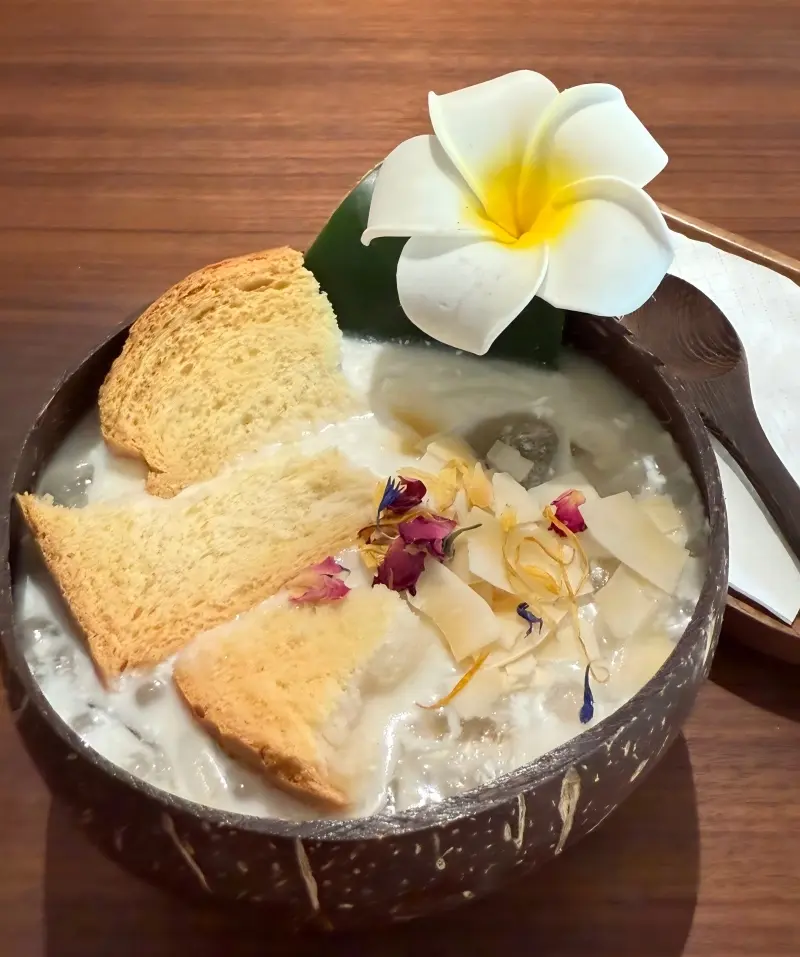
3. Paoluda (Southeast Asian Dessert)
Why Popular:
Mangshi’s most loved dessert drink, originally from Myanmar. Cool, sweet, and refreshing.
Flavor:
Coconut milk, sago, condensed milk, crispy bread, and fruit. Perfect in summer and great after spicy food.
Where to Try:
Best Food City, Menghuan Grandma Cold Drink Shop
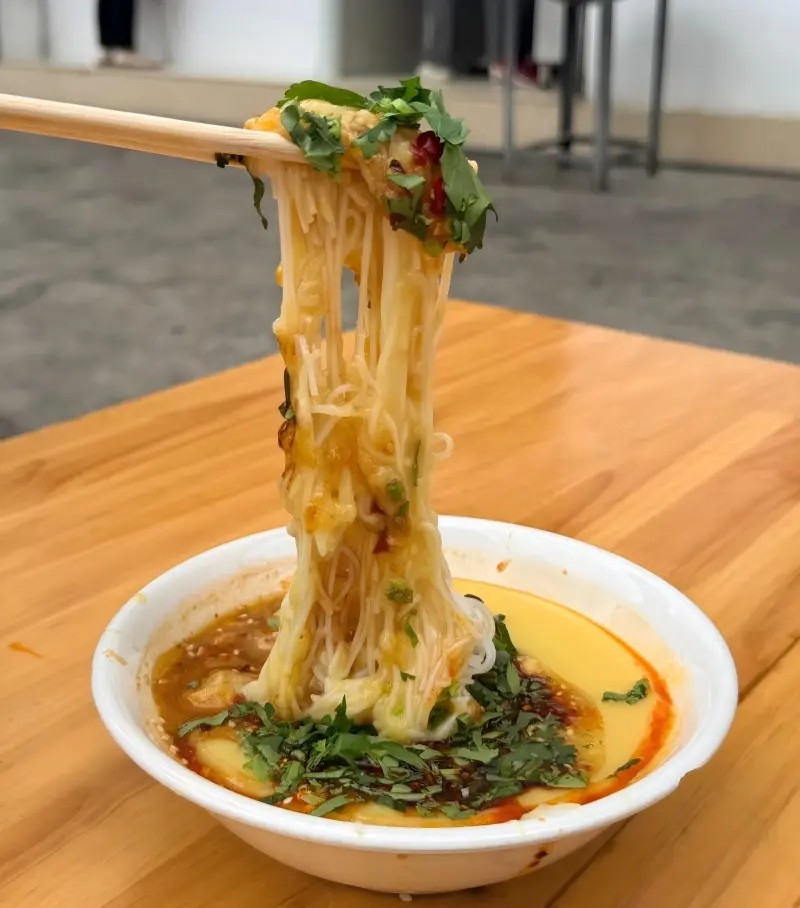
4. Rice Noodles with Pea Paste (Breakfast King)
Why Popular:
A classic local breakfast. Warm, filling, and loved by carb fans.
Flavor:
Smooth pea paste soup with soft rice noodles, topped with spring onion, coriander, chili, and crushed peanuts.
Where to Try:
Lanlu Breakfast Shop, Yinjia Breakfast, Mangshi First Market
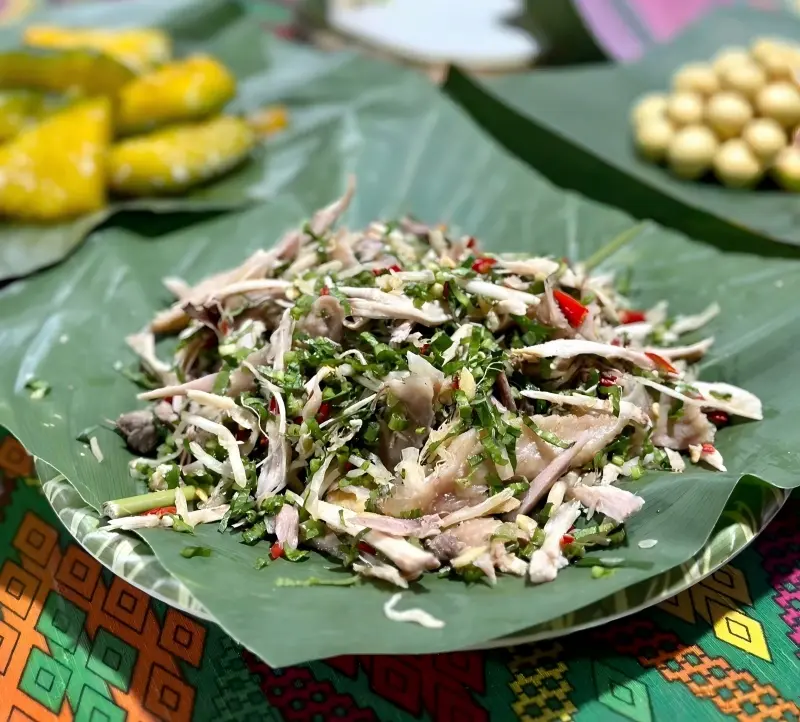
5. Jingpo Ghost Chicken
Why Popular:
A classic Jingpo dish. Sour, spicy, healthy, and perfect for light eaters.
Flavor:
Shredded black chicken mixed with chili, lemon, coriander, and local herbs. Refreshing and appetizing.
Where to Try:
Jing Dai Garden, Dai Ancient Town Night Market
5. Best 2–3 Day Itinerary for Mangshi (Foreign Visitor Friendly)
Travel Note: Gateway to Western Yunnan Border Route
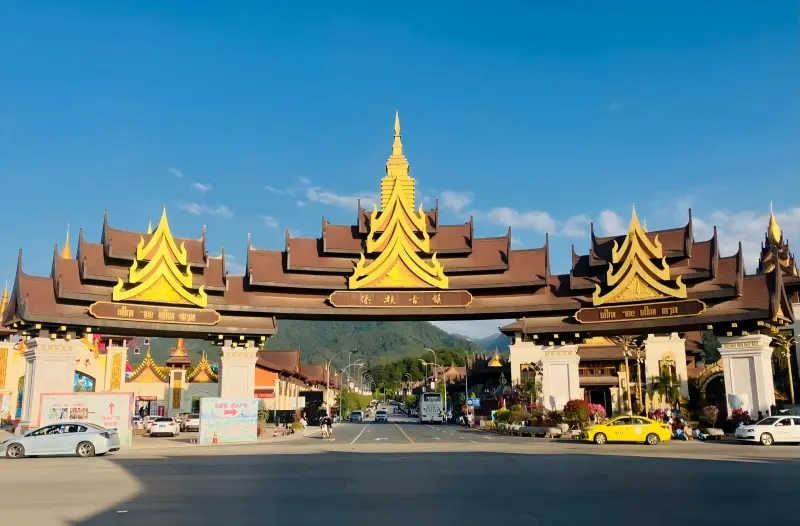
Mangshi is not only attractive itself, but also the main gateway to the best western Yunnan border travel route. Within 1–2 hours by car, you can easily visit Ruili, Wanding, Zhefang, Longchuan, and even the slightly farther Tengchong. Together, they offer border culture, ethnic traditions, natural scenery, and historical sites.
Best Time to Visit
November to April (Dry Season) ★★★★★
Sunny skies, temperatures around 15–28°C, best for sightseeing and photography. The Water Splashing Festival in mid-April is especially lively.
May to October (Rainy Season) ★★★★
Lush greenery, fewer tourists, lower prices, and fresh air after rain. Great for nature lovers and relaxed travel.
Plan A: 2-Day Highlights Trip (Best for First Visit, Includes Ruili)
Stay: Mangshi Square / Tuanjie Street
Day 1: Pagodas + Cultural Wonders
- Morning: Menghuan Silver Pagoda (1.5 hrs)
- Then: Menghuan Golden Pagoda (1.5 hrs, sunset view)
- Lunch: Dai hand-grab rice + Paoluda
- Afternoon: Tree-Wrapped Pagoda (30 mins) → Bodhi Temple (1 hr)
- Evening: Walk around Mangshi Square
- Night: Dai Ancient Town Night Market for Sa Pie, BBQ, chicken feet
Day 2: Border Experience + Tropical Garden
- Morning: Private car to Ruili (1.5 hrs), visit One Village, Two Countries (1 hr)
- Lunch: Burmese food in Ruili
- Afternoon: Jiegao Port (30 mins) → Return to Mangshi → Mengbanaxi Rare Garden (1.5 hrs)
- Evening: Walk around Peacock Lake
- Night: Xinwanchang Night Market, then departure
Plan B: 3-Day Relaxed Trip (Includes Ruili + Wanding)
Stay: Mangshi Square, no hotel change needed
Day 1: First Meeting with Mangshi
- Morning: Arrive and check in
- Enjoy a cup of Paoluda
- Afternoon: Silver Pagoda + Golden Pagoda
- Sunset: Golden Pagoda night view
- Night: Dinner in Dai Ancient Town + dance show
Day 2: Border Discovery Route
- Morning: Drive to Wanding (1 hr)
- Visit Wanding Bridge (30 mins)
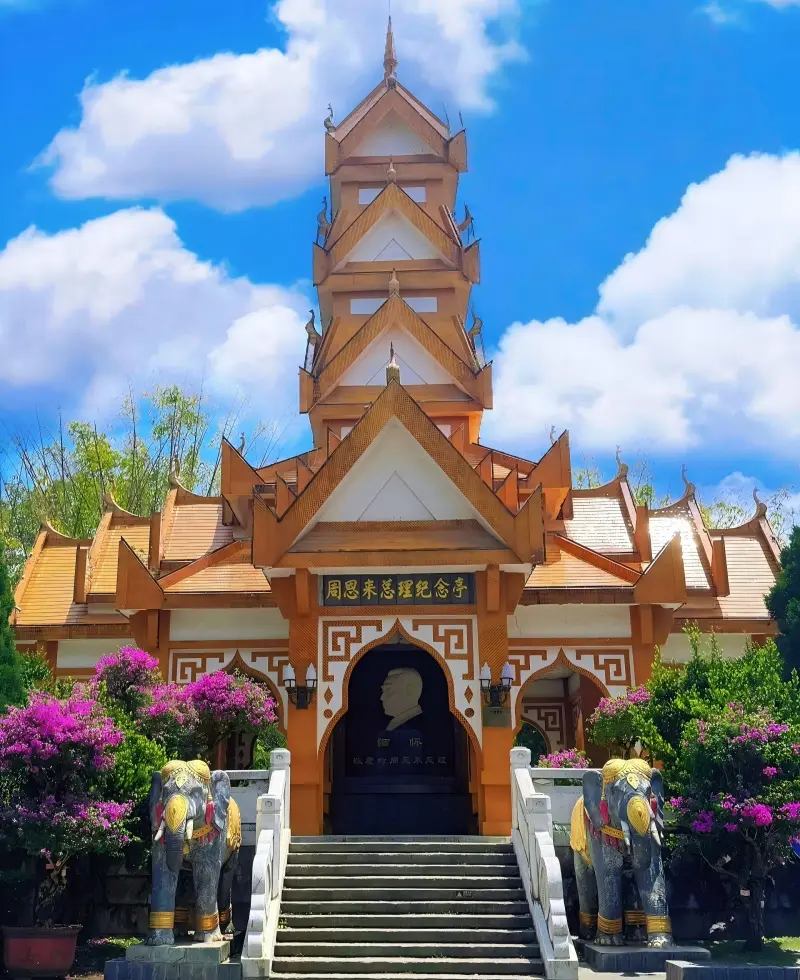
- Visit Overseas Chinese Driver Memorial (20 mins)
- Lunch in Wanding
- Afternoon: Ruili → One Village, Two Countries → Jiegao Port / China-Myanmar Street
- Evening: Return to Mangshi and eat at Best Food City
Day 3: Local Life + Easy Finish
- Breakfast: Rice noodles with pea paste
- Visit Bingwu Market for fruit and ethnic goods
- Lunch: Guoshou Rice Noodles
- Afternoon: Xianfo Cave or Peacock Lake
- Buy souvenirs: dried mango, tamarind cake, Dai textiles
- Evening: Airport / station transfer
6. Why Is Mangshi Worth Visiting?
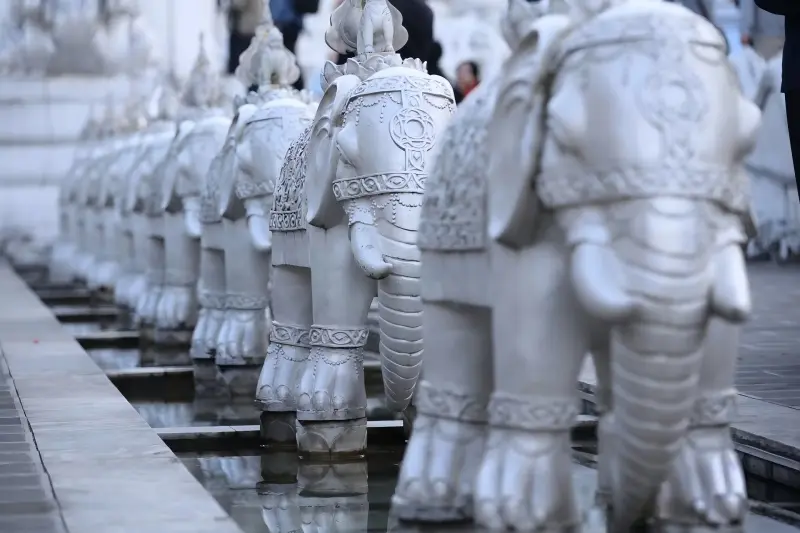
Mangshi is one of China’s most unique hidden gems. It is not over-commercialized. Instead, it offers pure border culture, local life, and one of the best slow-travel experiences in China.
Why You Should Visit Mangshi
- Unique Culture: Southeast Asian pagodas, border life, multi-ethnic heritage
- Rich Scenery: Golden pagoda, silver pagoda, tropical gardens, lakes, tree-wrapped pagoda
- Great Food: Fresh Dai cuisine, Burmese flavors, desserts, street snacks
- Comfortable Travel: Small city, slow pace, low prices, easy transport
- Friendly Atmosphere: Warm locals, safe environment, ideal for solo or family travel
Final Thoughts
Come to Mangshi and escape the crowded tourist cities. Use Mangshi as your gateway to western Yunnan’s golden border route. At a relaxed pace, discover golden pagodas, tropical scenery, sour-spicy food, and warm local life. This city will give you one of the most comfortable and unforgettable travel memories in China. If you’re interested in discovering more places experiencing a surge in international visitors, check out our guide to China’s Top Rising Destinations for 2026.


It’s actually a great and helpful piece of info. I’m happy that you just shared this helpful info with us. Please keep us up to date like this. Thank you for sharing.