Ultimate Guide to Tianzi Mountain: Imperial Writing Brush Peaks, Helong Park & Shentang Gulf
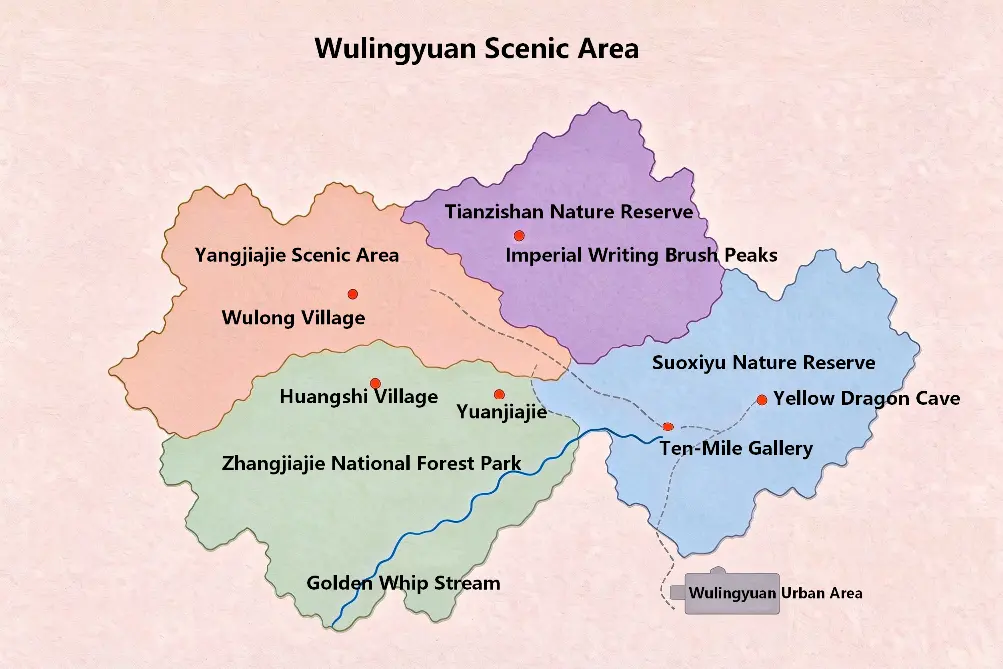
Visiting Zhangjiajie for the first time and wondering where to start? Just keep this simple formula in mind: 3 Major Scenic Areas (Wulingyuan, Tianmen Mountain, Zhangjiajie Grand Canyon) + Downtown Area. Wulingyuan is by far the most famous of these regions.It is actually made up of four key sections: Zhangjiajie National Forest Park, Suoxiyu, Tianzi Mountain, and Yangjiajie.
After exploring the core trails of the National Forest Park and the dynamic waters of Suoxiyu in our previous posts, we now ascend to the grandest viewpoint of them all—Tianzi Mountain.
Among Wulingyuan’s four sections, Tianzi Mountain offers the most panoramic and sweeping horizons. While Zhangjiajie National Forest Park is about “walking through the stone forest,” Tianzi Mountain changes the perspective entirely: here, you are standing in the clouds, looking down at a vast sea of peaks.
Known as the “King of Peak Forests,” its highest point reaches about 1,260 meters above sea level, making it the most iconic spot in Wulingyuan to catch the sea of clouds, sunrises, and sunsets.
Quick Navigation: Get Our Complete Itinerary
If you’d like to skip the details and start planning your trip right away, check out our complete guide, which includes both an Express Itinerary and a Deep-Dive Itinerary. It features suggested routes, time-saving tips, and pitfalls to avoid.
Now, let’s step into Tianzi Mountain: The King of Cloud Seas Looking Down from Above Wulingyuan.
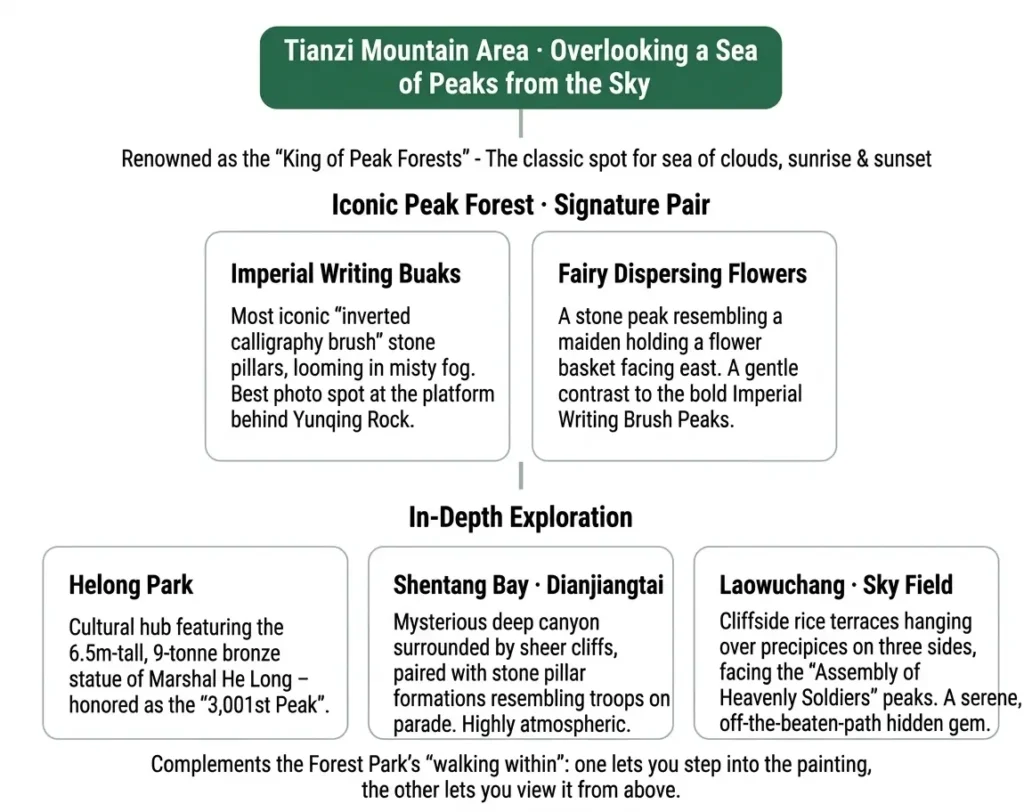
1. Imperial Writing Brush Peaks & Fairy Dispersing Flowers: The “Twin Covers” of Tianzi Mountain
If you only have time for two spots on Tianzi Mountain, make it these. Located within easy walking distance of Helong Park, they serve as the backdrop for nearly all of Tianzi Mountain’s official promotional photography.
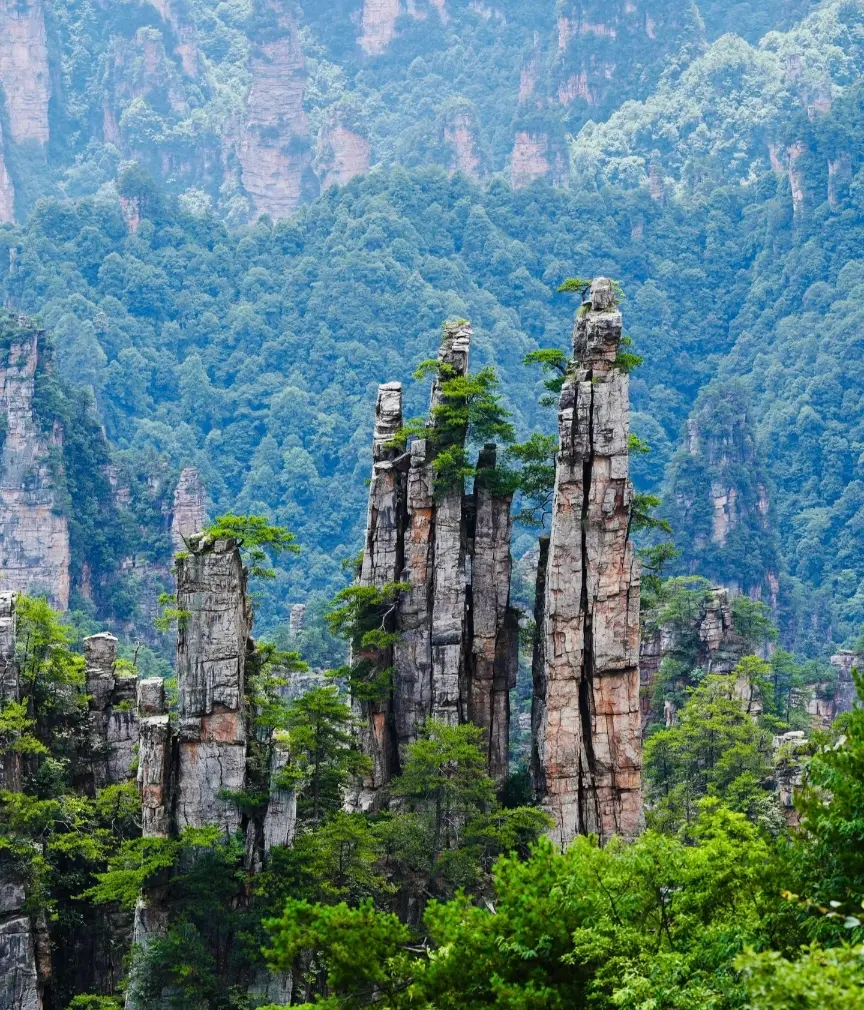
Imperial Writing Brush Peaks (Yubi Feng)
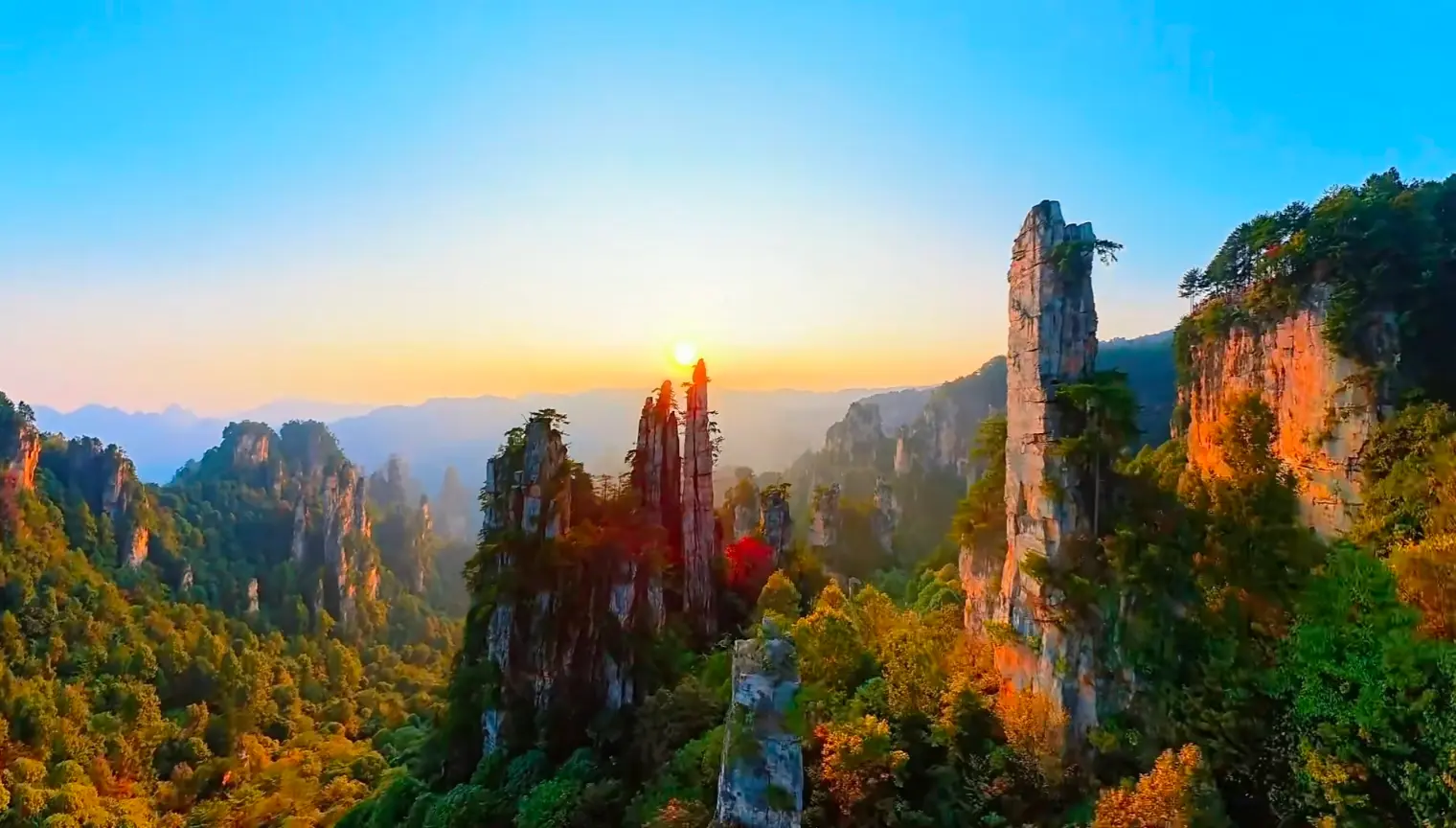
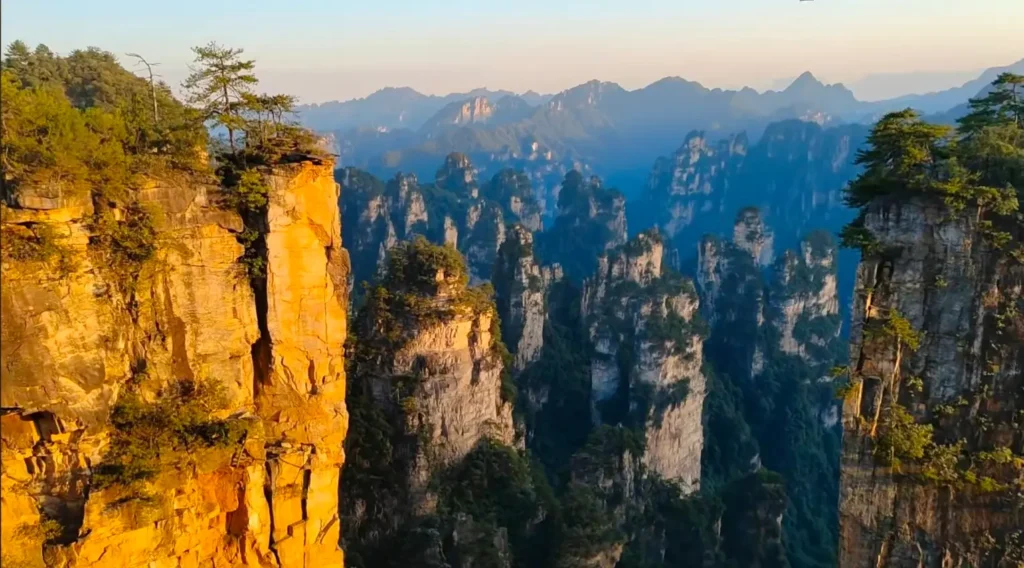
The Imperial Writing Brush Peaks are Tianzi Mountain’s most recognizable landmark. A series of slender stone pillars rise straight from the valley floor. Tapering toward the base and top, they resemble upside-down calligraphy brushes, complete with pine trees growing at the tips like brush hairs. Local legend says these are the enchanted writing brushes left behind by Xiang Dakun, the ancient Tujia King, after his final battle. When mountain mists rise, the stone peaks appear and disappear like a floating celestial palace. The best vantage point is from the viewing platform behind Yunqing Rock, especially during early morning backlit conditions or when clouds roll through the valley.
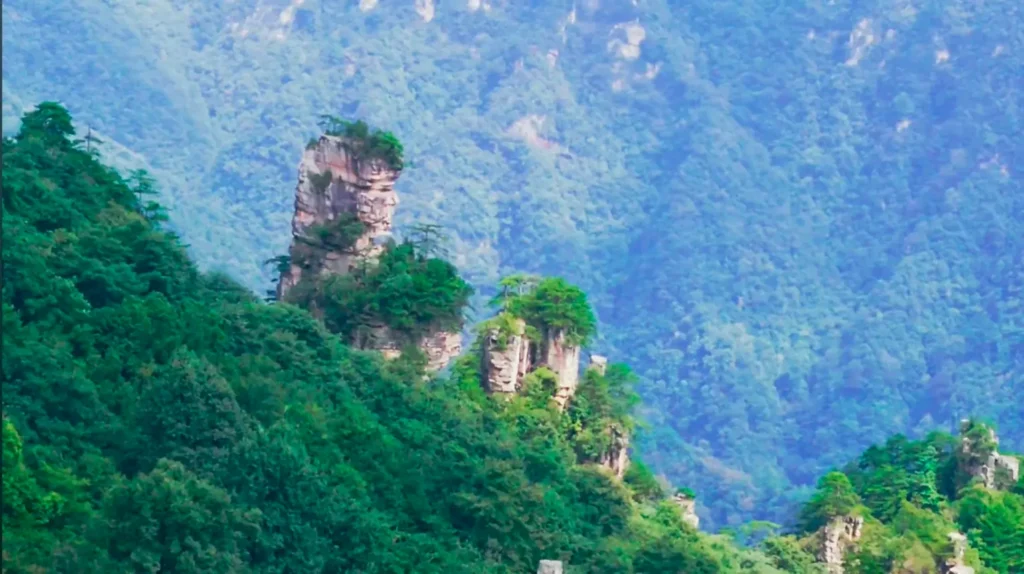
Fairy Dispersing Flowers (Xian Nv San Hua)
Located obliquely across from the Imperial Writing Brush Peaks is Fairy Dispersing Flowers. Viewed from the side, a sandstone peak resembles a young maiden holding a basket of flowers, standing proudly facing east. The shrubs atop the peak look like her headpiece, while wild flowers on the cliffside appear as petals scattered toward the realm below. Where the Imperial Writing Brush Peaks feel bold and rugged, Fairy Dispersing Flowers adds a touch of elegance—together forming the ultimate “twin cover photo” of Tianzi Mountain.
2. Helong Park: Where Culture Meets Nature
Helong Park (He Long Gong Yuan) is more than just a park—it serves as the core transit hub of Tianzi Mountain and holds the deepest historical resonance in the area.
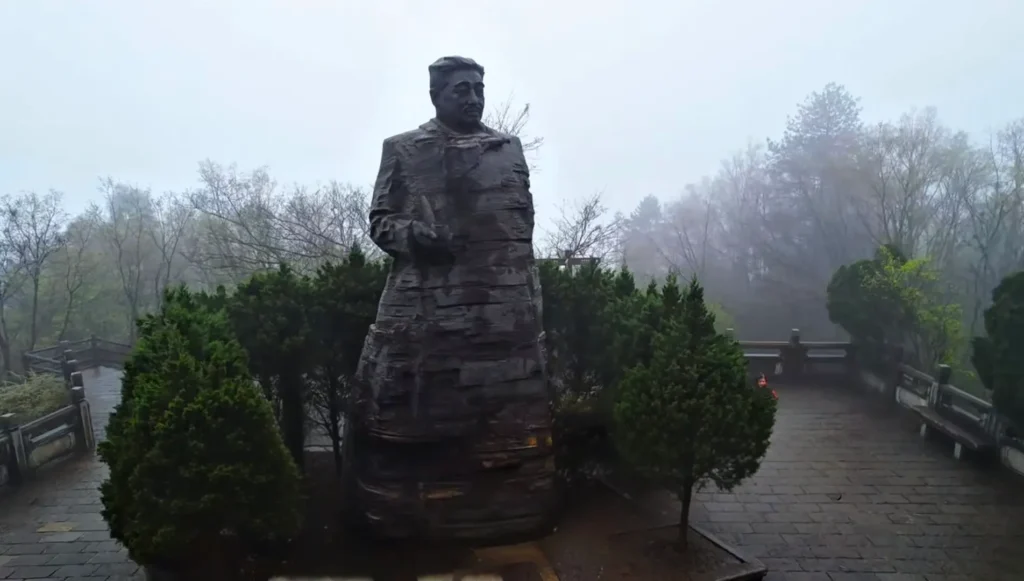
Erected in 1986, the bronze statue of Marshal He Long stands 6.5 meters tall and weighs 9 tons, making it one of China’s largest bronze monuments built in the past century. Facing Shentang Gulf with a fierce, resolute posture and a warhorse leaning closely by his side, the statue blends seamlessly into the surrounding peak forest. Locals affectionately call it Zhangjiajie’s “3,001st stone peak.”
Marshal He Long has deep roots in Tianzi Mountain. Born in Sangzhi County just west of the mountain, he led early revolutionary forces across these very rocks, using the rugged terrain for Red Army guerrilla operations. On June 27, 2009, with central approval, his ashes were brought back from Babaoshan Cemetery to rest permanently in his hometown. Standing before the statue and looking down over the West Sea Peak Forest, history and landscape intertw in a way unique to Tianzi Mountain.
3. Shentang Gulf & Commanding Platform: The “Mysterious Side Quests”
If you have extra time, head west from Helong Park to discover two legendary viewpoints. They see fewer crowds but offer an intensely atmospheric experience.
Shentang Gulf (Shentang Wan)
Shentang Gulf is a deep, concave gorge enclosed on all four sides by sheer cliffs, permanently cloaked in mist, rain, and mystery. Local lore claims King Xiang Dakun plunged off these cliffs after his defeat. Legend has it that whenever heavy rains fall, phantom sounds of drums, shouting men, and neighing horses echo from the bottomless abyss. While science attributes this to wind currents reverberating through the narrow gorge, standing on the rim surrounded by chilly gusts and swirling fog creates an undeniably mystical atmosphere.
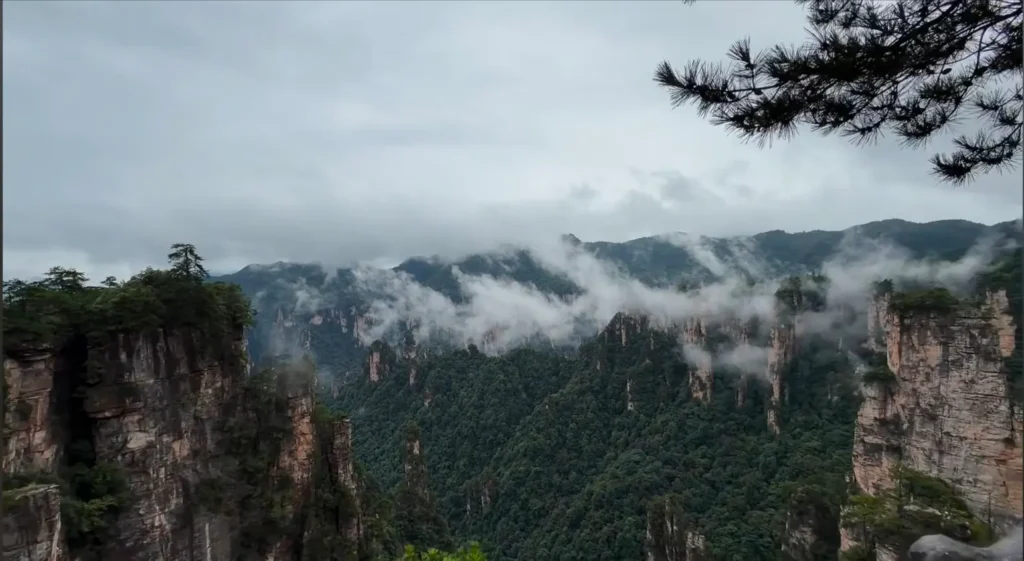
Commanding Platform (Dianjiang Tai)
Located a short walk from Shentang Gulf, the Commanding Platform overlooks dozens of stone pillars lined up neatly along the canyon floor like troops awaiting orders. Legend tells us this was where King Xiang Dakun reviewed his army before battle. With far fewer tourists than the Imperial Writing Brush Peaks, it’s a perfect spot for those seeking a quiet moment with the stone forest.
4. Laowuchang (Field in the Sky): Tianzi Mountain’s “Hidden Gem”
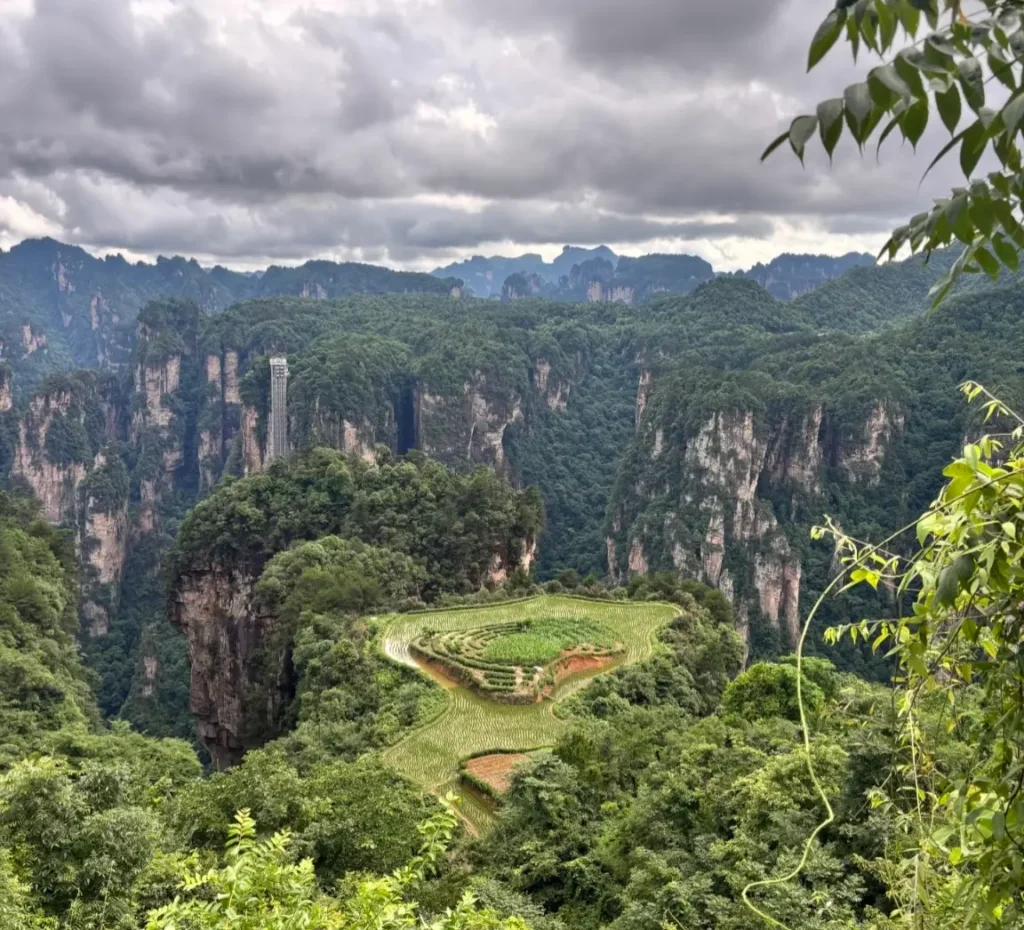
Reaching Laowuchang requires extra travel time, but visitors consistently rate it as a trip highlight. Situated on the western slope of Tianzi Mountain, its primary attraction is the Sky Field (Kongzhong Tianyuan)—a terraced rice field sitting at 1,000 meters elevation, perched precariously on a cliff surrounded by vertical drops on three sides. Above the abyss, crops grow as mists drift past, creating the illusion of a floating garden in the sky. Nearby lies the Gathering of Soldiers (Shenbing Juhui), where dozens of sandstone pillars crowd tightly together inside the gorge like a hidden mountain army.
Practical Tip: There are no official eco-shuttle buses to Laowuchang. You must arrange local transport or hike in from the Dingxiangrong area. Some viewing areas lack completed safety railings. If you love raw, untouched landscapes and don’t mind rougher trails, it is well worth the detour. If you are traveling with elderly companions or young children, feel free to skip it.
Summary: Why Visit Tianzi Mountain in Zhangjiajie?
The essence of Tianzi Mountain lies in gaining elevation to look out across the horizon:
- Imperial Writing Brush Peaks & Fairy Dispersing Flowers showcase iconic silhouette landscapes.
- Helong Park weaves human history together with natural wonder.
- Shentang Gulf & Commanding Platform offer a deep canyon atmosphere steeped in ancient legends.
Tianzi Mountain perfectly complements Zhangjiajie National Forest Park: while the Forest Park invites you to walk inside the painting, Tianzi Mountain lets you stand outside to take in the entire sea of peaks.
Practical Information
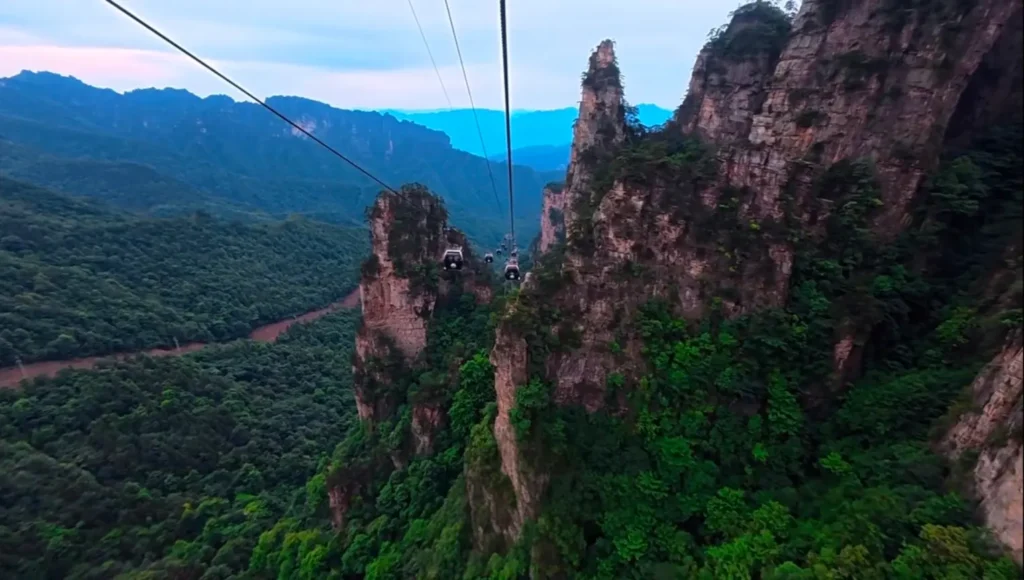
The Tianzi Mountain Cable Car is one of the main ways to ascend and descend the mountain:
- Distance & Drop: 2,084 meters diagonal length with a vertical drop of 692 meters.
- Travel Time: As fast as 6 minutes and 26 seconds one way.
- Ticket Price: Approximately 70 RMB (subject to official daily announcements).
- Crowd Tip: During peak seasons, afternoon queue times for the descent can be long. Official advice suggests staggering your departure toward 19:30 or taking alternative routes like the Yangjiajie Cable Car to avoid delays.
This article is part of our Wulingyuan destination series. Having covered the towering peak trails of Zhangjiajie National Forest Park and the flowing waters of Suoxiyu, we’ve now taken in the mountain vistas of Tianzi Mountain. Up next, we’ll venture into the rugged wilderness of Yangjiajie! If you’d like to learn more about other attractions in Zhangjiajie, check out our Zhangjiajie attractions guide.