Chongming Island: An Ecological Poem and Civilization Symphony at the Yangtze River Estuary
Looking out from the viewing platform on the Shanghai Yangtze River Bridge, this third-largest island in China floats like jade upon the blue waves. Chongming Island is not just the world’s largest delta-formed island — it is a living museum where Yangtze River civilization meets ocean culture.

When a Dutch ecologist observed 200,000 migrating birds in the East Shoal Wetlands, he said:
“This place practiced the philosophy of human-nature coexistence long before my home province of Flevoland.”
Visitors often combine a trip to Chongming Island with other nearby Shanghai highlights, such as the Bund, Yu Garden, and Shanghai Tower, or venture to charming water towns like Zhujiajiao Water Town, for a full exploration of urban and ecological landscapes.
I. From Sea to Land: The Civilization Code of a Flowing Island
Chongming Island’s formation is a geological epic. Since emerging in the Tang Dynasty, this “young island” grows by 1.43 sq. km each year. Its coastline pushes eastward into the East China Sea by 50 meters annually.
At the Chongming Academy, standing before the Ming Dynasty “Chongming Territory Map”, a British geographer noted: In 1385, Chongming was only one-third of its current size. This growth makes the island a natural laboratory for studying ecological evolution.
Relics reveal human-nature negotiation: Tang Dynasty salt kilns dating back 1,300 years and ancient Ming Dynasty sluice gates. At Baobao Town Port, layers of oyster shell fossils form a wall — early settlers “used the sea as their field”, building dams from discarded shells to strengthen the coast and nurture new fishing grounds. This circular economy mirrors modern sustainability thinking.

II. Ecological Wonder: A Global Landmark for Migratory Birds
The East Shoal Wetland is Chongming Island’s most stunning ecological feature. This 326 sq. km national nature reserve welcomes 200,000 migratory birds every autumn, including the Black-faced Spoonbill, of which only 500 remain globally.
A German ornithologist observed the reed marshes here were denser than Germany’s Wadden Sea, providing safer habitats for the birds.
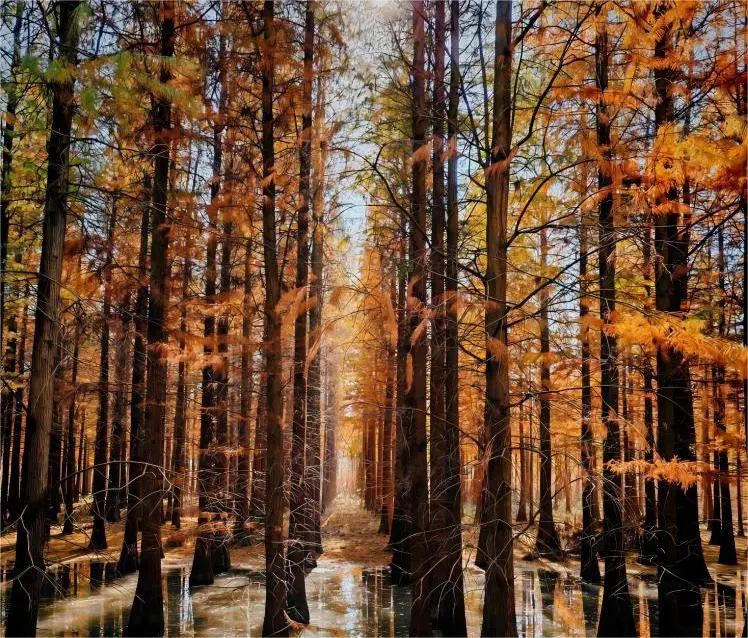
The “Tidal Forest” at West Shoal Wetland showcases intertidal wonders. A 7-kilometer wooden boardwalk leads visitors through tidal mazes. Mudskipper burrows dot the mudflats like miniature cities. This ecosystem echoes Amazonian mangroves, proving that ecological wisdom transcends continents.
III. Water Town Code: Living Heritage of Jiangnan Culture
Chongming Island’s 17 ancient towns preserve the purest Jiangnan water village traditions. In Caogang Ancient Town, a Swedish architect marveled at the “Two-Sided Street” design, where buildings extend toward the river, creating shaded walkways and public waterfront docks. This harmony between people and water predated Venice’s canals by centuries.

Intangible cultural heritage thrives. At Chongming Local Cloth Museum in Miaozhen, visitors try 600-year-old blue calico printing. A Japanese tourist noticed similarities to Kyoto’s Nishijin weaving, highlighting shared vegetable-dye techniques.
The annual Chongming Dragon Boat Race features straw scarecrow “Boat Gods”, blending Wu and Yue water deity faiths with agricultural culture.

IV. Travel Tips: Guide to an Ecological Slow Journey
- Golden Route: East Shoal Wetland (Bird Watching) → West Shoal Wetland (Tidal Trek) → Jiangnan Water Town Villages → Yingdong Village (Fisherman’s Stay). Electric bike recommended.
- Secret Moments: Sunrise at East Shoal at 6:00 AM — migrating birds rise from the morning fog like an ink-wash painting. At dusk, see the Hengsha Island wind turbines glow golden.
- Cultural Bonus: Participate in Carbon Footprint Calculation at Chongming Eco-Technology Museum. AR shows how wetland vegetation absorbs your trip’s carbon emissions.
As night falls and porpoises leap at the Yangtze estuary, Brazilian eco-volunteer Marina wrote:
“This place made me truly understand the meaning of ‘development.’”
Chongming Island, preserving Tang Dynasty salt fields while hosting Asia’s largest wind farm, speaks with its tidal rhythm: True progress is dancing with nature, not conquering it.