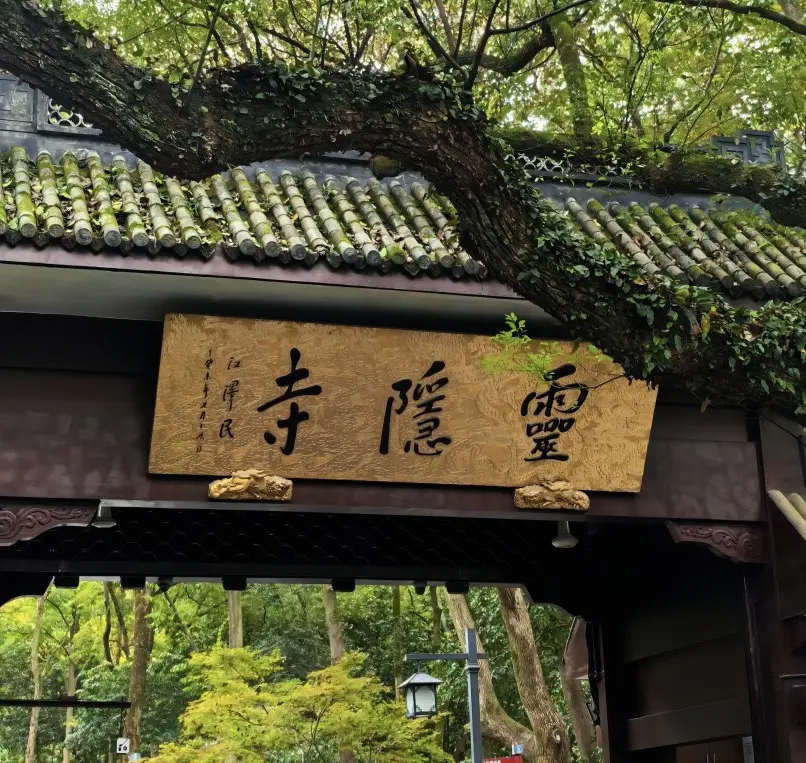
Lingyin Temple Travel Guide: Exploring Eastern Zen in Hangzhou
I. Overview: A Thousand Years of Faith and Tranquility
Located in the lush hills west of West Lake in Hangzhou, Lingyin Temple is one of the oldest and most influential Buddhist temples in China. Founded in 326 AD during the Eastern Jin Dynasty, it was established by the Indian monk Hui Li, who believed the surrounding peaks resembled India’s sacred Vulture Peak. He named the site Lingyin, meaning “Retreat of the Soul.”
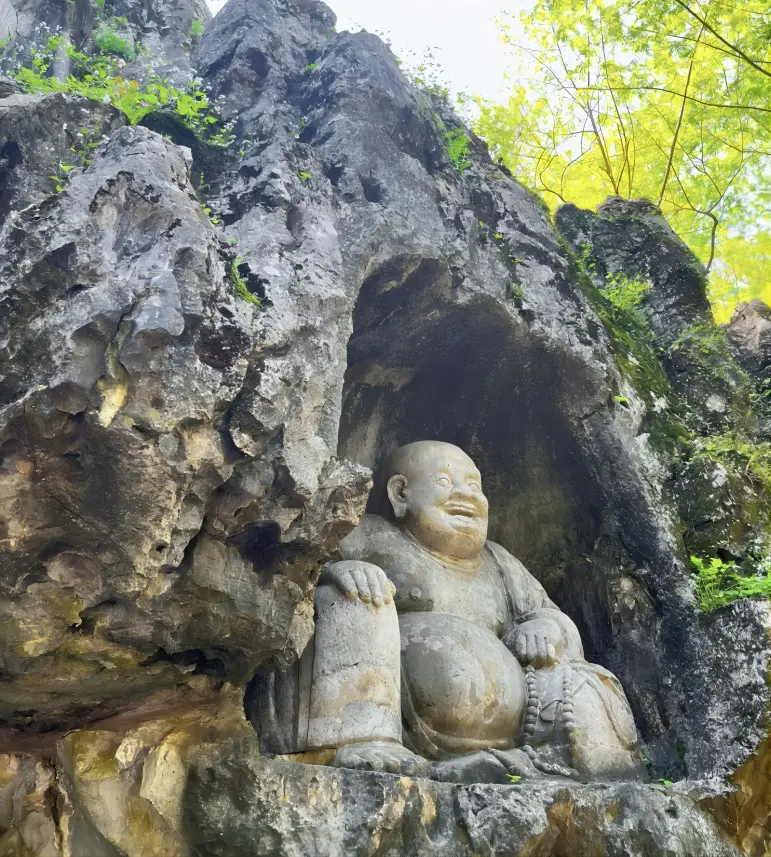
Today, Lingyin Temple covers more than 130 acres and remains an active place of worship. It is especially famous for the Feilai Feng (Peak Flown From Afar) Grottoes, home to 345 Buddhist rock carvings dating from the Five Dynasties through the Yuan Dynasty.
Good to know: Starting December 1, 2025, entry to the Lingyin–Feilai Feng scenic area will be free, making it one of the most accessible major temples in China.
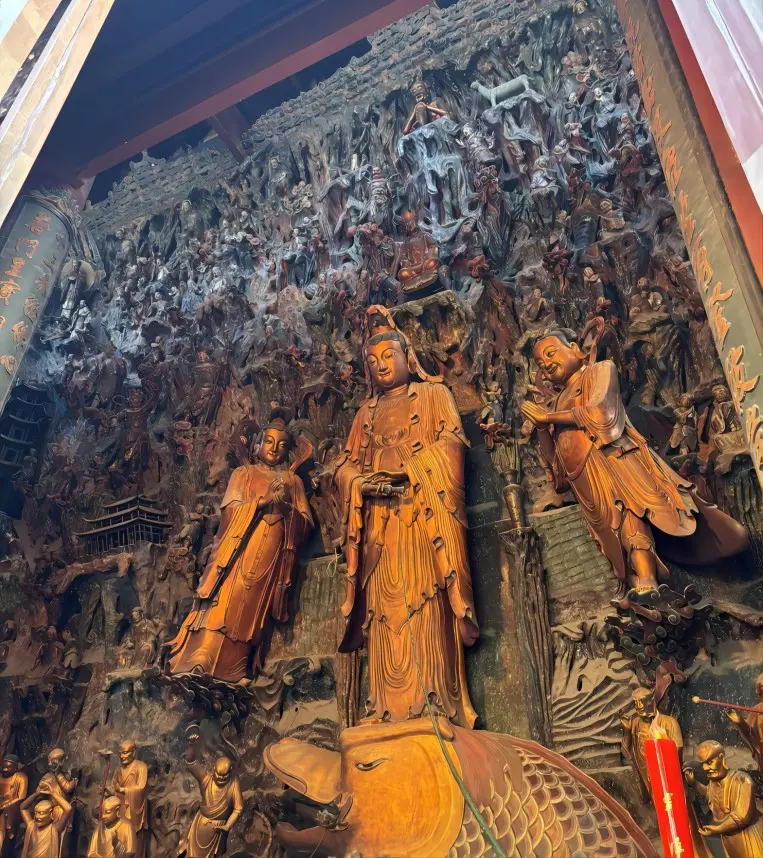
Three Must-See Highlights at Lingyin Temple
- The 24.8-Meter Sakyamuni Buddha:
Housed in the Main Hall, this towering Buddha is carved from 24 pieces of camphor wood. Its Tang-style design includes 1,468 delicately carved lotus patterns. - The Laughing Buddha at Feilai Feng:
This iconic Song Dynasty carving of Maitreya symbolizes happiness and good fortune. Many visitors gently touch the statue as a gesture of blessing. - The Hall of 500 Arhats:
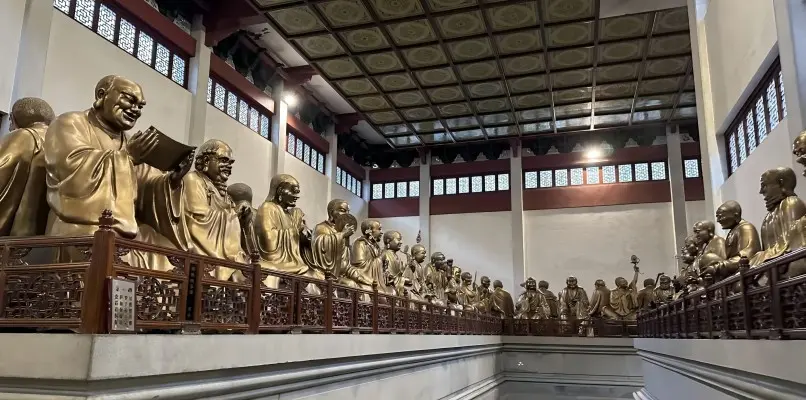
Featuring the world’s largest collection of bronze Arhat statues, each of the 500 figures stands 1.7 meters tall, with unique facial expressions and postures.
II. Practical Travel Guide to Lingyin Temple
Tickets, Reservations & Opening Hours
- Admission:
- Free entry from December 1, 2025 (Lingyin Temple, Feilai Feng, Yongfu Temple, and Taoguang Temple)
- Reservation Required:
Advance booking is mandatory via the official “Hangzhou Lingyin Feilai Feng” platform.- Reservations open 7 days in advance
- Daily limit: 35,000–65,000 visitors
- Opening Hours:
- 7:30 AM – 5:30 PM
- Pro Tip:
Weekends and holidays fill up quickly. Book early and visit on weekdays if possible.
How to Get to Lingyin Temple
- Public Transport:
Take Metro Line 1 to Longxiangqiao Station, then transfer to Bus Route 7 or the Lingyin Special Line. - By Car:
Parking near the temple is limited. Park at Jiulisong Parking Lot and enjoy a scenic 10-minute forest walk to the entrance.
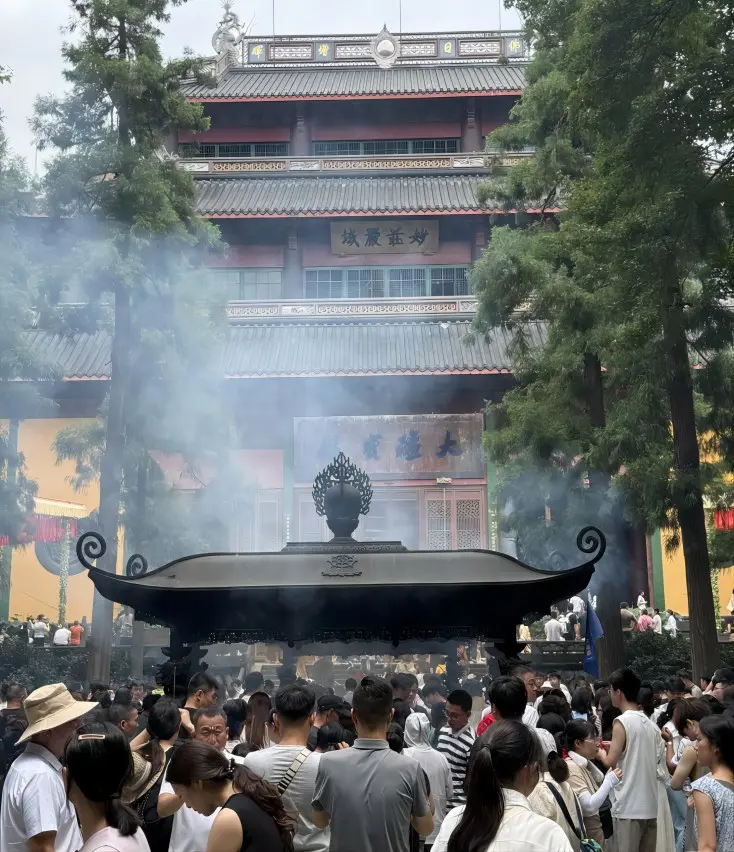
III. How to Pray at Lingyin Temple: Rituals & Meanings
Lingyin Temple is deeply connected to folk beliefs and everyday blessings. Many visitors come not only to admire history, but also to pray for peace, health, and guidance.
| Hall | Main Deity | Common Wishes | Ritual |
|---|---|---|---|
| Heavenly Kings Hall | Laughing Buddha (Maitreya) | Peace & Happiness | Walk clockwise around the statue three times |
| Main Hall | Sakyamuni Buddha | Wisdom & Career | Join palms at brow level and quietly repeat your wish three times |
| Medicine Buddha Hall | Bhaisajyaguru | Health & Longevity | Light three incense sticks and place them clockwise |
| Huayan Hall | Vairocana Buddha | Overcoming Obstacles | Perform three full bows |
| Jigong Hall | Monk Jigong | Helpful Mentors & Luck | Touch the sole of Jigong’s shoe to “leave bad luck behind” |
Special Blessing Tips
- For Family & Children: Visit the Cradle-Bearing Guanyin statue behind the Main Hall.
- For Wealth & Prosperity: Take the cable car (30 RMB) to North Peak, home to the “First Temple of the Wealth God.” Touch the golden ingot and walk clockwise three times.
IV. One-Day Lingyin Temple Itinerary
- 09:30 – 11:30 | Core Visit:
Explore the Feilai Feng Grottoes and main temple halls. In the Hall of 500 Arhats, try finding the Arhat linked to your lunar birthday. - 12:00 – 13:30 | Vegetarian Lunch:
Dine at Shifang Yuan, famous for its Arhat Noodles. The broth is simmered for four hours using eight types of mushrooms. - Afternoon | Cultural Extension:
Take an electric cart to Yongfu Temple and enjoy a Zen tea session overlooking the forest. - Evening | West Lake Experience:
Return to West Lake for the Enduring Memories of Hangzhou show, which blends music, water, and Buddhist-inspired themes.
V. Souvenirs & Smart Shopping Tips
- What to Buy:
- The popular “18-Seed” bracelet, symbolizing different blessings
- Zen-style vegetarian snacks, especially osmanthus cakes in autumn
- What to Avoid:
- “Blessed items” sold by unofficial street vendors
- Large wooden carvings that are difficult to transport and may use protected wood
VI. Why Visit Lingyin Temple?
Lingyin Temple is not just a sightseeing stop—it’s a living reflection of Chinese spirituality. Here, imperial history meets folk belief, scholarly poetry meets everyday prayer. Like Hangzhou itself, Lingyin is gentle on the surface, yet deeply profound at its core.
Slow down. Listen to the stream beside the pavilion. This is where Eastern Zen truly comes alive. Lingyin Temple is just one of many iconic Buddhist sites across the country—if you’d like to explore more, this guide to famous temples in China offers a broader perspective.