Shaanxi History Museum Travel Guide: Highlights, Tickets & Tips
Located in the ancient capital of Xi’an, the Shaanxi History Museum is one of the most important museums in China. Often called the “key to understanding Chinese civilization,” it presents more than 3,000 years of history through over 1.7 million artifacts, from prehistoric tools to masterpieces of the Tang Dynasty.
For first-time visitors to Xi’an, this museum is not optional—it is the best starting point for understanding why Xi’an stands at the heart of Chinese history.

Why Visit the Shaanxi History Museum?
The Shaanxi History Museum (often shortened to Shaanbo) was China’s first large-scale modern national museum. Its collections focus on four dynasties that shaped the foundation of Chinese civilization: Zhou, Qin, Han, and Tang.
What Makes It Special?
- An unmatched collection: Artifacts range from early stone tools to refined works from the 19th century
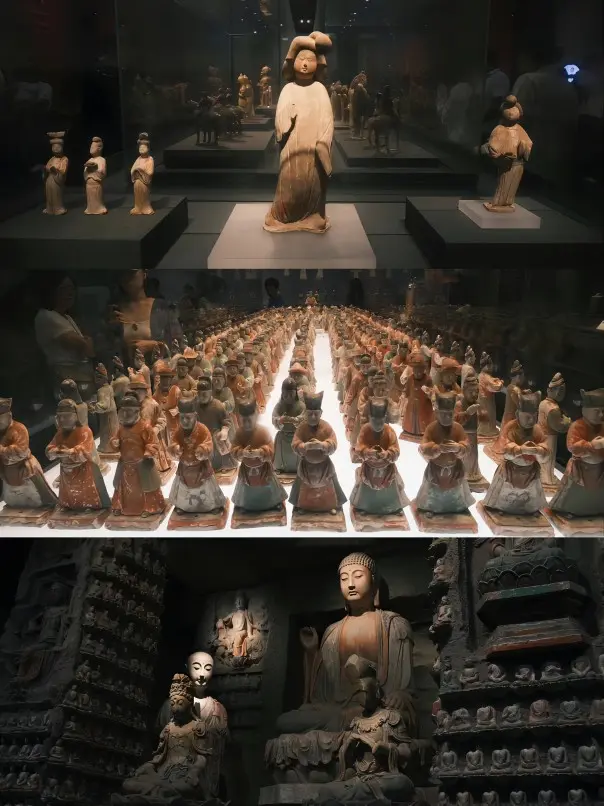
- National-level treasures: Shaanxi leads China in four categories—bronze ware, terracotta figures, gold and silver artifacts, and murals
- Rare exhibits: 37 national treasures are officially prohibited from overseas exhibitions due to their cultural value
If you want a clear, chronological overview of Chinese history, this is the best museum in the country to visit.
Tang Dynasty Architecture: A Museum That Is Art Itself
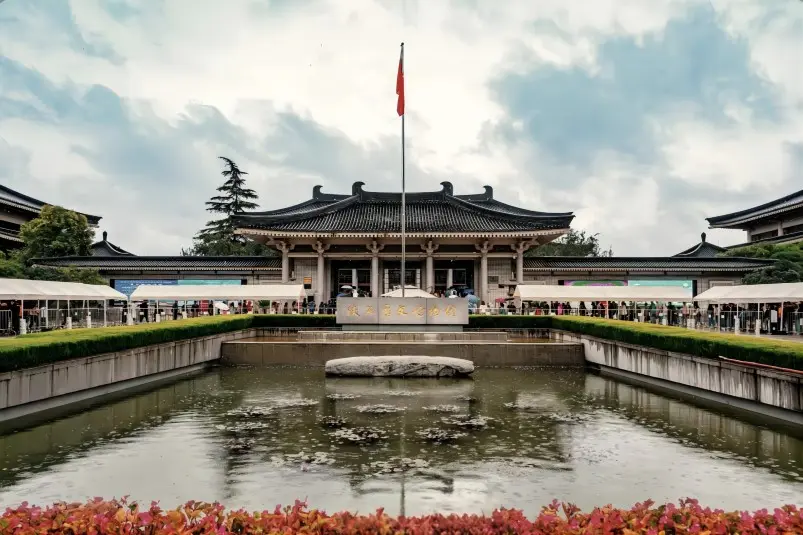
The museum building is a highlight on its own. Designed by renowned architect Zhang Jinqiu, it combines Tang Dynasty palace aesthetics with modern museum functionality.
- Exterior: Inspired by the imperial Daming Palace, featuring red columns and layered roofs
- Main Hall: High ceilings and marble columns evoke the atmosphere of an ancient royal court
- Courtyards: Designed in the traditional “palace in front, garden in back” style, ideal for photography
Photography tip: Visit early in the morning for soft light and fewer crowds.

Must-See Treasures in the Shaanxi History Museum
With thousands of priceless objects on display, focus on these five iconic national treasures:
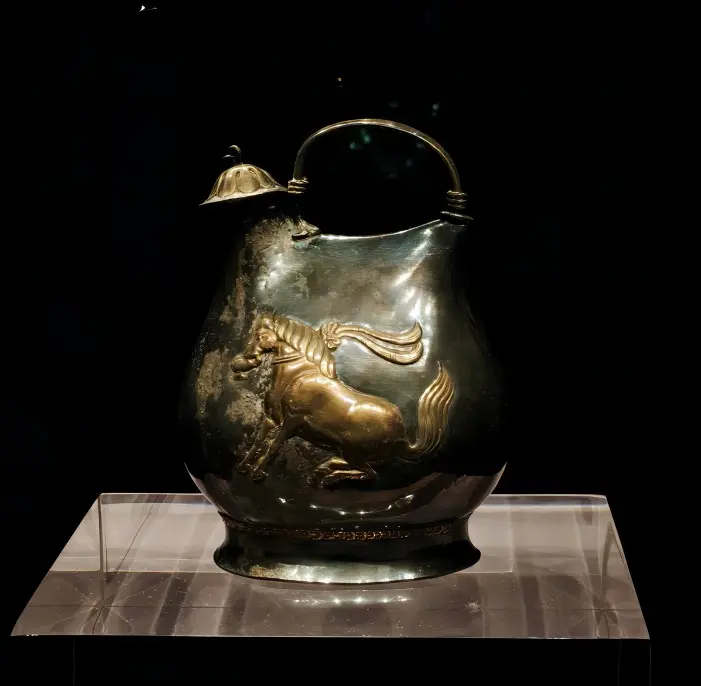
- Agate Cup with Gold Beast Head (Tang Dynasty)
Carved from a single piece of red agate, this cup reflects the fusion of Eastern and Western art along the Silk Road. - Gilded Silver Pot with a Dancing Horse (Tang Dynasty)
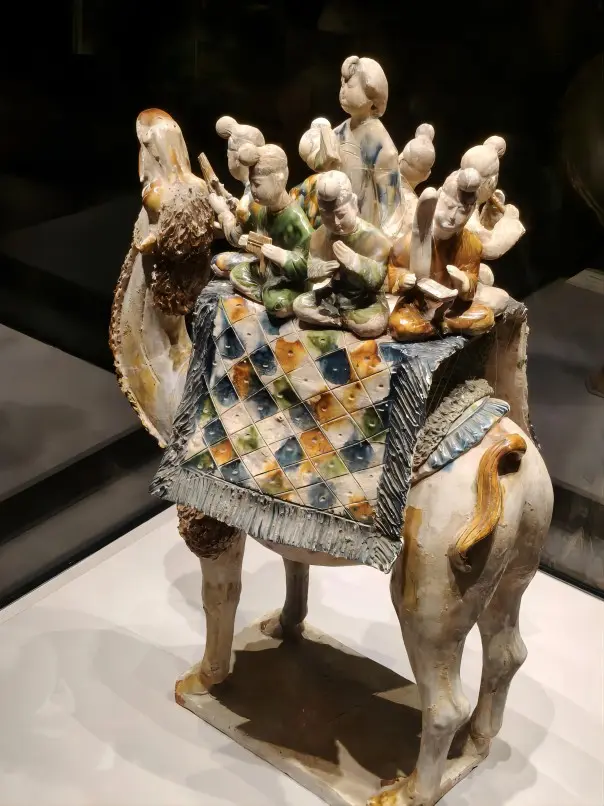
A vivid scene of a horse performing for the emperor, highlighting Chang’an’s role as a global cultural capital. - Tri-color Camel with Musicians (Tang Dynasty)
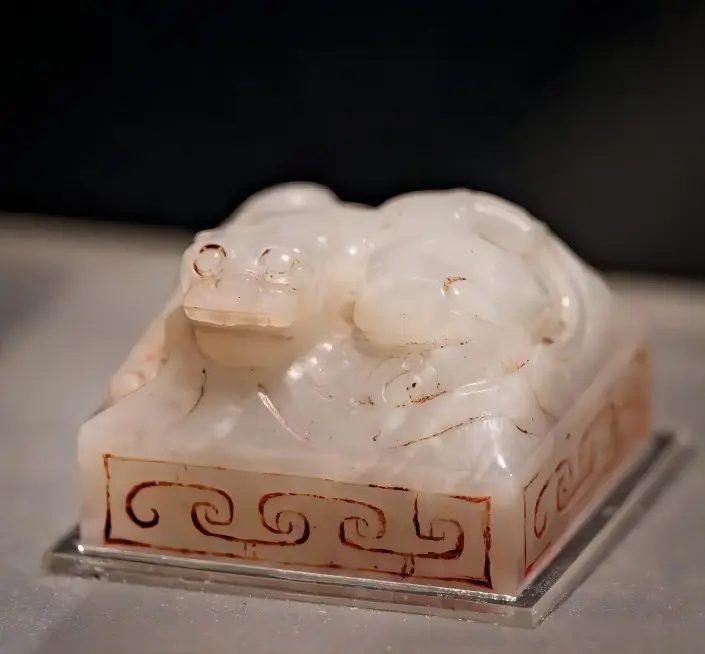
A ceramic camel carrying five musicians, symbolizing Silk Road trade, music, and multicultural exchange. - Jade Seal of the Empress (Han Dynasty)
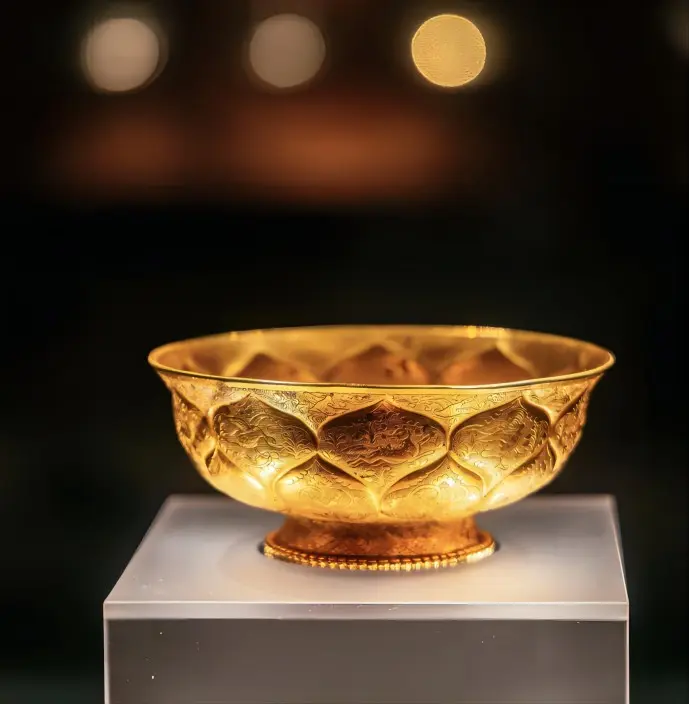
The earliest empress seal discovered in China, carved from precious Xinjiang jade. - Gilded Gold Bowl with Lotus Patterns (Tang Dynasty)
A goldsmithing masterpiece that blends Central Asian form with traditional Chinese symbolism.
How Long Does It Take? A 3-Hour Visiting Route
Most visitors spend 2.5 to 3 hours in the museum. A logical route saves time and energy.
- Gallery 1: Prehistoric to Zhou Dynasty
Early civilization, bronze ritual vessels, and origins of Chinese culture - Gallery 2: Qin to Han Dynasty
Terracotta figures, imperial systems, and the rise of early Chinese empires - Gallery 3: Wei to Tang Dynasty
Silk Road artifacts, Tang gold and silverware, and international influences - Hejia Village Treasure Hall (extra ticket required)
Over 1,000 elite Tang artifacts discovered in a noble family’s hidden cache—highly recommended
Practical Information for Visitors
| Category | Details |
|---|---|
| Opening Hours | Tue–Sun, 09:00–17:30 (last entry 16:00); closed Mondays |
| Tickets | Free, advance booking required via official WeChat mini-program (limit ~6,000/day) |
| Guided Tours | English human guide ~150 RMB; audio guide 30 RMB (8 languages) |
| Subway | Line 2 or 3 to Xiaozhai Station, Exit E, 10-minute walk |
| Taxi | About 15 minutes from Bell Tower; 15–20 RMB |
The Story the Shaanxi History Museum Tells
The Shaanxi History Museum reveals the true spirit of ancient Chang’an, once the eastern end of the Silk Road and one of the world’s largest cities. Foreign merchants, monks, diplomats, and scholars lived side by side here.
What you see in the galleries is not just history—it is the foundation of China’s openness, tolerance, and cultural confidence, values that shaped East Asia and beyond.
Is the Shaanxi History Museum Worth Visiting?
Absolutely. Whether you are interested in Chinese history, the Tang Dynasty, or Silk Road culture, this museum offers the most complete and accessible overview available anywhere in China.
To understand China, start with Xi’an. To understand Xi’an, start with the Shaanxi History Museum.
Furthermore, to explore more highlights of a Xi’an journey, don’t miss our page on Xi’an Tourist Attractions!