Xi’an Lamb Paomo Guide: How to Eat, Order & Top Spots
At a Glance: What it is · What it tastes like · How to break the flatbread (Mo) · Where to eat · 2026 Price Guide
1. What Is Xi’an Lamb Paomo?
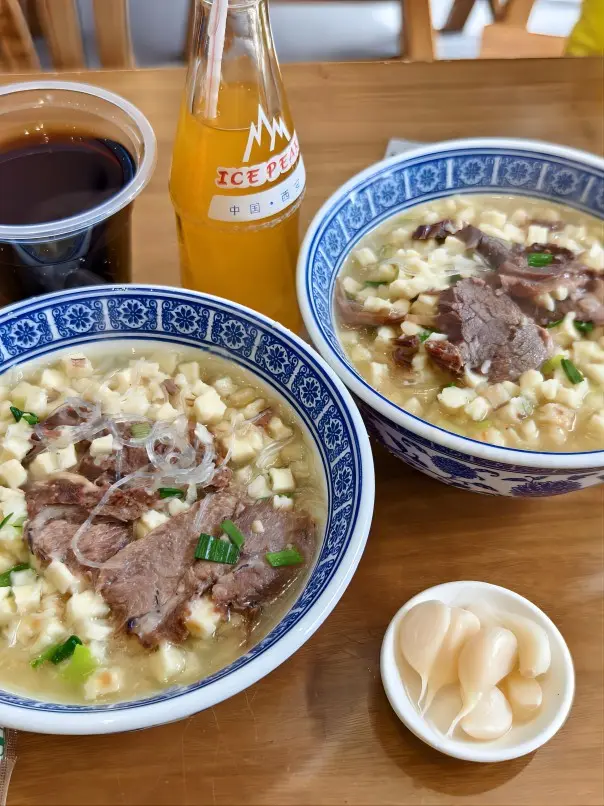
Xi’an Lamb Paomo (羊肉泡馍 – Yangrou Paomo, often translated as Mutton Paomo or Steamed Flatbread in Lamb Soup) is the most iconic culinary card of Xi’an.
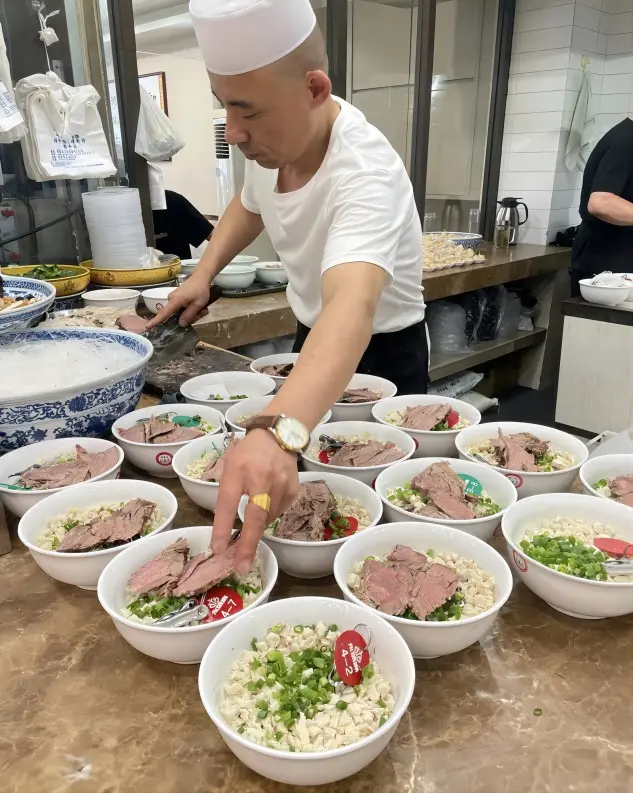
Deconstructed, it is deceptively simple: a bowl of slow-simmered, rich lamb broth, two unleavened white flatbreads (Mo – 馍), and tender slices of lamb. However, when it arrives at your table, it is not a finished dish. The flatbreads sit in a bowl whole—and breaking them down by hand is your job before it goes to the kitchen.
The Culinary Magic Lies in Two Elements:
- The Broth: Beef and lamb marrow bones are boiled in massive kettles with Sichuan pepper, fennel, star anise, cinnamon, and ginger. It simmers overnight until milk-white with a shimmering layer of fragrant fat on top. Whole cuts of lamb cook in the broth until fall-apart tender.
- The Bread (Mo): Made with semi-leavened dough, the dense flatbread is specifically baked to hold its structure. When simmered in broth, it absorbs flavor without dissolving into porridge (unlike standard mantou buns).
Lamb Paomo is less of a standard “noodle soup” and more of a hands-on dining ritual. Locals eat it for breakfast or lunch; for travelers, the 10-minute bread-breaking process is an authentic, interactive cultural experience.

2. What Does Lamb Paomo Taste Like?
First-timers often ask: Is the mutton gamey?
The short answer is no. The broth is rich, savory, and aromatic. The heavy spices and prolonged boiling neutralize gamey notes, leaving a savory fusion of animal fats and fragrant herbs. Rich soup lovers will adore it, though those who prefer light broths might find the first sip slightly heavy.
| Element | Flavor & Texture Profile |
| Broth | Milky yellow-white with a shiny sheen; savory, rich, with noticeable black pepper notes. |
| Bread (Mo) | Soft on the outside, pleasantly chewy inside; absorbs broth deeper when broken smaller. |
| Meat | Thinly sliced lamb, layered with fat and lean, stewed until tender and virtually game-free. |
| Garnish | Glass noodles, wood ear mushrooms, or daylily, served with pickled sweet garlic and chili paste. |
| Spiciness | Non-spicy by default; red chili paste is served on the side for self-adjustment. |
Pro Tip: The overall flavor profile is thick, salty, savory, and rich. Pair it with a cold bottle of Bingfeng (冰峰 – Xi’an’s local orange soda) or sour plum drink (Suanmeitang) to cleanse your palate.
3. How to Eat Lamb Paomo: The Bread-Breaking Ritual
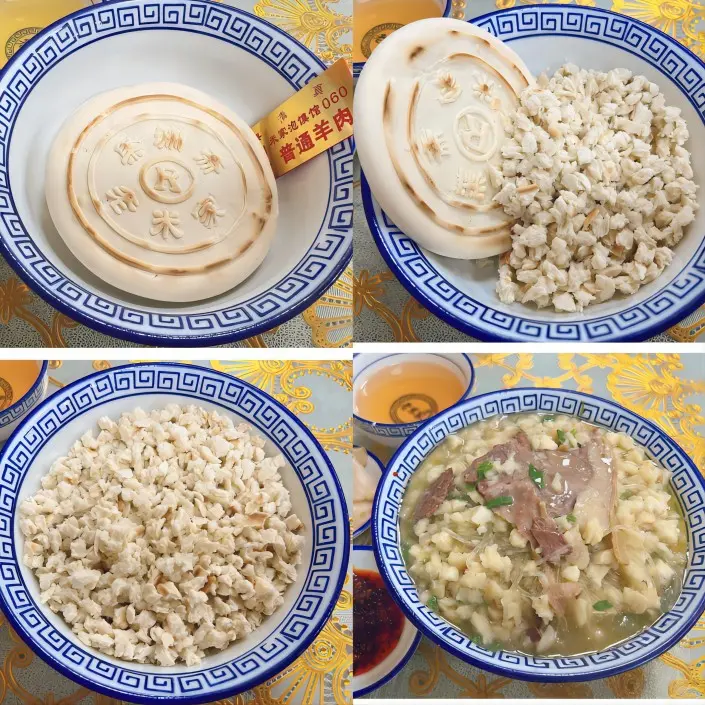
When you order Lamb Paomo, the server brings you two pieces of hard flatbread and an empty bowl. Here is the step-by-step process:
- Wash Your Hands: You break the bread directly with your fingers. Most authentic Paomo shops feature washing sinks near the entrance.
- Break the Bread into Pea-Sized Pieces: Tear the bread into two halves, split those layers thinly, and shred them into pieces the size of soy beans. It takes about 10 minutes. Pieces cut too large won’t cook through; smaller pieces absorb flavor evenly. Use your thumb pads to pinch rather than fingernails to avoid sore hands.
- Send Your Bowl to the Kitchen: Hand your bowl of shredded bread back to the staff. Specify whether you want Mutton (Yangrou) or Beef (Niurou), and Regular (Putong) or Premium (Youzhi). The chef simmers your bread in boiling broth with meat and noodles.
- Enjoy Hot: Eat it directly when returned to your table. Pair each bite with sweet pickled garlic (Tangsuan) to cut through richness, and add chili paste to taste.
Speed & Style Alternatives:
- In a Hurry? Ask for “Machine-Shredded” (Jiqi Bai – 机器掰). The shop uses a machine to slice the flatbread into uniform cubes.
- Don’t Want to Break Bread? Order “Danzou” (Danzou – 单走). You get whole flatbread and rich broth served separately, like dipping bread in soup.
Don’t Confuse These Related Dishes:
- Xiaochao Paomo (小炒泡馍): Also requires hand-broken bread, but cooked stir-fry style with chili, vinegar, tomatoes, and vegetables. It is sour, spicy, heavy, and typically made with beef. Listed as a separate menu item.
- Hulutou Paomo (葫芦头泡馍): Uses pork intestine as the primary ingredient. This is a Han Chinese specialty and not available in Halal restaurants.
- Shuipen Yangrou (水盆羊肉): Clear mutton soup served alongside baked flatbread. The soup and bread are eaten separately, not simmered together.
Broth Ratio Options:
- Koutang (口汤 – Default): Balanced broth leaving just one sip at the bottom when finished. Recommended for your first visit.
- Shuiweicheng (水围城): Features extra soup surrounding the pile of bread like a moat.
- Ganpao (干泡): Simmered until all liquid is completely absorbed into the bread.
4. Top Places to Eat Lamb Paomo in Xi’an
Xi’an offers hundreds of Paomo eateries. Choose based on your travel needs:
1. Lao Sun Jia (老孙家) · East Gate Branch
- Best For: Historic heritage & reliable standard version.
- Background: A historic Halal enterprise opened in 1898; its Paomo preparation technique is a National Intangible Cultural Heritage item. Offers rich broths and generous meat portions.
- Location & Hours: No. 78 Dongguan Zheng Street (near Changlemen Metro Station). Open 10:00 AM – 10:00 PM.
- Cost: ¥40–60 per person.
2. Tong Sheng Xiang (同盛祥) · Bell Tower Branch
- Best For: Convenient location & tourist-friendly atmosphere.
- Background: Established in 1920, this historic Halal brand sits right at the Bell and Drum Tower Square. Features bilingual menus and staff accustomed to international travelers.
- Location & Hours: West Avenue side of Bell Tower Square. Open 10:00 AM – 09:30 PM.
- Cost: ¥35–55 per person.
3. Muslim Quarter Alleyways (回坊 – Shajinqiao & Dapiyuan)
- Best For: Deep local atmosphere & heavy, rich flavors.
- Background: Neighborhood spots frequented by local residents. Prices are lower, bowls are larger, and broths carry a higher oil content. Look for shops with massive boiling kettles out front.
- Location & Hours: Shajinqiao and Dapiyuan alleys. Busy from morning to evening.
- Cost: ¥25–40 per person.
4. Neighborhood Community Shops
- Best For: Unpretentious budget meals across residential areas.
- Background: Everyday street corner restaurants outside scenic spots. Look for signboards reading “Beef & Mutton Paomo” (牛羊肉泡馍).
- Location & Hours: Citywide across all districts. Open all day.
- Cost: ¥20–35 per person.
5. 2026 Price Guide & Time Expectations
Prices depend on meat selection (Lamb / Beef) and portion grade (Regular / Premium).
| Menu Option | Reference Price (2026) | Description |
| Lamb Paomo · Regular (羊肉·普通) | ¥25–30 | One standard portion bowl; most popular choice. |
| Lamb Paomo · Premium (羊肉·优质) | ¥35–40 | Identical broth and bread, includes extra meat slices. |
| Beef Paomo · Regular (牛肉·普通) | ¥22–24 | Slightly cheaper alternative to lamb. |
| Beef Paomo · Premium (牛肉·优质) | ¥30–35 | Generous beef portion. |
| Pickled Garlic & Chili Paste | Free / ¥1–2 | Included with bowl at most locations. |
| Bingfeng Soda / Plum Juice | ¥3–10 | Recommended palate cleanser. |
Time Budgeting
Plan 40–60 minutes for a full Paomo meal:
- Bread breaking: 10 minutes
- Kitchen simmering: 5–10 minutes
- Eating: 20 minutes
- Queueing (Peak hours): Add 20–30 minutes at popular locations.
Sharing Strategy: One bowl equals a complete meal for one adult. If traveling as a duo wanting to sample multiple street foods, share one bowl of Lamb Paomo and order a side of Liangpi cold noodles or a Roujiamo burger.
6. Common Tourist Mistakes to Avoid
- “Premium” (Youzhi) Does Not Mean Higher Quality: The grade refers strictly to meat quantity, not broth quality or cooking craft. Regular (Putong) is sufficient for first-timers.
- Don’t Tear Bread Pieces Too Large: Aim for pea-sized fragments. Large walnut-sized chunks remain hard inside during simmering and fail to absorb broth.
- Mind the Broth Temperature: Bowls served directly from the kitchen are boiling hot. Eat the floating noodles and top bread layers first while the broth cools down.
- Respect Halal Etiquette: Authentic Paomo shops (Lao Sun Jia, Tong Sheng Xiang, and Muslim Quarter spots) are strictly Halal (Qingzhen). No pork or outside alcohol is allowed inside. Do not bring outside food.
- Not Ideal for Vegetarians: The broth is boiled with animal bones and marrow; vegetarian options do not exist for authentic Paomo.
- Flavor Profiles Vary by Shop: Historic brands serve lighter, cleaner broths, while Muslim Quarter alley spots skew heavier, richer, and punchier.

Summary: Is Lamb Paomo Worth Trying?
If you are spending two or more days in Xi’an, Lamb Paomo is a must-try dish. It offers a distinct regional taste and an interactive hands-on ritual that makes it one of China’s most memorable meals.
For a deeper taste of the city, visit our Xi’an Local Food Trails guide to explore traditional snacks, street food, and the everyday dishes locals truly love.
FAQs About Xi’an Lamb Paomo
Is Lamb Paomo suitable for solo travelers?
Yes, Paomo is served as individual single-person bowls. The 10-minute bread-shredding process provides a relaxed solo dining pace.
What if I don’t eat lamb/mutton?
Order Beef Paomo (Niurou Paomo – 牛肉泡馍). It uses the same bread-shredding process and rich broth style, often priced slightly lower.
Can I skip breaking the bread by hand?
Yes. Request “Machine-Shredded” (Jiqi Bai) or order “Danzou” (单走 – bread and soup served separately). However, hand-shredded bread remains the definitive local way to experience the dish.
Is Lamb Paomo suitable for Muslim travelers?
Yes. Flagship brand stores like Lao Sun Jia and Tong Sheng Xiang, along with Muslim Quarter alley shops, are certified Halal (Qingzhen) with no pork or alcohol on premises.