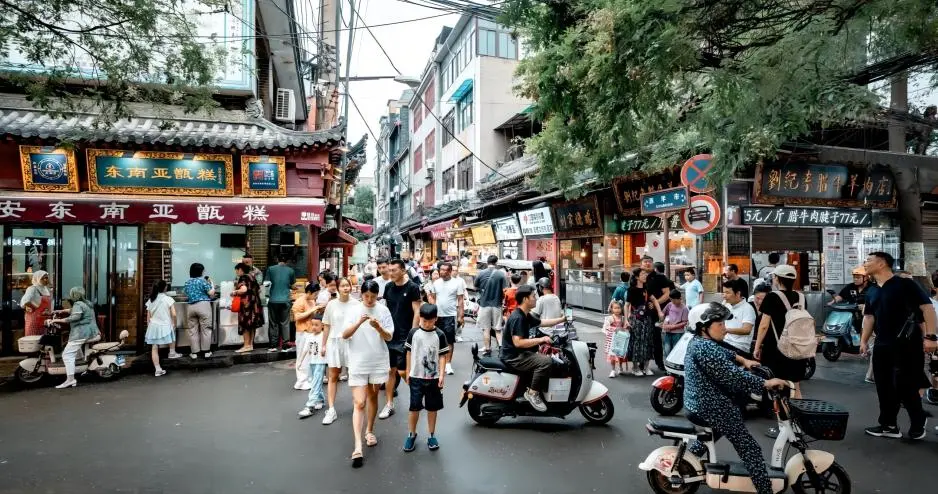
Xi’an Local Food Trails: A Mouthwatering Journey Through 3,100 Years of Iconic Carb Dishes
From Rou Jia Mo to Biangbiang Noodles: The Ultimate Xi’an Street Food & Cuisine Guide
Xi’an isn’t just an ancient capital with a 3,100-year history; it’s the starting point of the Silk Road and a UNESCO-certified “City of Gastronomy.”
For foodies exploring Local Food Trails in Xi’an, the city is a paradise of steaming noodles, sizzling flatbreads, and rich broths that carry the weight of centuries. Global visitors flock here to see the awe-inspiring Terracotta Army, but they often find themselves halted by a simple, steaming bowl of noodles or a crispy, juicy Rou Jia Mo.
These five classic dishes will take you on a delicious journey spanning millennia—an essential Xi’an food trail for any traveler.
👉 For a deeper dive into the city’s vibrant food hubs, don’t miss Xi’an Muslim Quarter: Savor Local Food Trails & Living Culture and Xi’an Yongxing Fang: A Vibrant Journey Through China’s First “Intangible Cultural Heritage Food” Street.
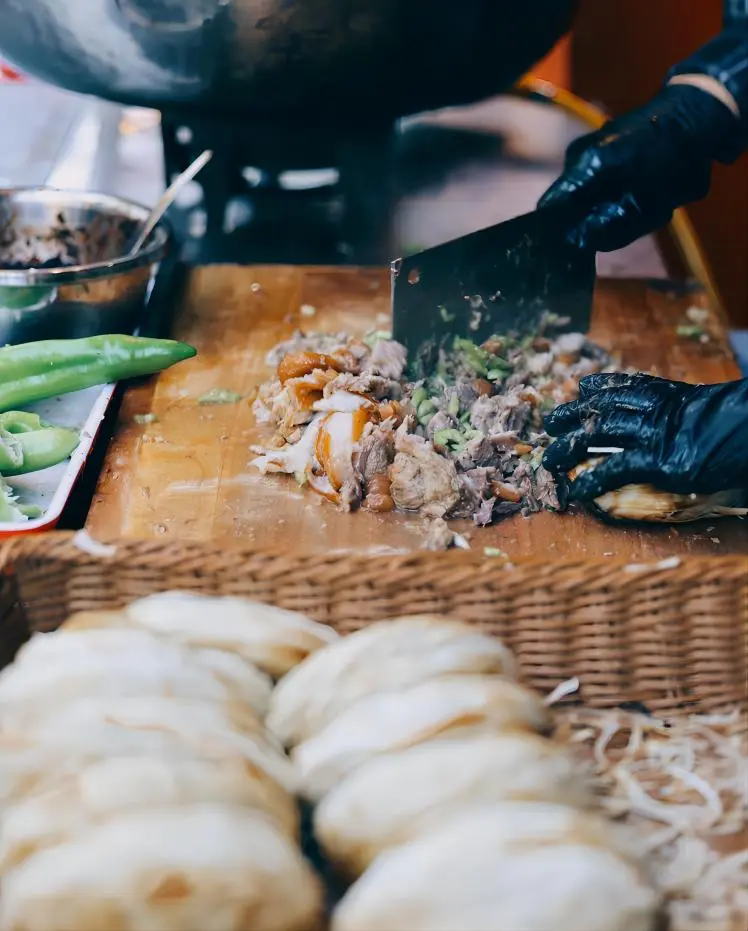
I. Rou Jia Mo: The Chinese Burger’s Thousand-Year Evolution
- The Story:
- It originated as the “Han Rou” (cold meat) in the Sui and Tang Dynasty imperial courts.
- Over a thousand years of refinement led to today’s Rou Jia Mo.
- Its name is a linguistic inversion of “meat clamped in a bun” in Old Chinese.
- In 2016, it was officially listed as a Shaanxi Provincial Intangible Cultural Heritage.
- The Making:
- Pork shoulder is slow-cooked for 8 hours with over 20 spices until it’s meltingly tender.
- The shredded, savory meat is stuffed into a freshly baked Bai Ji Mo (a flatbread).
- The bun’s crust is crisp and crackly, like a cracker, while the soft inner layer soaks up all the meat juice.
- The Taste:
- The fatty-and-lean marinated meat literally melts in your mouth.
- The aromas of the bun and the meat collide perfectly.
- Pairing it with Bingfeng soda is known as the “Xi’an Big Three” combo.
- Global Review:
- A US tourist at Yongxingfang said: “This beats any burger at balancing carbs and protein!”

II. Yangrou Paomo: The Flavor Fusion of Nomad and Farmer
- The Story:
- Historically called “Mutton Soup” (Yang Geng). The Northern Song dynasty poet Su Shi praised it, writing “For Qin cuisine, there is only Yang Geng.”
- In 2018, experts from the World Chinese Cuisine Association specifically praised its cooking philosophy of “rich ingredients and deep, pure flavor.”
- The Making:
- Choice Northern Shaanxi mutton is slow-simmered with beef and lamb bones for 6 hours to create a thick, rich broth.
- The ritual: Diners must personally tear the flatbread (Tuo Tuo Mo) into pieces the size of soybeans.
- The chef then cooks the pieces with vermicelli and wood ear mushrooms in the broth.
- The Taste:
- The soup is rich and the meat is tender.
- The bun pieces absorb the liquid, becoming soft yet still chewy.
- It’s best eaten with sweet garlic and chili paste to cut the richness and boost the aroma.
- Global Review:
- A French gourmet at Lao Sun Jia exclaimed: “This bowl of soup holds the entire weight of the Loess Plateau!”
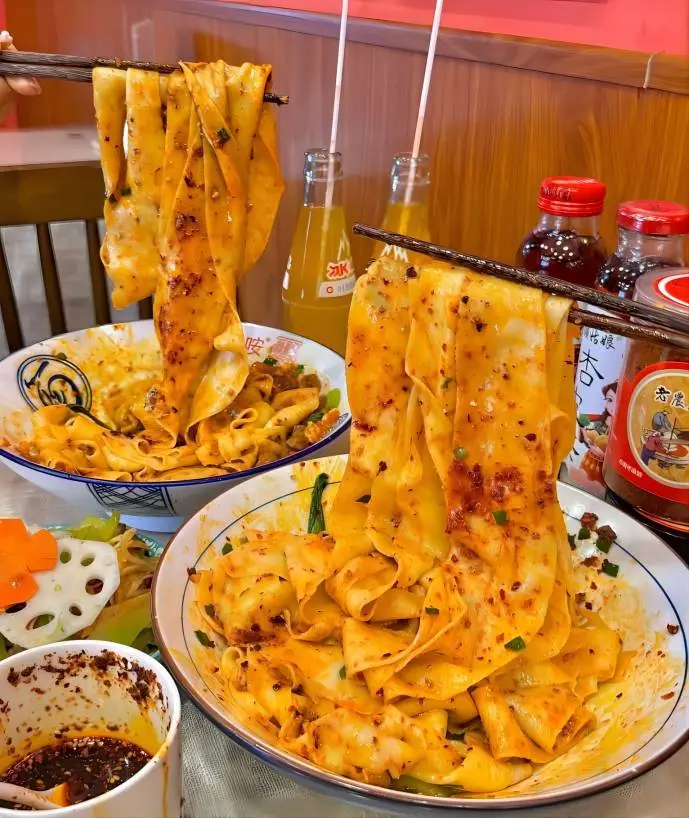
III. Biangbiang Noodles: The Dual Art of Character and Noodle
- The Story:
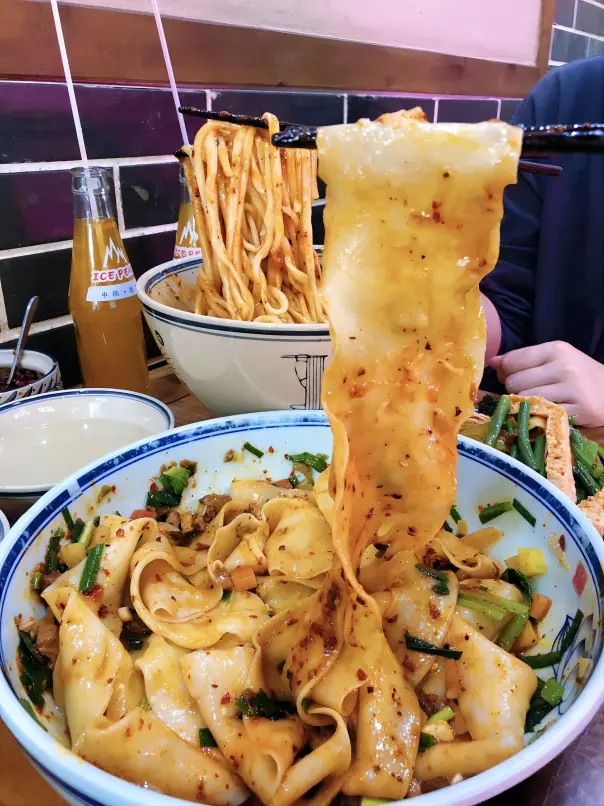
- The noodles are wide, like a belt or a trouser leg.
- They get their name from the “biang” sound the dough makes when it’s slapped on the counter.
- Its Chinese character has 58 strokes, making it “the most difficult character to write in China.”
- The Making:
- Noodles are hand-pulled to be 3 centimeters wide.
- After boiling, they’re topped with sides like potatoes, carrots, and tofu cubes.
- Finally, a special chili oil (you po la zi) is poured over everything.
- The Taste:
- The noodles are sturdy and springy (al dente).
- The chili oil is fragrant without being overly spicy.
- International tourists often mimic the locals’ bold, “big-bowl-eating” style for photos.
- Global Review:
- A Japanese travel blogger live-streamed from Aihua Noodle House and commented: “The sheer presence of this bowl of noodles is more stunning than the Terracotta Warriors!”
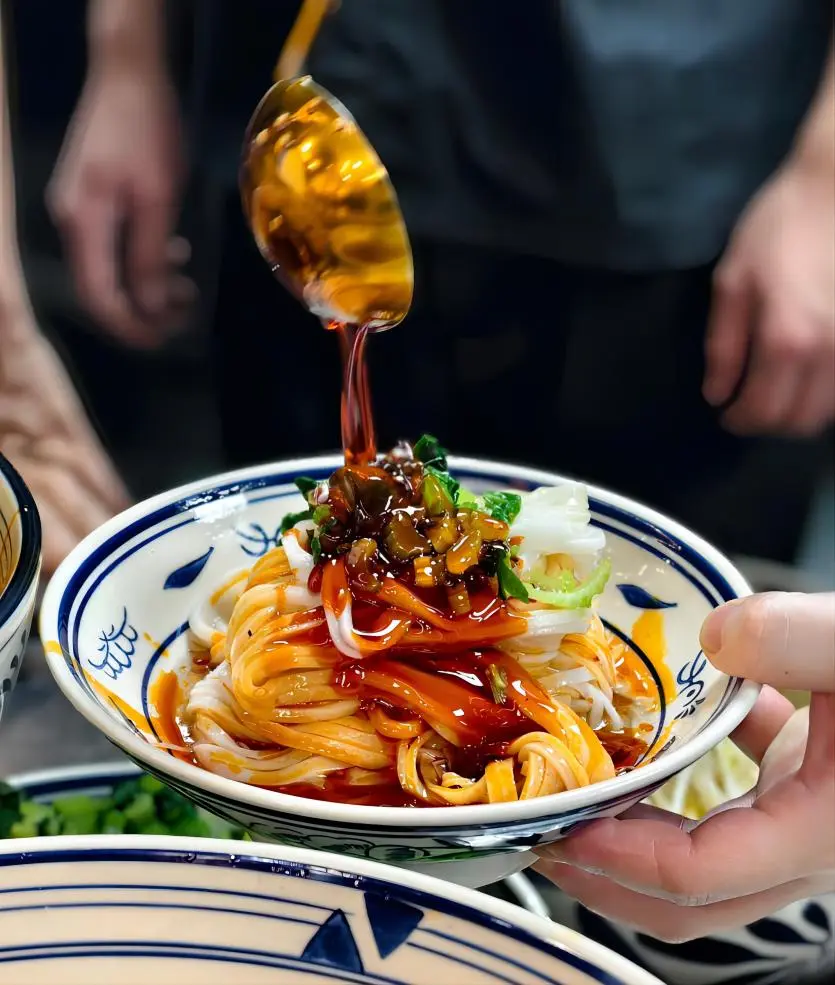
IV. Liangpi: A Summer Symphony of Sour and Spicy
- The Story:
- Its origins trace back to military rations in the Qin Dynasty.
- It has developed into three major styles: Sesame Paste, Hanzhong Rice Noodle, and Ganmianpi (rolled noodle).
- Douyin (TikTok) data in 2023 showed related videos had over 1.2 billion views.
- The Making:
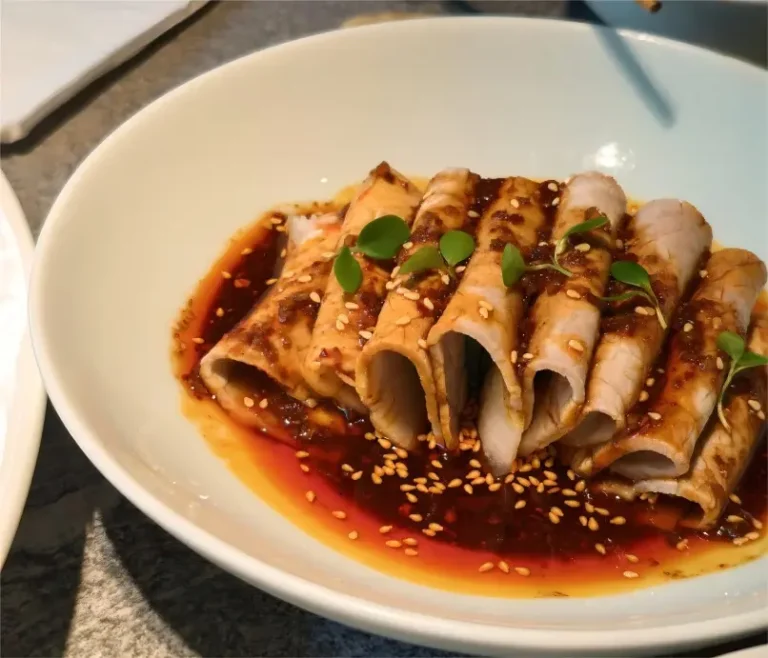
- The starch is washed out of the flour, which is then steamed into thin sheets and cut into strips.
- It’s dressed with vinegar, garlic water, and chili oil.
- The Sesame Paste style also gets a thick drizzle of sesame paste.
- The Taste:
- It’s refreshing, sour, and spicy.
- The gluten blocks soak up all the flavorful sauce.
- In the summer, you often see locals happily eating their bowls while squatting on the curb.
- Global Review:
- A British tourist left a note at Fatty Rice Noodle Shop: “This wakes up your taste buds better than any salad!”
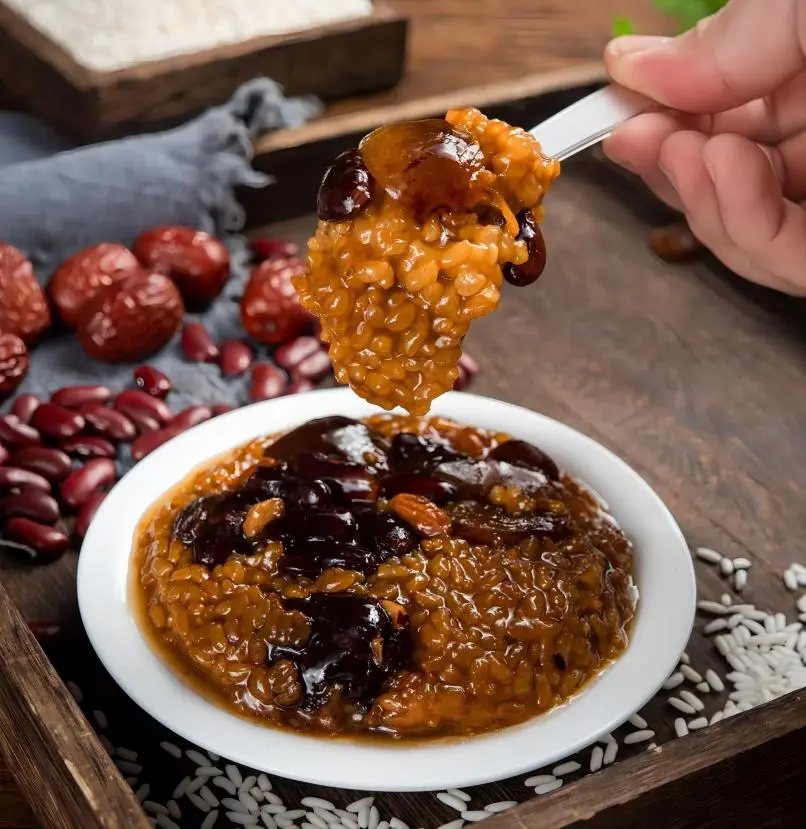
V. Zeng Gao: The Sweetness of a Thousand-Year Tradition
- The Story:
- A sweet glutinous rice dessert steamed in a pottery steamer (Zeng).
- It became a “foodie favorite” after the popular TV drama “Nothing Gold Can Stay” featured it.
- Its making process is listed as a Shaanxi Provincial Intangible Cultural Heritage.
- The Making:
- Glutinous rice is layered with red dates and red beans.
- It’s steamed for 12 hours until it is perfectly soft and sticky.
- Finally, it’s sprinkled with osmanthus sugar.
- The Taste:
- The sweetness is just right. The rice is sticky but not cloying.
- The aroma of red dates and beans intertwine.
- The mobile Zeng Gao carts on the street in the early morning are Xi’an’s warmest breakfast memory.
- Global Review:
- An Italian food critic on Muslim Street remarked: “This uses sweetness better than Tiramisu to heal the morning.”
Why Have These Dishes Won Over the World?
- Historical Depth: Each dish is a “living history book.” Rou Jia Mo carries the memory of Sui-Tang dining, and Paomo shows the fusion of nomadic cultures.
- Artisan Craft: From the sound of the Biangbiang noodle being slapped to the 12-hour steaming of Zeng Gao, they showcase China’s “philosophy of time” in cooking.
- Social Ritual: The process of tearing the bun encourages conversation, and eating from a big bowl shows boldness. This perfectly fits the international tourist’s image of authentic “Chinese street energy”.
Part II will guide you through more specialties like Hulu Chicken and Jia San Soup Dumplings, and reveal some hidden gems on Xi’an’s food map.
When you take that first bite of Rou Jia Mo, you might realize: the city’s most moving sights aren’t in the museum exhibits—they’re in the steam rising from every street corner, waiting for you on the next local food trail.