The “Oriental Hamburger”: Xi’an Roujiamo, China’s 1,000-Year-Old Meat Sandwich
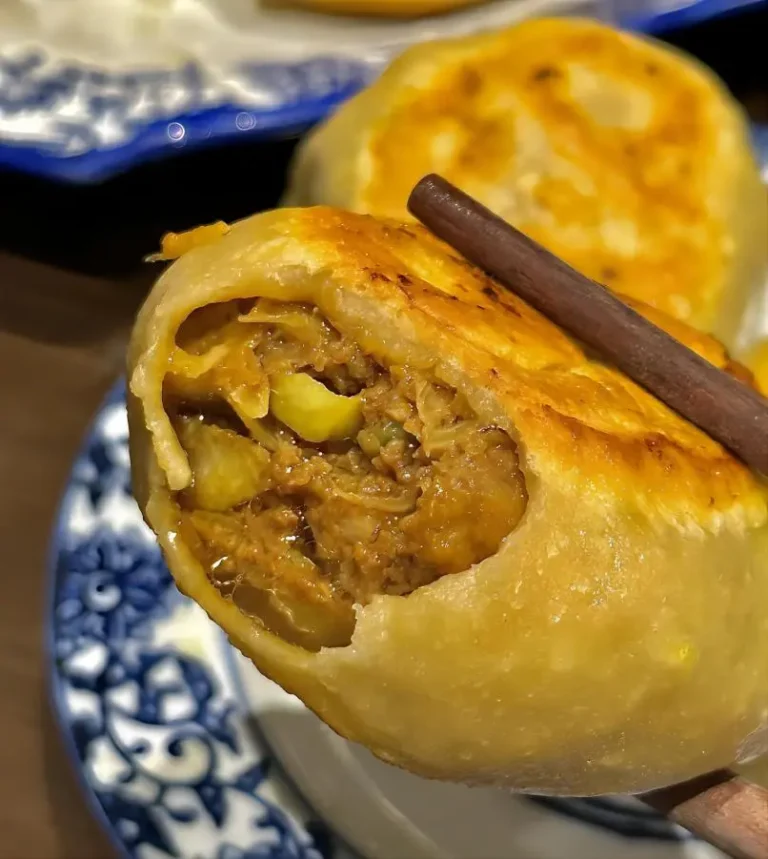
Imagine biting into a golden, crispy bun that shatters between your teeth, followed by rich, juicy stewed meat melting on your tongue. Pair it with a cold local orange soda, and you’ve just tasted Xi’an Roujiamo—often called the “Oriental Hamburger.”
More than street food, Roujiamo is a 1,000-year-old culinary icon. From its ancient name to its precise meat-to-bread ratio, this famous Chinese meat sandwich offers a direct way to understand the soul of Xi’an cuisine.
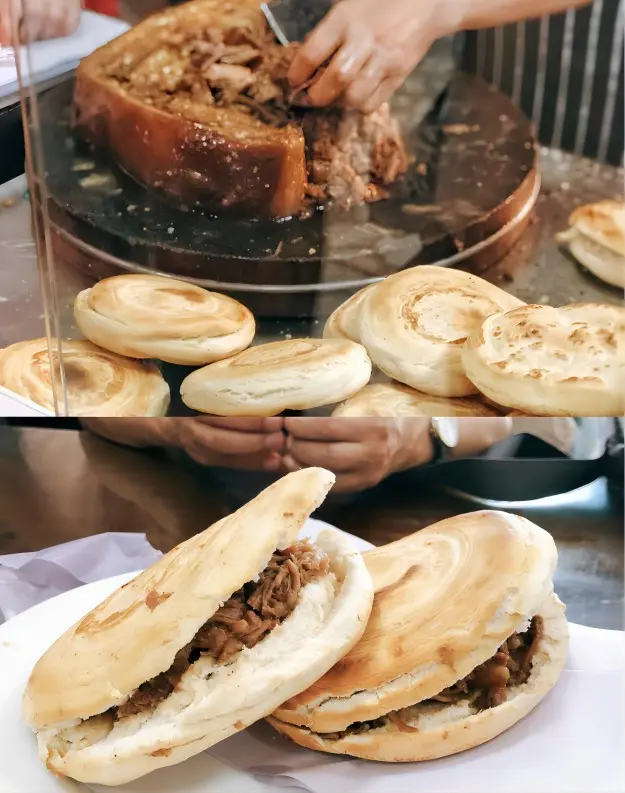
I. Why Is It Called Roujiamo?
Many foreign visitors are puzzled by the name. In Chinese, Rou Jia Mo (肉夹馍) literally translates to “meat sandwiched in a bun.” It may sound backwards in English, but the name preserves ancient Chinese grammar.
Linguists often call Roujiamo a “linguistic fossil.” The phrasing dates back to the Tang Dynasty, when this structure was common in daily speech. In Xi’an, locals joke that “anything can be sandwiched,” but Roujiamo remains the undisputed classic.
II. The Gold Standard: How Xi’an Roujiamo Is Made
An authentic Xi’an Roujiamo follows three strict rules to ensure it is crispy, juicy, and never greasy.
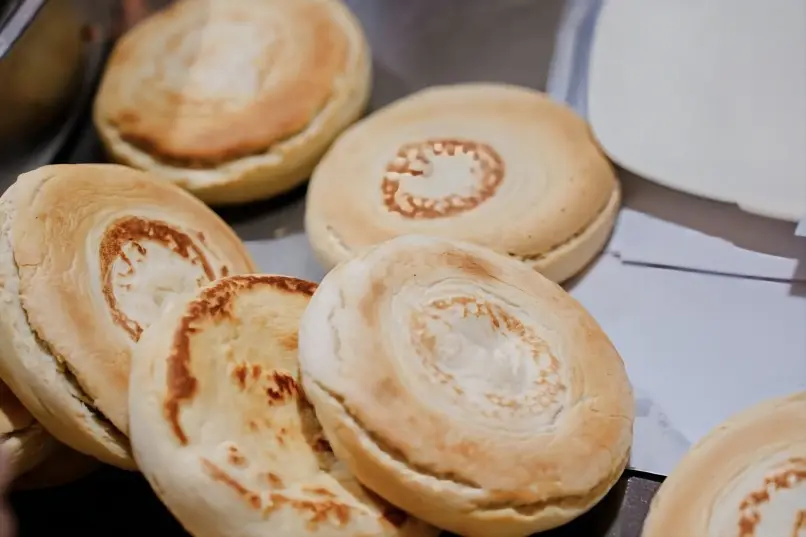
1. The Bun (Baiji Mo): Crispy Outside, Soft Inside
The bun, known as Baiji Mo, is made from local wheat and kneaded multiple times for elasticity. It is then baked over charcoal until golden.
- Appearance: Locals describe the surface pattern as “Tiger’s Back and Chrysanthemum Heart.”
- Texture: Crisp on the outside, airy inside—perfect for absorbing meat juices without falling apart.
2. The Meat (La Zhi Rou): A 12-Hour Process
The meat—traditionally pork, though beef Roujiamo is also common—is the heart of the sandwich.
- Slow Cooking: Simmered for over 12 hours in a master broth with more than 20 spices, including star anise and cinnamon
- Result: Fork-tender meat that falls apart naturally and stays intensely flavorful

3. The Ratio: How Locals Order Roujiamo
Regulars use a kind of “secret language” when ordering:
- Chun Shou: Pure lean meat
- Fei Shou: Fat and lean mixed (the most popular choice)
- Pi Shou: Lean meat with skin for added collagen
Before serving, the cook finely chops the meat and spoons hot gravy into the bun. A good Roujiamo should be juicy—but never drip.
III. The Sanqin Set: How Locals Eat Roujiamo
In Xi’an, Roujiamo is rarely eaten alone. Locals usually order the Sanqin Set, a classic combination of Shaanxi foods:
- Roujiamo: The iconic meat sandwich
- Liangpi: Cold noodles with bean sprouts and a tangy, spicy sauce
- Bingfeng (Ice Peak): A local orange soda and the traditional pairing
This trio balances richness, acidity, and freshness perfectly.

IV. Best Places to Eat Roujiamo in Xi’an
Here are some trusted local spots for authentic Xi’an Roujiamo:
| Shop Name | Area | Avg. Price | Why It’s Popular |
|---|---|---|---|
| Ziwu Road Zhangji | Xiaozhai | 12–25 RMB | Famous Sanqin Sets and free sweet garlic |
| Qin Yu | Yongning Gate | 10–22 RMB | 30-year-old favorite, often sold out by 3 PM |
| Fan Ji | Bell Tower | 11–24 RMB | Century-old brand with classic flavors |
| Wang Kui | Dongguan | 9–21 RMB | Excellent value and extra-crispy buns |
| Tongguan Style | Saga Mall B2 | 13–26 RMB | Flaky, layered bun variation |

V. Practical Tips for Travelers
- Best Time: Go early morning or between 2–4 PM to avoid lines
- Paper Bag Rule: Keep Roujiamo in the paper bag—plastic traps steam and ruins the crust
- Local Habit: Some people dip pieces into soup or noodles
- Dining Culture: Sharing tables (pinzhuo) is common in busy shops
Conclusion: Why Roujiamo Is Xi’an’s Most Iconic Bite
From ancient charcoal ovens to modern street stalls, Xi’an Roujiamo has remained unchanged for centuries. One bite delivers history, craftsmanship, and bold flavor—making it a must-try for anyone exploring Xi’an food culture.
For a deeper taste of the city, visit our Xi’an Local Food Trails guide to explore traditional snacks, street food, and the everyday dishes locals truly love.