Yongxingfang Xi’an Food Guide: 1 Yard, 107 County Flavors
At a Glance: Guanzhong Alley · Shannan Street · Shanbei Lane · Handcrafted Artisan Street—Discover regional Shaanxi street food gathered right along the Ancient City Wall.
1. What is Yongxingfang: Shaanxi Street Food in One Courtyard
Shaanxi, the province where Xi’an is located, stretches over 800 kilometers (500 miles) from north to south.
- The South (Shannan): Bordering Sichuan and Hubei, this lush region has a humid climate. Locals favor rice over wheat and prefer sour and spicy flavors.
- The Center (Guanzhong): The central plain surrounding Xi’an is the heartland of wheat noodles and flatbreads.
- The North (Shanbei): Located on the Loess Plateau, this rugged region features windy landscapes, coarse grains, hearty mutton, and yellow sticky rice pastries.
Even within the same province, culinary habits between north and south are completely different.
Yongxingfang solves this for travelers in a very direct way: it gathers iconic street food from across all 107 counties of Shaanxi into a single 2.5-acre courtyard right next to the city wall. Instead of traveling across the entire province, visitors can taste southern rice crepes, central thick wheat noodles, pulled-pork burgers, and northern mutton delicacies all in a single walk.
History & Background
Built in 2007 and officially opened at the end of 2014, Yongxingfang is a reconstructed historic-style food precinct. Featuring traditional gray-brick storefronts and uniform architecture, it is a curated food park rather than a residential historic neighborhood.
Logistics & Expenses
- Admission: Free. No tickets or reservations required.
- Payment: Each food stall prepares dishes fresh on-site with clearly marked prices. Pay directly at each stall as you order.

2. Navigating the 8 Food Zones in Yongxingfang: What to Eat Where
Though compact—measuring just 130 meters east-to-west and 88 meters north-to-south—Yongxingfang is organized into 8 distinct thematic zones, including 3 regional sections and over 50 individual food stalls:
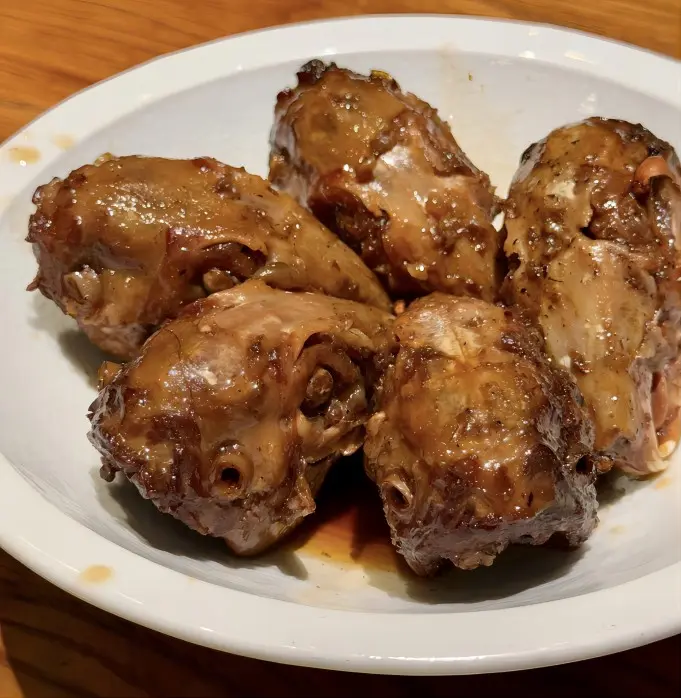
- Guanzhong Alley (关中巷): The home court for wheat noodles from central Shaanxi (Xi’an, Baoji, Xianyang). This is where you will find Biangbiang Noodles, Tongguan Roujiamo, and Hulu Chicken—and the longest queues.
- Shannan Street (陕南街): Refreshing, sour, and spicy flavors from southern Shaanxi (Hanzhong, Ankang, Shangluo). Top picks include Hanzhong Hot Rice Noodle Sheets, Zhashui Potato Cakes, and Ziyang Steamed Pot.
- Shanbei Lane (陕北里): Northern Shaanxi fare from Yulin and Yan’an. Coarse grains, millet cakes, mutton soups, and willow-skewered grilled lamb take center stage here.
- Handcrafted Artisan Street (手工作坊街): A live demonstration area where you can watch stone mills grinding chili peppers, artisans making fresh tofu, and bakeries twisting dough snakes (Mahua).
- 107 Street (107 街): A collection of dedicated stalls representing counties not covered in the main regional streets. This is the most diverse section.
- Intangible Cultural Heritage & Custom Streets (非遗民俗街 / 福街): Primarily dedicated to folk performances, cultural crafts, and souvenirs, with fewer food options.

3.Location & How to Get There
Where It Is
Yongxingfang is located right inside Zhongshan Gate (中山门) of the Xi’an Ancient City Wall—often locally referred to as Xiaodongmen (小东门 – Little East Gate). The courtyard sits directly against the inner fortress wall, with Shuncheng Alley running along its eastern border.
How to Get There
- By Metro (Option 1 – Closest & Most Direct): Take Line 4 to Wulukou Station (五路口站), Exit D. Walk straight east along Dongxin Street for about 10 minutes to reach the entrance.
- By Metro (Option 2): Take Line 1 to Chaoyangmen Station (朝阳门站), Exit B. Walk south along Huancheng East Road for about 650 meters, turn west at Wudaoshizi West Street, and walk through Zhongshan Gate (approx. 15 minutes total).
- By Bus: Take bus routes 22, 32, 33, or 527 and get off at Zhongshanmen Station (中山门站). It is a 3-minute walk to the gate.
- By Taxi / Ride-Hailing: A taxi ride from the Bell Tower (city center) costs around ¥15.
Walking Route Inside Yongxingfang
Enter directly through Zhongshan Gate to reach the main archway. Follow this simple walking loop:
Zhongshan Gate Entrance → Guanzhong Alley → Shannan Street → Shanbei Lane → Handcrafted Street
The courtyard spans 130 meters from east to west. Walking straight through without stopping takes only 10 minutes; wandering, snacking, and exploring at a relaxed pace takes about 1 hour.
4. Top 6 Must-Eat Specialties
Bowl-Smashing Wine (摔碗酒 – Shuaiwanjiu)
The headline attraction at Yongxingfang isn’t actually food. You receive a small ceramic bowl of low-alcohol rice wine, drink it down, and smash the empty bowl forcefully into a stone basin to wish for good fortune (Sui Sui Ping An).
- Price: ~¥5 per bowl (includes the bowl)
- Experience: The sharp sound of breaking ceramic on the stone is the loudest noise in the courtyard.
Biangbiang Noodles (Biangbiang 面)
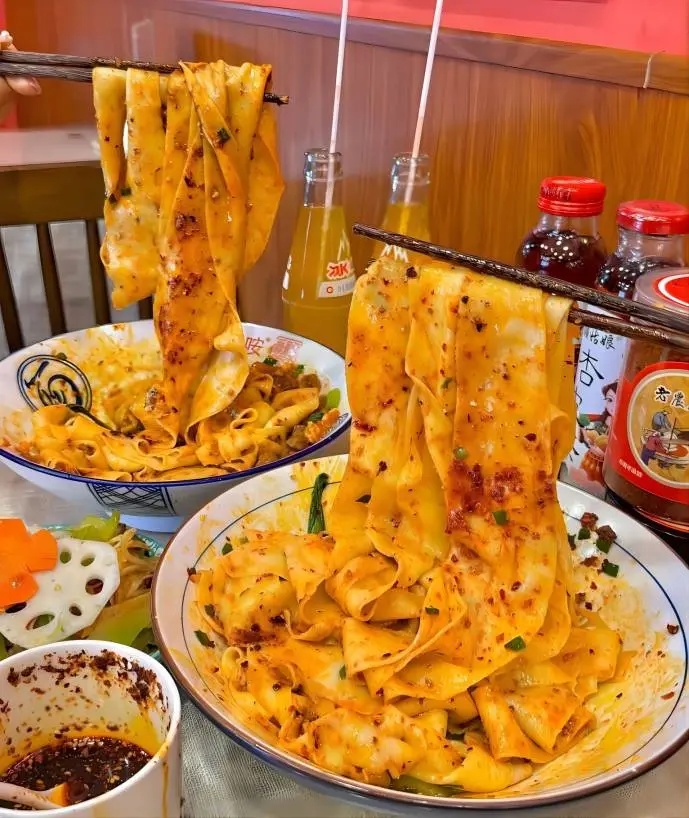
Shaanxi’s most famous thick wheat noodles, pulled as wide as a leather belt, topped with garlic, scallions, and red chili flakes, then seared with sizzling hot oil.
- Price: ¥15–30 per bowl
- Tip: Look for the famous 58-stroke Chinese character displayed prominently on every signboard.
Qishan Saozi Noodles (岐山臊子面)
A classic recipe from Qishan County in Baoji. Served in small bowls with rich broth, thin noodles, diced pork, tofu, and black fungus. The flavor profile is predominantly sour and spicy.
- Price: ¥10–20 per order
- Tip: Locals eat these in small single-bite bowls served in sets. Don’t be surprised when several small bowls arrive at your table at once.
Hanzhong Hot Rice Noodle Sheets (汉中热米皮)
The pride of southern Shaanxi. Fresh rice slurry is steamed into thin sheets, sliced warm, and tossed with chili oil, aromatic vinegar, and bean sprouts.
- Price: ~¥10 per portion
- Texture: Soft, silky, and delightfully tangy—ideal for summer.
Tongguan Roujiamo (潼关肉夹馍 – Flaky Pork Burger)
Unlike the soft white flatbread (Baiji Mo) common in downtown Xi’an, Tongguan-style burgers feature a baked, multi-layered crispy pastry shell that shatters upon biting, stuffed with savory braised pork.
- Price: ~¥12 each
- Texture: Flakier and crunchier than the cured beef burgers found in the Muslim Quarter.
Zichang Crepes (子长煎饼)
Hailing from Zichang in northern Shaanxi, these paper-thin grain crepes are rolled with seasoned vegetables and chili paste. Among northern coarse-grain snacks, this is the most approachable for international palates.
- Price: ~¥10 per serving (multiple mini-rolls)

5. 6 Extra Local Delicacies Worth Trying
- Chinese Calligraphy Pastry (毛笔酥 – Maobi Su): A crispy pastry shaped exactly like a traditional writing brush, served with edible “ink” (fruit syrup or chocolate sauce). Price: ¥45–55. Best for photos rather than a full meal.
- Bubble Oil Cake (泡泡油糕): Deep-fried pastry puff that expands into a translucent, hollow sphere. Golden and crispy on the outside, soft on the inside. Eat while hot before it deflates. Price: A few RMB each.
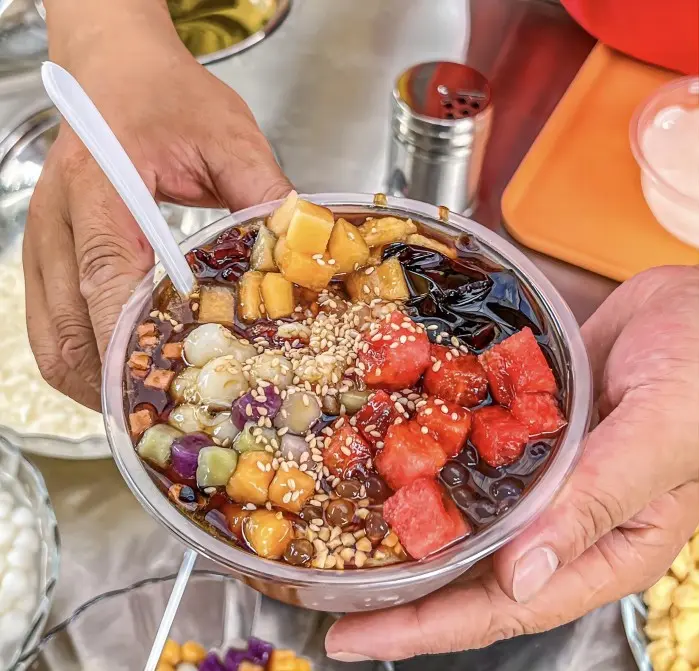
- Zenggao (蒸糕 – Steamed Date Rice Cake): Steamed sticky rice layered with sweet red dates and kidney beans. Slightly more expensive here than at morning street markets, but available all day. Price: ¥5–12 per portion.
- Zhashui Potato Cakes (柞水洋芋糍粑): Steamed potatoes pounded into a chewy mash, served warm in a sour and spicy savory broth. Price: ~¥15. Similar texture to savory potato mochi.
- Ziyang Steamed Pot (紫阳蒸盆子): A hearty stew from southern Shaanxi featuring pork, chicken, egg dumplings, and vegetables steamed together in a clay pot. Price: ~¥50–80. Large portion—best shared among 2 to 3 people.
- Liquan Licked Noodles (礼泉烙面): Thin, pre-baked wheat noodle sheets cut into strips and re-hydrated in boiling spicy broth. Price: ~¥15 per bowl.
6. Dining at Yongxingfang: 5 Practical Local Tips
1. Ordering & Local Dining Etiquette
All stalls feature visible pricing, making ordering straightforward. The main trick lies in local eating customs:
- Bowl-Smashing Wine: Drink the wine completely before throwing. Raise your arm and toss the bowl firmly downward into the designated stone basin. Walk away immediately—do not attempt to pick up ceramic shards. Watch your step if wearing open-toed sandals.
- Saozi Noodles: Served as “one-bite” small bowls (Yi Kou Xiang). Multiple small bowls brought to your table at once is standard practice.
- Biangbiang Noodles: Mix thoroughly while hot! The hot oil sear gives it fragrance; if left to cool, the wide noodles stick together.
- Calligraphy Pastry: Dip the brush tip into the accompanying syrup or jam “ink” dish before eating to avoid dry pastry dough.
- Payment at Stalls: There is no central cashier system. Pay individually at each vendor via Alipay or WeChat Pay. Cash is not universally accepted at smaller stalls.
- Share Dishes: Portion sizes for noodle bowls are generous. Sharing one large bowl between two people allows room to try more regional snacks.
2. Best Time to Visit (Opening Hours & Evening Shows)
- 09:30 AM (Opening): Gates open, but many vendors are still setting up. Best for quiet photography.
- After 11:00 AM: All street stalls are fully operational and cooking fresh food.
- After 05:00 PM (Best Atmosphere): Lanterns turn on, creating a picturesque evening ambiance. This is also peak crowd hour. Open-air folk performances and indoor shadow puppet theaters run most frequently during this window.
- Peak Rush Hours (12:00 PM–01:00 PM / 06:00 PM–08:00 PM): Expect tour groups and queues at popular stalls.
- 10:30 PM (Closing): Stalls begin closing down. Avoid arriving late in the evening.
3. Yongxingfang Price Estimates (2026 Budget Guide)
| Dish / Activity | Reference Price (RMB) | Notes |
| Bowl-Smashing Wine | ¥5 / bowl | Includes bowl; interactive experience |
| Biangbiang Noodles | ¥15 – ¥30 | Generous portion; very filling |
| Qishan Saozi Noodles | ¥10 – ¥20 | Small single-bite bowls |
| Hanzhong Hot Rice Noodle Sheets | ~¥10 | Sour & spicy; served warm |
| Tongguan Roujiamo | ~¥12 | Crispy flaky bun stuffed with pork |
| Liquan Licked Noodles | ~¥15 | Thin noodles in hot spicy broth |
| Shanbei Grilled Lamb Skewer | ~¥15 / skewer | Large mutton chunks on willow wood |
| Calligraphy Pastry | ¥45 – ¥55 | Novelty dish; photogenic |
| Zenggao (Steamed Date Cake) | ¥5 – ¥12 | Sweet rice cake sold by slice/portion |
| Bubble Oil Cake | ~¥5 / piece | Crispy hollow fried dessert |
| Shadow Puppet Theater Ticket | ~¥30 | Separate ticketed performance |
Budget Tip: Expect to spend around ¥50–100 ($7–$14 USD) per person for a comprehensive food tour. Traveling with a partner allows you to sample twice as many dishes within the same budget.

4. 6 Common Yongxingfang Tourist Pitfalls to Avoid
- Don’t Expect an Ancient Neighborhood: Built in 2007, Yongxingfang is a modern, purpose-built cultural food park. If you prefer residential historic alleyways, visit the Muslim Quarter (Huifang) instead.
- Avoid Arriving Before 11:00 AM: Arriving early means walking past shuttered storefronts.
- Check Calligraphy Pastry Prices First: At ¥45–55 per order, you are paying for the aesthetic presentation. The same money buys 3 full bowls of authentic handmade noodles.
- Bowl Wine is a ¥5 Single Item: Clarify details before purchasing if offered bundled “tourist combo packages.”
- Outdoor Stage is Free; Indoor Shows Require Tickets: Brief folk music on the open-air central stage is completely free. Full-length indoor theater programs (shadow puppetry, Qinqiang opera) require separate tickets (~¥40 for single shows or ¥70–80 for full access).
- Tour Groups Peak at Sunset: Tour buses arrive around 05:00 PM as the lights turn on. For a quieter dining experience, visit between 03:00 PM and 04:30 PM.
5. Recommended Visit Duration & Itinerary Routing
- 1 Hour (Quick Snack Tour): Walk the loop and sample 3 to 4 quick snacks. Ideal for tight itineraries.
- 2–3 Hours (Relaxed Food & Artisan Tour): Sit down for a full bowl of noodles, visit handcrafted workshops, and sample desserts at a leisurely pace.
- +1 Extra Hour (Folk Shows): Catch free open-air excerpts of Qinqiang Opera or Huayin Old Tale on the central stage, or purchase a ticket for an indoor shadow puppet and puppet show performance (~1 hour duration).
Suggested Itinerary: Plan to arrive between 04:00 PM and 05:00 PM. Eat while it’s light, catch the evening lantern lights as night falls, and then head directly up to the Xi’an City Wall via Zhongshan Gate (City Wall entrance ticket: ¥54) or stroll along the picturesque Shuncheng Alley beneath the fortress walls.

7. Is Yongxingfang Worth Visiting? (Yongxingfang vs. Muslim Quarter)
It depends on your travel goals:
- Why Visit: It is the easiest place in Xi’an to sample cuisine from all 107 Shaanxi counties in one single spot, with clear English/bilingual signboards, transparent pricing, and open-kitchen stalls.
- What it Isn’t: If you are seeking an organic, raw local neighborhood where residents live and eat at tiny roadside tables, head to the Muslim Quarter (Huifang) instead.
Key Advantages
- Free admission & no reservation required.
- Directly adjacent to the East City Wall (Zhongshan Gate), making it easy to combine with evening sightseeing.
Yongxingfang gathers street food from all 107 counties of Shaanxi into a single courtyard, but it closes at 10:30 PM. The late-night soul of Xi’an lives within the ancient city walls, where local night markets come alive with charcoal-grilled lamb skewers, hotpot tripe, stir-fried jelly, and sour soup dumplings—getting livelier the later it gets.
Coming up in the next guide: The ultimate Xi’an Night Market Guide—which districts are actually worth visiting, what time to head out, and which local stalls are worth queuing for.
FAQ: Yongxingfang Food Quarter & Travel Tips
What is the difference between Yongxingfang and the Xi’an Muslim Quarter?
The Xi’an Muslim Quarter (Huifang) is a historic Halal dining area—no pork is served, and dishes focus primarily on beef, mutton, Paomo, and charcoal grills. Yongxingfang is a curated regional showcase of food from across Shaanxi province, featuring Han Chinese cuisine, pork dishes (Tongguan Roujiamo), rice crepes, and vinegar-based noodle soups.
Is the Bowl-Smashing Wine experience safe at Yongxingfang?
Yes. The ceramic bowls are specially fired to shatter easily upon impact inside the designated heavy stone basin. To stay safe, throw the bowl firmly downward, do not pick up ceramic shards by hand, and watch your step around the basin if wearing open-toed shoes.
Is Yongxingfang suitable for families traveling with children?
Yes. The food park is compact, easy to navigate without excessive walking, and offers mild, child-friendly options like sweet Zenggao, honey rice cakes, and noodle dishes. Just keep an eye on young children around the bowl-smashing wine area where broken ceramic shards lie.
Is cash accepted at Yongxingfang food stalls?
Not reliably. Most food vendors at Yongxingfang rely on mobile payments (Alipay or WeChat Pay). It is highly recommended to set up digital payments on your phone prior to your trip, or ask your local hotel staff or tour guide to assist with cash exchanges.