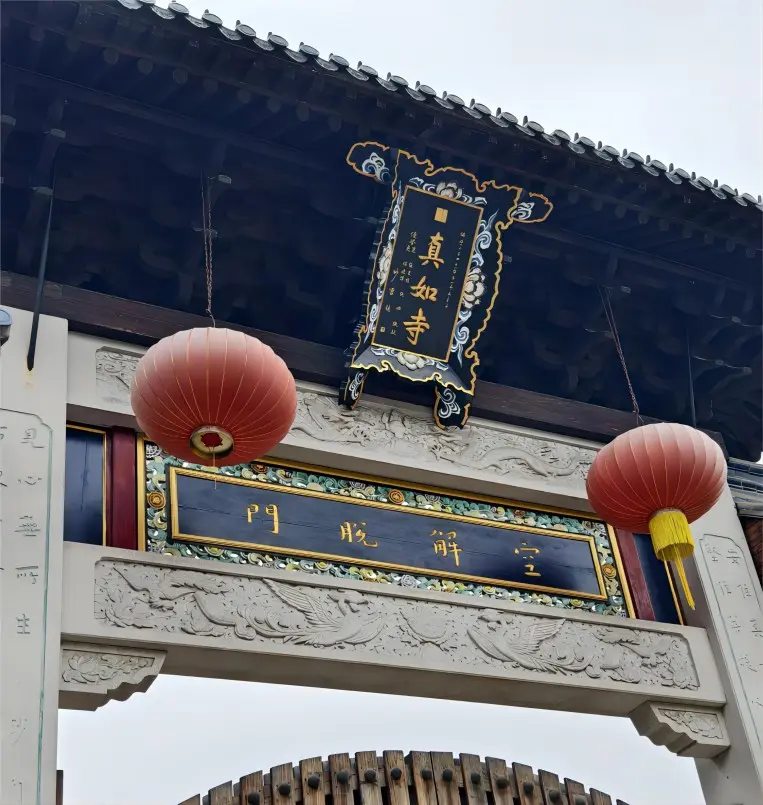
Zhenru Temple Shanghai Travel Guide : History, Highlights, Tickets & Hidden Gems
An 800-Year-Old Zen Sanctuary in the Heart of Shanghai
When most people picture Shanghai, they think of futuristic skylines. Yet in the city’s quiet northwest sits Zhenru Temple — one of Shanghai’s oldest Buddhist temples and a true cultural hidden gem. Located in Zhenru Ancient Town, the temple is among the Four Famous Temples of Shanghai and houses the city’s only surviving Yuan Dynasty wooden hall. With white walls, black tiles, prayer wheels, and ancient trees, it offers a rare window into Shanghai’s spiritual past.
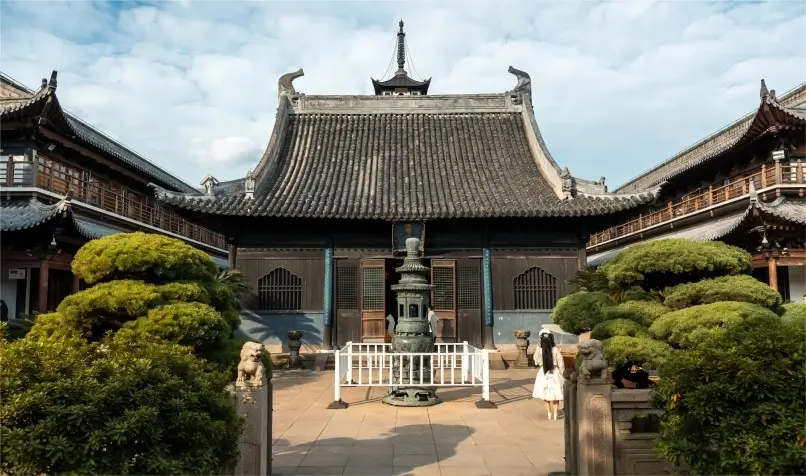
I. A Brief History of Zhenru Temple: From Southern Song Roots to Yuan Dynasty Glory
Founded during the Southern Song Dynasty (1208–1224), Zhenru Temple originally served travelers along the Taopu River. In 1320, the monk Miaoxin rebuilt it at today’s location, giving it the name “Zhenru,” meaning “ultimate truth.”
Despite wars and multiple restorations, the temple survived. In 2025, its Yuan-era Main Hall and 650-year-old ginkgo tree were jointly listed as nationally protected heritage — the only pairing of its kind in Shanghai.
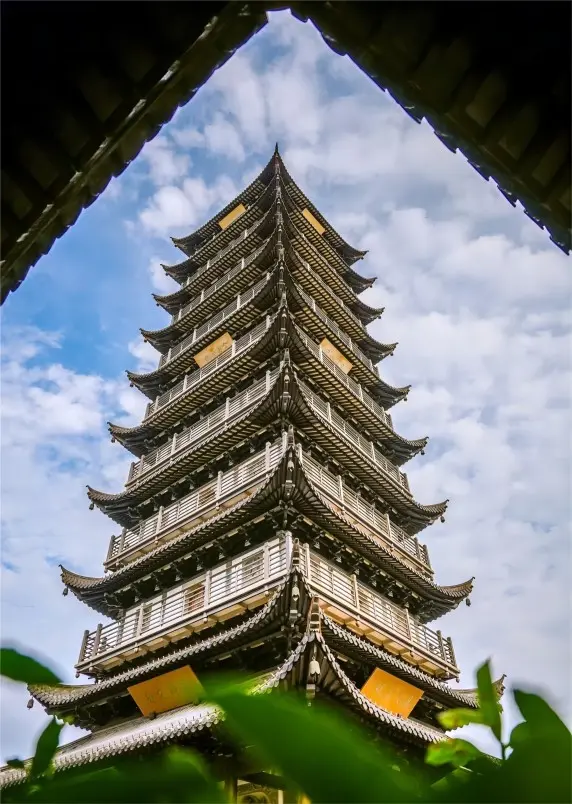
The Yuan Dynasty Main Hall: A Living Fossil of Architecture
Zhenru Temple’s Main Hall is Shanghai’s only remaining Yuan Dynasty timber structure and one of the best preserved in Jiangnan.
Key features include:
- Classic 3×3 bay layout
- Single-eave half-hipped roof (26° slope)
- 16 pillars, with 10 original Yuan cypress columns
- Beam inscription dated 1320 (Yanyou year 7)
A 1990s restoration carefully removed later additions to restore its clean, minimalist Yuan-style silhouette, following principles from the ancient Yingzao Fashi manual.
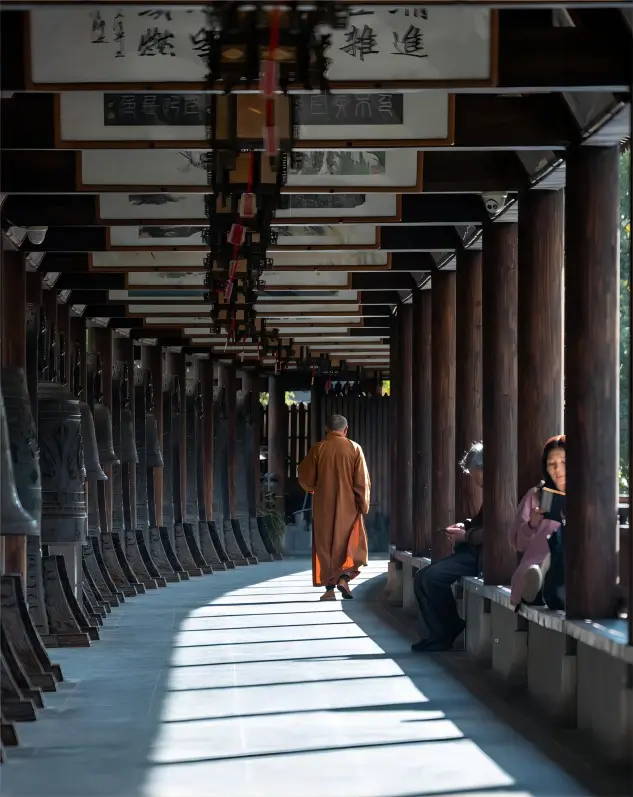
II. What to See & Do: Top Zhenru Temple Highlights
1. Pray for Wisdom, Health & Peace — The Temple’s Three Blessings
• Manjusri Hall — Praying for Wisdom
Parents bring students preparing for the Gaokao or Zhongkao exams to pray for clarity and academic success. Manjusri, the Bodhisattva of Wisdom, is said to cut through confusion with his sword of insight.
• Medicine Buddha Hall — Praying for Health
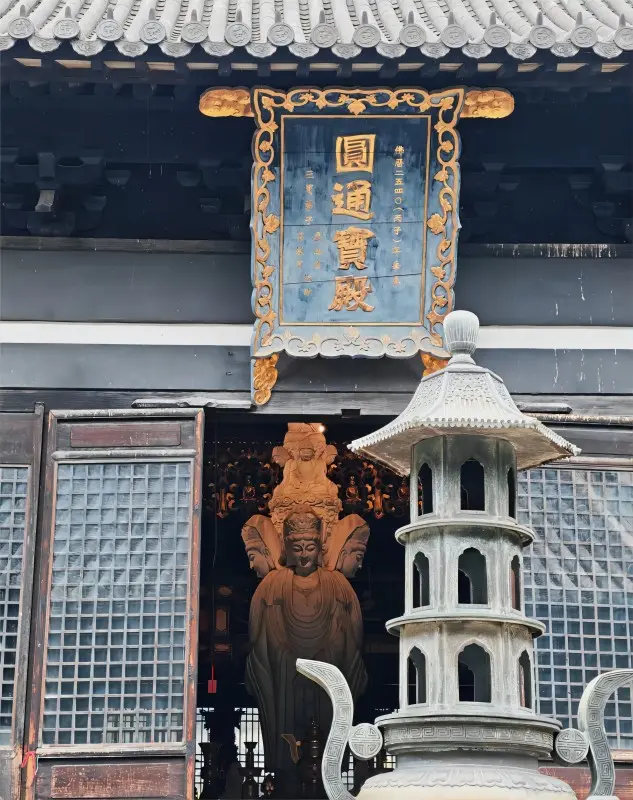
The Medicine Buddha oversees the Eastern Lapis Lazuli Pure Land. Devotees walk around the pagoda and turn the 108 prayer wheels to cultivate merit and dispel illness.
Beneath the pagoda lies a sacred underground palace housing Sakyamuni Buddha relics.
• The Ancient Ginkgo Tree — Praying for Peace
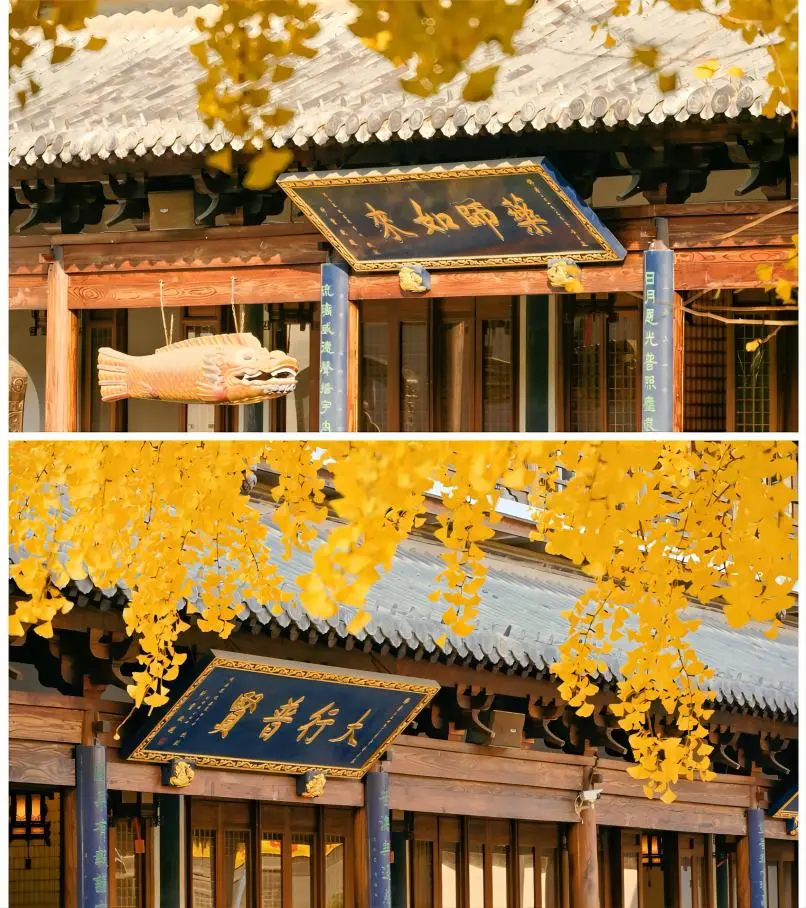
This 650-year-old ginkgo — struck by lightning long ago — sprouted a hackberry from its hollow trunk, forming a rare “tree within a tree.” Visitors tie red ribbons to pray for family harmony.
2. Three Must-Experience Moments
1) Touch the 800-Year-Old Wooden Columns
Inside the Main Hall, lightly trace your fingers along the grain of Yuan Dynasty cypress pillars. Look up to see the Thousand-Hand Guanyin mural and the Burmese jade Buddhas donated by Master Xingren of Singapore.
2) Enjoy a Zen Moment by the Pagoda
While climbing is restricted, the plaza is filled with pigeons and prayer wheels — creating a peaceful, photogenic “living Zen” scene perfect for slow travel photography.
3) Taste Local Heritage: Zhenru White-Cut Mutton
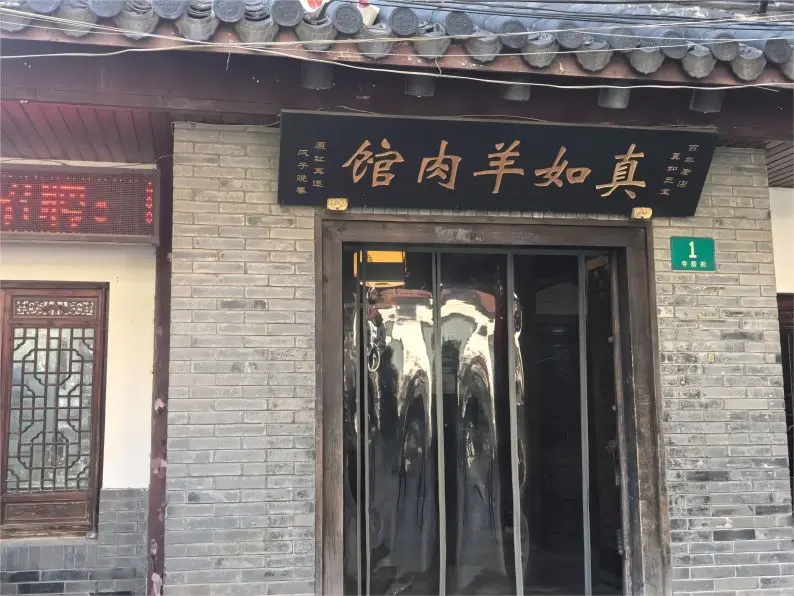
Just five minutes away is Zhenru Mutton Restaurant, a 200-year-old eatery famous for its tender, odorless white-cut mutton. The recipe is part of Shanghai’s Intangible Cultural Heritage.
III. Practical Travel Guide to Zhenru Temple
📍 1. Essential Info
- Address: 399 Lanxi Road, Putuo District, Shanghai
- Metro: Zhenru Station (Line 11/14), Exit 6 → 10 min walk
- Opening Hours: 6:00 AM – 4:00 PM
- Admission: ¥10 (Main Hall entry included)
- Phone: 021-62971581
🛍️ 2. What to Buy: Souvenir Guide
- Metal Bookmarks & Keychains (Main Hall / Pagoda designs)
- Sixteen Arhat Rubbings — perfect for wall décor
- Traditional Incense or Bracelets (available at nearby Jade Buddha Temple)
🗺️ 3. Nearby Itinerary Ideas (Easy Add-Ons)
• Zhenru Ancient Town
Explore cobblestone lanes lined with teahouses, tailor shops, and old Qing-era houses.
• M50 Creative Park (2 km away)
A converted textile mill turned art zone with galleries, studios, and cafés.
IV. Best Time to Visit & How Long to Stay
- Best Time: Early morning (6:00–9:00 AM) for quiet photos and fewer crowds
- Ideal Visit Duration: 1–1.5 hours
- Perfect For: Culture lovers, history buffs, photographers, architecture fans, and travelers seeking peaceful spots in Shanghai
tips: Special Events: Don’t Miss the Lantern Transmission Ceremony
Visit on the 8th day of the 4th lunar month (Buddha’s Birthday) to join the temple’s Lantern Transmission Ceremony — a serene ritual enjoyed by locals and visitors alike.
V. A Hidden Piece of Shanghai’s Soul
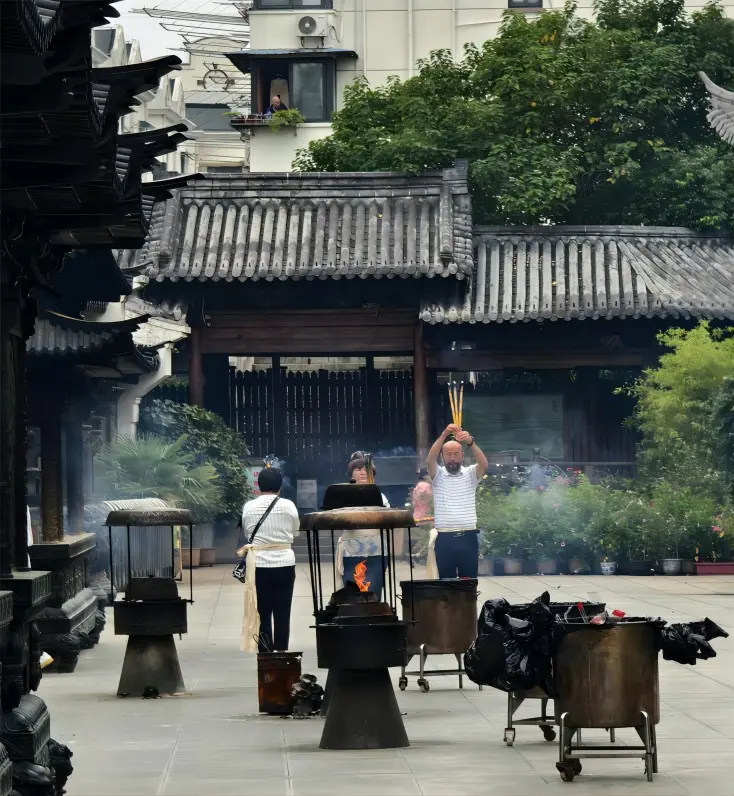
Zhenru Temple is more than an ancient monument — it’s a living sanctuary where incense smoke, prayer wheels, pigeons, and centuries-old architecture blend into a rare pocket of calm within the metropolis.
Here, every beam and tile tells a story. In a city racing toward the future, Zhenru Temple keeps the rhythm of tradition alive. And if you’re planning more places to see in the city, check out my page on Shanghai Tourist Attractions for more ideas.