The Five Charms of Beijing Teahouses: Discovering Serenity in the Capital’s Traditional Tea Culture
🌿 What You’ll Get in This Guide
If you’re curious about Beijing’s traditional tea culture and the best teahouses to visit, this guide will help you explore both historic favorites and local gems. You’ll find:
- 🏆 Top traditional teahouses in Beijing with standout experiences
- 🍵 Tea types & local favorites to try in each place
- 📍 Where they are + why they matter to Beijing’s culture
- 💡 Insider tips for experiencing tea like a local
Whether you’re a tea lover or a culture-seeker, this is your go-to resource before planning a tea house visit.
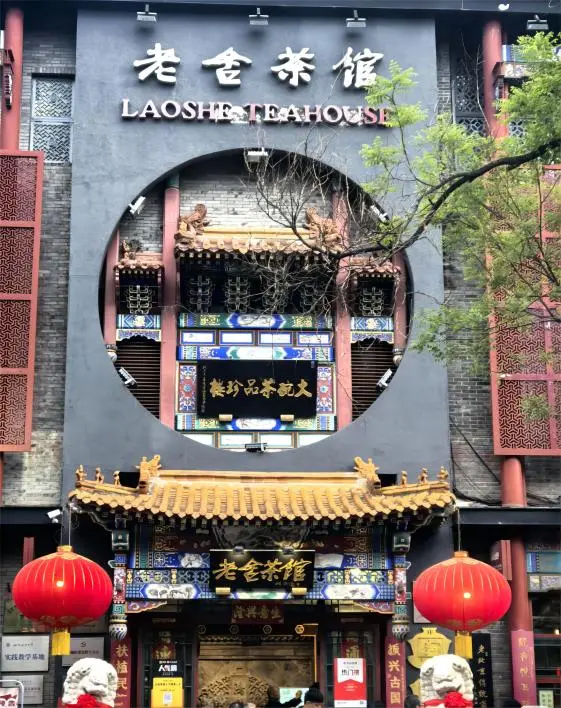
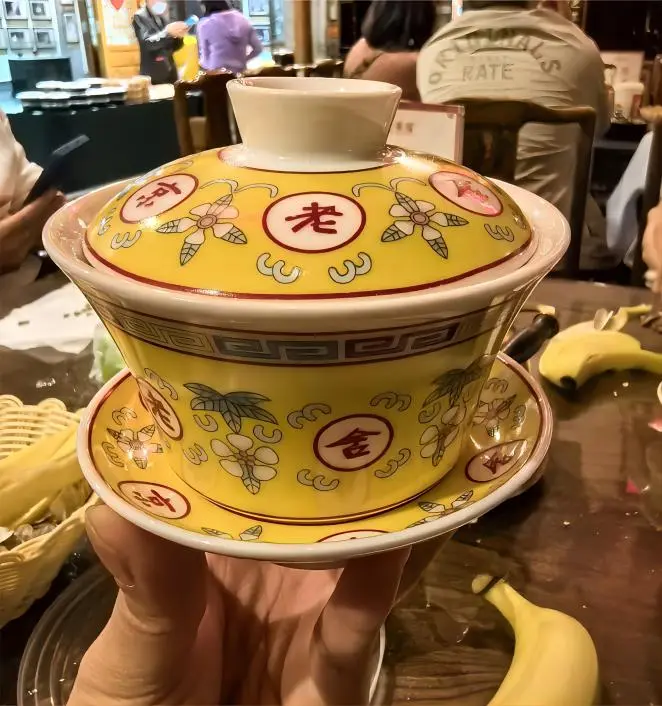
1. Lao She Teahouse (Qianmen): A Living Museum of Old Beijing Tea Culture
Historical Roots:
Founded in 1988 and named after Lao She’s classic play Teahouse, this was the first privately operated teahouse in Beijing. Over the decades, it has welcomed countless domestic and international guests, earning its reputation as Beijing’s “Urban Living Room” for showcasing authentic traditional culture.
Unique Features:
Across its three floors, Lao She Teahouse captures different chapters of Beijing’s story:
- The ground floor recreates the nostalgic “Big Bowl Tea” stalls of old Beijing.
- The second floor features live intangible cultural heritage shows such as Peking Opera and Crosstalk (Xiangsheng).
- The third floor offers elegant private rooms ideal for slow, quiet tea moments.
Already captivated by the charm of Lao She Teahouse in Beijing? For a full travel guide with tickets, show times, tea tips, and more detailed insights, check out our dedicated article: Lao She Teahouse Beijing: Shows, Tickets & Travel Guide — your complete resource on this iconic cultural teahouse.
Must-Try Experience:
Order the Jasmine Scented Tea (Mòli Xiāngpiàn) with a set of Beijing-style tea snacks, and enjoy it during a live performance—this is the closest you’ll get to the classic scene of “drinking tea while listening to the opera.”
Location: Zhengyang Market Building 3, Qianmen West Street
Price: ¥2–128
Nearby Attractions: Qianmen Street · Dashilar · Nanluoguxiang
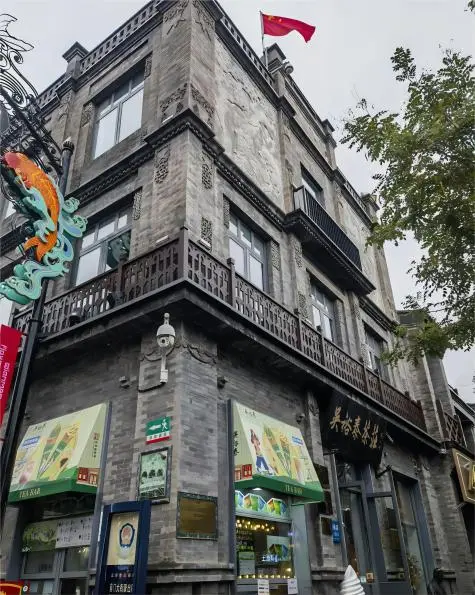
2. Wuyutai Tea Shop (Qianmen): Step Into a Century-Old Tea Aroma
Historical Roots:
Operating since 1887, Wuyutai is one of Beijing’s oldest and most respected tea houses. The Qianmen branch preserves the Republican-era layout of “shop in front, workshop in back,” complete with blue bricks, grey tiles, and a classic wooden counter—almost like stepping into the late Qing Dynasty.
Unique Features:
- First floor: classic floral and green teas available for purchase
- Second floor: tea-making workshops where you can try pressing tea cakes or practicing tea ceremony skills
- Recommended: the Wuyutai Floral Tea Platter with jasmine, osmanthus, and rose scents—best paired with their elegant Imperial Tea Snacks
Location: No. 70 Qianmen Street
Price: ¥50–300 per 50g tea · ¥88–158 snack sets
Nearby Attractions: Temple of Heaven · Lama Temple
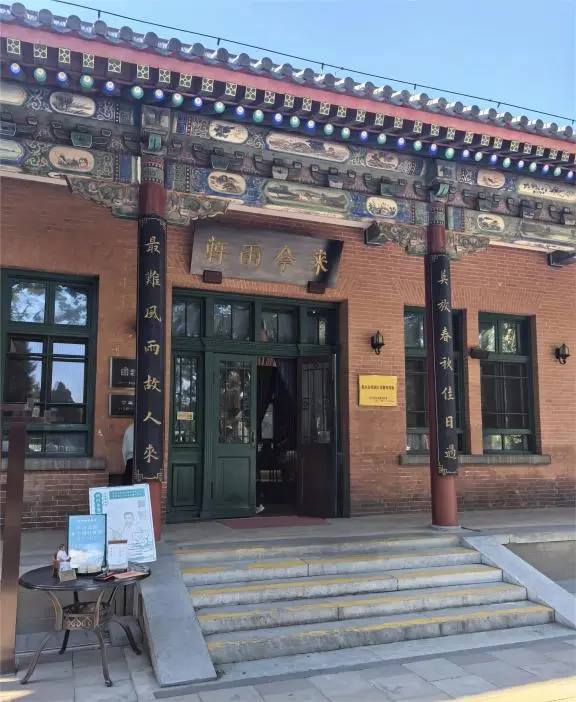
3. Laijinyuxuan (Zhongshan Park): Lu Xun’s Favorite Buns, Served With a Cup of Tea
Historical Roots:
Since 1915, Laijinyuxuan has been a gathering place for Republican-era scholars, including literary giants like Lu Xun and Hu Shi. With over 60 recorded visits, this century-old teahouse remains a cultural landmark where tea and literature meet.
Unique Features:
The building retains its original wooden staircase and vintage windows. Its iconic “Winter Vegetable Steamed Bun (Dongcai Baozi)”—once Lu Xun’s favorite—pairs beautifully with a pot of warm tea. (This location also serves coffee, as noted in the previous guide, embodying Beijing’s blend of old and new.)
Location: Inside Zhongshan Park, near the Forbidden City
Price: ¥8–65
Nearby Attractions: Forbidden City · Tian’anmen Square
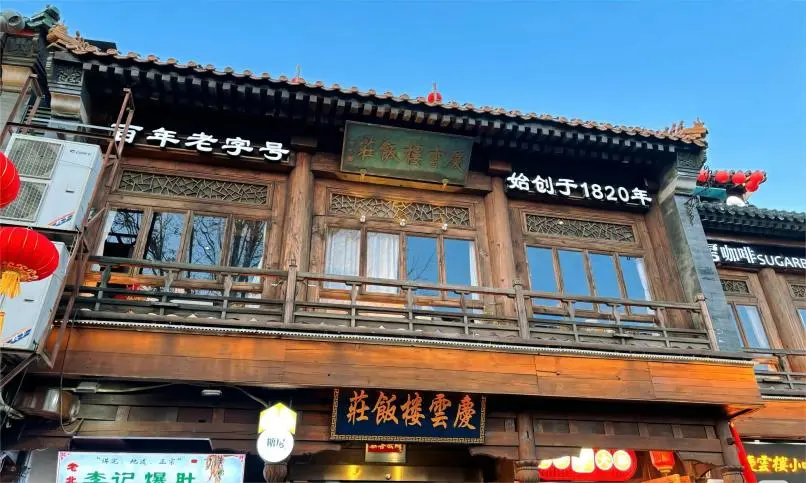
4. Qingyunlou Teahouse (Shichahai): Imperial Tea Beside the Lake
Historical Roots:
Founded in 1820 during the Qing Dynasty, Qingyunlou was once a private teahouse for nobles and imperial relatives. After reconstruction in 2011, it reveals a graceful mix of Jiangnan garden elegance and northern siheyuan design—earning its poetic nickname, “The Jiangnan Dream by Shichahai.” The first floor of Qingyunlou is a restaurant, while the second floor serves as a teahouse. On the upper level, you’ll find Tangfang Coffee, famously known as the ‘Sky Café’ overlooking Shichahai.
Unique Features:
The star here is the second-floor terrace, overlooking shimmering Shichahai Lake.
Highly recommended: the Imperial Tea Feast, featuring Lu’an Guapian green tea paired with traditional royal snacks like Pea Cake and Kidney Bean Rolls. The tea sets are replicas of Qianlong-era cloisonné porcelain—adding ceremony to every sip.
Location: No. 22 Qianhai Dongyan
Price: ¥88–688
Nearby Attractions: Yandai Xiejie · Prince Gong’s Mansion
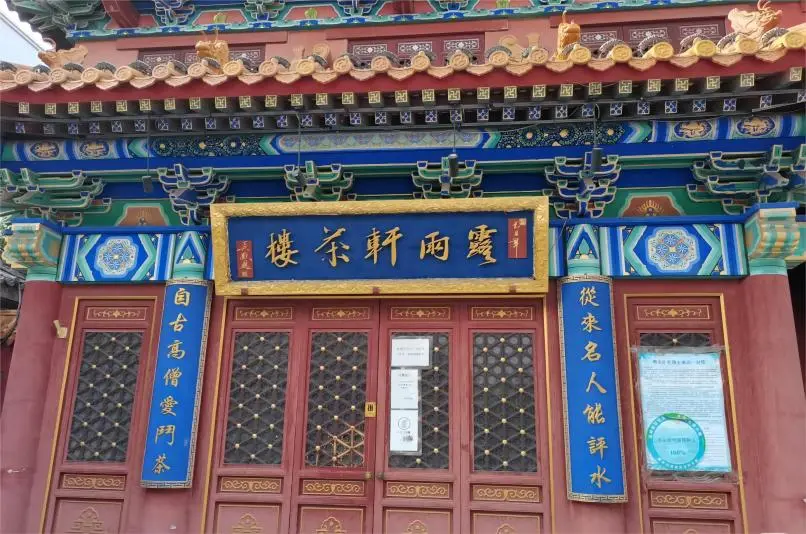
5. Luyuxuan (Summer Palace): Zen Tea Moments in a Royal Garden
Historical Roots:
Located next to the Garden of Harmonious Interests inside the Summer Palace, this space once served the Qing imperial family. Restored in 2015, its name—“Moonlight among the pines, tea after the rain”—reflects a pursuit of serenity and natural harmony.
Unique Features:
The tea house blends Japanese Karesansui (Zen dry landscape) with traditional Chinese courtyard aesthetics.
Must-try: the “Zen Tea and Taste” experience—West Lake Longjing paired with delicate vegetarian tea snacks, guided by a tea master.
Location: Inside the Summer Palace (East Palace Gate)
Price: ¥128–588
Nearby Attractions: Long Corridor · Kunming Lake
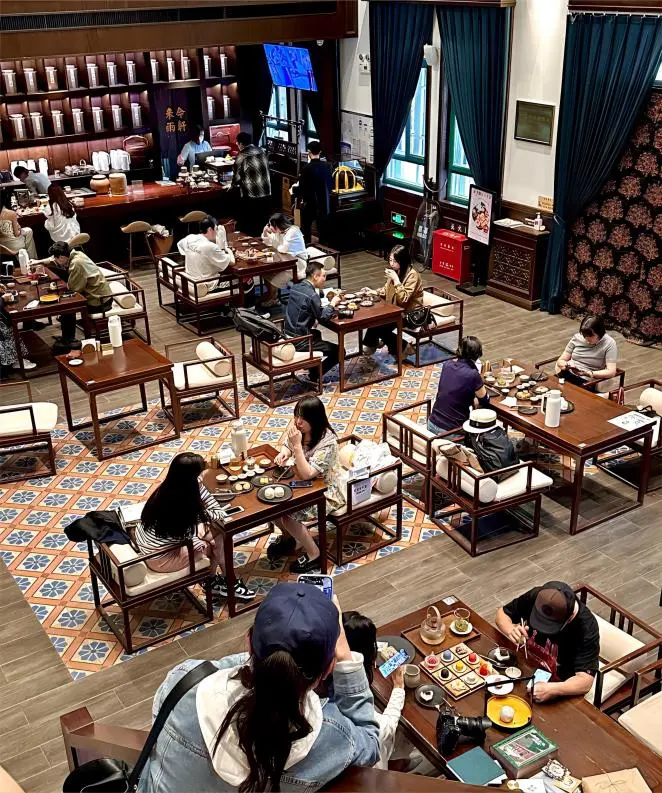
Conclusion: A Bowl of Tea, A City’s Soul
Beijing’s teahouses are cultural vessels—bridging the liveliness of street life, the grace of imperial tradition, and the quiet art of everyday living.
Whether you’re watching opera over jasmine tea or sipping Longjing beside a royal lake, each cup holds a chapter of Beijing’s story.
When you next explore the capital, slow your pace, step into one of these traditional tea houses, and let a bowl of tea deepen your connection with this ancient city. For more ways to taste the city, take a look at our full guide on Beijing’s Local Food Trails.