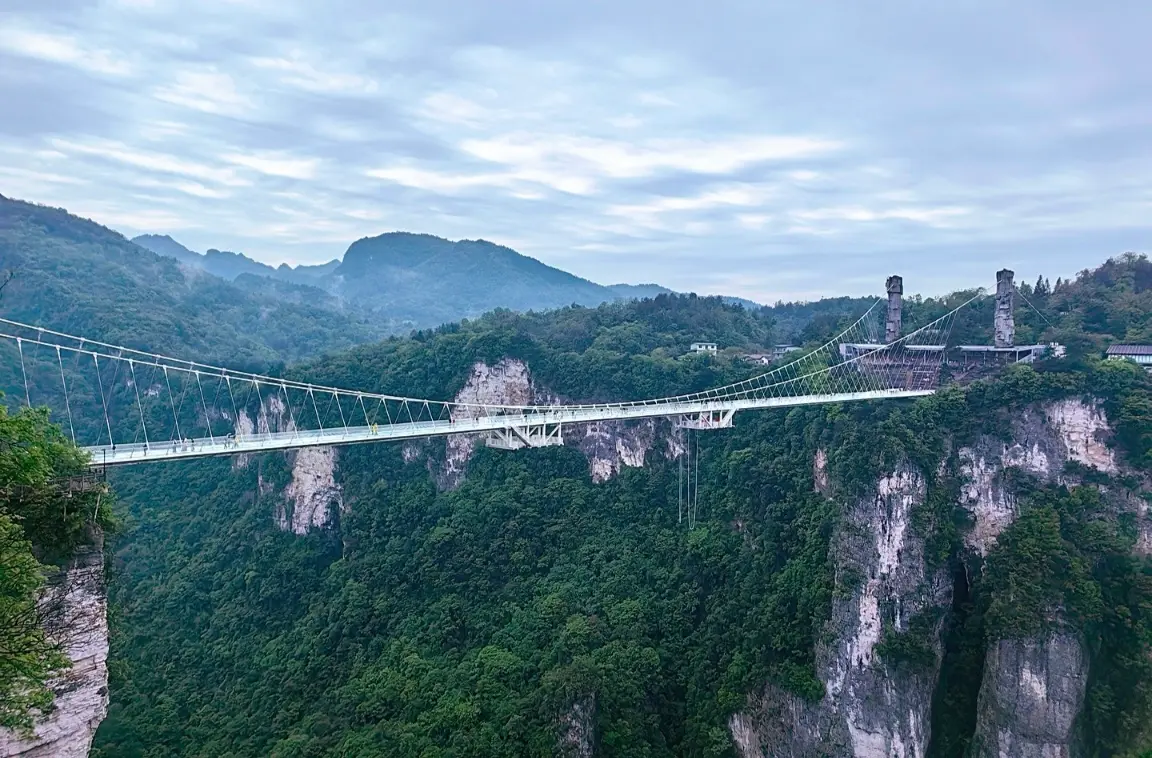
Zhangjiajie Grand Canyon Guide: Glass Bridge & Canyon Hike
Visiting Zhangjiajie for the first time and wondering where to start? Just keep this simple formula in mind: 3 Major Scenic Areas (Wulingyuan, Tianmen Mountain, Zhangjiajie Grand Canyon) + 1 Downtown Area. While Wulingyuan is known for its 3,000 quartz-sandstone pillars and Tianmen Mountain for its towering cliffside gateway, Zhangjiajie Grand Canyon offers a completely different landscape—defined simply as a transparent glass bridge spanning across the canyon, and a lush river valley waiting to be explored.
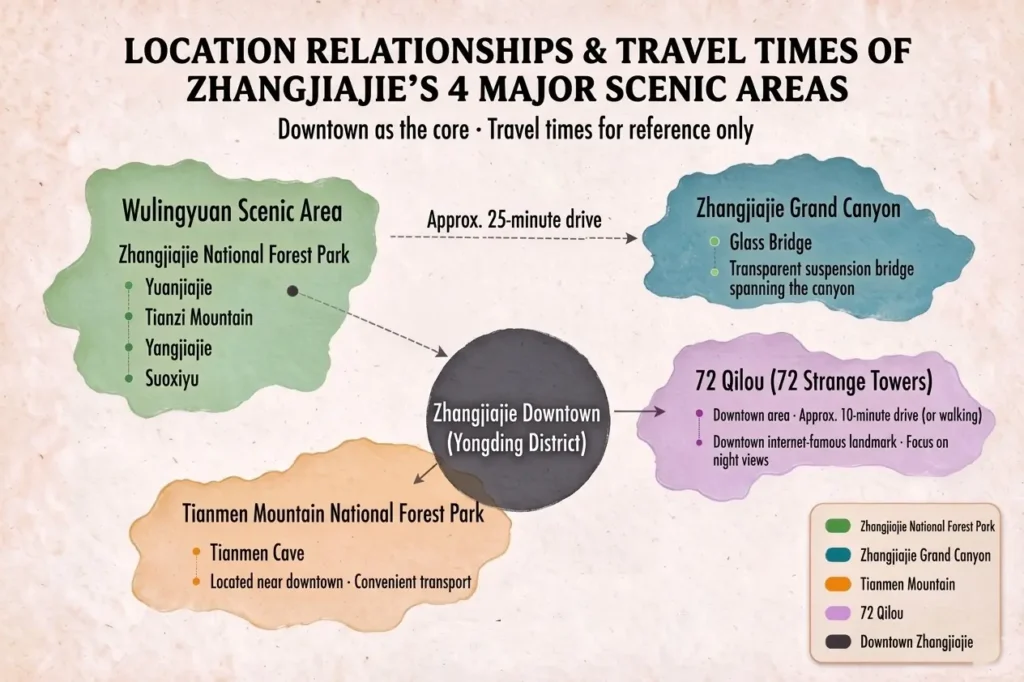
Located in Sanguansi Township, Cili County, right next to Wulingyuan, the scenic area covers a total planned area of about 22 square kilometers. While many tourists flock here solely for the Glass Bridge, snap a few photos, and leave, they miss out on the valley itself—featuring Yixiantian (A Thread of Sky), cascading waterfalls, and boat cruises on Shenquan Lake. That valley experience is where the true essence of the “Grand Canyon” lies.
Wondering how to choose your route for a first-time visit? Here is the quick takeaway before we dive into the details:
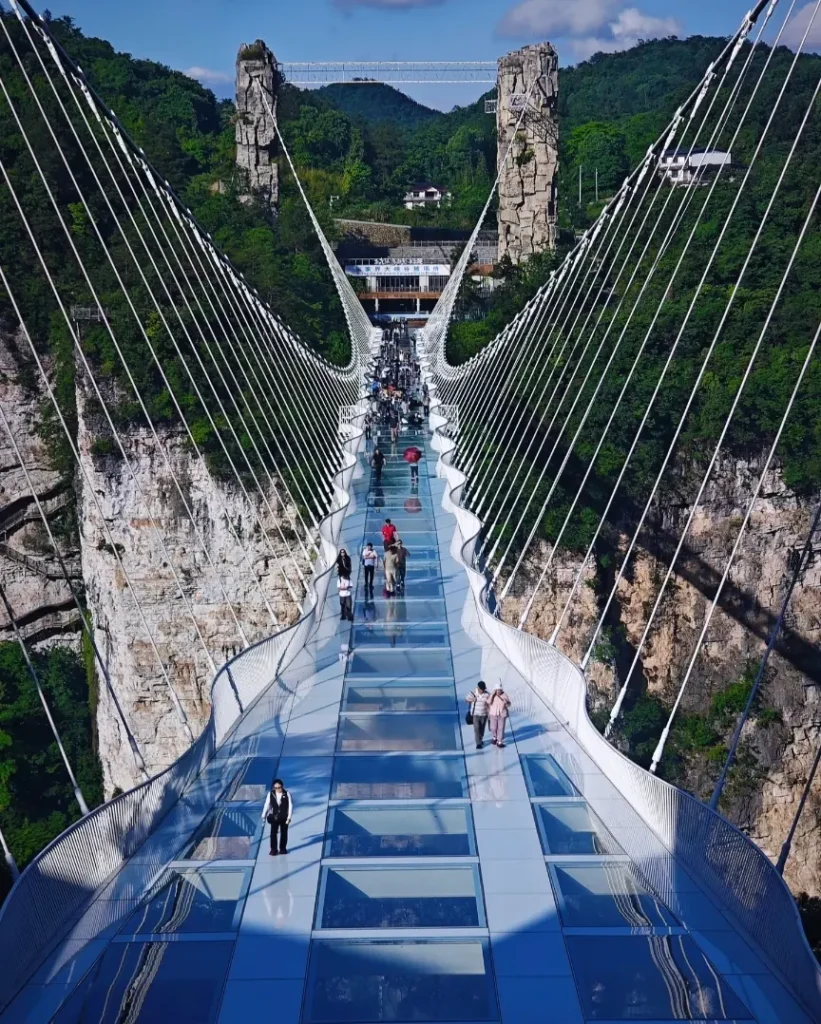
1. The Glass Bridge (Yuntiandu): Highlights & Walking Experience
Officially named “Yuntiandu” (Cloud-Crossing Way), the Glass Bridge spans roughly 430 meters in length, measures 6 meters wide, and hangs approximately 300 meters above the canyon floor. It is the world’s first glass-bottomed, steel-suspended high-altitude bridge. Upon completion, it set ten world records, including the world’s highest and longest glass bridge, received the prestigious Arthur G. Hayden Medal in 2018, and was named one of CNN’s “World’s Most Spectacular Bridges.” For most travelers, it serves as the “cover photo” of the Grand Canyon—striking awe before you even enter the valley below.
The experience of walking across unfolds in two stages: the first few steps bring an instinctive spike of tension as transparent glass exposes the sheer depth beneath your feet. However, after 20 or 30 meters, most people relax, sit down for photos, or even lie flat on the glass panel. It doesn’t require a lengthy stay, but it delivers an immediate visual impact before you head down into the canyon. For those with a fear of heights, there is no need to push past your comfort zone—non-glass, solid pathways line both edges of the bridge for a stress-free walk across.
To clarify a common point of confusion: Tianmen Mountain features a 60-meter glass walkway clinging to a cliff face, whereas the Grand Canyon boasts a 430-meter bridge spanning across a valley—one is a narrow ledge on a cliff, while the other is a massive structure suspended in mid-air.
2. Zhangjiajie Grand Canyon Hike: Waterfalls, Caves & Shenquan Lake
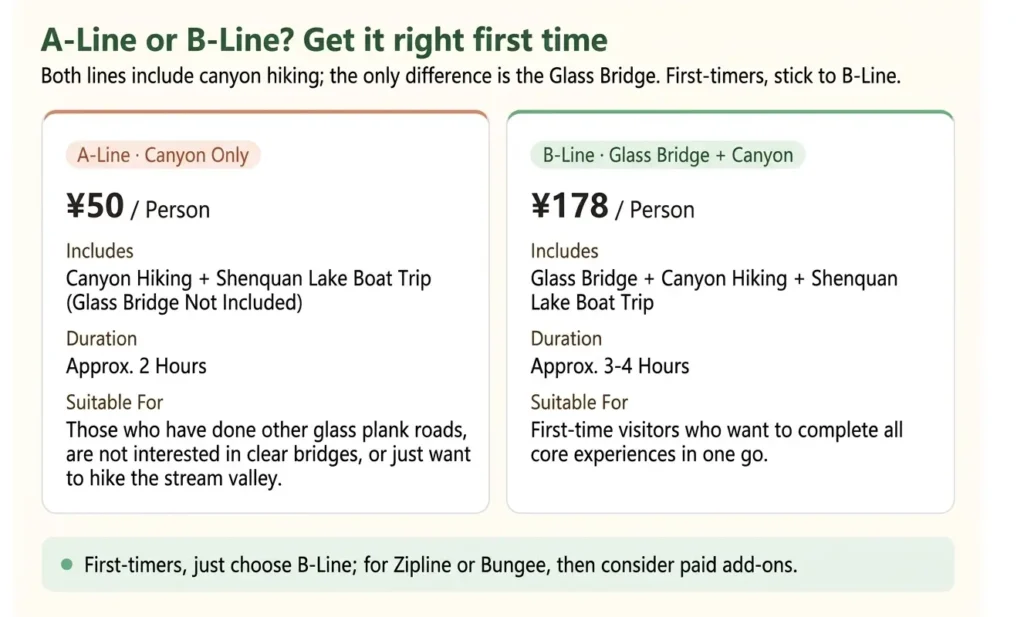
Many visitors are unaware that admission to the Grand Canyon is split into Line A and Line B: Line A includes canyon hiking only (excluding the Glass Bridge), while Line B offers the full “Glass Bridge + Canyon Hiking” combination. Leaving right after crossing the Glass Bridge means seeing only half of what the scenic area has to offer.
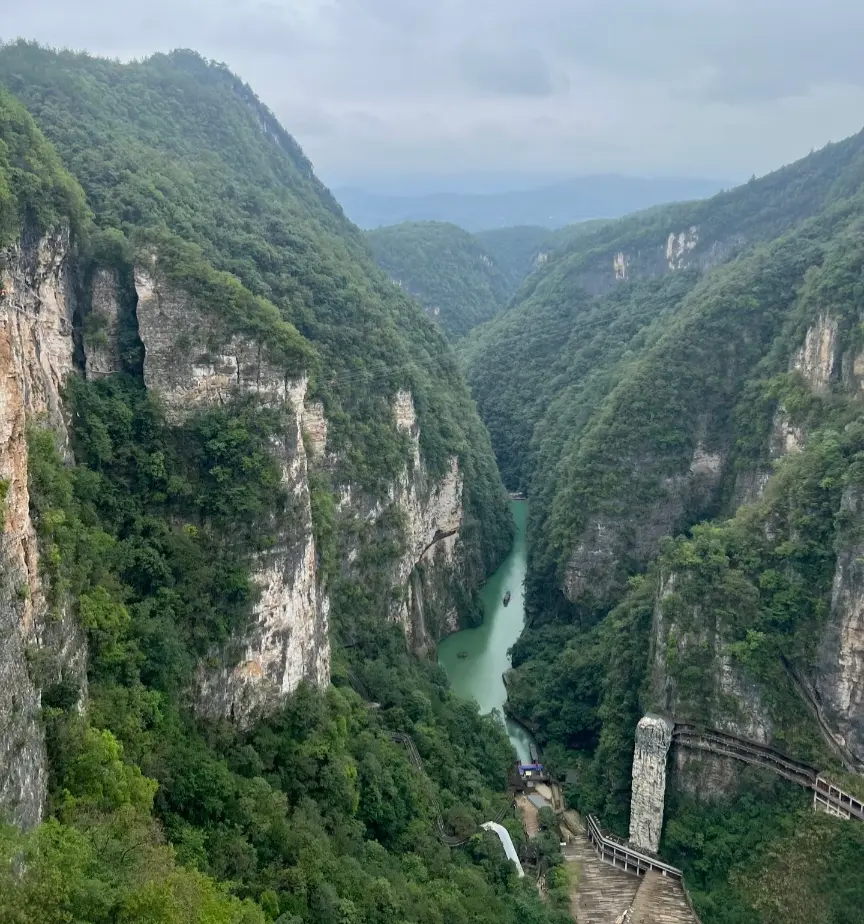
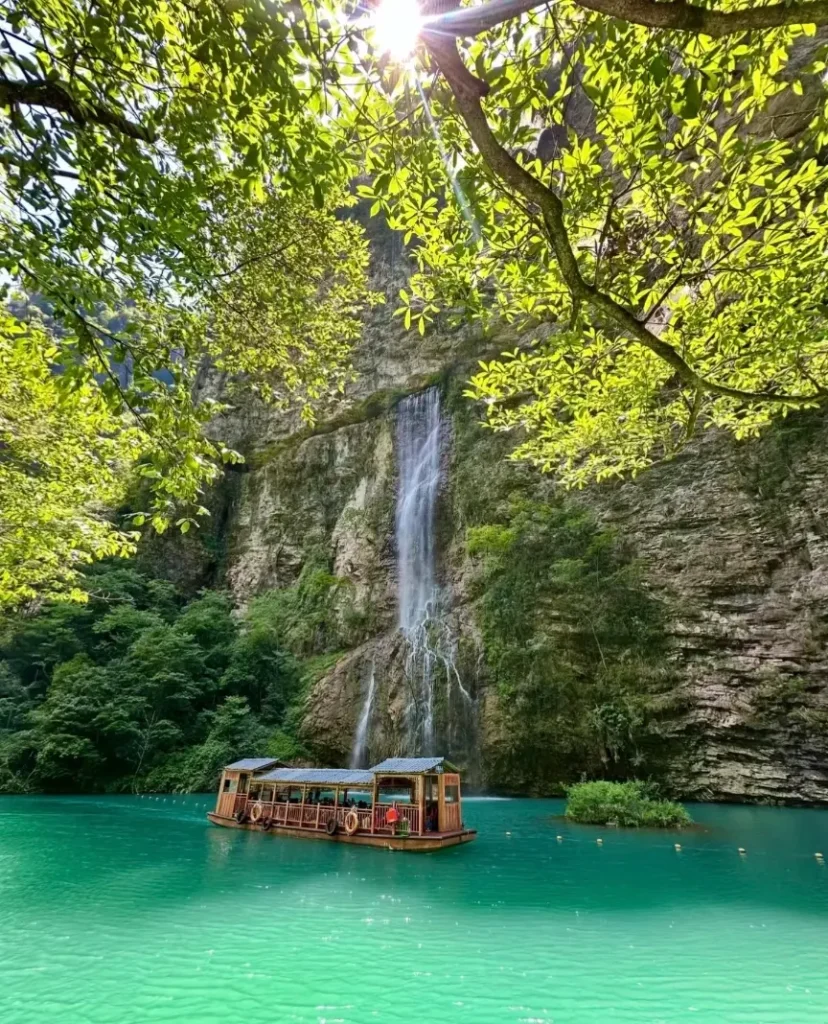
The canyon hike begins at the east side of the Glass Bridge, descending along a cliffside walkway straight to the valley floor. You will pass through Yixiantian (A Thread of Sky), Rainbow Plaza, and Rainbow Lake, then follow the winding stream past “A Curtain of Dreams” and “Momo Cave” (Touch Cave), before finally boarding a sightseeing boat across Shenquan Lake to exit. The combined hiking and boat ride takes about 2 to 3 hours, consisting mostly of flat paths and gentle downslopes with low physical exertion.
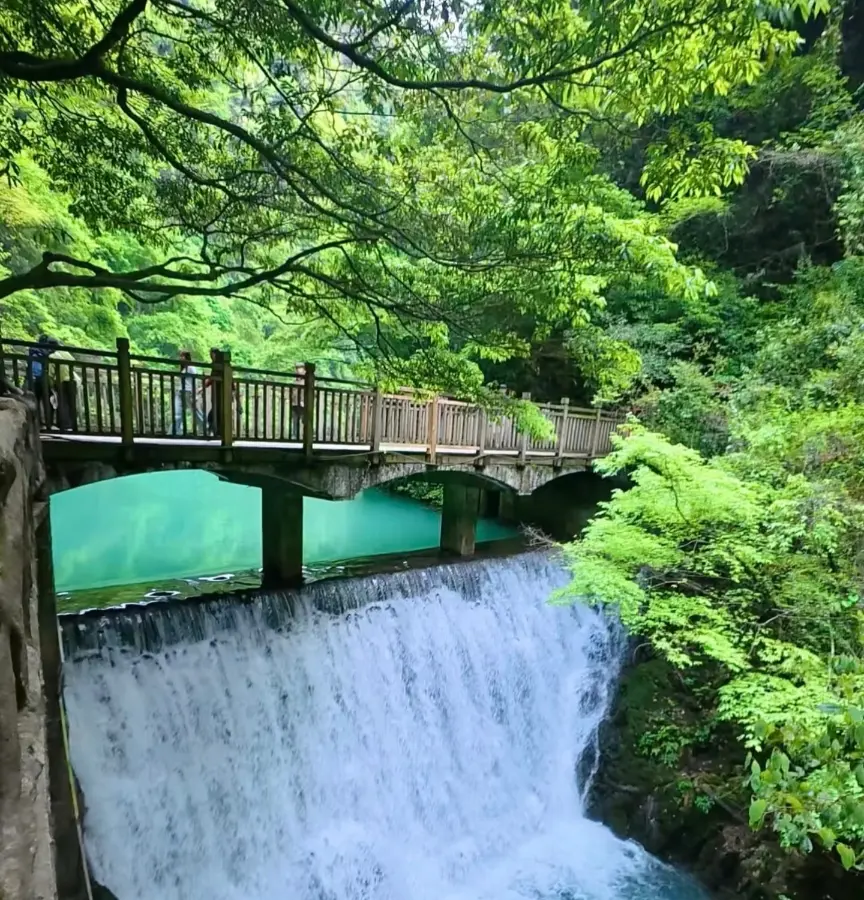
The highlight here isn’t stone peaks, but water, cave passages, and dense greenery. Yixiantian is a narrow rock fissure at the canyon entrance that requires squeezing through sideways; Momo Cave earned its name because it is so dark that visitors historically had to navigate by feeling the rock walls; and waterfalls cascade down cliff walls into crystal-clear streams. Boarding the boat at Shenquan Lake, looking up reveals waterfalls refracting rainbows in the sunlight—hence the name “Rainbow Plaza.” If you’ve just come down from Wulingyuan or Tianmen Mountain with tired legs, this valley hike serves as a gentle, refreshing wrap-up.
3. Zhangjiajie Grand Canyon Ticket Options: Line A vs. Line B
Choosing your route for a first-time visit comes down to one simple question: Do you want to walk on the Glass Bridge?
| Route | Highlights & Duration | Best For |
| Line A (~50 RMB) | Canyon Hike + Shenquan Lake Boat Cruise (Excludes Glass Bridge); approx. 2 hours. | Travelers who have experienced other glass skywalks, have no interest in the glass bridge, and prefer purely stream-side walking. |
| Line B (~178 RMB) | Glass Bridge + Canyon Hike + Shenquan Lake Boat Cruise; approx. 3 to 4 hours. | First-time visitors looking to experience all core highlights in a single trip. |
In short: First-time visitors need only choose Line B to cover both the Glass Bridge and the canyon hike without spending extra on unnecessary add-ons.
4. Grand Canyon Adventure Activities: Zipline, Bungee & Slides
Beyond the Glass Bridge and canyon hike, the Grand Canyon offers a series of individually priced add-on activities: High-Altitude Zip-line, Yixiantian Slide, Bungee Jumping, VR Flying Cinema, and Via Ferrata Climbing.
These activities primarily serve a convenient purpose—they act as “lazy shortcuts” after crossing the Glass Bridge. If you want to skip part of the downhill cliffside walk, taking the zip-line, slide, or elevator brings you quickly down toward Shenquan Lake. Here is a breakdown of the noteworthy options:
- High-Altitude Zip-line (50 RMB/person): Spanning 358 meters with a vertical drop of 302 meters, this 3-minute ride glides from the east side of the bridge to the opposite cliff. It consistently ranks as the most well-reviewed paid activity, combining panoramic views, an adrenaline rush, and a shortcut down to Shenquan Lake. Weight restrictions apply (typically between 35 kg and 95 kg, subject to on-site weighing).
- Bungee Jumping (~2,998 RMB for first jump, ~998 RMB for second jump on the same day): Plunging from the Glass Bridge with a vertical drop of 260 meters, this is one of the world’s highest commercial bungee jumps. Age limits are set between 16 and 65, with weight limits from 40 kg to 90 kg. It is expensive—unless you are visiting specifically for the plunge, standing on the bridge to watch others jump is thrilling enough.
- Yixiantian Slide (50 RMB/person): Sliding down a chute along the cliffside directly to the valley floor, this is one of the easiest ways to reach the bottom. It’s a great option for families with children or those looking to avoid steep stairs.
- VR Flying Cinema (~30 RMB) & Via Ferrata Climbing: These serve as secondary entertainment options. The VR experience simulates flying over the canyon from a seated position, while Via Ferrata involves climbing along steel cables on vertical cliff faces—a genuine test of physical strength and courage. Unless you are seeking extreme outdoor sports, these add-ons are not essential.
A Practical Assessment: If you are short on time or watching your budget, Line B covers all essential highlights. Zip-lines and bungee jumps are nice bonuses, but by no means mandatory.
5. How to Get There & How to Plan Your Half-Day Tour
Zhangjiajie Grand Canyon is located right next to Wulingyuan—about 15 km away (a 20-minute drive), or roughly a 40-minute drive from downtown Zhangjiajie. It fits seamlessly into the second half of your itinerary, offering a relaxing change of pace after several days of viewing stone pillars and towering peaks.
Structuring Your Half-Day: Reserve 3 to 4 hours in the morning or afternoon for Line B. Morning visits feature lighter crowds and favorable lighting for photographing the Glass Bridge; afternoon light can be harsh, creating strong reflections on the glass. When booking tickets, aim for a morning time slot whenever possible.
Summary: Planning Your Zhangjiajie Grand Canyon Trip
Choose Line B for the Glass Bridge, follow the canyon down to Shenquan Lake, and decide on zip-lines or bungee jumping based on your budget and appetite for thrills. The Grand Canyon isn’t a vast scenic area like Wulingyuan that demands two days to explore—half a day is plenty. It serves as the perfect “palette cleanser” for your Zhangjiajie itinerary: a chance to switch perspectives, taking in bird’s-eye views from high above before wandering through the peaceful valley below. If you’ve just finished reading this and want a big-picture overview of Zhangjiajie’s top spots and how they connect, head back to our Zhangjiajie Scenic Attractions & Landmarks Guide.
For general trip logistics—including passport reservations, entry tickets, transport passes, translation apps, mobile payment setups, and offline maps—please refer to the detailed breakdown in our Zhangjiajie Practical Travel Essentials Guide.