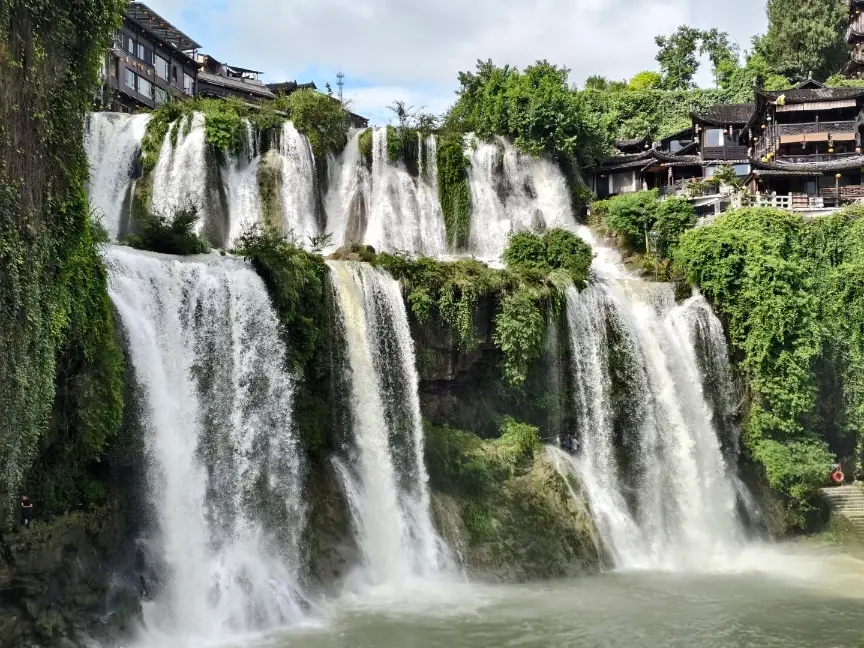
Furong Ancient Town Guide: The Waterfall Town Near Zhangjiajie
Having covered Wulingyuan, Tianmen Mountain, Zhangjiajie Grand Canyon, and the Downtown Area in our previous guides, this article spotlights the only location in our series outside Zhangjiajie itself—Furong Ancient Town (Furongzhen). Geographically situated in Yongshun County within the Xiangxi Tujia and Miao Autonomous Prefecture, it sits just over 20 minutes away from Zhangjiajie West Railway Station via high-speed rail. Consequently, many visitors traveling through Zhangjiajie seamlessly pair Furong Ancient Town with Fenghuang Ancient Town to complete a broader Xiangxi (Western Hunan) circuit.
To clarify the difference between the two: Fenghuang Ancient Town lies further south in Xiangxi, famous as the hometown of author Shen Congwen (Border Town). It offers a completely different vibe—where Furong is about a town dramatically suspended over waterfalls, Fenghuang showcases traditional stilt houses lining the Tuojiang River alongside rich literary heritage. Fenghuang is also notably farther from Zhangjiajie—roughly 228 kilometers or a 3-hour bus ride away. When mapping out a Western Hunan loop, Furong Ancient Town is a natural high-speed rail addition, while Fenghuang depends on whether your overall schedule allows for the extra transit time.
Originally known as Wangcun, Furong Ancient Town boasts a rich history spanning over 2,000 years. In 1986, renowned director Xie Jin filmed the acclaimed movie Hibiscus Town (Furong Zhen) here, starring Liu Xiaoqing and Jiang Wen. The film brought international fame to this cliffside sanctuary, eventually leading to its official renaming as Furong Ancient Town. Its defining feature can be summed up in one sentence: a 2,000-year-old ancient town suspended over roaring waterfalls.
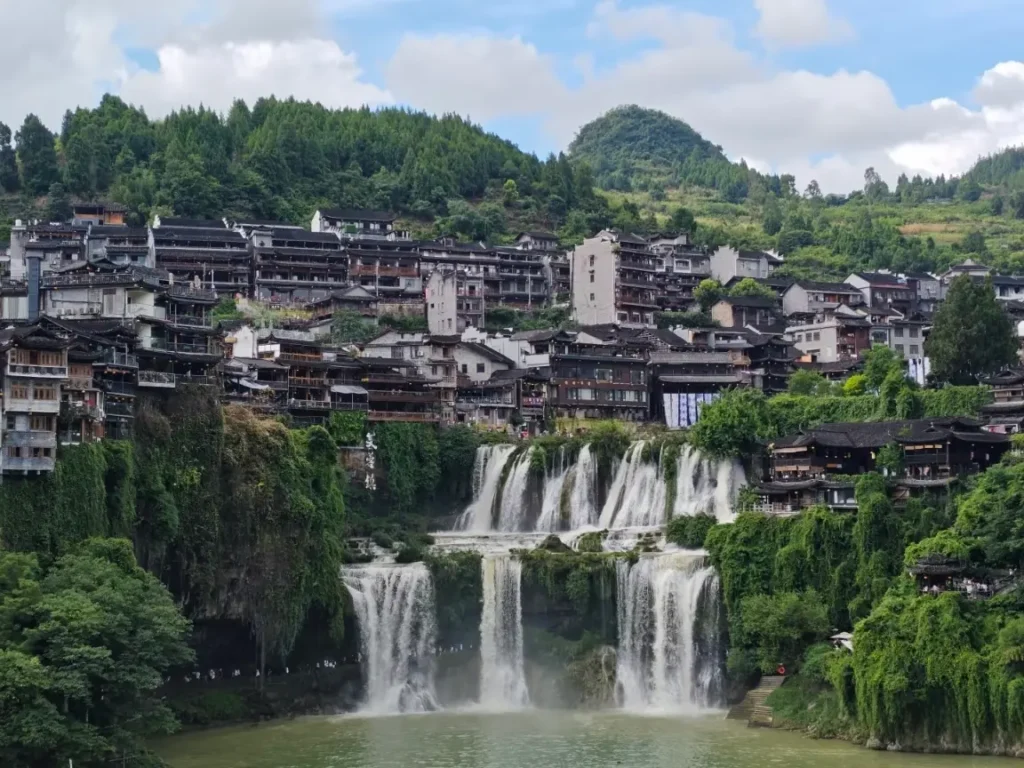
1. Wangcun Waterfall: Walking Behind the Thunderous Falls
The most signature icon of Furong Ancient Town is the massive waterfall cutting straight through the town center. Measuring roughly 60 meters high and 40 meters wide, it cascades down a two-tiered cliff face; during peak flow seasons, its thunderous roar echoes for miles around.
The highlight of the waterfall experience is a narrow path carved directly into the rock face behind the water, allowing visitors to walk behind the torrent—a real-life “Water Curtain Cave” experience where misty spray refracts sunlight into vivid rainbows. By day, it offers dramatic natural views; by night, vibrant illuminations light up both the cascading water and surrounding stilt houses, transforming the setting into a scene straight out of a Xianxia fantasy world.
2. Wuli Flagstone Street: Historic Alley & Famous Rice Tofu
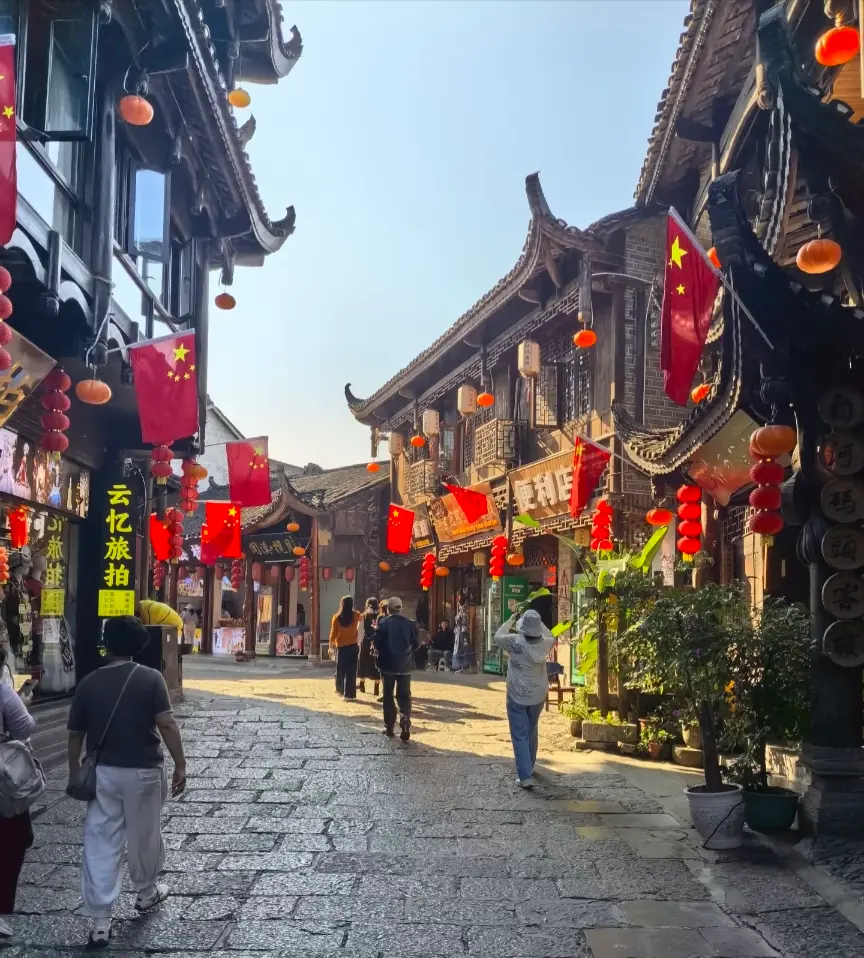
Squeezing under the stilt houses beside the waterfall leads directly onto Wuli Flagstone Street. Worn smooth and shiny by centuries of footsteps, the blue flagstone pathway is flanked on both sides by traditional wooden Tujia stilt houses and old shopfronts adorned with red lanterns.
As the primary filming location for the movie Hibiscus Town, the street’s most famous stop is the “Liu Xiaoqing Rice Tofu Shop”—the exact stall depicted in the film. Rice Tofu is a local delicacy made from ground rice paste cooked into firm cakes, served tossed with pickled green beans, shredded meat, and spicy chili oil. Tender, tangy, and savory, enjoying a fresh bowl here is a quintessential rite of passage. Wuli Flagstone Street remains one of the most authentic old streets among Xiangxi’s ancient towns, free from overwhelming commercialism.
3. Cliffside Stilt Houses & Tusi Palace: 2,000 Years of Tujia Heritage
The stilt houses (Diaojiaolou) of Furong Ancient Town are built onto the cliffs flanking both sides of the waterfall, creating a multi-tiered cityscape where houses perch directly above the rushing waters.
Historically serving as the domain of the local Tujia chieftains (Tusi), the town still preserves the historic Tusi Palace—a living fossil of Tujia culture spanning over two millennia. Known as Youyang during the Western Han Dynasty and Xizhou during the Tang Dynasty, the town served as an important trading hub along the Youshui River. Unlike the uninhabited quartz-sandstone pillars of Zhangjiajie, Furong Ancient Town represents a living heritage where generations of Tujia people have resided for thousands of years.
4. Furong Ancient Town Night View: Illuminations & Xianxia Vibe
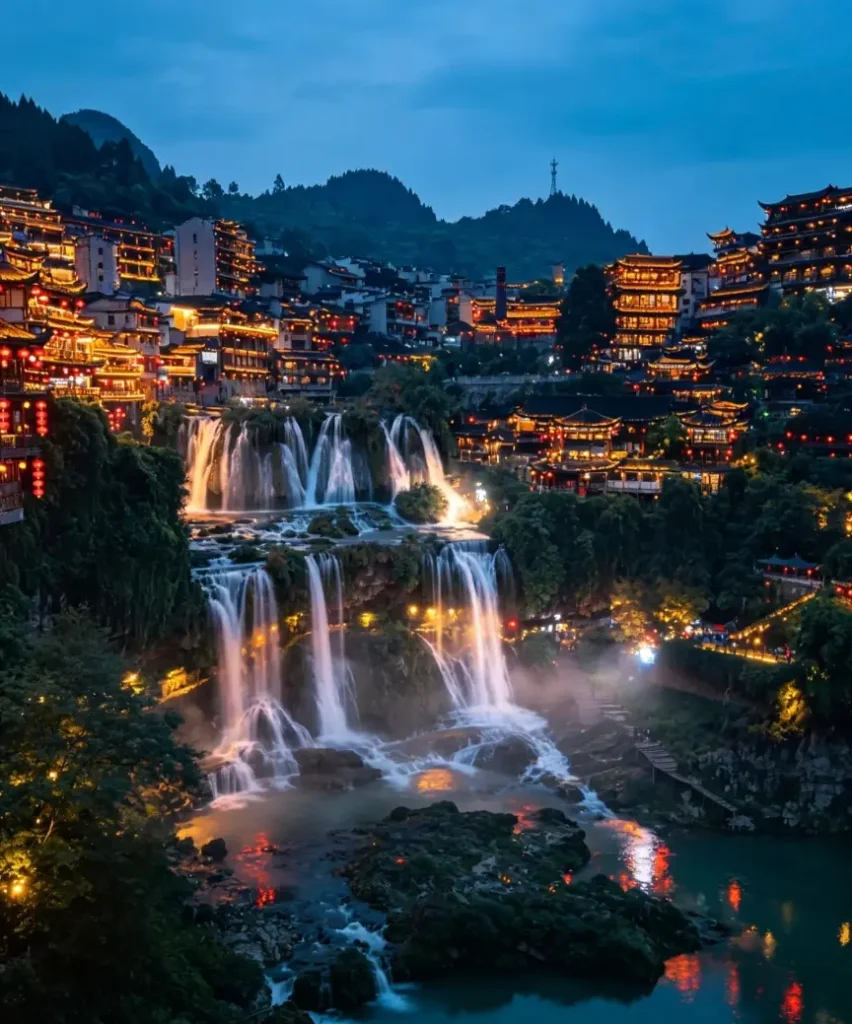
If your travel schedule permits, staying overnight in Furong Ancient Town is highly recommended. As dusk falls, colorful light displays illuminate the waterfall, while rows of cliffside stilt houses glow in warm yellow lights reflected on the water below. Misty water spray drifts through illuminated air—making CCTV’s description of it as a “Xianxia Fantasy World” no exaggeration at all. It easily ranks as one of the finest nighttime views among ancient towns across Hunan Province.
5. How to Get to Furong Town from Zhangjiajie & Itinerary Tips
Reaching Furong Ancient Town from Zhangjiajie is fast and convenient:
- High-Speed Rail: High-speed trains along the Zhangjiakai Line run from Zhangjiajie West Railway Station to Furongzhen Railway Station in just over 20 minutes.
- Driving / Bus: Roughly 80 kilometers away, taking about 1 to 1.5 hours by car or long-distance bus.
The most practical approach is linking these destinations into a Western Hunan regional route: after exploring the mountains in Zhangjiajie, take a quick train ride to Furong Ancient Town for an overnight stay and evening views, then continue onward to Fenghuang Ancient Town for a seamless 3-day, 2-night itinerary.
If you plan to continue to Fenghuang, keep two important factors in mind: first, ensure your travel duration allows for the extra transit; second, Tongren Fenghuang Airport (the closest airport to Fenghuang) operates a limited number of flights, so flight tickets should be booked well in advance. Entry to the main scenic area of Fenghuang Ancient Town requires a separate admission ticket—be sure to verify current ticket prices on booking platforms prior to visiting.
If you are planning your overall trip and want a big-picture overview of Zhangjiajie’s top spots and how they connect, feel free to return to our Zhangjiajie Travel Itineraries.
Summary: Is Furong Ancient Town Worth Visiting?
While Zhangjiajie showcases mountain scenery at its absolute grandest, Furong Ancient Town captures the harmony of water, heritage, and human life. With wooden stilt houses perched directly over roaring waterfalls and stone paths leading behind curtain falls, this stop serves as a refreshing, culturally rich interlude after exploring the 3,000 sandstone peaks of Zhangjiajie. To learn more about other attractions across the region, explore our complete Zhangjiajie Scenic Attractions & Landmarks Guide.