Xi’an Giant Wild Goose Pagoda Guide: Tickets, Transport & Avoid Scams
A practical handbook for first-time international visitors: Tickets · Transport · Top Highlights · Musical Fountain · Pitfalls to Avoid · Walking Routes
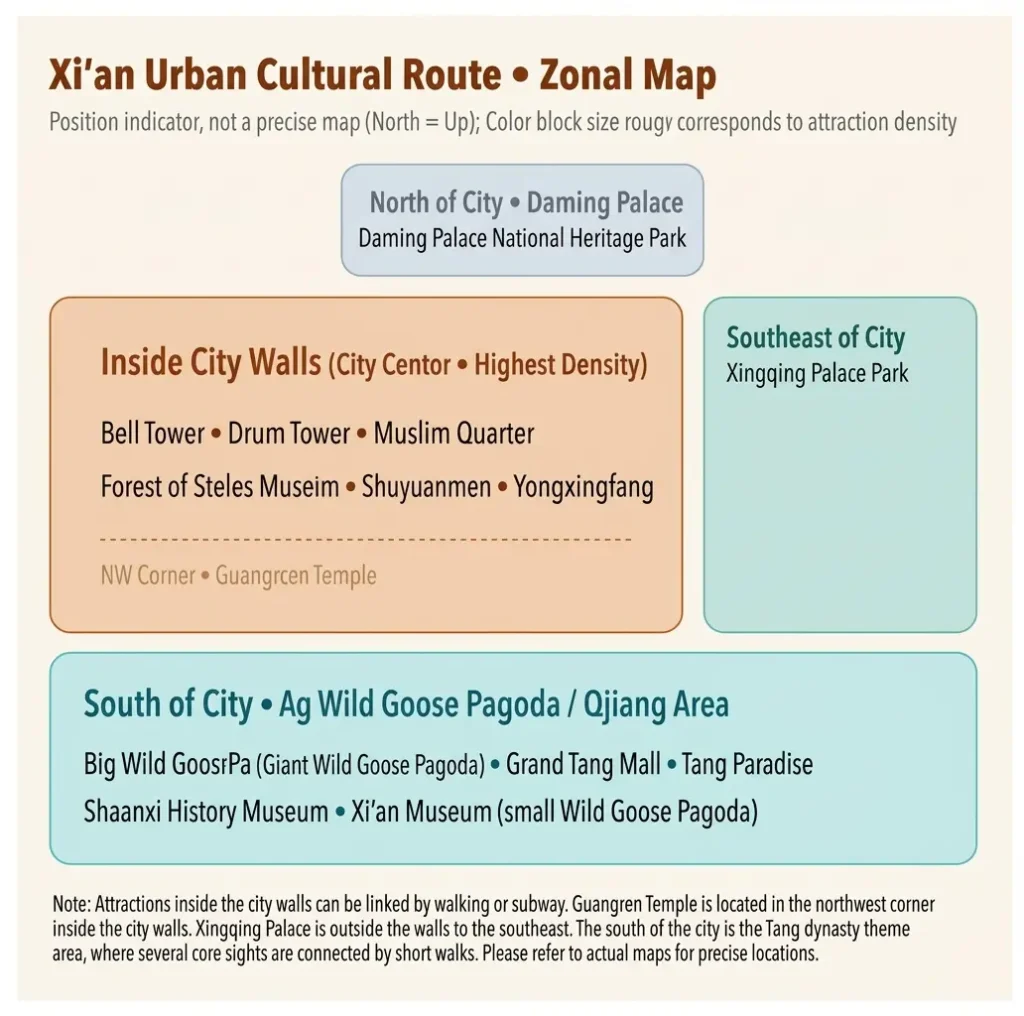
Overwhelmed by planning your Xi’an trip? Don’t worry—the easiest way to navigate this ancient capital is to split it into two key areas: the lively city center and the surrounding regions.
The inner city highlights are clustered around downtown and the south, seamlessly connected by walking or subway. Meanwhile, the surrounding day trips spread across the east, west, north, and south, each packed with iconic sights. In this guide, we’re heading to the city’s south district to explore the majestic Big Wild Goose Pagoda
1. Why Is It the Icon of the Tang Dynasty?
If you could pick only one landmark to represent the apex of China’s Tang Dynasty, many would choose the Giant Wild Goose Pagoda (Dayan Pagoda). It is not just an ancient brick tower; it is tightly linked to a real historical figure—Xuanzang, the legendary monk who inspired the famous Chinese literary masterpiece Journey to the West.
In 652 AD, after returning from a 17-year pilgrimage to India, Xuanzang personally oversaw the construction of this pagoda to preserve the sacred Buddhist scriptures and statues he brought back. Standing at the foot of the tower today, you are stepping onto the exact spot where ancient scriptures were translated over 1,300 years ago.
If you are visiting for the first time, this guide covers ticket booking (including which parts are completely free), transport from downtown Xi’an, whether to climb the tower, musical fountain schedules, and how to plan a smooth half-day route.

2. What Is the Giant Wild Goose Pagoda? (Overview & Location)
- Location: Yanta District, Xi’an (inside Da Ci’en Temple complex, approx. 3–4 km south of the downtown Bell Tower).
- Status: Tang Dynasty pavilion-style brick pagoda; Major National Historical and Cultural Site; inscribed as a UNESCO World Heritage Site in 2014 under the Silk Roads: the Routes Network of Chang’an-Tianshan Corridor.
- History: Built in 652 AD under Xuanzang’s supervision. Originally 5 stories tall, it was rebuilt and restored over centuries into its current 7-story structure, standing at about 64 meters (210 feet).
- Da Ci’en Temple: A premier imperial temple built by Emperor Gaozong of Tang in memory of his mother, Empress Wende. Xuanzang served as the head monk here to translate scriptures.
Key Takeaway: The pagoda sits inside the temple. Entering the temple requires a ticket, and climbing the pagoda costs an additional fee. However, the outer North and South Squares and the Musical Fountain are 100% free to the public.
3. Top Things to See: Pagoda, Temple & Musical Fountain
① Pagoda Climb & City Skyline
Inside the pagoda, a narrow wooden staircase spirals up across seven levels. Reaching the top offers sweeping views of southern Xi’an’s urban skyline.
- Note: The staircases are steep and narrow; during peak season, lines can be long. Visitors with a fear of heights or traveling with small kids should consider their physical comfort.
- Recommended Time: ~30–40 mins.
② Da Ci’en Temple (Tang Imperial Temple)
The temple features a symmetrical layout with classic halls, courtyard gardens, and relics from Xuanzang’s translation work. Walking through the temple grounds provides essential context on why the pagoda was built here.
- Recommended Time: ~40–60 mins.

③ North Square Musical Fountain (Free Show)
The North Square hosts one of Asia’s largest musical fountains and is one of Xi’an’s best free evening attractions. Water jets dance in sync with music and vibrant lights. Standard showtimes are usually around 12:00 PM, 4:00 PM, 7:00 PM, and 9:00 PM (each lasting 10–15 mins). Always verify schedules on-site.
④ Xuanzang Statue & South Square (Best Photo Spot)
The bronze statue of Xuanzang on the South Square is the ultimate photo spot to capture both the monk and the towering pagoda in a single shot. Daylight offers crisp angles, while dusk creates a magical backlit atmosphere.
Visitor Tip: Exploring the temple and climbing the pagoda takes about 1–1.5 hours. Pair it with the evening fountain show for the smoothest experience.

4. Visitor Guide: Tickets, Transport, Guides & Scams
How to Book Tickets (Free vs Paid Areas)
- Free Access: The North and South Squares, the Xuanzang Statue, the Musical Fountain show, and the adjacent Grand Tang Mall street require no tickets or advance reservations.
- Paid Access: Entry to Da Ci’en Temple is approx. ¥40 (~$5.50 USD). Climbing the pagoda costs an extra ¥25 (~$3.50 USD).
- Top International Platforms (Recommended): Use Trip.com or Klook. They offer English interfaces, mobile QR-code entry, and accept international credit cards (Visa, Mastercard, Amex)—ideal for international travelers without a Chinese phone number.
- Official Channels: Reservations via the temple’s official WeChat account require Chinese ID verification and domestic phone numbers, which can be inconvenient for overseas visitors.
- Passport Requirement: Always bring your original passport used during booking for entry verification.
How to Get to the Giant Wild Goose Pagoda from Downtown Xi’an
- Subway (Best Budget & Easy Option): Take Metro Line 3 or Line 4 to Dayanta Station (Giant Wild Goose Pagoda Station). Exit to walk directly onto the North Square.
- Taxi / Didi Ride-Hailing: Takes about 15–20 minutes from the Bell Tower area (~$3–$5 USD).
- Public Bus: Numerous public buses stop at “Dayanta” station; check local navigation apps for real-time routes.
Do You Need a Tour Guide for the Pagoda?
- Get a Guide: Most of the pagoda’s charm lies in its history—Xuanzang’s pilgrimage to India, ancient translation works, and Tang Dynasty imperial stories. Exploring without historical context means missing out on what makes it special.
- Pre-Book English Tours: Half-day tours with licensed English guides and ticket setup can be booked in advance via Trip.com or Klook.
- On-Site & App Options: Audio guide devices can be rented at the temple entrance, or you can use self-guided audio tour apps.
Common Scams & Pitfalls to Avoid in Yanta District
- Confusing Free vs. Paid Areas: Squares and fountains are free, but temple entry and pagoda climbing require separate tickets.
- Unpredictable Fountain Schedules: Fountain shows adjust seasonally. The daytime show is usually canceled on Tuesdays for maintenance, and operations may pause during winter (Nov–Jan). Always double-check daily announcements.
- Heavy Evening Crowds: The 7:00 PM and 9:00 PM fountain shows attract massive crowds. Keep an eye on personal belongings and avoid pushing near the water’s edge.
- Overpriced Photo Touts: Polite rejection works best if unsolicited street photographers on the square offer paid photos. Always confirm prices beforehand.
- Peak Season Pagoda Queues: Lines to climb the tower can be long during holidays; weigh your schedule before purchasing the climbing add-on.
Best Time to Visit & How to Avoid Crowds
- Climbing the Pagoda: Early morning right at opening or late afternoon near final admission sees fewer crowds and softer light.
- Fountain Show: Daytime shows (except Tuesdays) offer a far less crowded experience if you prefer avoiding nighttime tour groups.
- Avoid National Holidays: Steer clear of Chinese Golden Weeks (May Day, October National Day) and summer breaks when crowd levels surge.
Opening Hours
- Peak Season (Mar 1 – Oct 14): 8:30 AM – 6:00 PM (Last entry at 5:00 PM).
- Off-Peak Season (Oct 15 – End of Feb): 8:30 AM – 5:30 PM (Last entry at 4:30 PM).
- Maintenance Note: The pagoda tower is closed for structural inspection every Monday (except official public holidays); temple grounds remain open.

5. Recommended Itinerary: Half-Day vs Full-Day Routes
Optimal Sequence:
South Square (Xuanzang Statue) → Da Ci’en Temple & Pagoda Climb → North Square Musical Fountain → Walk to Grand Tang Mall
- Half-Day Option (~3–4 hours): Temple visit, pagoda climb, one fountain show, finishing with an evening stroll through the Grand Tang Mall.
- Full-Day Option (~5–6 hours): Combine the pagoda with nearby attractions like Tang Paradise or the Shaanxi History Museum.
- Proximity Tip: The Giant Wild Goose Pagoda and the Grand Tang Mall sit adjacent to each other (approx. 5–10 minutes on foot).
6. Fascinating Giant Wild Goose Pagoda Facts
- The Real Pilgrimage: Xuanzang spent over a decade traveling tens of thousands of miles to India on foot. The monk in Journey to the West is a fictionalized version of his real life.
- Inscribed Names of Scholars: During the Tang Dynasty, successful candidates of the imperial exams would carve their names into the pagoda’s walls—an ancient tradition celebrating academic success.
- Changing Levels: The tower was originally 5 stories tall. Reconstructions and earthquake damage altered its structure over time into the 7-story landmark seen today.
7. How to Combine the Visit with Your Xi’an Itinerary
- Classic Southern Route: Pair the Giant Wild Goose Pagoda with the Grand Tang Mall and Tang Paradise for a day focusing on Tang culture and vibrant night lights.
- Museum Combination: Visit the nearby Shaanxi History Museum in the morning, followed by the Pagoda in the afternoon for a complete historical deep dive. (Note: Museum tickets require advance booking).

8. Is the Giant Wild Goose Pagoda Worth Visiting?
Yes, absolutely. Whether you are fascinated by Tang Dynasty architecture and Buddhist history, or simply want to catch a spectacular evening fountain show against an ancient backdrop, it remains an essential stop in Xi’an.
Furthermore, to explore more highlights of your Xi’an journey, don’t miss our complete guide to Xi’an Tourist Attractions!
FAQ: Frequently Asked Questions
How long do you need at the Giant Wild Goose Pagoda?
Allow 3–4 hours to tour Da Ci’en Temple, climb the pagoda, and watch a musical fountain show.
Is it worth climbing the Giant Wild Goose Pagoda?
Yes, if your budget and stamina allow. The top provides a great viewpoint over southern Xi’an, though staircases are steep and narrow.
Do you need a tour guide for the Giant Wild Goose Pagoda?
Hiring an official English guide or renting an audio set is highly recommended to appreciate the historical legacy of Xuanzang and Tang Dynasty Buddhism.
Are photos allowed inside the Giant Wild Goose Pagoda?
Yes, photography is permitted inside temple grounds and the pagoda, but flash photography is strictly prohibited indoors.