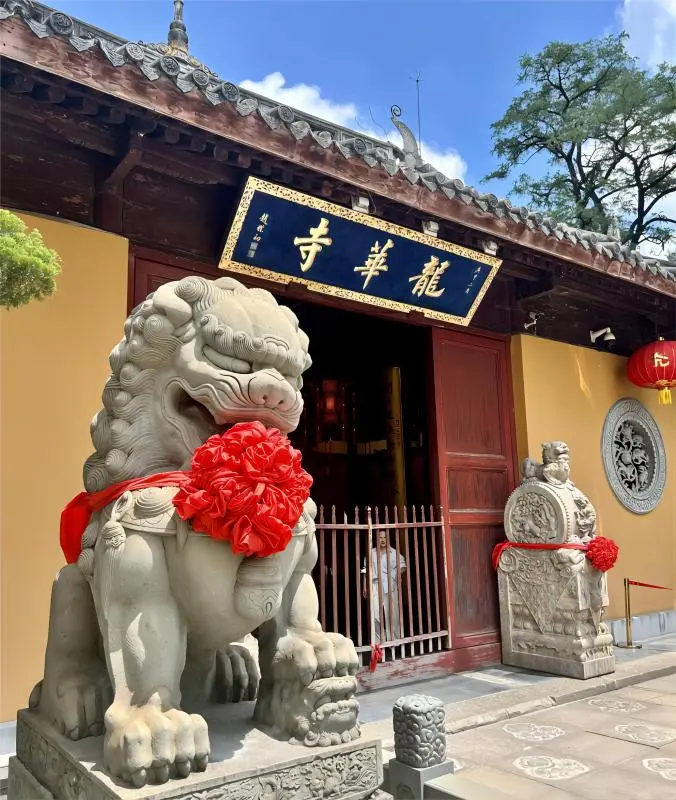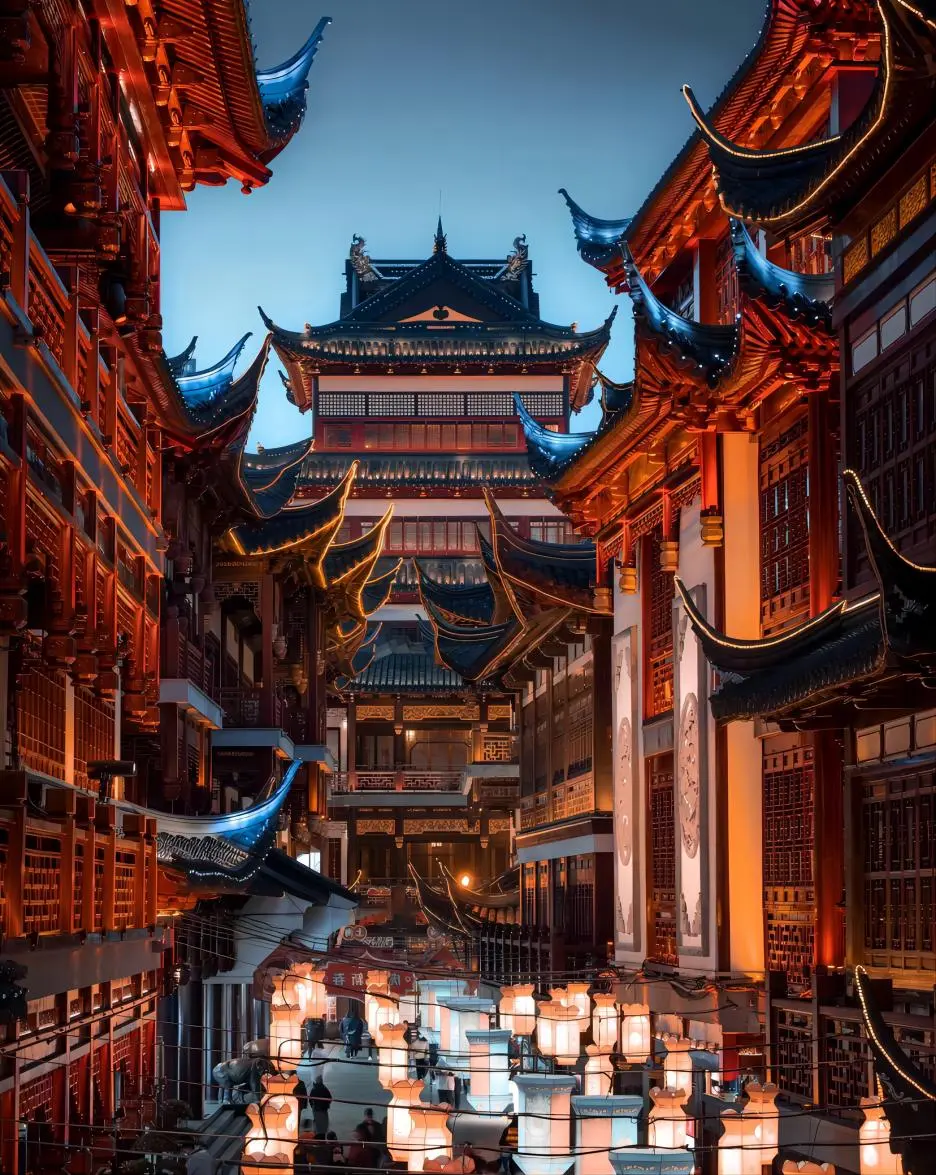
Yuyuan Garden Shanghai: A 400-Year Journey Through Classical Chinese Beauty
For first-time international visitors to Shanghai, towering skyscrapers might be your first impression. But if you want to touch the true soul of traditional Chinese culture, Yuyuan Garden shanghai(also known as Yu Garden) is a must-see time capsule.
Built during the Ming Dynasty, this classical Jiangnan garden is renowned for its ingenious layout, profound cultural heritage, and unique Eastern aesthetics. It is widely regarded as the quintessential experience of a classical Chinese garden.
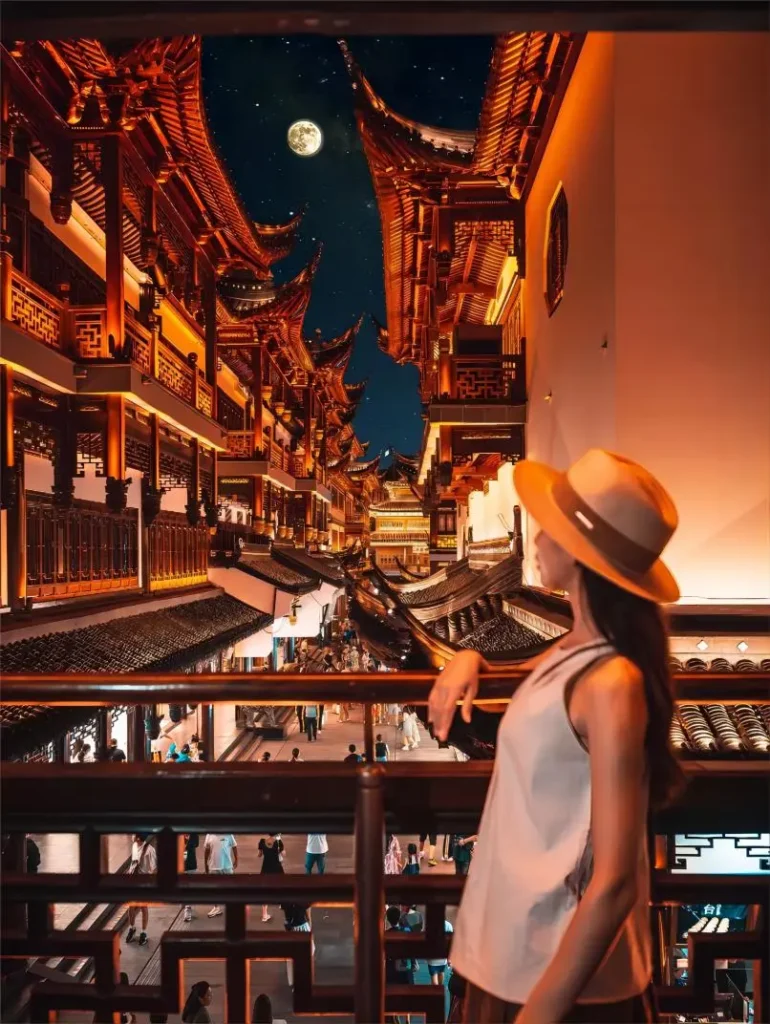
I. Tracing History: From Private Estate to Cultural Icon
The creation of Yuyuan Garden was the “dream of retirement” for Pan Yunduan, a high-ranking official. In 1559, he built the garden in Shanghai’s Old Town for his father’s pleasure. The name “Yuyuan” means “Garden of Happiness,” symbolizing filial piety. Over the next four centuries, it survived wars and periods of neglect, finally becoming a protected national heritage site in 1982 — Shanghai’s showcase for traditional culture.
- For European travelers, Yuyuan is like an “Oriental Versailles,” emphasizing harmony with nature rather than royal grandeur.
- For American visitors, it resembles a “miniature Central Park,” yet one that condenses poetry, painting, and philosophy into a small space.
After reading about classical gardens, travelers might also want to explore The Bund Shanghai: Where History Shines Against the Modern Skyline, experiencing another facet of Shanghai’s cultural heritage.

II. Yuyuan Garden Aesthetics: A Stepping Stone into Eastern Art
Although Yuyuan Garden covers only 2 hectares, techniques like “borrowed scenery” and “framed views” integrate water, architecture, and plants, creating a living masterpiece of Jiangnan garden style.
1. Core Landscapes: The Grand Rockery and Yuhua Garden Hall
- The Grand Rockery: Designed by Ming Dynasty master Zhang Nanyang, this 14-meter-tall structure, built with Wukang yellow stone, mimics a natural mountain. From its top platform, you can enjoy the delight of “changing views with every step.”
- Yuhua Garden Hall: Pan Yunduan’s former study. A century-old magnolia outside blossoms in spring, reflecting the hall’s name, “Jade Splendor.”
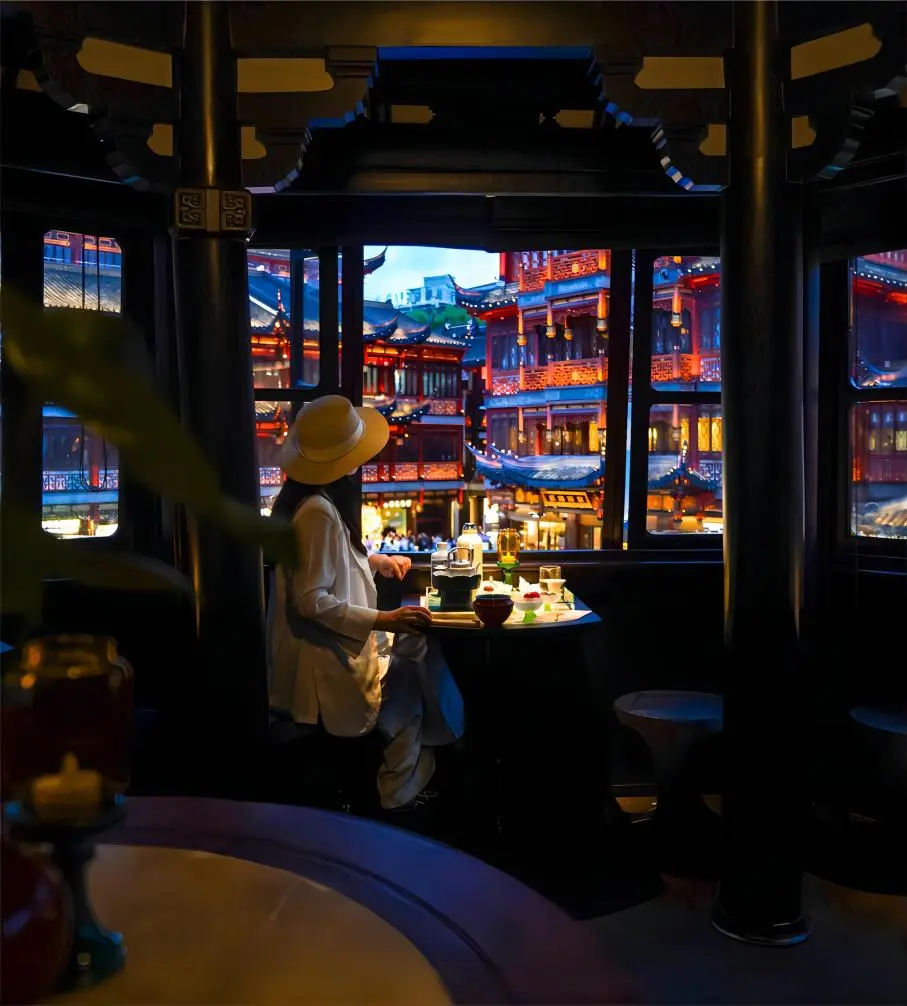
2. Signature Designs: Nine-Turn Bridge and Mid-Lake Pavilion
- The Nine-Turn Bridge: Yuyuan’s signature landmark, curving like a dragon to symbolize “navigating twists and turns toward a smooth path.”
- Mid-Lake Pavilion (Huxin Ting): Built in 1784, one of China’s oldest existing teahouses. Sitting here, sipping Longjing tea while watching koi feels like joining a Ming or Qing scholar gathering.
- European visitors often remark on “seeing the large in the small”—simulating vast landscapes with rocks and ponds.
- Japanese travelers may notice Wabi-Sabi influences in the incomplete Taihu rocks and mottled walls, reflecting the passage of time.
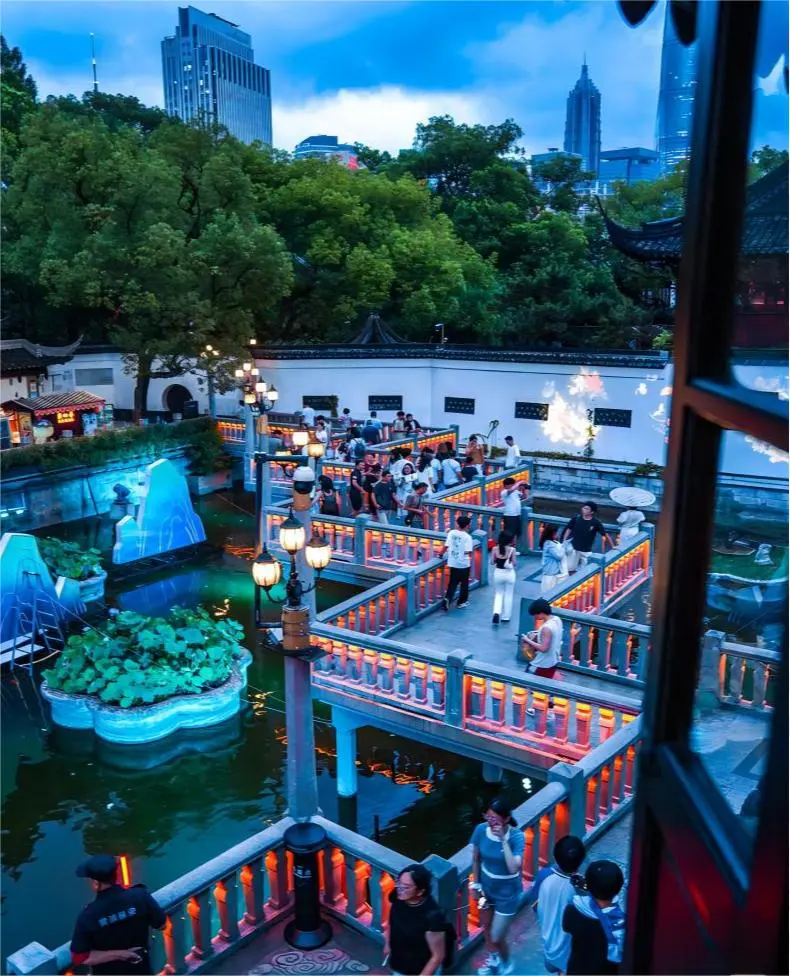
III. Blending into Life: The Vibrant Chenghuang Temple Area
Yuyuan is not only a garden but a living cultural hub. The surrounding Chenghuang Temple (City God Temple) area preserves Ming and Qing street layouts. Step from the tranquil garden into lively streets filled with shops, snacks, and crafts.
1. Food Experience: A Taste of Jiangnan
- Nanxiang Mantou Dian: Founded in 1900, famous for Crab Roe Xiaolongbao. The New York Times praised it as one of the world’s best snacks.
- Lubolang: Known for Crab Roe Tofu and Eyebrow Pastries. Deng Xiaoping once hosted foreign dignitaries here.
2. Handicraft Tour: Heritage in Modern Hands
- Shanghai Old City God Temple Arts and Crafts Store: Watch artisans demonstrate Shanghai Velvet Embroidery and Gu Embroidery, preserved across generations.
- Huxin Ting Tea Ceremony: Tea masters perform the mesmerizing “Eighteen Dragon Forms” pouring technique with long-spouted kettles.
- French tourists may be reminded of Le Marais craft shops, while Italian visitors may see this as an Oriental version of latte art with the tea ceremony.
IV. Practical Guide: Maximizing Your Yuyuan Garden Experience
- Best Time: Early morning (opens at 8:30 AM) or early evening (after 5:00 PM) to avoid crowds.
- Tickets: Garden entry 40 RMB; Yuyuan + Chenghuang Temple Combo Ticket 60 RMB.
- Hidden Tip: Explore the quiet garden first, then the bustling surrounding market. Exit via the back gate to Wenchang Road to see Shuyin Lou, one of Shanghai’s oldest private homes (advance booking required).
Conclusion: Yuyuan Garden— A Never-Ending Oriental Culture Exhibition
Yuyuan’s magic lies in telling 400 years of Chinese culture through gardens, alleys, and shared meals. Each Taihu rock, latticed window, and bite of xiaolongbao reveals Eastern aesthetics.
For international visitors, Yuyuan is more than a destination—it’s a direct conversation with history and tradition. Walking into Yuyuan is like stepping into a flowing “Eastern Poem.”