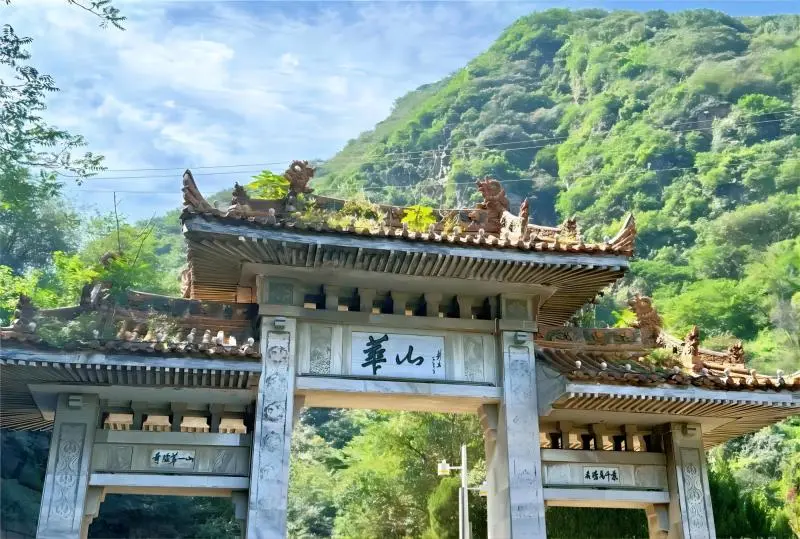
Mount Hua (Huashan): Touching the DNA of Chinese Civilization on the “Most Dangerous Mountain Under Heaven”
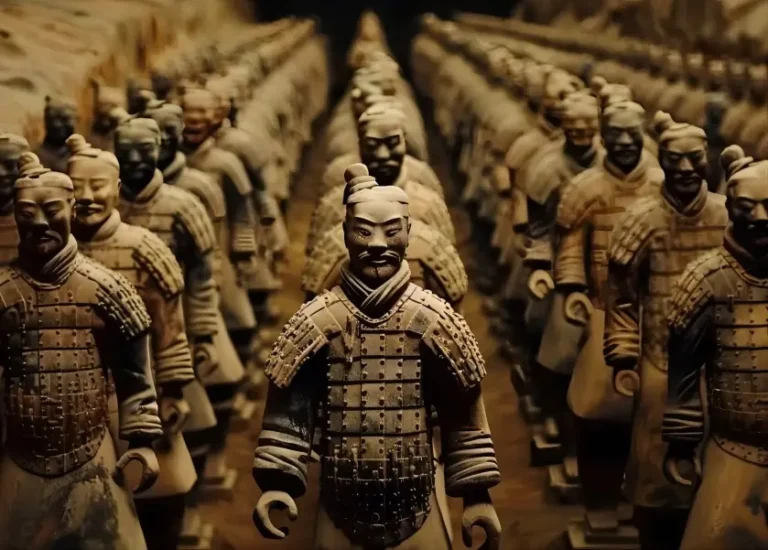
After tasting the crispy Roujiamo in Xi’an’s Muslim Quarter and marveling at the Terracotta Army and Big Wild Goose Pagoda, take a 1.5-hour drive southeast—you’ll reach Mount Hua (Huashan).
Soaring to 2,154.9 meters, Huashan is part of the Five Great Mountains of China and is famed as the “Most Dangerous Mountain Under Heaven.” But beyond its daring cliffs lies a deeper story—one of civilization, faith, and time itself.
I. Mount Hua (Huashan) Geological Miracle: A 2.7-Billion-Year Story
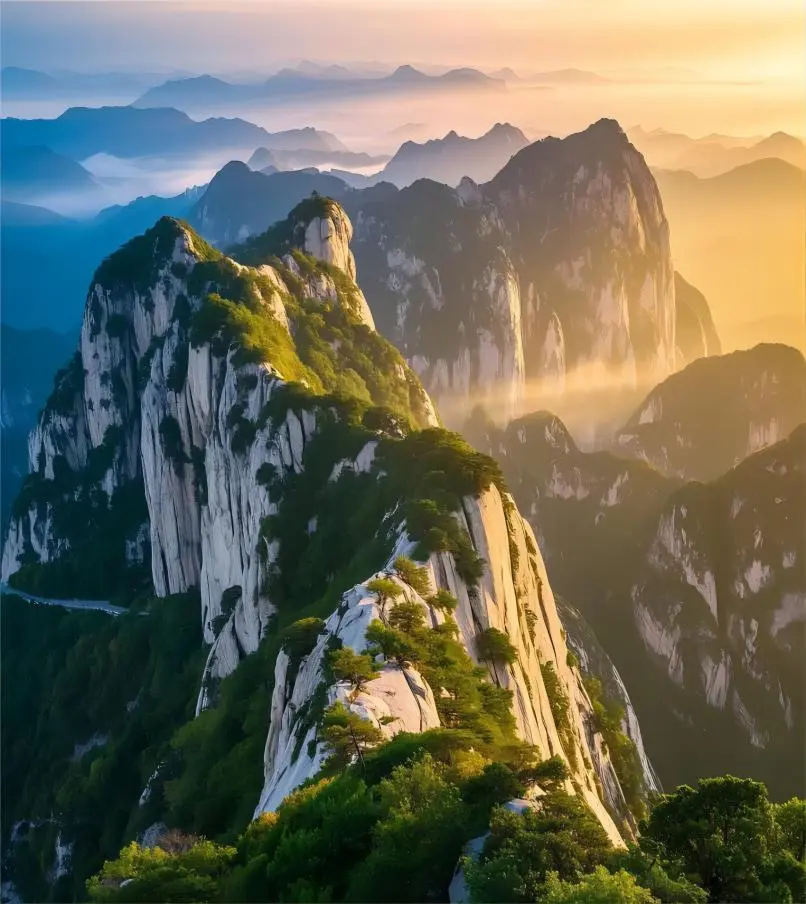
Huashan’s geological history stretches back 2.7 billion years. The entire massif is a single block of granite sculpted by tectonic uplift and erosion.
Standing on the East Peak before the “Raptor’s Dive” cliff, you can trace visible folds—“Earth’s growth rings” far older than humankind. The rare Huashan Wheat Grass, called a living fossil, and nesting Golden Eagles make it a natural sanctuary.
A British geologist once said: “This is one of Earth’s oldest cathedrals of stone.”
II. From Sacred Altar to Taoist Holy Land: A 3D Display of Eastern Philosophy
The name “Hua” (华)—meaning Chinese or magnificent—originates here. Since ancient times, Huashan was a sacred site for imperial worship. Emperors like Qin Shi Huang and Han Wudi climbed these peaks for sacrifices to Heaven.
Huashan later became a Taoist holy land. The West Xuan Cave, known as the Fourth Heavenly Grotto, and Cuiyun Palace on West Peak embody Taoist serenity. Legends say Chen Xiang split the mountain here to save his mother.
An American traveler once wrote after meditating here: “These temples aren’t relics—they breathe philosophy. When the priest recited ‘Highest Goodness is like Water,’ I finally understood Chinese harmony.”
III. The Ultimate Global Challenge: A Test of Courage and Wisdom
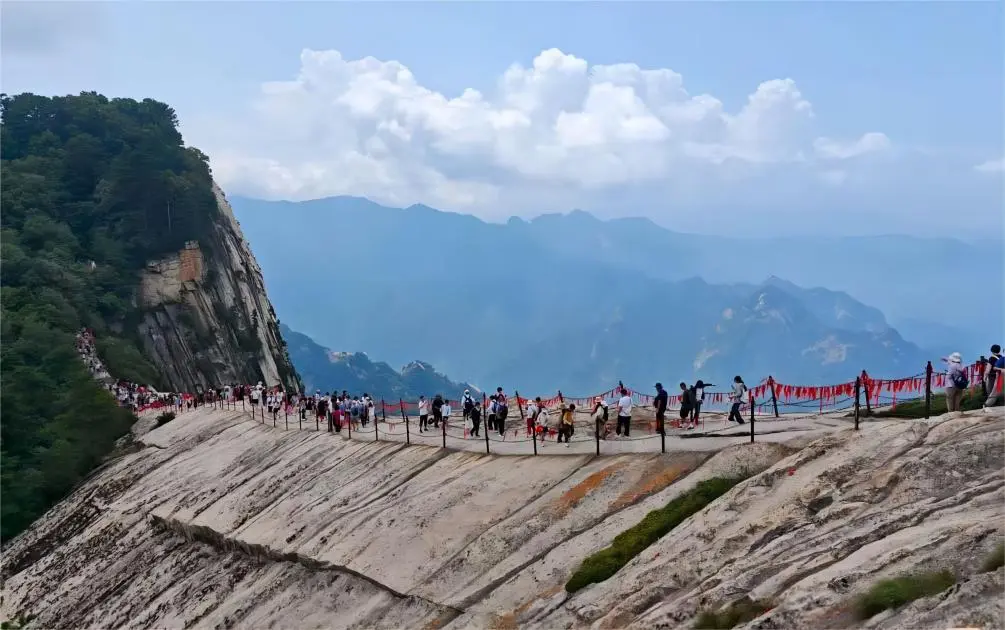
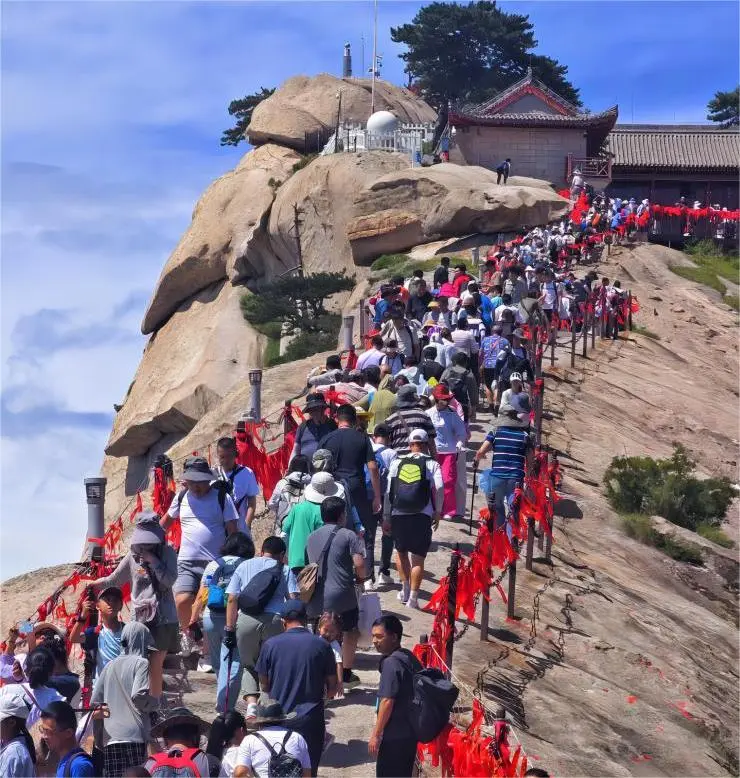
Huashan’s fame as the world’s most thrilling hike is well deserved. The Plank Walk—just 30cm wide and 2,000 meters above ground—has gone viral globally. Travelers clip in, move sideways, and hold their breath.
Portuguese climber Carlos said: “Huashan redefined adventure—it demands respect, not just strength.”
Japanese hiker Yamamoto added: “My legs shook for three days, but it was worth every step!”
Despite safety upgrades, the heart-pounding thrill and panoramic beauty remain.
IV. Travel Tips: Your Immersion Guide
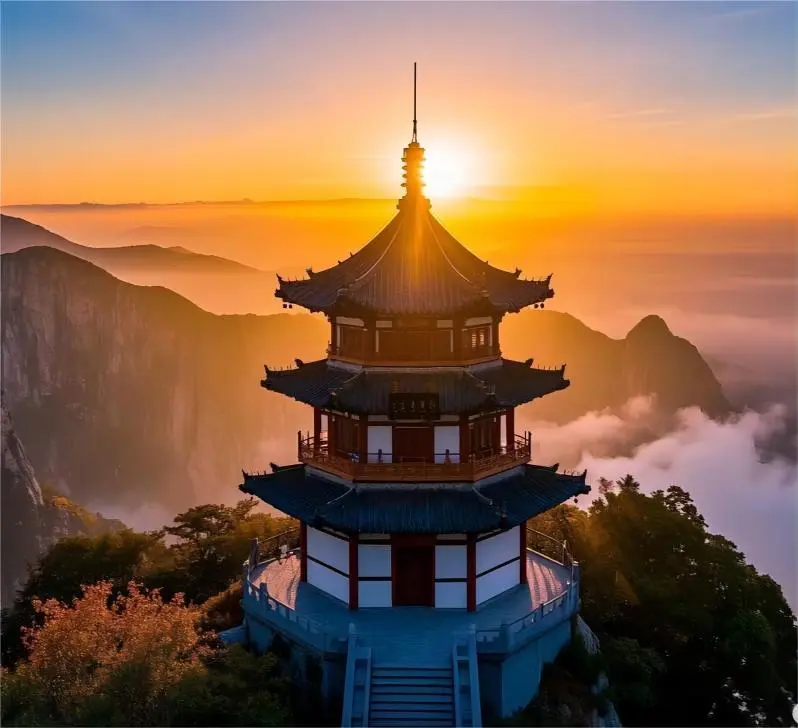
- Must-Do Experience: Summit at Dawn. Take the early cable car to North Peak and watch the sunrise and “sea of clouds.”
- Night Climb Challenge: Start from Yuquan Temple at 10:00 PM; reach East Peak by sunrise.
- Taoist Culture: Join morning chants at Jintian Palace; English explanations of Tao Te Ching are available.
- Find Your Fortune: Touch the golden Gods of Wealth statues for good luck.
Practical Info:
- Tickets: ¥180 peak, ¥100 off-season.
- Transport: High-speed train from Xi’an North → Huashan North Station, then shuttle to the visitor center.
- Safety: Plank Walk requires two people; height over 1.5m; no slippers.
If you still crave more history and serenity, visit Huaqing Palace or Terracotta Army back in Xi’an—both echo the same timeless blend of legend and devotion.
As you overlook the rolling peaks from West Peak, the cliffside path seems to bridge Heaven and Earth. As Hua Chunying once wrote: “Every step leads to a better view.”
Bring your courage—Huashan’s cliffs and temples await, whispering stories of eternity.