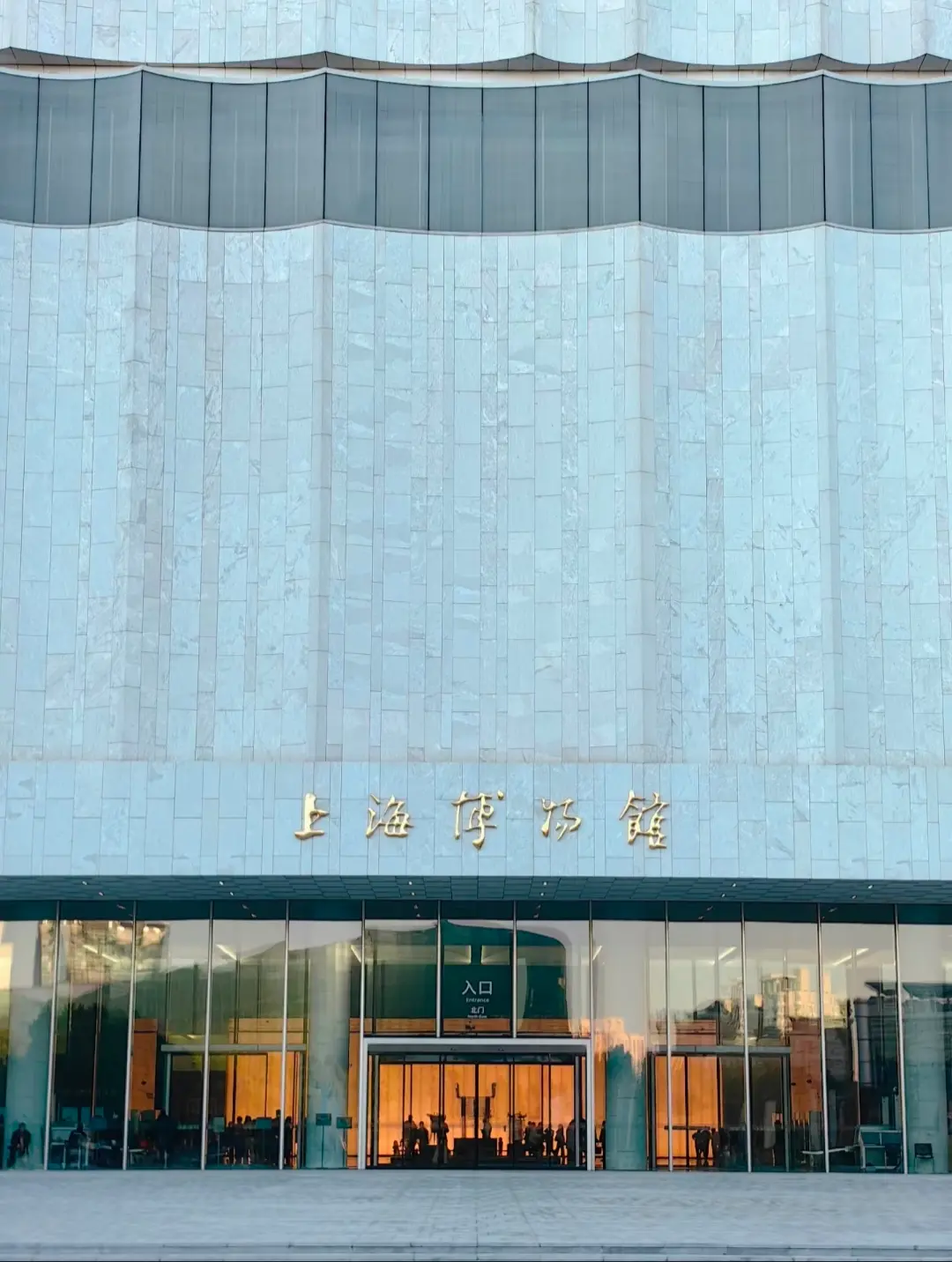
Shanghai Museum: People’s Square vs. East Hall — Figure It Out Before You Go
The Shanghai Museum is no longer in just one location; it’s in two: one at People’s Square in the city center and another on Century Avenue in Pudong, separated by the Huangpu River. The two venues do not exhibit the same items, and which one you should visit depends entirely on what you want to see.
There is also something many people do not know: Chinese cultural relics are currently no longer at the People’s Square venue. The entire People’s Square building is hosting a special exhibition—”Atop the World Tree: The Ancient Civilization of the Americas”—running from July 2026 through November 2027. It occupies floors one through three, requires a ticket, and full-price admission is 148 RMB. The permanent displays of ancient Chinese art have all been moved to the East Hall, which is free.
Therefore, deciding is simple: if you want to see bronzes, ceramics, calligraphy, and paintings—the traditional Chinese collections—go to the East Hall. If you want to see the gold, stone carvings, and the “World Tree” from the Americas, go to the People’s Square venue and buy a ticket. If you want to visit both, split them across two days; running to both in a single day is unrealistic.
I. Shanghai Museum Locations: Clarifying the Two Venues
| items | People’s Square Venue | East Hall |
| Location | No. 201 People’s Avenue, Huangpu District (city center, right next to People’s Square) | No. 1952 Century Avenue, Pudong New Area (near Shanghai Science and Technology Museum and Century Park) |
| How to Get There | Metro Lines 1, 2, and 8 to People’s Square Station, walk a few minutes from the exit; south gate is on Wusheng Road | Metro Line 2 to Shanghai Science and Technology Museum Station, Exit 8; Line 4 to Xiangcheng Road Station, Exit 2; Line 6 to Pudian Road Station, Exit 1 |
| Opening Hours | 9:00–17:00 (Entry stops at 15:00) | 10:00–18:00 (Entry stops at 17:00) |
| Closed Days | Closed on Mondays (except statutory holidays) | Closed on Tuesdays (except statutory holidays) |
| Current Exhibitions | Only “Atop the World Tree: The Ancient Civilization of the Americas” across floors 1–3 | Permanent displays of ancient Chinese art, including over a dozen halls for bronzes, sculptures, calligraphy, jade, and ceramics |
| Ticket Price | Full price: 148 RMB; Concession: 74 RMB; Designated-date ticket: 135 RMB; Family tickets: 200 RMB (1 adult + 1 child), 320 RMB (2 adults + 1 child) | Free (Basic displays require no reservation; scan your ID to enter) |
| Suggested Duration | 2 to 2.5 hours | 3 to 4 hours (allow half a day for a thorough visit) |
II. Shanghai Museum East Hall: The Main Stage for Chinese Art
Floor-by-Floor Highlights of Shanghai Museum East Hall
The East Hall opened progressively starting in February 2024 and fully opened by the end of that year. With a total building area of 113,200 square meters, it is much larger than the old building and serves as the main venue for the museum’s permanent collections. The exhibition halls are clearly arranged by floor, allowing you to walk through from top to bottom or bottom to top without missing anything:
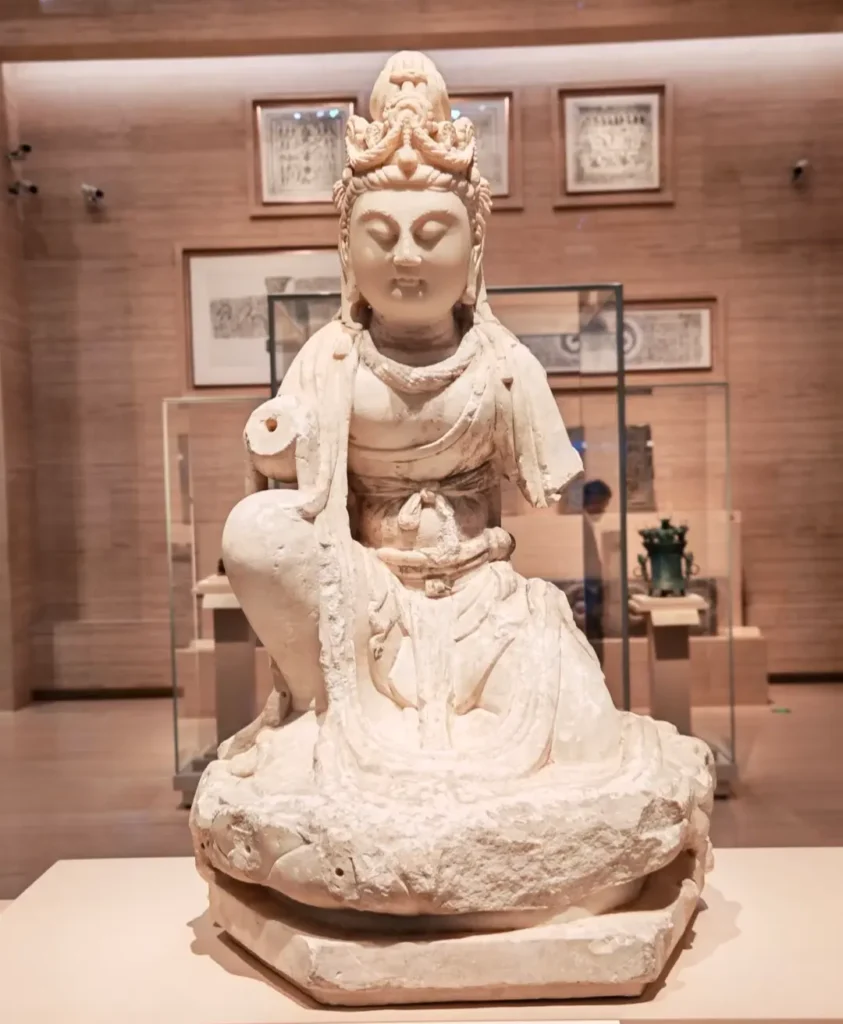
- Floor 1: Gallery of Ancient Chinese Bronze, Gallery of Ancient Chinese Sculpture
- Floor 2: Gallery of Chinese Calligraphy through the Ages, Gallery of Chinese Painting through the Ages, Shanghai School Painting and Calligraphy Gallery, Gallery of Chinese Seals through the Ages, Gallery of Ancient Chinese Jade
- Floor 3: Gallery of Ancient Chinese Ceramics, Gallery of Chinese Numismatics through the Ages, CeraMIX (Ceramics Special Exhibition)
- Floor 4: Jiangnan Craftsmanship Gallery, Archaeology Gallery, Zhao Puchu Calligraphy Art Gallery
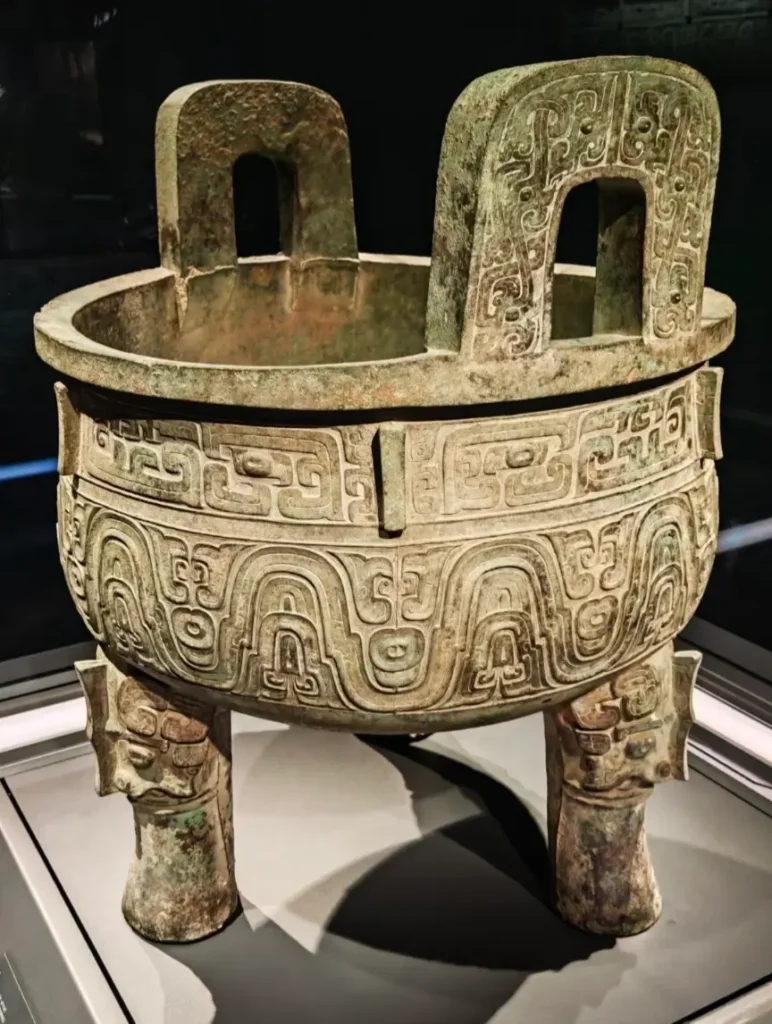
If you only have an hour and a half, focus on the first floor. The Bronze Gallery is the crown jewel of the Shanghai Museum, housing one of the most complete collections of ancient Chinese bronzes globally in terms of system and scale. The shapes, decorative patterns, and inscriptions are striking enough to appreciate even without knowing Chinese, as the objects themselves carry immense weight.
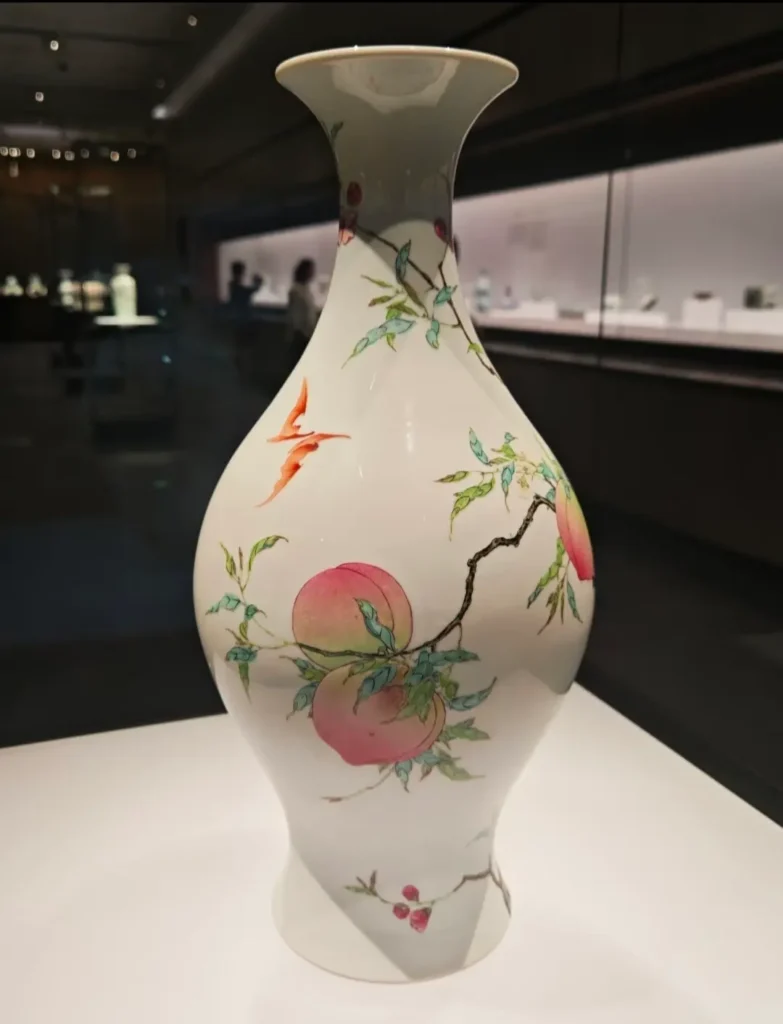
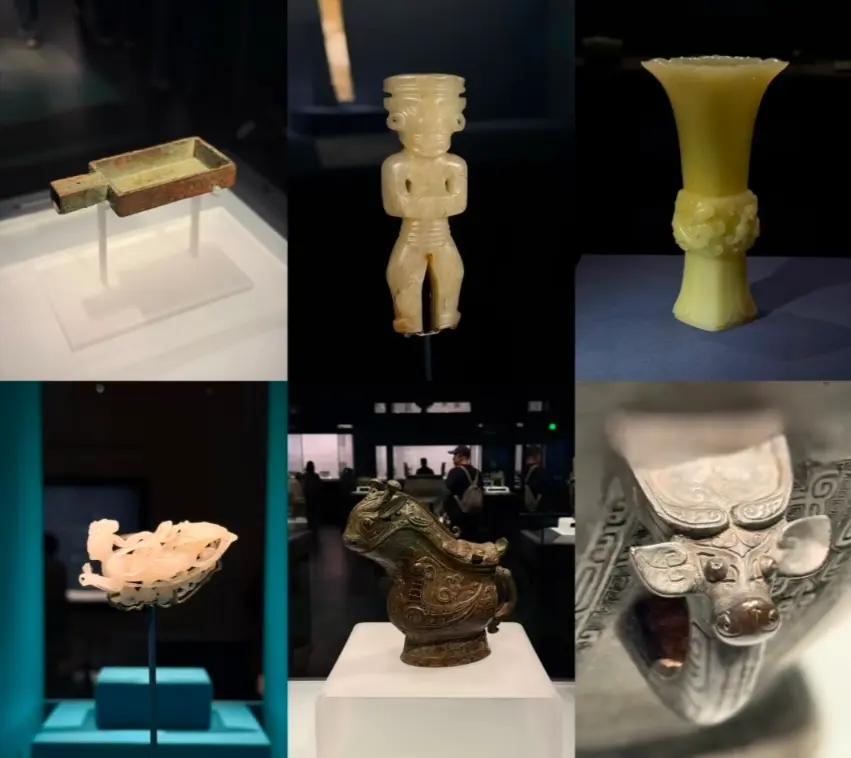
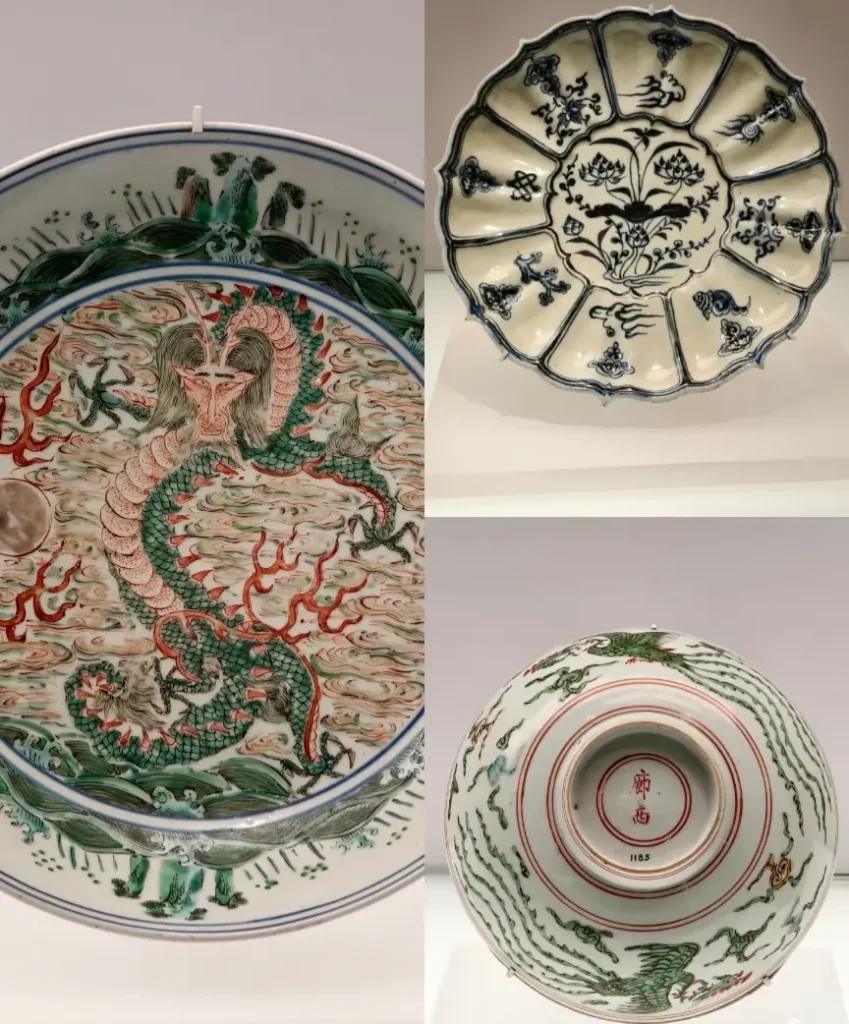
Dedicate your remaining time to the ceramics on the third floor for a straightforward reason: ceramics are the most effortless medium to appreciate. Colors, clay bodies, and shapes are all visible on the surface. You do not need to read the descriptions to tell the difference between the glaze of a Song Dynasty celadon and the patterns of a Ming or Qing dynasty polychrome ceramic. Furthermore, the museum’s ceramic collection runs continuously from the Neolithic pottery down through the Qing Dynasty over thousands of years. Walking through this sequence gives you a clear mental baseline of how Chinese ceramics evolved to become whiter, thinner, and more colorful—a yardstick you can carry with you into museums, antique shops, and restaurants. Calligraphy, paintings, and jade are better suited for visitors with ample time, as light-sensitive paintings and calligraphy are rotated periodically, and jade relies heavily on tactile appreciation that glass barriers inhibit.
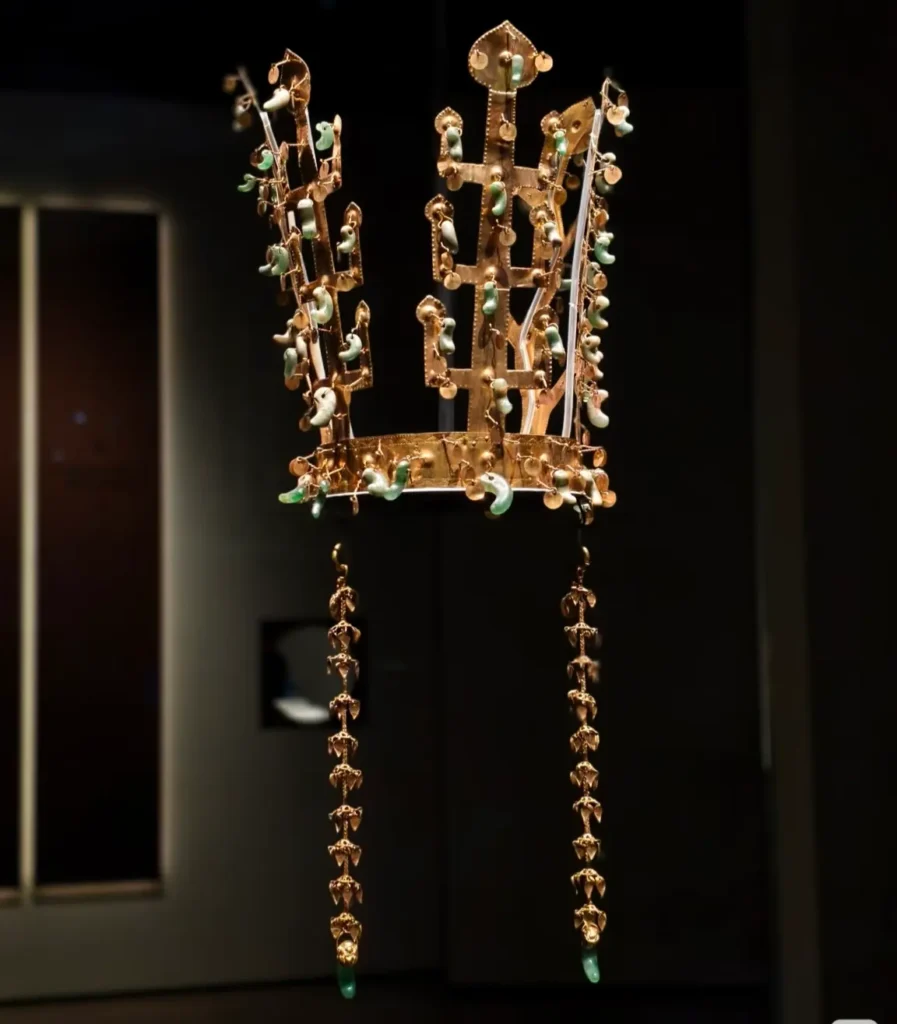
Specialized Reservations: Digital Hall & Exploration Palace
If your schedule is flexible, the second floor deserves a dedicated hour: calligraphy and paintings form the museum’s other core thread. Because paper and silk are sensitive to light and cannot be permanently displayed, pieces are rotated regularly, making each visit unique.
The East Hall also features two areas requiring separate specialized reservations. Understand what they are before deciding whether to secure a spot:
- Digital Hall (Floor 2): Entitled “Jiangnan Landscapes.” The entire hall contains no physical artifacts; instead, projections, lighting, and sound bring ancient Chinese landscape paintings to life, allowing you to step right into the artwork. It takes about half an hour, requires no background knowledge, and is the most photogenic spot in the museum.
- Ancient Civilization Exploration Palace (Floors 3 & 4): This is the East Hall’s “children’s museum,” tailored for kids aged 6 to 18. It features a giant rammed-earth structure where children can try real archaeological excavation, instruments to date cultural artifacts, and an “underwater archaeology” zone where they can touch ceramic shards salvaged from ancient shipwrecks in the Yangtze River estuary. This is an interactive vocational experience rather than a traditional exhibition; minors must be accompanied by an adult at all times, and children under 12 cannot enter alone.
Both experiences can be booked via the “Shanghai Museum Visit Reservation” (上海博物馆参观预约) WeChat mini-program under the entry option “East Hall — Specialized Reservation” (东馆—专项预约). While basic permanent displays require no booking, these two do. Slots for peak times book out days in advance, so families traveling with children should secure these reservations first before locking in other plans.
III. Shanghai Museum People’s Square Venue: The Special Exhibition
“Atop the World Tree” is the Shanghai Museum’s second major global ancient civilization exhibition following its Ancient Egypt exhibition, featuring over 3,000 cultural artifacts on display through November 14, 2027. Spanning floors one through three, you won’t need to debate which hall to visit first—the entire building follows this single thematic line.
During this exhibition period, the People’s Square venue will host no other exhibitions. All visitors must purchase a ticket and verify their identity using valid original identification documents at the entrance. A rest area is available on the fourth floor if you need to sit down after walking, meaning you don’t have to rush through all three floors in one breath.
Note that entry stops at 15:00, which is earlier than most museums, so avoid scheduling a visit late in the afternoon.
IV. How to Buy Tickets for Shanghai Museum (International Guide)
Admission to the East Hall is free, but you must bring your ID. Independent visitors enter via the B1 East Gate security checkpoint by scanning their original valid identification document. Passports are accepted—make sure to bring the original document rather than a photo on your phone.
For the American civilization exhibition at the People’s Square venue, the official designated channels are the Shanghai Museum Official WeChat Mini-program, the Trip.com app, and the on-site ticket office. For international visitors, the official recommendation is to purchase tickets online via Trip.com (the international version of Ctrip), which offers an English interface, accepts foreign credit cards, and allows entry using the confirmation QR code and passport. This step is essential for international travelers and bypasses domestic ticketing platforms.
Ticket prices vary by category: full-price tickets are 148 RMB (date-flexible); designated-date tickets are 135 RMB (valid on off-peak, non-weekend, and non-holiday dates); concession tickets are 74 RMB; family packages are available at 200 RMB for 1 adult and 1 child, or 320 RMB for 2 adults and 1 child.
V. How to Plan Your Shanghai Museum Itinerary in One Day
The East Hall is located in the southeast of Shanghai, while the People’s Square venue is right in the center, separated by the Huangpu River with a metro transit time of over 40 minutes. Therefore, choose one venue per day.
A logical pairing for the East Hall is to combine it with Lujiazui along Metro Line 2: spend the morning exploring bronzes at the East Hall, then cross the river in the afternoon to visit a skyscraper observation deck for panoramic views—a seamless trip straight down Metro Line 2. The People’s Square venue pairs well with Nanjing Road and the Bund: spend your morning at the exhibition, walk east toward the Bund in the afternoon, and stay to watch the city lights come on after dark.
Keep closed days straight to avoid mix-ups: the People’s Square venue is closed on Mondays, and the East Hall is closed on Tuesdays, perfectly staggering their schedules.
VI. Other Major Museums: Shanghai Astronomy Museum & Shanghai Natural History Museum
The following two museums serve distinct purposes outside the scope of the Shanghai Museum: one focuses on astronomy, the other on natural history. Both are spots where “kids will go wild.”
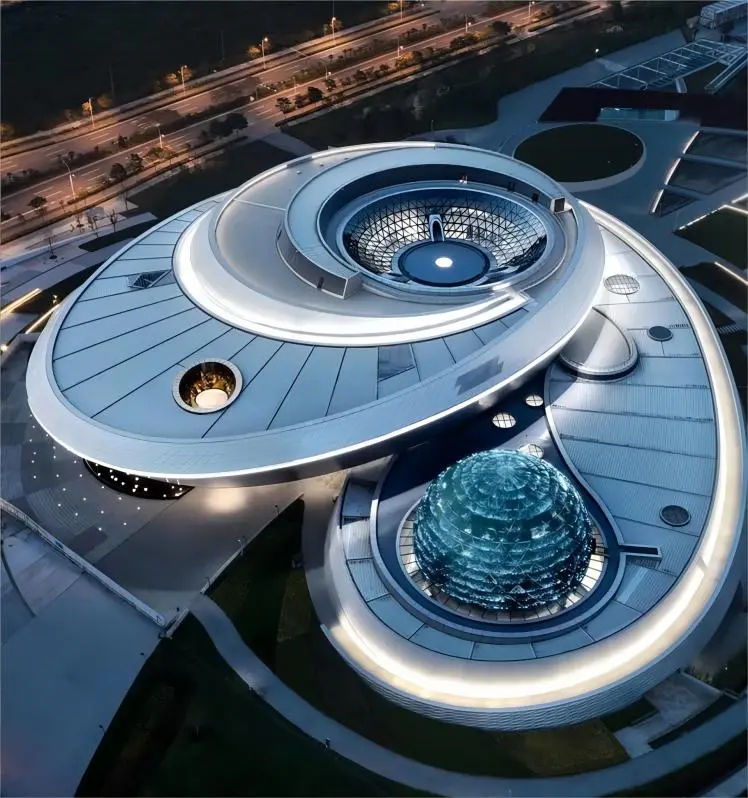
- Shanghai Astronomy Museum is located in Lingang, near Dishui Lake, and ranks among the largest planetariums globally. Its massive dome theater and rows of authentic meteorites offer an experience hard to find elsewhere. The tradeoff is distance: traveling one-way from the city center takes about an hour and a half, tickets are released only three days in advance, and peak slots sell out on the same day.
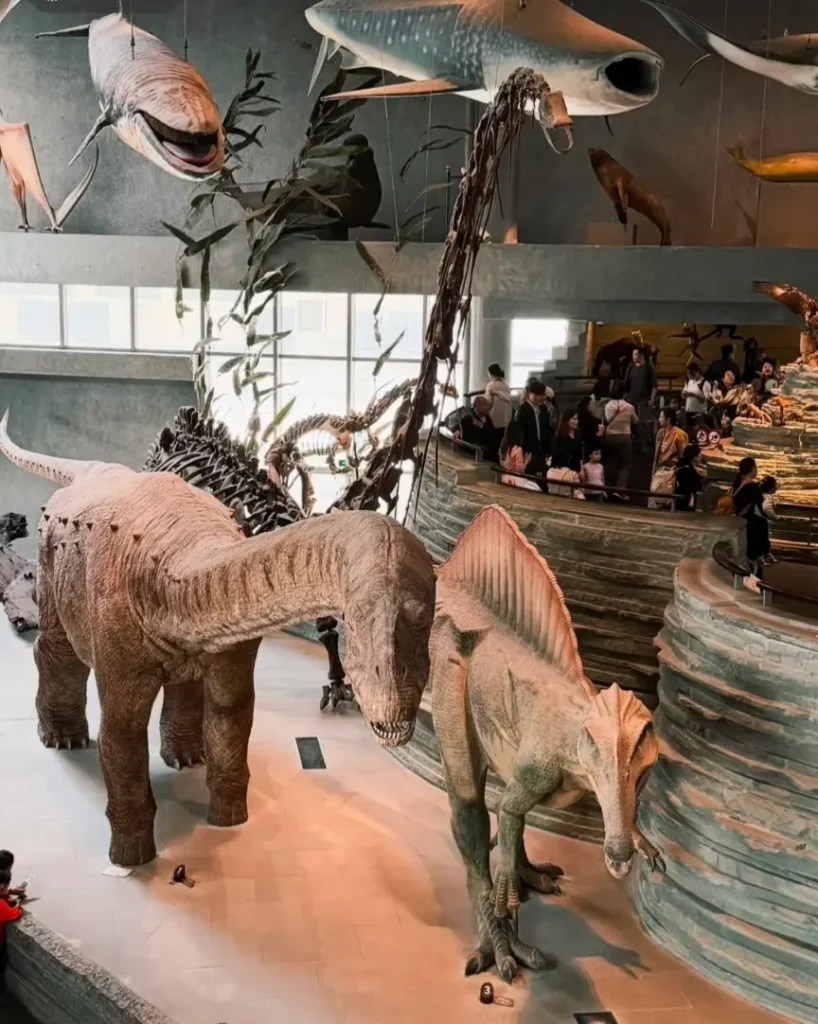
- Shanghai Natural History Museum sits inside Jing’an Sculpture Park. It features an entrance wall entirely composed of specimen displays and a multi-story dinosaur skeleton atrium as its centerpiece, captivating children from ages 3 to 12. It serves as an ideal rainy-day backup option—fully indoor and directly accessible via Metro Line 13.
| Museum | Location & Transit | Key Highlights | Best Suited For | Tickets & Booking |
| Shanghai Astronomy Museum | No. 380 Lingang Avenue, Pudong New Area Metro Line 16 to Dishui Lake Station, walk 10–15 minutes; about 1.5 hours from downtown | One of the world’s largest planetariums, dome theater, meteorites, cosmic-scale narrative design | Families with children, astronomy enthusiasts, and those willing to travel far; not ideal for tight schedules | 30 RMB; released 3 days in advance, online booking required |
| Shanghai Natural History Museum | No. 510 West Beijing Road, Jing’an District (inside Jing’an Sculpture Park) Metro Line 13 to Natural History Museum Station | Dinosaur skeletons, specimen arrays, evolution and biodiversity; the architecture itself is worth seeing | Families, rainy day alternatives, or visitors staying near Jing’an or Nanjing Road | 30 RMB; booked 7 days in advance, no on-site ticket sales |
Note the updated closing days: The Astronomy Museum closes on Mondays, while the Natural History Museum shifted its closing day to Tuesdays (matching the Shanghai Museum East Hall).
VII. Final Verdict: If You Only Have Time for One Shanghai Museum East Hall
Shanghai offers plenty of museum choices, but for first-time international visitors, I still recommend dedicating your sole museum window to the Shanghai Museum (East Hall) for three practical reasons:
First, it serves as the core framework for understanding China. Moving sequentially through the five categories of bronze, jade, ceramics, calligraphy, and painting provides a foundational vocabulary of Chinese visual culture. Later, when you encounter bronzes, blue-and-white porcelain, or landscape paintings in other cities, you will recognize them. Other museums offer niche knowledge; this one builds the foundation.
Second, it is language-independent. Artifacts are concrete—you cannot touch them, but you can see them clearly. The decorative patterns and forms speak for themselves, and English signage is comprehensive. You won’t miss out heavily due to a language barrier, which is rare among Chinese museums.
Third, it is the most cost-effective option. Admission is free, reservations aren’t needed, and it’s directly accessible by metro. Spend three hours inside, and you step right out into the heart of Shanghai.